すべて · 漫画・イラスト · 人物
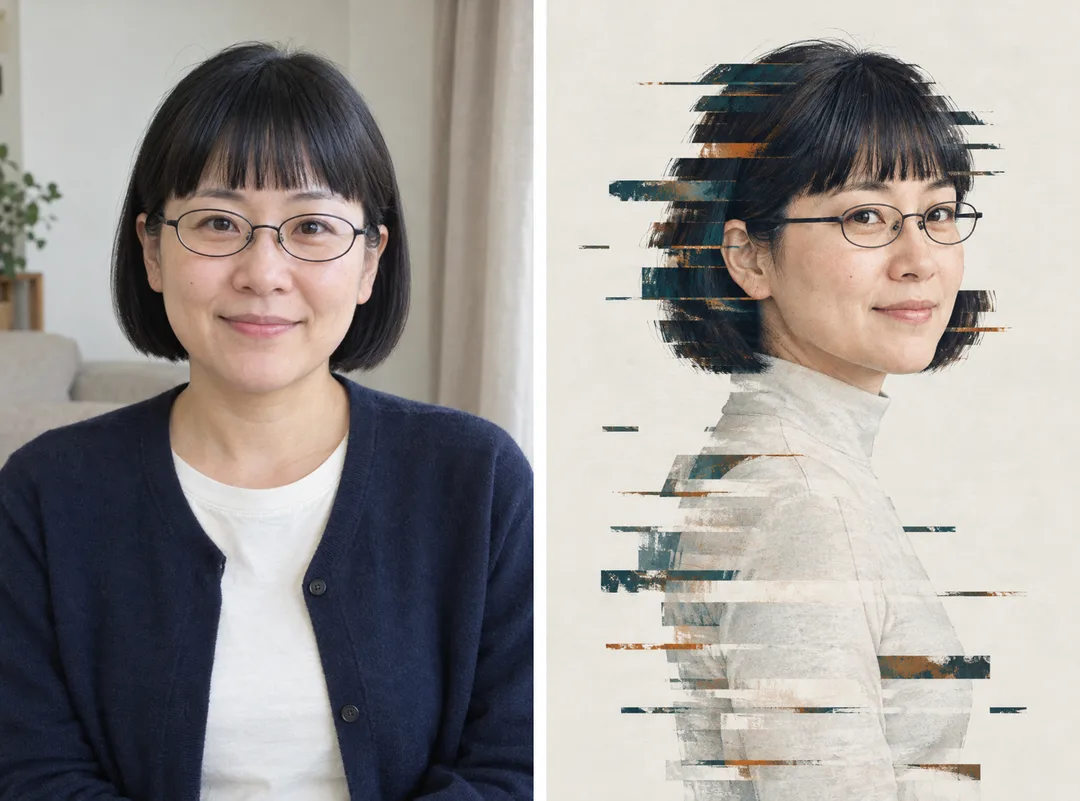
265横グリッチのわたしの肖像 — 白い余白でずれる人物
顔の輪郭は残し、髪と服が横の薄い断片にずれます。明るい背景に青緑と銅色の筋。
ChatGPT 無料 OK
項目を入力
- 1項目を入力します
- 2プロンプトをコピーします
- 3GPTのチャットに貼り付けます
- 4そのまま送ると、サムネイルの例のような画像になります
- 5自分の写真一枚(任意)をプロンプトと一緒に入れると、その写真が反映されます 任意
プロンプト全文を見る 8,037文字
Generate this image now. Return exactly one finished semi-realistic horizontal-glitch portrait on a pale empty background; draw it directly without explanations, code, plans, or questions.
完成した2:3の縦型画像を1枚、1024×1536ピクセルで出力してください。重要な文字は上12%と下15%に置かないでください。
PHOTO RULE (this overrides any other line in this prompt, before or after it, that calls the photo required or mandatory or says to ask for it): if a photo is attached, use it exactly as the instructions below describe. If no photo is attached, never ask for one and never stop — invent a fitting fictional subject (person, pet, food, product or place, whatever this card is about) in the spirit of the card's example image, and finish the image.

[Resolve every variable before building the glitch]
PHOTO_MODE = "【自分の写真】".
POSE = "【ポーズ】".
PALETTE = "【色の組み合わせ】".
DISPLACEMENT = "【ずれ】".
Interpret the Korean selections by their meaning. Blank or absent optional inputs resolve to PHOTO_MODE no photo, POSE side profile, PALETTE oxidized teal and copper, and DISPLACEMENT medium. "おまかせ", "おまかせ", and choose-for-me values mean select one listed value before rendering; those command words must never appear in the image. Oxidized teal and copper uses dark desaturated teal planes and restrained burnt-copper streaks; ink and silver uses charcoal with cool pale-gray highlights; navy and ocher uses muted navy with subdued ocher traces. All palettes retain an off-white background, opaque pale clothing and the person's natural skin tone. DISPLACEMENT adjusts the extent of one fixed horizontal rectangular fragmentation method rather than selecting a different medium. PHOTO_MODE is only an attachment instruction; a supplied personal photo overrides a no-photo menu choice, while no attachment always finishes with an original fictional person.

[Likeness roles and the intact identity anchor]
A user's own human photograph supplies recognizable brow and eye spacing, forehead, nose, lips, cheek, jaw, hairline, hairstyle, skin tone, glasses, facial hair, distinctive marks and apparent age. Paint these cues consistently across the intact portions and shifted slices. If a photo contains several subjects choose the clearly dominant one and draw exactly one person. Without a personal photo invent one distinctive fictional adult. Style references supply only the muted colors, thin scraped textures, horizontal slice construction and pale negative space; their specific face, shirt details, digital signature or any existing character are not identity sources. Make a new artwork in the same series language rather than reproducing the reference. Preserve a connected near-side nose, mouth and chin outline as the principal identity anchor. Keep at least one readable eye region or the coherent side-profile eye socket; do not turn the face into a blank rectangle.

[Portrait orientation, clothes and pale space]
Show one head and upper torso as a large vertical form, extending from the upper canvas through the lower portion with pale breathing room beside it. Side profile presents a clean nose-and-chin contour to one side; turning back shows the back shoulder and a three-quarter face returned towards the viewer; lowered head tilts the head gently downward with the neck and shoulders remaining physically joined. Use relaxed posture and no props. Dress the subject in an opaque ivory or light-gray structured high-neck top with long sleeves, readable seam planes and a fully covered chest, shoulders and abdomen. Hands can remain outside this chest-up crop instead of adding unnecessary gestures. Paint the face and clothing in a subtle semi-realistic editorial style, with softly modeled planes and dry, scraped surface detail. Keep a pale nearly empty studio background, no room interior, skyline, neon signs or foreground object.

[Horizontal slicing that actually changes the body contour]
Divide selected areas of the hair, far face, shoulder and torso into narrow horizontal rectangular strips and occasional taller rectangular blocks. Shift some strips sideways by different distances, omit some small sections to expose the pale background, and duplicate only small edge fragments at the same height. All displaced geometry remains aligned to horizontal bands and their vertical cut ends. Let shifts create an irregular stepped outer contour and several clean negative gaps through the distant shoulder and lower torso. Build broad and thin bands at varied but deliberate spacing, leaving other areas stable; avoid a perfectly even television scan-line filter. The pieces contain their original hair strands, skin plane or cloth weave so viewers see material being fragmented rather than unrelated abstract boxes pasted over a face. Use small PALETTE-colored scraped streaks within selected bands, with subtle dirty-white interstices and a few hard rectangular interruptions. The source subject remains recognizable through spatial correspondence across those strips. Do not add a second complete head, duplicate eyes, detached limbs or a collage of other people's features.

[A coherent level of displacement]
For slight DISPLACEMENT shift a few thin hair and outer-shoulder bands modestly, leaving most of the face and torso contiguous. For medium introduce clear lateral shifts around the far forehead, hair edge and lower chest with several visible gaps; keep the central face and near jaw coherent. For strong use wider alternating offsets, more negative openings through the far shoulder and lower torso, and a more fragmented hair silhouette, but protect the near nose, mouth, chin and one eye region as a joined anchor. No setting erases the person's entire head or makes the result a random pattern. Keep the neck visually attached to a plausible shoulder even where strips interrupt its surface. Extend some small fragments into the pale side space at their original vertical position, with substantial quiet areas between them. Keep the head and main shoulder inside the requested aspect ratio and let only low-priority small debris fade near the outside margins.

[One restrained photographic painting language]
Use soft diffuse lighting on intact facial planes and subtle cool shadow in the hair, with subdued PALETTE traces concentrated in the disrupted bands. Natural skin is warm or cool according to its identity reference, not replaced by metallic orange. Preserve delicate facial shading, a believable dark hair mass or reference-specific hair color, folded opaque fabric and slight layered pigment grain. The image combines convincing human volume with dry digital-paint fragmentation; it is not a shiny 3D robot, flat vector icon, bright cartoon, horror mutilation or conventional full-color photograph with an app filter. No luminous orb, fire, floral trails, liquid paint splash, nebula smoke, floating planets, chromatic rainbow outline, computer panel, source code or holographic number. The decisive visual feature is horizontal geometric displacement against quiet white space.

[Finished artwork boundary]
Use contrast and negative space so the profile reads at thumbnail size and the small slices reveal themselves when viewed larger. Keep dark fragment values separated from the pale clothing and background, without crushing every band into black. Make each cut and transition intentional, with clean short edges and some fine scraped grain inside the planes. Deliver only the single complete portrait artwork. No text, title, caption, name, face number, platform UI, search bar, carousel indicators, watermark, copied artist signature, known character, branded logo, frame mockup, before-and-after strip or effect instructions. This must remain one person, one fixed horizontal-glitch painting style and one finished image.

[Final output format]
完成した2:3の縦型画像を1枚、1024×1536ピクセルで出力してください。重要な文字は上12%と下15%に置かないでください。
This selected output format takes priority over any fixed canvas size or aspect ratio elsewhere in this template. Adapt the composition, text zones and margins to the selected canvas without stretching or cropping essential content. Device safe areas apply only when a device is selected. Never print these format instructions on the image.
結果はどうでしたか?
こちらのカードも人気です
使い方・よくある質問
こんなときに
白い余白の横顔が、データが壊れたように横の断片に切れてずれる一枚です。顔の輪郭は残り、展示ポスターのような雰囲気に。
項目の入れ方
色の組み合わせを選ぶだけです。ずれを「強く」にすると断片が大きくずれます。
写真を入れると(任意)
写真なしなら表紙のように架空の人物で描きます。自分に似せたいときは:
① 顔がよく見える写真をアップ — まだ送りません
② 同じ欄にプロンプトを貼り付け
③ 両方入ったのを確認して送ります
確認すること
- 顔の輪郭は読めますか?
直したいとき
同じ会話で「顔をもっとはっきり」のように一つずつ頼んでください。