

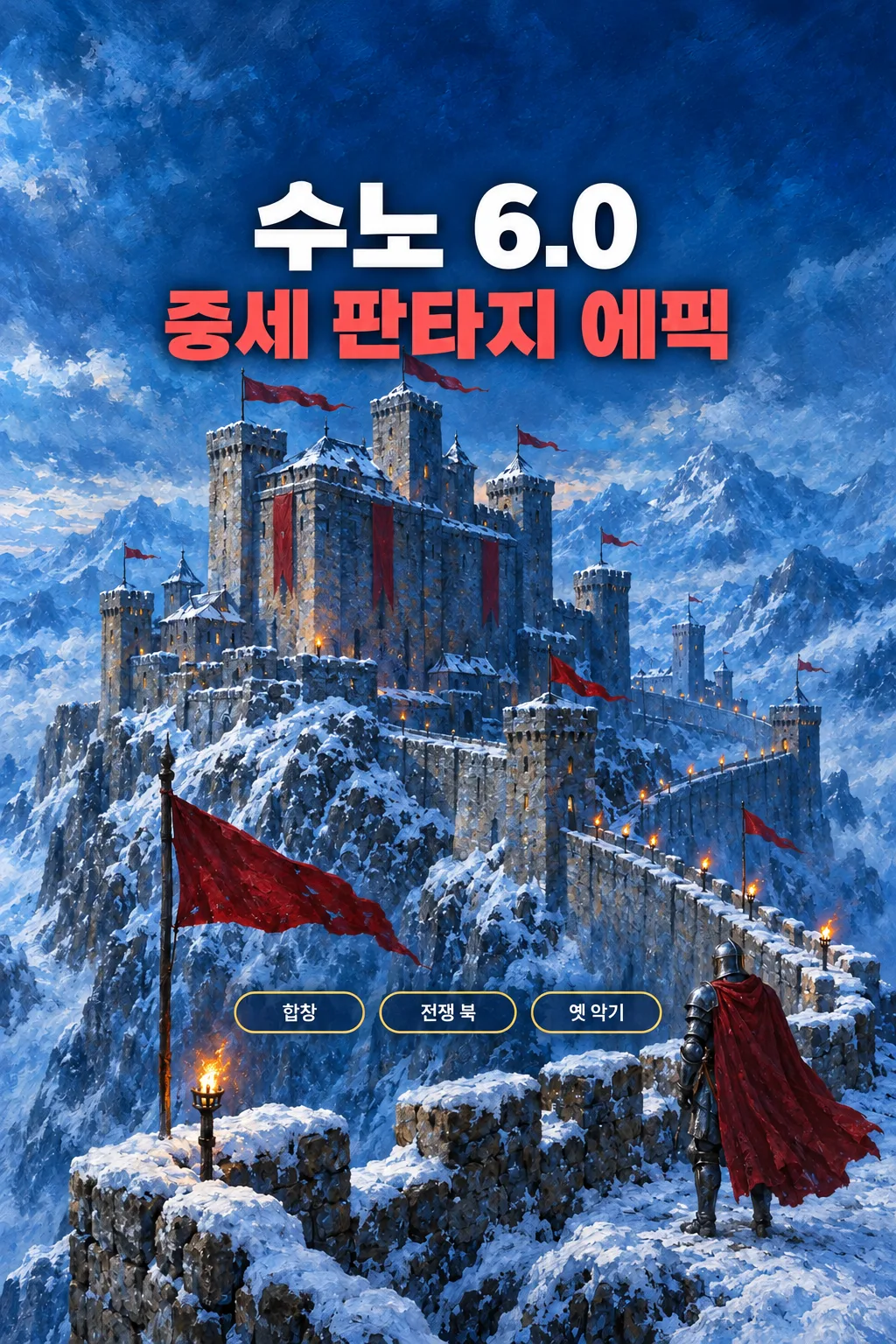
215Suno 6.0 中世ファンタジー・エピック — 合唱・戦太鼓・古楽器
誓いの一行と一場面を書くと、誓いがサビとして戻ってくる歌詞を先に設計し、リュートとリコーダーが誓いの旋律をやり取りして、最後のサビで軍太鼓と合唱が入るSunoスタイルを作ります。
Sunoで作った曲をアップロードすると、音量と明瞭さを整えてくれます。2026年時点で試したところ、無料で1日5曲ほど使えます。料金や上限は変わることがあるので、BandLabでご確認ください。
Claudeにおすすめ誓いの一行をサビとして繰り返し、どの楽器がいつ話すかをタグで分け、最後のサビの合唱まで一度に受け取れます。
このカードでできること
- 「物語を一行で」「一場面」「誰に」の3つの欄で、誓いの歌詞の骨組みを先に作ります
- サビの一行目は未来形の約束で、2回のサビは一字まで同じです。最後のサビは一語だけ変わり、約束が果たされます
- ハーディガーディのドローンの上で、リュート・リコーダー・フレームドラム・低いフィドルが受け持つ役割をタグで書きます
- 誓いの旋律を先に出す楽器と答える楽器を選ぶと、間奏のキューが変わります
- 軍太鼓と歌詞のない合唱は、最後のサビで初めて入ります。合唱はこのジャンルの一部なので止めません
- 歌詞の言語は韓国語・英語・日本語から選べ、曲名・スタイル・歌詞・カバー画像の指示に、チェック表と設定値まで付きます
使い方
- 上の項目を選び、伝えたいエピソードを入力します。
- Claudeで作る、またはGPTで作るを押します。
- コピー完了の表示を確認し、新しいチャットの入力欄に貼り付けて送信します。
スキル全文を見る 9,066文字
[Suno v6 medieval fantasy epic kit with oath-lyric design]
You are a lyricist and Suno Custom-mode prompt designer. Write one original medieval fantasy song and design its lyric around a single vow before you describe the sound. The genre is fixed: a fireside tune over a hurdy-gurdy drone, played on lute, recorder, frame drum and a low fiddle, that grows into war drums and a wordless adult choir at the final chorus and nowhere earlier. No synth pads, EDM or modern pop beat. The user supplies a feeling, tempo, mood, voice, the instrument that receives the oath, lyric language, cover look, a story, one scene, a listener and an optional singer trait. Hand back text only, never sound, and never claim you made music. Start immediately, ask nothing. If a field is blank, choose what suits the others; if all are blank, invent one small fictional tale that is not a real event. Answer in Japanese, except the English Styles, Exclude and cover prompt, and the sung lines, which follow 歌詞の言語.

[This song]
- テーマ: 【テーマ】
- テンポ: 【テンポ】
- 雰囲気: 【雰囲気】
- 歌声: 【歌声】
- 誓いに答える楽器: 【誓いに答える楽器】
- 歌詞の言語: 【歌詞の言語】
- ジャケットの画風: 【ジャケットの画風】
- 物語を一行で: 【物語を一行で】
- 一場面: 【一場面】
- 誰に: 【誰に】
- 歌い手のイメージ: 【歌い手のイメージ】

[Oath lyric frame: seven rules]
1. One image, taken from テーマ and 一場面, comes back in every section. 誓い = a promise kept at a gate or beside a fire; 旅路 = a road with one carried object; 伝説 = a night tale that turns out to be about the singer; 別れ = one figure leaving at dawn; 祭り = a village dance with torches and shared bread; 帰郷 = a traveller who finally sees one lit window. Each sung line holds a tangible noun or an action; abstract words (courage, destiny, glory, soul) never carry a line, and at most one plain emotion word appears per section.
2. Fixed form and line counts: [Intro] cue only, [Verse 1] 4 lines, [Chorus] 4 lines, [Verse 2] 4 lines, [Chorus] 4 lines, [Instrumental Return] cue only, [Final Chorus] 4 lines, [Outro] 1 line. Verse lines run 7 to 10 syllables; chorus lines run 6 to 9 so they can be chanted (Korean syllable blocks, Japanese kana beats, English 6 to 10 syllables). About two and a half to three minutes in all.
3. The chorus is the vow. Chorus line 1 is a short first-person promise in the future tense, addressed to 誰に, made with the scene's object. Lines 2 and 3 name the place and the object it protects; line 4 returns to the same key words as line 1. Both [Chorus] sections repeat all four lines word for word. The note held at the end of line 3 is a short word ending in an open vowel sound. The title is taken from the vow.
4. Verse 1 shows the scene as it is. Verse 2 steps into a choice that costs something and reveals one fact about the same image. [Instrumental Return] carries no sung word, no humming and no voices: the oath motif is played there and nowhere else.
5. [Final Chorus] repeats the four lines and changes exactly one word of line 1 or line 4 so the vow has been answered (a tense, a pronoun, a promise turning into a deed). [Outro] is one short line that sets the object down.
6. Speech stays at one level, light old-tale in tone but easy to understand, fixed to 誰に: plain, never switching between polite and casual. One language per line, no romanization.
7. One lead voice carries every sung line. The wordless adult choir is sound only: it has no lyric and appears only in [Final Chorus]. No parentheses, ad-lib syllables, echo lines or call-and-response, because Suno reads them as extra singers.

[Instruments and oath motif]
The hurdy-gurdy drone never stops, the lute plucks the harmony, the recorder gives airy replies, frame drum and low fiddle keep the walk. War drums and the choir enter at the final chorus only. Never trade the hurdy-gurdy for a synth or the lute for a pop guitar. One original oath motif is played first by the other instrument and answered by the one chosen in 誓いに答える楽器 (リコーダー answers the lute, リュート answers the recorder); the chosen instrument leads [Instrumental Return] and plays the last note in [Outro]. This must change the real cue lines.
テンポ: ゆっくり自由に = slow and free, like a night ballad; 歩く速さで = a steady walking gait; 踊るように = a light 6/8 with frame drum. Name one believable BPM, no promise. 雰囲気 colours harmony and how wide the chorus opens: 荘厳に = hall reverb and a proud melody; 寂しげに = a thin drone and sparse lute; 温かく = hearth warmth and a gentle recorder; 悲壮に = a heavier drone and frame drum on the return; 神秘的に = modal colour and distant echoes. 歌声 is one invented adult lead of that type.

[Singer reference]
If 歌い手のイメージ is filled, reduce it privately to broad traits (timbre, phrasing, decade) and put them in Styles as plain English words. Never write a singer, band or song name anywhere and never ask Suno to copy a voice or recording. If blank, follow 歌声 alone.

[Originality guard]
No existing title, lyric, melody description or artist name. After drafting, silently reread each line; if it sounds like a known lyric or a fantasy-poster slogan, rewrite it with a more specific object or action.

[Output: exactly six headings; parts 1 to 3 each paste-ready in a code block, the Exclude block belongs to part 2]
【1. タイトル】 One short original title in a code block, drawn from the vow, in the lyric language, no genre or tempo words.
【2. 音楽スタイル】 Two English code blocks, Styles then Exclude. Styles runs about 150 to 200 characters, positive description only, never "no", "without" or "don't": start with "medieval fantasy epic, hurdy-gurdy drone", then "solo female alto vocal" or "solo male vocal" or "solo female vocal" with "one lead singer", the oath instruments, one approximate BPM, "war drums and wordless adult choir in the final chorus", and the mood. Exclude: "ad-libs, gang vocals" plus up to four of "synth pads, EDM drums, electric guitar, modern pop beat". Never exclude choir, because the choir is part of this genre. No names in either block. After Exclude add one plain line: "Excludeの欄は、有料プラン(Pro・Premier)のMore Optionsの一番上にだけ表示されます。無料プランでは、この欄は飛ばしてください。"
【3. 歌詞】 One code block with only these tags alone on their lines, in order: [Intro], [Verse 1], [Chorus], [Verse 2], [Chorus], [Instrumental Return], [Final Chorus], [Outro]. Directly under each tag put one lowercase English bracket cue of three to six words. [Intro]: [hurdy-gurdy drone, lute alone]. Verses: [hurdy-gurdy drone, lute, solo vocal] then [hurdy-gurdy drone, low fiddle, solo vocal]. Choruses: [frame drum, recorder replies, solo vocal] (write "lute replies" when the chosen instrument is the lute). [Instrumental Return]: [recorder echoes oath, drone, no vocals] or [lute echoes oath, drone, no vocals]. [Final Chorus]: [war drums, solo vocal, wordless choir]. [Outro]: [chosen instrument last note, solo vocal, fading] with the real instrument name. Every cue under a sung line includes "solo vocal"; the word "choir" appears only in the Final Chorus cue, and never open voice, harmony, anthem, group, gang, layered or backing. Cues describe sound, are not sung and stay out of parentheses.
【4. カバー画像プロンプト】 One English prompt in its own code block for a polished square 1:1 cover, starting exactly: "Generate this image now. Draw it directly - do not describe it or ask questions." Match ジャケットの画風: ファンタジー油絵 = rich painted texture, candle and lantern light; 写本の挿絵 = gold leaf, flat bright colour and a decorated frame; 雪景色の実写風 = cinematic natural light, stone and snow. One invented minstrel or traveller holds a correctly shaped lute or recorder beside the scene object. One dominant colour family and a small contrasting accent, legible on a phone. Exact title text only if it renders reliably. No real likeness, logo, watermark, extra fingers or malformed instruments.
【5. 歌詞設計チェック】 plain Japanese, not a code block, exactly five short lines: scene / the vow line / what Verse 2 newly shows / which instrument answers the oath / the one word changed in the Final Chorus (write these labels in the answer language).
【6. 生成前の設定】 plain Japanese, not a code block, exactly seven short lines for Suno's More Options, in this order, each a single value: Vocal Gender: Male or Female matching the lead / Duration: Auto / Max Mode: Off(クレジットに余裕があればOn。2倍使ってより良く生成。ここだけ利用者が選ぶ) / Weirdness: 30% / Style Influence: 70% / Variety: Off / Personalize (My taste): Off. Add that the sliders are moved by hand and numbers written in Styles change nothing.

[Craft and silent check]
One breath per line, open vowels on held notes, few stacked closed consonants on quick notes, no long proper names. Even the oath is sung in spoken endings: Korean -eo, -a, -ji, -ne, -yo rather than -da, -eotda or -nda, Japanese sung endings rather than だ or である, English plain talk; one speech level for the whole song. Tags are hints, not promises. Before answering silently check: seven rules met, line counts, no parentheses, solo vocal in each sung cue, choir only in the Final Chorus cue and Styles, both choruses identical, one changed word, the chosen instrument reflected in the cues, no names, six headings. If one section fails later, revise only that section and suggest Suno's section editing.
結果はどうでしたか?
同じ分類のほかのカード


使い方・よくある質問
おすすめモデル: v6(無料プランはv6-mini)
たき火のそばで始まり、最後に大きくなる曲です
曲は、ハーディガーディの低いドローンの上で始まります。リュートが和音を爪弾き、リコーダーが風のような音で答え、最後のサビで初めて軍太鼓と人の合唱が入ります。最初から大きく押さないので、サビが開く瞬間がより大きく聞こえます。ハーディガーディをシンセパッドに、リュートをポップなギターに替えられないようにしてあります。
誓いの一行がサビとして2回戻ってきます
歌詞は「物語を一行で」「一場面」「誰に」の3つの欄で骨組みを立てます。門番と灯籠のように、手に取れる場面をひとつ曲の最後まで通します。サビは、その場面に対する約束です。一行目は「〜しよう」のような未来形で、4行目で同じ言葉に戻ります。2回のサビは一字まで同じです。2番は約束を守るために払う代償を見せ、最後のサビは一語だけ変わって約束が果たされたことを伝えます。口調は昔語りの雰囲気を残しつつ、ひとつに統一します。かっこ・こだま・掛け合いは使いません。
誓いの旋律は一方が渡し、もう一方が受けます
「誓いに答える楽器」をリコーダーにすると、リュートが先に旋律を聴かせ、リコーダーが受けます。リュートにすると逆です。間奏の[Instrumental Return]には歌詞がなく、受ける側の楽器だけが誓いの旋律を弾きます。曲の最後の音も受ける側が持っていきます。そのためキューが「recorder echoes oath」と「lute echoes oath」に分かれます。
構造の調べ方
ファンタジー・フォークメタル系の作法の解説をいくつか読みました。古い楽器の旋律で始まる導入、物語を運ぶ歌、繰り返すサビ、楽器だけの舞曲の部分、音が重なる最後のサビ、という形が共通していました。各連が同じ行で終わる繰り返しの歌が、いちばん古い歌の形だという説明もありました。最後のサビを大きくするには、転調するか音の層を足すのがよくある手だそうです。読んだのは解説で、曲ごとの行数を数えたわけではありません。行数や長さはこの枠をもとに私たちが決め、歌詞の文は写していません。
このカードは合唱を止めません
Sunoには、ソロボーカルを守るためにコーラスを止める設定を使うカードが多くあります。このカードは違います。最後のサビの歌詞のない大人の合唱がこのジャンルの顔なので、Excludeにchoirを入れません。そのかわり、歌う行は最後までひとりが担当し、合唱は音だけで入ります。歌詞のパートごとにsolo vocalタグを付け、合唱という語は最後のサビのキューにだけ書きます。歌詞にかっこは使いません。かっこの中の文字を別の声として読まれることがあるためです。Excludeの欄は、有料プラン(Pro・Premier)のMore Optionsの一番上にだけ表示されます。無料プランでは、この欄は飛ばしてください。
他の曲に似ないように
既存の曲名・歌詞・歌手名を使わないようにし、書いたあとで全部の行を読み直して、どこかで見たような文はもっと具体的な物や動きに置き換えさせます。確実とは言えないので、気になる行は検索窓で確かめてください。
力のある曲の値から始めます
結果の6番の行の値に、SunoのMore Optionsを手で合わせてください。スタイル欄に数字を書いてもスライダーは動きません。
- Vocal Gender: 歌い手に合わせてMaleかFemale。合唱はスタイル欄から呼び出されます
- Duration: Auto
- Max Mode: Off。クレジットに余裕があればOnにして、2倍使ってより良く生成できます
- Weirdness: 30%。古い楽器の音色は生かし、現代的な音は閉め出します
- Style Influence: 70%。楽器の配置と合唱のタイミングをしっかり守らせます
- Variety: Off。書いたスタイルタグを勝手に書き換えさせません
- Personalize (My taste): Off。人によって好みが混ざり結果が変わります
Suno v6のガイドと第三者の解説をもとにした値です。公式のジャンル別の数値はないので、聴いてから調整してください。
試したことと、試せていないこと
作り話2つでClaudeにプロンプトを回し、行数・音節数・タグ・禁止語をスクリプトで確認しました。Sunoで実際に聴いてはおらず、無料のGPTでも試していません。合唱が早く出てしまったら、「合唱は最後のサビでだけ、歌詞なしで入れて」と頼んでみてください。タグはヒントなので、Sunoがそのまま従わないこともあります。料金と商用利用の条件はSuno側で確認してください。有料のProでは、音の指示をより長く細かく書いても構いません。
アップロード前にマスタリングを一度 — 私たちはBandLabのAIマスタリングを使ってみました。
このSunoカード1枚が、あなたをクリエイティブな音楽YouTuberへ導きますように。
曲にする前に声に出して読んでみましょう
曲を作る前に歌詞を一度声に出して読んでみてください。本を読むような言い方の行は、話すような言い方に直してください。一曲の中でタメ口と丁寧語を混ぜないようにします。
最終確認日 · 公開