
All · Wallpapers · Seasons & scenery · Cute
298Modern botanical pattern — seamless flowers and leaves for wallpaper, wrapping or fabric
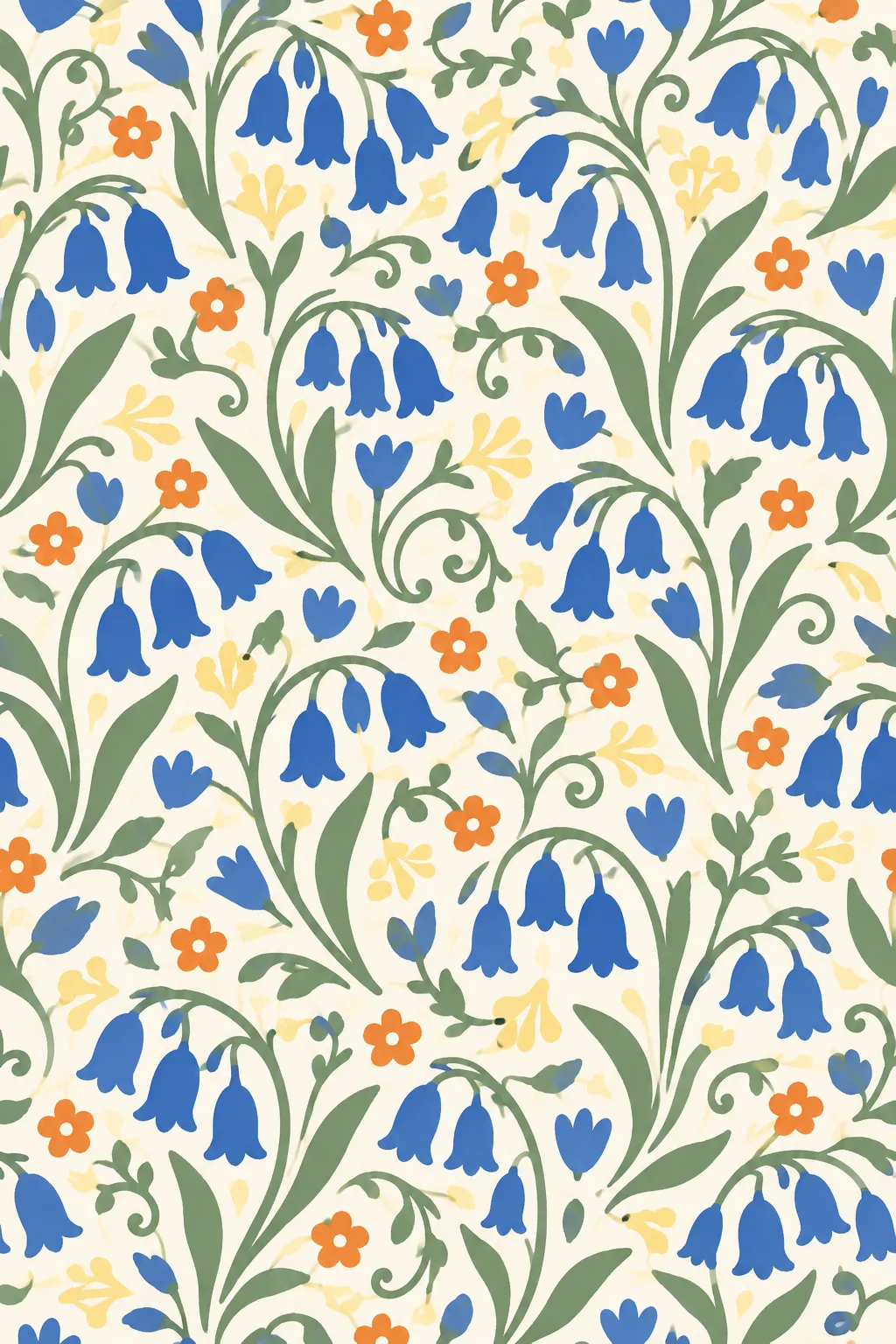
Pick a flower and colors to get a seamless modern botanical pattern of flat flowers and leaves.
What you get
- One seamless botanical pattern
- Flat flowers and leaves in three or four bright colors
- No text
ChatGPT Free OK
Fill in the fields
- 1Fill in the fields
- 2Copy the prompt
- 3Paste it into a GPT chat
- 4Send it as is and you get an image like the thumbnail example
- 5Attach a real photo that fits the card and it is used in the result: a background photo for background cards, a person or food photo for those cards Optional
Full prompt 3,981 characters
Generate this image now. Draw it directly - do not describe it, explain it, or ask questions.
Output size 1080x1920 pixels, 9:16 portrait story. Keep all text inside the central 80% of the height.

Create one modern seamless botanical pattern tile suitable for wallpaper, wrapping paper, or fabric. Fill the entire image with repeating flat botanical shapes. Use the requested dimensions, with a vertical composition by default, and make all four edges join seamlessly.

BOTANICAL selected: "【Flower】"
Interpret only the selected choice:
- Bluebells: Drooping bell-shaped blossoms grouped along curved stems, with long sweeping leaves.
- Tulips: Upright cup-shaped tulip blossoms, softly pointed petals, and broad curved leaves.
- Cherry blossoms: Small five-petal cherry blossoms, bud clusters, and fine branching twigs with occasional leaves.
- Lavender: Slender lavender flower spikes made from small clustered florets, with narrow leaves and curved stems.
- Daisies: Open daisy flowers with rounded central disks, radiating petals, and loose leafy stems.
- Monstera leaves: Broad split monstera leaves with characteristic cuts and natural holes, accompanied by curling stems and smaller leaf silhouettes.
If this selection line is missing or empty, use Bluebells only.

COLOR selected: "【Colors】"
Interpret only the selected choice:
- Blue and orange: Blue and orange as the dominant botanical colors, supported by muted sage and pale yellow; use at most four botanical ink colors.
- Pink and purple: Pink and lavender-purple as the dominant botanical colors, supported by muted sage and pale peach; use at most four botanical ink colors.
- Green and yellow: Fresh green and warm yellow as the dominant botanical colors, supported by dark olive and pale mint; use at most four botanical ink colors.
- Black and white: Black and white botanical shapes with optional gray accents only; use no chromatic colors.
If this selection line is missing or empty, use Blue and orange only.

BACKGROUND selected: "【Background】"
Interpret only the selected choice:
- Cream: A uniform warm cream ground with no gradient or lighting variation.
- White: A uniform clean white ground with no gradient or lighting variation.
- Deep navy: A uniform deep navy ground; use sufficiently light botanical colors for clear contrast.
If this selection line is missing or empty, use Cream only.
When the monochrome palette is selected, keep the background achromatic: map cream or white to white, and deep navy to black.

SPACING selected: "【Spacing】"
Interpret only the selected choice:
- Dense: A dense all-over arrangement with interwoven stems, frequent blossoms or leaves, and small balanced gaps.
- Airy: A moderately spaced all-over arrangement with generous breathing room, while retaining repeated motifs across the entire tile.
If this selection line is missing or empty, use Dense only.

Use organic flat silhouettes, gently irregular hand-cut edges, varied motif sizes, rotated clusters, curved stems, and small supporting petal or leaf forms. Preserve the selected botanical type as the dominant motif. Avoid a central bouquet, isolated emblem, heavy outlines, gradients, dimensional shading, and photographic texture.

Ensure exact opposite-edge continuity: shapes crossing the left edge continue at the same vertical position on the right; shapes crossing the top edge continue at the same horizontal position on the bottom. Match contours, colors, and background tone at every join, including the corners. No frame, border, blank margins, visible repeat grid, or mockup.

No text of any kind. No logos, signatures, or watermarks.
The choice names in this prompt are internal labels only; never print them as text.

[Final output format]
Output size 1080x1920 pixels, 9:16 portrait story. Keep all text inside the central 80% of the height.
This selected output format takes priority over any fixed canvas size or aspect ratio elsewhere in this template. Adapt the composition, text zones and margins to the selected canvas without stretching or cropping essential content. Device safe areas apply only when a device is selected. Never print these format instructions on the image.
How did it turn out?
You may also like
- 344Tiny worlds inside objects — a village in a teacup, glass jar or walnut shell
- 334Forest spirit fantasy — meet a glowing stag or wolf spirit in a night forest
- 328Cinematic winter animal portrait — a fox, snow leopard or your dog in a coat on snowy mountains
- 322Retrofuturism collage — cut-out astronauts and race cars with planets and orbits
- 310Bookish dreamscape wallpaper — bookshelf canyons, a sea over an open book, glowing lanterns
- 304Romantic dreamscape wallpaper — music, flowers and waves swirling on black
How to use it · FAQ
When to use it
Use it when you need a floral phone wallpaper, wrapping paper, fabric or sticker mockup: simple flat flowers and leaves repeated across the image. The prompt asks for all four edges to join, so tiles can be placed side by side. AI images are not always perfectly seamless, so place two copies next to each other and check the join before you use it.
Filling in the fields
Just pick a flower. Colors, background and spacing default to blue and orange, cream and dense.
FAQ
- Fabric printing? Upscale first and ask the printer to treat it as a repeat pattern.