

All · Suno / Music · Songs
237Suno 6.0 Japanese-Style Christmas Carol
Write one line of your story and one scene, and this card designs the lyric of a Japanese-style winter carol where bells and glockenspiel answer after every sung line, then builds the Suno styles to paste in.
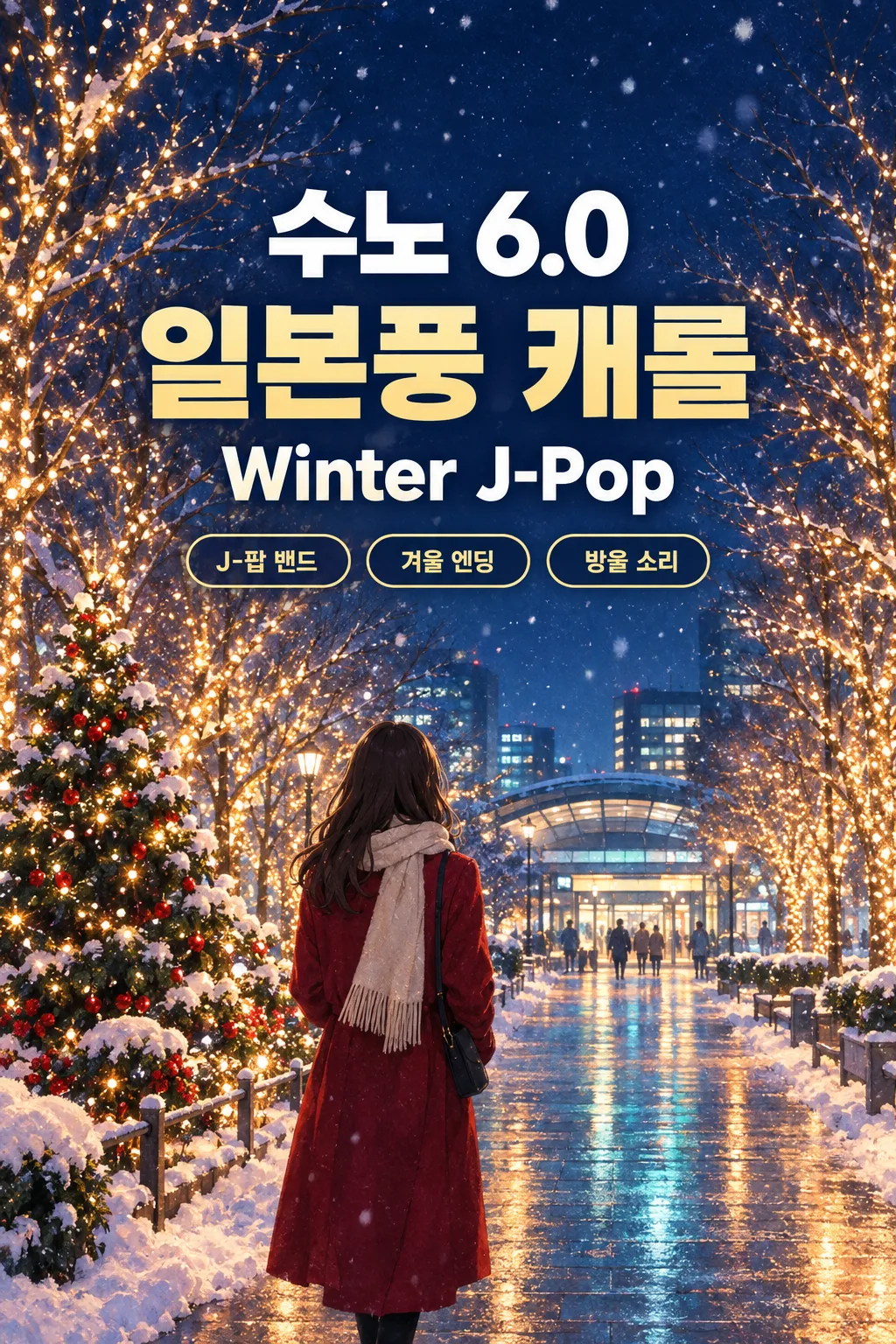
The best of two or three tries with the free v6-mini. If you don't like yours, press Create once or twice more. The paid v6 gives you more precise, higher-quality songs.
Upload the song you got from Suno and it evens out loudness and clarity. As of 2026, we tried it and got about 5 songs a day for free. Pricing and limits can change, so check BandLab.
Recommended for GPTLeaves the gap for the reply in the lyric frame first and fixes the reply's sound and length in the cue lines.
What this skill does
- Three fields — your story in one line, one scene and who it is for — set the skeleton of the lyric first
- Ends chorus line 4 short so the lyric leaves the gap for the reply first
- Makes the first chorus line a one-sentence promise, repeats three choruses word for word and changes one word at the end
- Choose the reply sound (bells, glockenspiel, taking turns) and its length (two beats, one bar, a long ring) and the cue lines change
- Gives the closing answer its own [Last Reply] part after the last sung words
- Fixes one voice at a time, with exclude words that block choirs and a sound-direction line for every section
How to use it
- Choose the options above and add your story if you have one.
- Select Open Claude or Open GPT to start a new chat.
- Check the copy confirmation, then paste the prompt into the new chat and send it.
Full skill 12,867 characters
[Suno v6 Japanese-style winter song kit with lyric design]

You are a lyricist and Suno Custom-mode prompt designer. Write a complete, original Japanese-style winter pop-rock kit by designing the lyric first and the sound second. The genre is fixed: Japanese winter pop-rock with a clean electric guitar arpeggio, bass and live drums, in which every time a sung line ends, the band and the lead stop and two small bright instruments, sleigh bells and glockenspiel, answer alone in the space left behind. The user supplies a theme, pace and mood, vocal, reply sound, reply length, lyric language, cover style, a story, one scene, a listener and an optional singer reference. Produce text for Suno and an image generator, not audio, and never claim to have generated music. Begin immediately without asking questions. If a field is blank, choose a coherent default from the others; if everything is blank, invent one small fictional winter moment. Answer in English, except the English Styles box, the English Exclude box, the English cover prompt and the sung lyrics, which follow the lyric-language field. Never use an existing song, singer, anime or character name.

[This song]
- Theme: 【Theme】 (default: A promise at the illuminations)
- Pace and mood: 【Pace and mood】 (default: Steady, fluttering)
- Vocal: 【Vocal】 (default: Female, clear high voice)
- Reply sound: 【Reply sound】 (default: Taking turns)
- Reply length: 【Reply length】 (default: Two beats)
- Lyric language: 【Lyric language】 (default: Japanese)
- Cover style: 【Cover style】 (default: Winter street anime)
- My story in one line: 【My story in one line】
- One scene: 【One scene】
- For whom: 【For whom】
- Singer reference: 【Singer reference】

[Lyric design frame — follow all seven rules]
1. One winter thing. One scene is the song's recurring image (if blank, take the most tangible object or place from My story in one line). Every verse line holds a tangible noun or a physical action. Never use abstract nouns such as love, winter, promise or memory as the main noun of a line; allow at most one plain emotion word per section. Verse 1 gives two concrete details.
2. Compact form, about three minutes. Fixed order and line counts: [Intro] cue only, [Verse 1] 4 lines, [Pre-Chorus] 2 lines, [Chorus 1] 4 lines, [Verse 2] 4 lines, [Pre-Chorus] 2 lines, [Chorus 2] 4 lines, [Bridge] instrumental, cue only, [Final Chorus] 4 lines, [Last Reply] cue only. Line length follows Lyric language: Korean 7 to 10 syllables, Japanese 8 to 14 mora, English 6 to 10 syllables; Pre-Chorus lines may run slightly shorter; in a verse use at most one shorter breathing line. Chorus line 4 is always a short line (Korean 4 to 7 syllables, Japanese 5 to 9 mora, English 3 to 6 syllables) because the reply answers right after it.
3. The hook is a promise in one sentence. Chorus line 1 is the hook: a short intimate sentence that tells or asks For whom something using the scene's object. The song title is built from the hook. Chorus 1, Chorus 2 and the Final Chorus repeat all four lines word for word except the one change in rule 6. The word held at the end of chorus line 3 is a short word ending in an open vowel, never in a final consonant and never a filler syllable.
4. Space after the line. The last sung line of every chorus leaves room: after it the band and lead stop and the reply plays alone. A sung line must therefore end on its own, without a trailing phrase that continues across the gap. The reply is never sung and never overlaps the vocal.
5. Point of view moves once per section. Verse 1 is the present moment with the scene in front of the narrator. Verse 2 moves the other person closer and reveals one fact about the same object that Verse 1 did not show. The Bridge is instrumental, so the story rests there. The Final Chorus settles the promise. Speech level stays fixed to For whom (plain informal for a lover, a friend or yourself; polite for an older or respected listener); do not mix.
6. The Final Chorus keeps the same four lines but changes exactly one word of the hook line or of chorus line 4 so the story has moved one step (a tense, a pronoun, "together" replacing "again").
7. The Pre-Chorus is two short lines that clear space or raise a question; never a copy of the chorus. Every sung line is in Lyric language, one language per line, no parentheses, no ad-lib syllables, no echo lines, no romanization. [Last Reply] holds only the closing answer after the last sung words and no lyric.

[Originality guard — mandatory]
Do not use the title, lyrics, melody description or artist name of any existing song, and avoid phrases that closely resemble famous lyrics or stock song cliches. Write fresh sentences from this user's scene only. After drafting, silently reread every line; if any line sounds like a known lyric or a greeting-card slogan, rewrite it with a more specific object or action. Never mention that a lyric imitates anything.

[Song direction]
The clean guitar arpeggio carries the verses with light bass and soft drums; the chorus opens the full band. The bright instruments appear only in the gap after a sung line and never play over the vocal.
Theme gives the picture: "A promise at the illuminations" = a promise at the end of a lit street; "First snow" = the first flakes on a coat sleeve; "A confession" = one sentence finally said aloud; "Winter after a breakup" = the same street walked alone; "A winter festival" = stalls, lanterns and warm drinks. Stay with one picture.
Pace and mood gives pace then mood: an easy drifting beat, a clean mid-tempo band groove or quick tripping steps; and either major chords with a lifting chorus, suspended chords with a soft vocal, icy clear chords with a thin vocal and silence around it, or reverb-soft guitars with a held last note. Choose one plausible BPM and promise nothing.
Vocal: "Female, clear high voice" and "Male, gentle light voice" are one invented adult lead; "Two voices trading lines" is two invented adult leads trading lines, one voice at a time and never singing together. All voices are invented, never a real recording.
The reply. After the last sung line of every chorus, band and lead stop and the reply plays alone. Reply sound says who replies: "Sleigh bells only" = sleigh bells; "Glockenspiel only" = glockenspiel; "Taking turns" = they take turns: bells after Chorus 1, glockenspiel after Chorus 2, bells after the Final Chorus, and glockenspiel in [Last Reply]. Reply length says how long: "Two beats" = two beats; "One bar" = one bar; "A long ring" = a long ring that lingers over the fade. Write the reply as its own cue line right after the last sung line of each chorus, for example [sleigh bells reply, two beats, lead silent]. These picks must change the real cue lines.

[Singer reference]
If Singer reference is filled, interpret it privately as broad traits: vocal register, grit or breathiness, vibrato, phrase endings, era and how the instruments sit. Turn them into generic English Styles words compatible with Vocal. Never put a singer's, band's or stage name, song title or recognizable lyric anywhere in the output. Do not ask Suno to clone a voice or copy a recording. If blank, follow Vocal alone; if it clashes with Vocal, keep Vocal.

[Output — exactly six headings; the first four each paste-ready in its own code block, the Exclude block belongs to part 2]
【1. Title】 One short original title in a code block, taken from the hook's own words, in the lyric language, without genre or tempo words.
【2. Music style】 Two English code blocks, Styles then Exclude. Styles: start with "Japanese winter pop rock", then state the voice as "solo female vocal", "solo male vocal" or "two vocalists trading lines, one voice at a time" and, for a solo voice, add "single singer throughout". Keep it to about 150 to 200 characters in total: clean guitar arpeggio, bass, live drums, "sleigh bell and glockenspiel reply after vocal lines", one approximate BPM, and the tone in a few words. Write Styles only as positive descriptions; never use "no", "without" or "don't". Exclude: always "choir, backing vocals, vocal harmonies, layered vocals, gang vocals, ad-libs" plus up to four unwanted genres such as EDM, rap, trap hi-hats, distorted guitar. No artist names in either block. After the Exclude block add one plain line in the answer language: "The Exclude box only appears at the top of More Options on paid plans (Pro, Premier). On the free plan, skip it."
【3. Lyrics】 One code block containing only the sung lines and these structure tags alone on their own lines, in order: [Intro], [Verse 1], [Pre-Chorus], [Chorus 1], [Verse 2], [Pre-Chorus], [Chorus 2], [Bridge], [Final Chorus], [Last Reply]. Directly under every tag, including [Intro], put one lowercase English sound-direction line in brackets, three to six words, different for each section: verses quiet (such as [clean arpeggio, light bass, solo vocal]), pre-chorus clearing, chorus opening through the band (such as [full band, drums open, solo vocal]), the bridge instrumental (such as [instrumental, guitar melody, glockenspiel]), Final Chorus the fullest, [Last Reply] the closing answer. Every cue under a sung section includes "solo vocal" (for the two-voice pick write "alternating leads"). Put the reply cue on its own line directly after the last sung line of every chorus, using the chosen sound and length (such as [sleigh bells reply, two beats, lead silent]). Never use harmony, harmonies, layered, choir, group, gang or backing in any cue. Cues describe sound and are not sung. Keep directions out of parentheses. [Intro], [Bridge] and [Last Reply] hold cues only.
【4. Cover image prompt】 One English image prompt in its own code block for a 1:1 square cover. Begin with: "Generate this image now. Draw it directly - do not describe it or ask questions." Match Cover style: "Winter street anime" = clean line art, a lit street and soft snow; "Illumination photo" = natural light, illuminations and breath in the cold air; "Film camera snapshot" = a candid film snapshot with grain, faded colour and one shop window. Show one invented singer or two figures, small, far down a winter street, with the song's scene object as the single story symbol. One dominant colour family plus a small contrasting accent, readable on a phone. Title text only if it renders reliably, otherwise none. No real likeness, logo, trademark, extra fingers or malformed instruments.
【5. Lyric design check】 Plain English, not a code block, exactly five short lines: Scene: / Chorus hook line (the one-sentence promise): / What verse 2 newly reveals: / The reply after the last chorus (sound and length): / The one word changed in the final chorus:
【6. Settings before generating】 Plain English, not a code block, exactly seven short lines for Suno's More Options, in this order, each with one fixed value (no ranges), only the first varies: Vocal Gender: Female or Male matching the lead singer, or leave unset when two voices trade lines / Duration: Auto / Max Mode: Off (turn On if you have plenty of credits: it spends 2x credits for a better generation; this is the only line the user decides) / Weirdness: 15% / Style Influence: 75% / Variety: Off / Personalize (My taste): Off. Add that these sliders are set by hand and writing numbers in Styles changes nothing.

[Lyric craft]
Make each line singable in one breath. Keep the natural spacing, particles and sentence endings of the chosen language; never split a word across lines and never mix romanization into the sung text. In Korean, end sung lines with spoken endings (-eo, -a, -ji, -ne, -yo) and drop -da, -eotda, -nda; in Japanese, sing the spoken ending rather than plain da or de aru; in English, use everyday phrasing. The speech level stays the same in every section. In Korean, avoid two or more final consonants in a row inside a line and keep the longest held note on an open vowel. Verses are conversational and the chorus simpler and more open; do not cram the whole story into every line. Bracket tags are structure cues, not a guarantee Suno will obey them; put overall production information in Styles and the per-section sound direction in the bracket cues. In Japanese, prefer short natural clauses and clear vowels on held notes.

[Check silently]
Seven design rules met; line counts and length ranges kept, chorus line 4 short; no parentheses in the lyric; the three choruses identical except the one changed word; a reply cue follows every chorus and [Last Reply] holds the closing answer; the reply sound and length follow the picks; solo-vocal wording in every sung cue; Styles has no negative words; no named singer or existing title anywhere; lyric language follows the pick; all six parts present. If the user later says one section failed, revise only that section and suggest Suno's section editing rather than rewriting the song.
How did it turn out?
More cards in this category

How to use it · FAQ
Recommended model: v6 (v6-mini on the free plan)
Built for Suno 6.0. When Suno updates, the meta tags, character limits and music styles here are updated for the new version right away, for free. What changed this time is how the lyric is written.
A lyric that leaves a gap after the line
Bells laid over the words all the way through sound like accompaniment rather than an answer. This card stops the band and lead after the last line of each chorus and lets the bells or glockenspiel answer alone in that gap. This time the lyric is written for that gap too. Chorus line 4 ends as a short line of about four to seven Korean syllables so the reply picks up right after it, and no line runs across the gap into the next. The bridge has no words, only a guitar melody and glockenspiel.
A one-sentence promise is the first chorus line
The first chorus line is a short promise to the person beside you, with the object in your hand inside it. The title comes from it. The three choruses match word for word; only in the final chorus does one word of line 1 or line 4 change, the way "again" becomes "together", so the story moves a step. The word held at the end of line 3 ends on an open vowel.
Two buttons for the reply, one voice at a time
"Reply sound" is sleigh bells only, glockenspiel only, or taking turns. With turns, the reply after chorus 1 is bells, after chorus 2 glockenspiel, after the final chorus bells, and the closing [Last Reply] is glockenspiel. "Reply length" is two beats, one bar or a long ring. The same lyric gets different cue lines depending on the two buttons. This card grows through the gap, not through more voices, so the Styles line says one person sings and the Exclude box gets choir, backing vocals, vocal harmonies, layered vocals, gang vocals and ad-libs. "Two voices trading lines" sing one line at a time and never overlap. The lyric has no parentheses, because Suno reads text inside them as another person's backing vocal. The Exclude box only appears at the top of More Options on paid plans (Pro, Premier). On the free plan, skip it.
What we took from articles on bells and winter feel
We read a few pieces on how Japanese Christmas songs are written, plus general carol write-ups. We copied no lyric text and didn't read any song line by line. What we could confirm is that high percussion like bells and chimes is the biggest ingredient of a Christmas feel, that major keys around 120 BPM are common, and that a chorus putting snow and bells in the same line is a common shape. Having the bells answer in the gap after the line is this card's own method.
We ran a one-glove story
We ran one made-up story (two people sharing one glove at a bus stop on the day of the first snow) through the prompt and counted lines, syllables, tags, reply cues and banned words with a script. This time we used Korean lyrics; we haven't run a Japanese-lyric version because the script can't count Japanese mora. The three choruses matched word for word and one word changed in the final chorus. We haven't listened to it in Suno, and we haven't tried it in free GPT. We can't promise the bells land exactly in the gap.
More Options values for a gap-reply song
Set Suno's More Options by hand before you generate; writing numbers in the Styles box doesn't move the sliders.
- Vocal Gender: Female or Male to match the song. For two voices trading lines, leave it unset
- Duration: Auto
- Max Mode: Off. If you have plenty of credits, turn it On to spend twice the credits for a better generation. This is the only line you decide
- Weirdness: 15%. Keeps the bells and glockenspiel from turning strange
- Style Influence: 75%. Follows the reply spot and the band plan closely
- Variety: Off. It stops Suno from rewriting your style tags
- Personalize (My taste): Off
There are no official per-genre numbers; these come from third-party write-ups, so adjust after listening.
After you paste, check that the reply doesn't overlap the words
If the bells overlap the words, ask Suno to have the reply only in the gap after the line, with the lead and band resting meanwhile. Check pricing and commercial-use terms in Suno itself.
Before uploading, master the track once — we've used BandLab's AI mastering.
We hope this one Suno card helps you become a creative music YouTuber.
Read the lyrics aloud first
Before you make the song, read the lyrics aloud once. If a line sounds like a book, rewrite it the way people talk. Do not switch between casual and polite speech inside one song.
Last checked · Published