
すべて · SNS投稿 · 季節・行事 · お店のストーリー
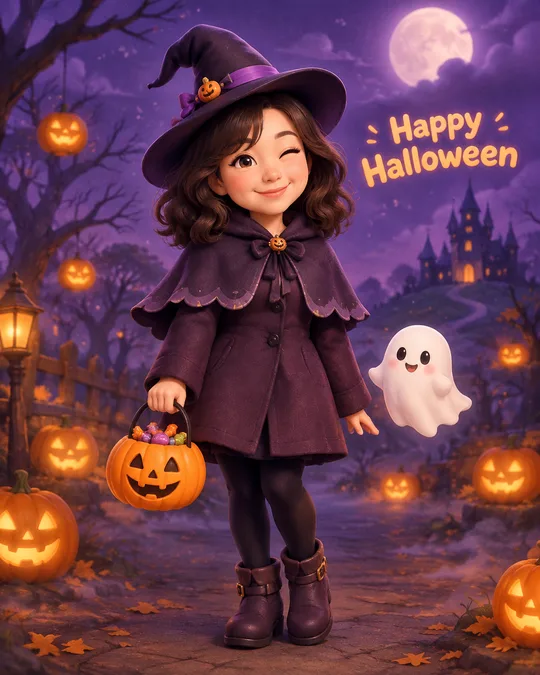
273うちの子のハロウィンフォト — 手編みのかぼちゃ・ちびおばけ・黒猫の仮装
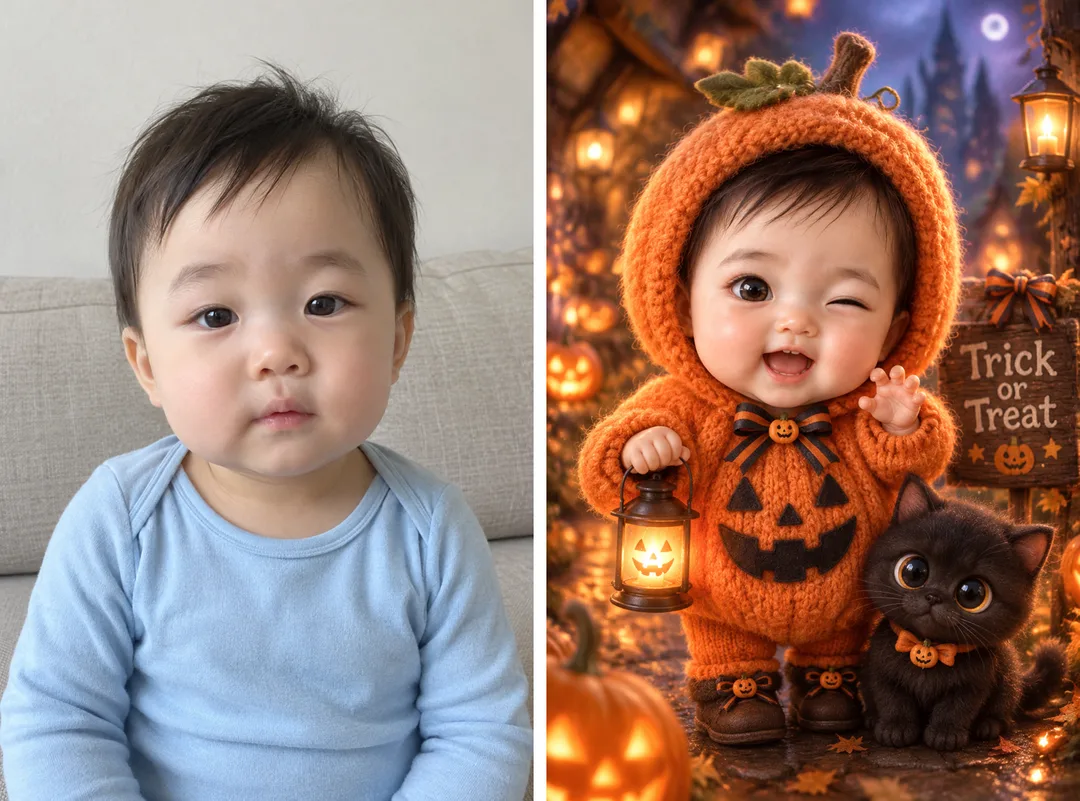
子どもが手編みのハロウィン衣装を着た人形のようなフィギュア風になり、ろうそくとかぼちゃランタンの路地でウインク。写真館のような記念写真です。
ChatGPT 無料 OK
項目を入力
- 1項目を入力します
- 2プロンプトをコピーします
- 3GPTのチャットに貼り付けます
- 4そのまま送ると、サムネイルの例のような画像になります
- 5子どもの写真一枚(任意)をプロンプトと一緒に入れると、その写真が反映されます 任意
プロンプト全文を見る 10,800文字
Generate this image now. Return exactly one finished semi-realistic collectible-doll-style Halloween child portrait with large glassy eyes and glowing cinematic bokeh; draw it directly without explanations, code, plans, or questions.
完成した2:3の縦型画像を1枚、1024×1536ピクセルで出力してください。重要な文字は上12%と下15%に置かないでください。
PHOTO RULE (this overrides any other line in this prompt, before or after it, that calls the photo required or mandatory or says to ask for it): if a photo is attached, use it exactly as the instructions below describe. If no photo is attached, never ask for one and never stop — invent a fitting fictional subject (person, pet, food, product or place, whatever this card is about) in the spirit of the card's example image, and finish the image.

[Resolve these controls before designing the scene]
COSTUME = "【仮装】".
POSE = "【ポーズ】".
SIGN_TEXT = "【看板の文字】".
CHILD_NAME = "【子どもの名前】".
COMPANION = "【そばにいる友だち】".
Interpret choices by their meaning in the user's language. Choose exactly one COSTUME. A blank value or absent optional line defaults to a hand-knitted pumpkin COSTUME, winking with a playful little roar POSE, "Trick or Treat" SIGN_TEXT, no CHILD_NAME, and one black cat COMPANION. An explicit none choice omits that feature. Any "おまかせ", "おまかせ", or choose-for-me value is a selection command, never printable text: choose a concrete fitting option before drawing. Automatic sign text uses "Trick or Treat"; automatic name omits the name tag. Each resolved value governs its feature throughout; do not blend several costumes or restore an unselected default.

[Fixed semi-realistic doll and figurine aesthetic]
Render a charming original child as a finely crafted collectible art-doll figure brought to life in a glowing Halloween storybook editorial. This is deliberately stylized semi-realism, not a documentary photograph of a real child. Use a visibly enlarged rounded head, petite short limbs and a compact toddler body, approximately three to three-and-a-half head lengths tall when standing. Give the child very large luminous glass-like eyes with broad reflective irises, delicate dense lashes, a tiny softly modeled nose, small pink lips, plush round cheeks and an expressive little smile. If POSE is winking, the open eye retains the same large glassy scale. Skin is smooth hand-painted porcelain-like shading with subtle rosy gradients and soft translucent light, not photographic pores or hard shiny injection-molded plastic.

Combine these doll-like proportions with exquisite dimensional hair, fuzzy fabric, tiny costume details and realistic light transport. Use delicate fine wisps of hair and soft face modeling; no visible joints, seams, stands, packaging or toy-product presentation. Avoid flat cartoon proportions or a broad 3D animated-film mascot design. The finish is an intimate, finely rendered fantasy figurine portrait with photographic depth of field and light, while the child's face and body remain unmistakably stylized.

[Child-photo identity translated into this medium]
The first attached child photo is the identity reference. Preserve recognizable eye shape and spacing, brows, nose and mouth character, cheeks, skin tone, distinctive marks, hairline, hair color, hairstyle and apparent age while translating them into the larger-eyed art-doll proportions above. Do not lock the result to photographic facial scale or real-skin texture. Keep likeness through characteristic features rather than copying a style-reference doll's exact face. Use the reference for identity, not its original outfit, pose or background. If several people appear, select the most prominent child and draw one human subject. Without a child photo, invent one original fictional child aged three to five with an individual doll-like face and finish immediately. No celebrity or existing character likeness.

[One soft handmade costume]
Build an opaque fully covering seasonal outfit from fine knit underlayers, airy fuzzy boucle or mohair pile, plush fleece, soft felt, gauzy trim over opaque fabric and delicate original ribbon details. The visible textile signature is small irregular loops, fine glowing fibers and fluffy embroidered surfaces, not oversized rigid cable stitches. Add comfortable opaque leggings and closed boots or shoes; chest, shoulders, torso and legs stay covered in every pose. Hood framing should be large and soft around the doll-like face, with believable fine hair escaping its opening.

Pumpkin COSTUME is a plump orange fuzzy hand-knitted hooded tunic with original simple jack-o'-lantern felt motifs, a little green leaf accent and small black-orange ribbon details. Little ghost cape is an ivory fluffy hooded cape over a complete outfit, with a friendly original felt ghost motif and softly trailing translucent trim only over the opaque base. Black cat hood is charcoal plush with small pink-lined fabric ears, a generic embroidered cat motif and cozy clothing. Little witch is a soft pointed hat and long-sleeved knitted tunic with opaque leggings. Bat wings are small soft felt wings on a fuzzy fully covering hooded outfit. Mini vampire is a neat knitted vest, long sleeves, trousers and a short soft cape. Keep only the chosen design; ivory stays ivory and black stays black under amber light. No licensed character, recognizable costume brand or copied signature ornament arrangement.

[Playful selected pose and companion]
Follow POSE with an asymmetrical, relaxed playful gesture. Winking with a little roar means a gentle wink and one lifted small paw-like hand, with the other hand naturally relaxed or holding a small enclosed lantern; avoid two stiff identical raised palms. Lantern-and-smile means holding one small glowing enclosed lantern with a delighted doll-like smile. Crouching-for-candy means a compact balanced crouch beside a plain candy pouch. Petting means a gentle hand touching the selected animal or plush; with COMPANION none, keep the soft crouched gesture without inventing a friend. Keep fingers, wrists, limbs, paws and contact coherent within the stylized proportions.

COMPANION is one featured friend: an original fluffy black cat with round glassy eyes, one small handmade friendly ghost plush, the family's dog, or none. For the dog use a second attached dog photo when supplied, retaining its species, coat colors, markings, ears and muzzle through the same finely rendered storybook medium; without it, invent a small dog. Do not turn a referenced dog into a cat. Place the friend beside the lower body, usually about a quarter to a third of the child's height, rather than making a foreground animal compete with the face. If the selected friend is the ghost plush, show that toy only once. None means no character-shaped companions or extra ghost figures.

[Dense enchanted Halloween lane and close portrait]
Create a richly layered autumn stone lane with carved glowing pumpkins, warm enclosed candle lanterns, dark aged wood, russet leaves, tiny original seasonal ribbons and distant crooked fantasy rooftops. A wholly invented softly blurred castle silhouette and one small cool moon can appear high in the background. Compose several depth planes: a softly cropped glowing pumpkin or lantern at the near edge, the child crisp in the middle, and many softly blurred lights and atmospheric silhouettes behind. Use original generic friendly seasonal decorations, with no violent or frightening scene and no real or fictional landmark replica.

Frame close enough for the hood and face to dominate: the child occupies roughly 75 to 90 percent of image height, with the large hooded head about 40 to 50 percent of image width. For a standing pose show costume and shoes with little empty margin; for a crouched or seated pose bring the expressive face and hands closer. Use a modestly elevated or near-eye-level portrait viewpoint and a slight natural diagonal tilt, avoiding a rigid straight-on catalog pose. Let the costume, lantern and small companion sit in a richly styled scene without a giant foreground sign blocking the child.

[Blooming candlelight, glossy eyes and soft textures]
Use warm amber, pumpkin-orange, copper and muted gold highlights against velvety brown-black shadows, with restrained cool violet-blue moonlight in the distance. Give the face soft warm fill and a thin cool rim through fine hair. Keep skin midtones faithful to the subject while stylizing the shading. Let candle and pumpkin highlights bloom strongly into soft halos and rounded bokeh, with tiny floating golden dust and delicate sparkling fiber tips. This luminous glow and shallow depth are defining features, not an evenly sharp studio exposure.

Keep the eye reflections, lashes, smile, hand contours and selected costume details precise inside the diffuse light. Fuzzy yarn and mohair edges catch small warm points; ivory fleece keeps soft gray-pink inner shadows, and black pile retains separated fiber tips. Make the moon and distant castle hazy rather than sharply outlined. Render softly reflective wet stone, wood grain and leaves where they matter, with natural contact shadows beneath the child. The materials feel exquisitely tactile around a painted art-doll face.

[Exact sign lettering and single finished artwork]
If SIGN_TEXT is not none, put it exactly once on a small aged wooden sign beside or just behind the child, approximately 20 to 28 percent of image width, facing the viewer enough to read. Keep it subordinate to the hood, face and costume. Copy its original language, capitalization, spaces and punctuation verbatim, with no translation, paraphrase or added quote marks. If CHILD_NAME is supplied as real text, place that exact name on a smaller tag beneath the sign; otherwise omit the name tag. If SIGN_TEXT is none, omit the main sign. Only these supplied words may appear; never print menu commands, variable labels or random lettering.

Follow the requested ratio, defaulting to vertical 2:3. Deliver a complete new semi-realistic doll-style child illustration with cinematic Halloween light, fluffy costume and abundant bokeh. No real-child photographic rendering, toy packaging, visible doll joints, source-photo panel, comparison layout, marketing title, search bar, carousel dots or arrows, artist signature, watermark, celebrity, existing character, trademark, logo or branded merchandise. Borrow only the style reference's general proportions, rendering, lighting, color, composition grammar and material treatment, and invent the face and scene details afresh.

[Final output format]
完成した2:3の縦型画像を1枚、1024×1536ピクセルで出力してください。重要な文字は上12%と下15%に置かないでください。
This selected output format takes priority over any fixed canvas size or aspect ratio elsewhere in this template. Adapt the composition, text zones and margins to the selected canvas without stretching or cropping essential content. Device safe areas apply only when a device is selected. Never print these format instructions on the image.
結果はどうでしたか?
こちらのカードも人気です
使い方・よくある質問
こんなときに
写真館で撮ったようなハロウィンの記念写真です。ろうそくとかぼちゃランタンが光る路地で、手編みの仮装をした人形のような子どもがウインクして「ガオー」。
項目の入れ方
仮装を一つ選ぶだけです。名前を入れると小さな木の看板に入ります。
写真を入れると(任意)
写真なしなら表紙のように架空の人物で描きます。自分に似せたいときは:
① 顔がよく見える写真をアップ — まだ送りません
② 同じ欄にプロンプトを貼り付け
③ 両方入ったのを確認して送ります
確認すること
- 顔がうちの子に似ていますか?
- 指は自然ですか?
直したいとき
同じ会話で「仮装をちびおばけに」のように頼んでください。
よくある質問
- 子どもの写真は大丈夫? 公開SNSより家族のチャットやプリントで使うことをおすすめします。