

298モダンな植物パターン — 途切れずにつながる花と葉の柄(壁紙・包装紙・布)
花の茎で縦の列やひし形の格子を組む、平面の植物パターン。花と葉の形、茎の間の小さなモチーフを指定できます。
受け取れるもの
- モダンな植物のリピート図案一枚
- 平面の花と葉、選べる茎の骨組み
- 文字なし
ChatGPT 無料 OK
項目を入力
- 1項目を入力します
- 2コピーを押します
- 3GPTのチャットに貼り付けます
- 4そのまま送ると、サムネイルの例のような画像になります
- 5カードに合う実際の写真を一緒に入れると反映されます。背景カードなら背景の写真、人物・料理カードならその写真 任意
プロンプト全文を見る 2,624文字
Draw one edge-to-edge modern botanical repeat tile, a flat cut-paper illustration for phone wallpaper, wrapping paper and fabric sampling. Return the artwork itself at 出力サイズは1080×1920ピクセル、9:16の縦型にしてください。文字は中央の安全な範囲に収めてください。, default portrait 9:16.

FLOWER ANATOMY: 【花と葉の形】
STEM COMPANION: 【茎の間の小さな模様】
INKS: 【インクの組み合わせ】
GROWTH SCAFFOLD: 【茎の骨組み】

The defining device is a floral trellis grown from the plants themselves. Long continuous stems carry the supplied blossoms and alternating leaves. Their repeated routes, rather than isolated bouquets or a central emblem, organize the whole surface. Use the flower anatomy literally, with the companion shapes tucked into the spaces between stems. Keep companion marks subordinate and detached from the main stems.

Apply ONLY the matching GROWTH SCAFFOLD definition; disregard the unselected definition completely.
縦の花垣: long gently waving stems run bottom-to-top in parallel vertical lanes. Branches and flowers alternate to either side of each stem. Cream corridors separate the lanes; adjacent stems do not join sideways. The eye follows continuous upright plant columns, never enclosed cells.
ひし形の花格子: diagonal leafy stems connect at branching junctions to form a continuous diamond lattice. Flowers bloom on the junctions; cream diamond-shaped openings repeat between the connected stems. No upright parallel plant columns. This is a connected botanical network, not diamonds drawn behind unrelated flowers.

Flat blue blossoms, orange companion buds and sage leaves on a uniform cream ground unless INKS specifies alternatives. Limit botanical inks to three or four solid colors. Gently irregular hand-cut silhouettes and curved leaves, clean unshaded surfaces. No outlines, gradients, photography, texture lighting or depth. Preserve the same flower anatomy and inks in either scaffold.

Build a repeatable unit: any stem, leaf or flower cut by one edge must resume at the identical position, thickness and color on the opposite edge. Top and bottom continue the plant scaffold; left and right continue the lateral repeat. Keep the background uniform through every corner. No border, blank outside margins, display grid, sample book or mockup. No letters, labels, signature or watermark. Field values are visual instructions and must not be printed.

[Final output format]
出力サイズは1080×1920ピクセル、9:16の縦型にしてください。文字は中央の安全な範囲に収めてください。
This selected output format takes priority over any fixed canvas size or aspect ratio elsewhere in this template. Adapt the composition, text zones and margins to the selected canvas without stretching or cropping essential content. Device safe areas apply only when a device is selected. Never print these format instructions on the image.
結果はどうでしたか?
同じ分類のほかのカード





使い方・よくある質問
同じ青い花が縦の列から網目になりました
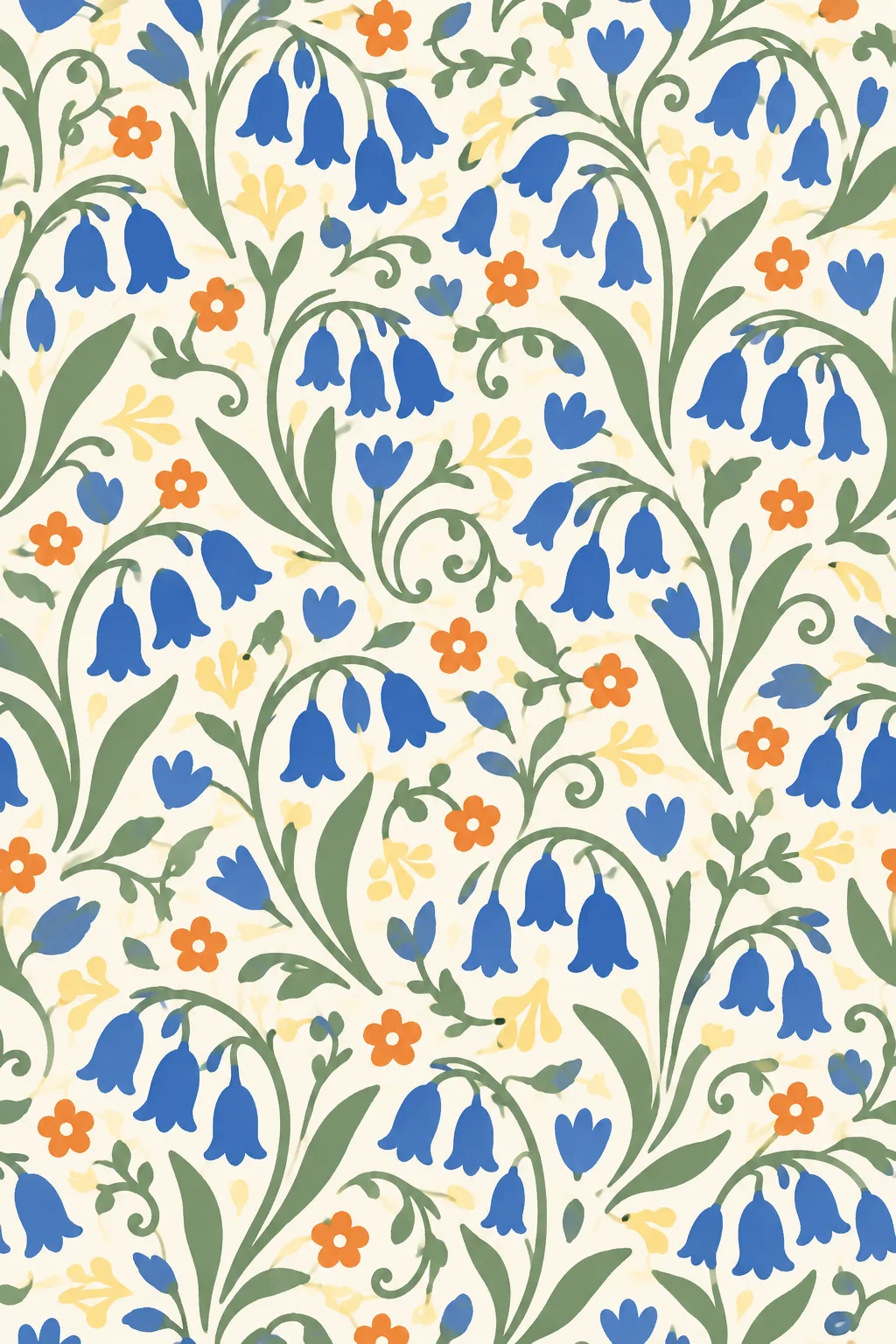
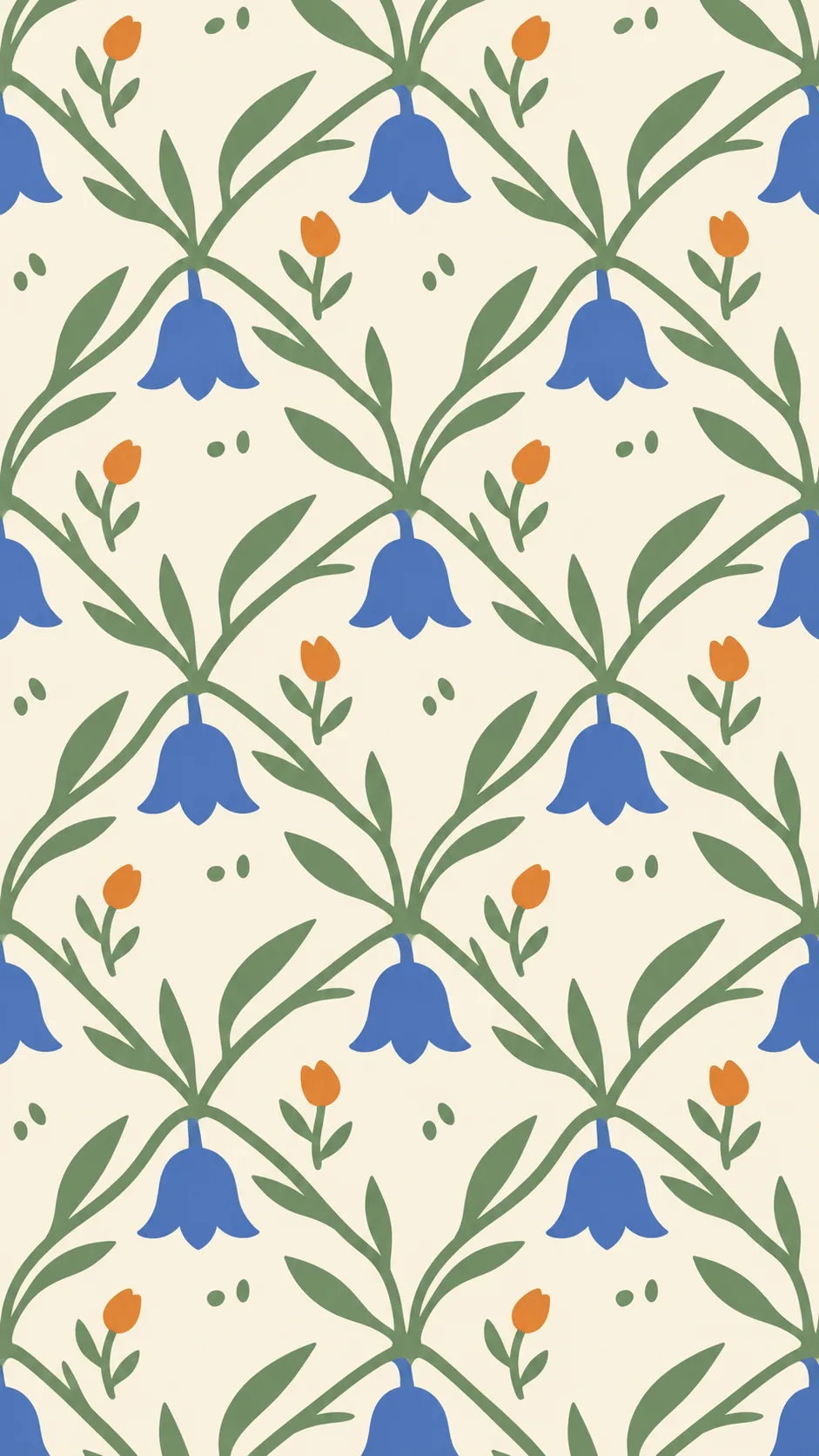
ブルーベルと先のとがった葉で二度描くと、長い茎が下から上へ伸び、間にクリーム色の通り道が残りました。「茎の骨組み」だけを「ひし形の花格子」に変えると、茎が斜めにつながり、地の部分がひし形の穴になりました。青い花とオレンジのつぼみはそのままで、目でたどる方向が縦から斜めに変わります。表紙と最初の作例は花垣、二つ目の作例は花格子です。
つぼみは茎につき、種は隙間に散りました
小さな模様は主な茎から離すよう指示しましたが、基本の二枚ではオレンジのつぼみが茎についていました。セージ色の楕円の種は茎の間に散り、格子の作例ではつぼみも独立した小枝のように描かれました。「茎の間の小さな模様」は補助の植物モチーフを決める欄です。すべてが一つずつ離れて描かれる保証はありません。花と葉には植物名だけでなく、「下を向く釣鐘形の花, 細長い葉」のように輪郭を指定できます。
リピートの骨組みと印刷用のつなぎ目
三枚とも繰り返しの構造は見えますが、上下の端にある茎の位置や切れた花の形は完全には一致しませんでした。四辺がつながるよう指示していても、そのまま量産用のシームレスデータとして扱わないでください。まず壁紙や包装紙の雰囲気を選び、連続する布地に印刷する前に、向かい合う端の茎と花を印刷会社と確認してください。実際の布への印刷やスマホへの設定は試していません。
最終確認日 · 公開