すべて · 漫画・イラスト · キャラクター · 人物
255マンガから歩き出したわたし — 実写の主人公とペン画のコマ
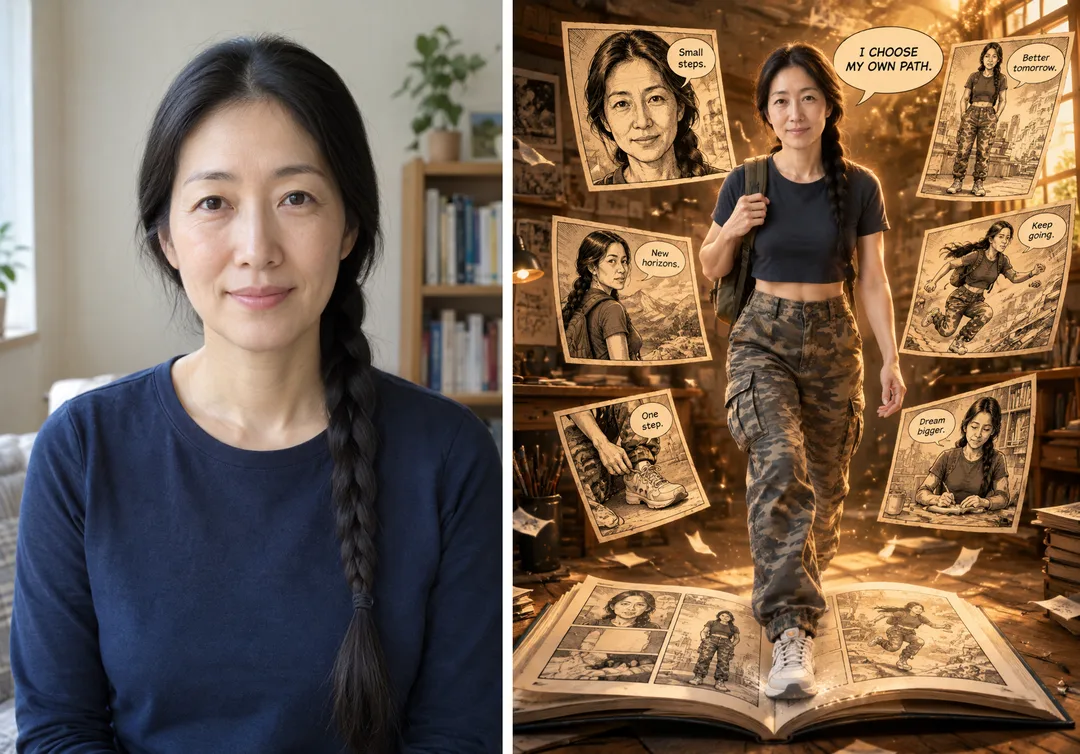
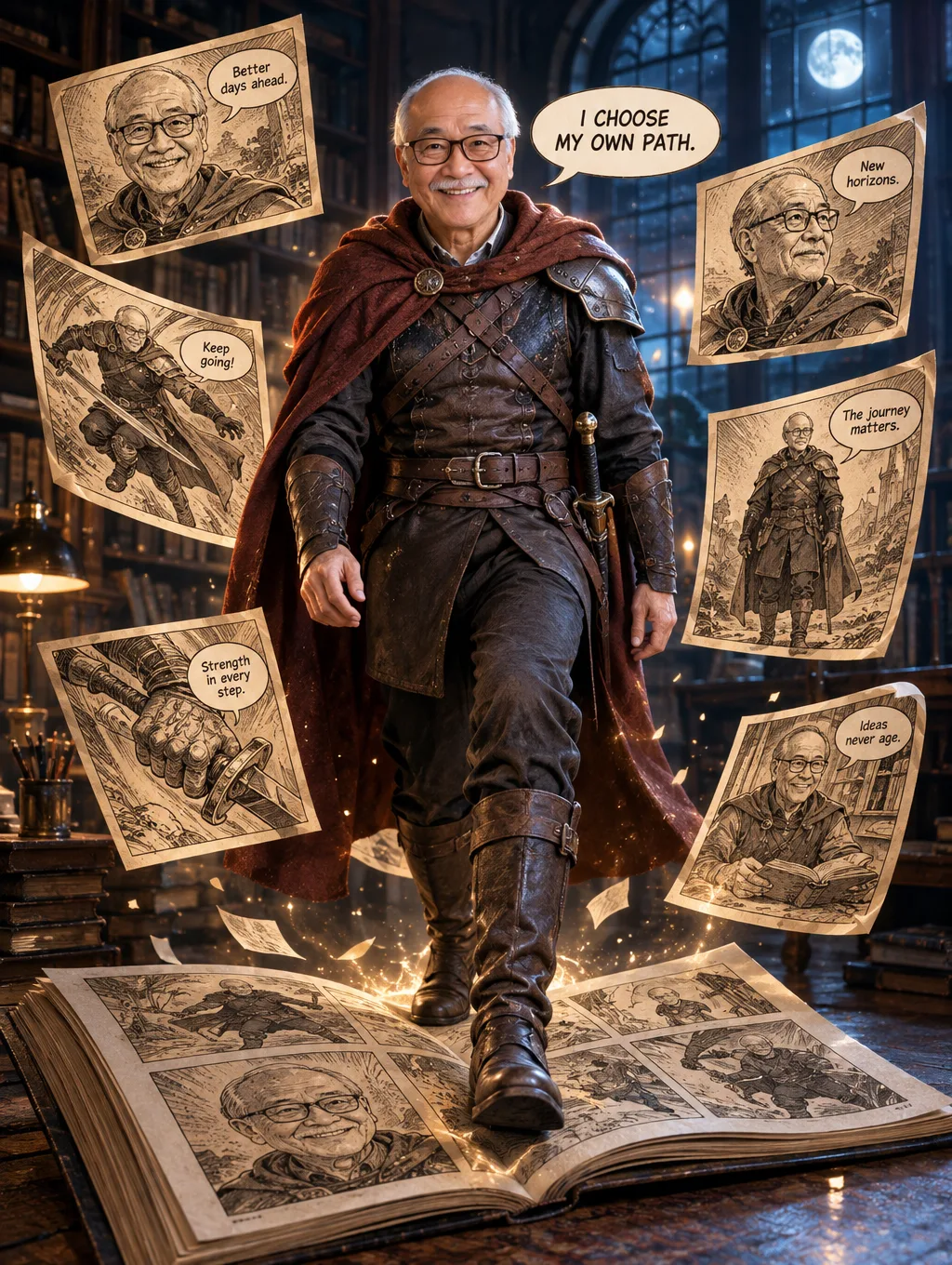
開いたマンガ本から実写の主人公が歩き出し、周りには同じ顔のペン画のコマが吹き出しと一緒に浮かびます。性別とスタイルを選ぶだけ。写真を入れれば自分の顔になります。
ChatGPT 無料 OK
項目を入力
- 1項目を入力します
- 2プロンプトをコピーします
- 3GPTのチャットに貼り付けます
- 4そのまま送ると、サムネイルの例のような画像になります
- 5自分の写真一枚(任意)をプロンプトと一緒に入れると、その写真が反映されます 任意
プロンプト全文を見る 12,146文字
Generate this image now. Render the finished image directly; do not explain it, describe a plan, or ask questions.
出力サイズは1080×1440ピクセル、3:4の縦型SNS投稿にしてください。
PHOTO RULE: If a photograph is attached, use its subject's identity in BOTH the central photoreal figure and every ink-drawn version in the surrounding panels and open book. If no photo is attached, invent an original fictional subject matching the selected subject type and finish immediately. Never ask for a photograph, pause for clarification, or replace a supplied face with a stock face. This rule takes precedence over any instruction that might otherwise require a reference.

[The image]
Create one cinematic full-bleed image of a photoreal protagonist emerging into a richly detailed room from a large open comic book on the floor, surrounded by floating, curved comic-paper panels. The defining visual contrast is the lifelike central subject versus ink-and-halftone drawings of THAT SAME SUBJECT on tangible paper. This is one continuous physical scene, not a split-screen comparison, flat collage, comic page layout, toy photograph or illustration of an illustrated person. Follow the requested aspect ratio; default to a vertical 3:4 frame.

SUBJECT_TYPE = "【性別】". Resolve this once: woman or man means exactly one human protagonist; couple means exactly two distinct people; pet means exactly one animal protagonist. If blank or automatic, choose one fictional adult woman. A couple photo supplies both identities; preserve their individual faces without blending them. If only one identifiable person is provided for a couple, retain that person and invent the other without asking. For a pet, use the attached pet's species, coat patterns, muzzle, ears and eye color, and carry those features into every drawing. With a group photo for a solo subject, use the most prominent person, breaking ties by proximity to the center.

WARDROBE = "【スタイル】". Resolve this into ONE complete original costume design, then reuse that exact design in the live subject, all floating panels and every visible book-page drawing. Street casual means a modest opaque cropped top, high-waisted camouflage cargo trousers and unbranded sneakers; fantasy warrior means detailed practical armor, boots and one sheathed sword; dark sorcerer means layered dark robes, a cloak and restrained arcane details; wuxia swordsman means flowing martial robes, a sash and one sheathed straight sword; cyberpunk means a layered technical jacket, utility trousers and subtle luminous trims; romance protagonist means refined contemporary layers and elegant footwear. A blank or automatic value defaults to street casual. For a couple, choose complementary outfits, then lock each person's design separately. For a pet, adapt the selected theme into a comfortable species-appropriate vest, cloak or harness; keep its body quadrupedal and its face uncovered.

[Defaults and named values]
The complete default scene has the protagonist stepping out of the book, an old comic artist's workshop, warm golden light and delicate golden sparks. The default PRIMARY_SPEECH is one original short English line: "I CHOOSE MY OWN PATH." Each active optional owner-input line below defines one named value once and changes only that feature. If such a line is absent, keep its default. If an input reads "おまかせ", decide a fitting value yourself without asking or printing that phrase. Treat blank inputs and "選ばない" as absent. Maintain a single identity-and-wardrobe reference for each protagonist throughout the finished image; do not redesign a face or costume for individual panels.

[Photoreal central protagonist]
Render the central subject as a convincing full-body live-action photograph: natural skin pores, believable hair strands, realistic eyes, fabric weave, seams, footwear construction and coherent shadows. Keep normal human proportions and anatomically sound hands. Preserve the reference face's proportions, skin tone, hairstyle, glasses, facial hair and apparent age; do not recolor skin, change age or smooth it into a generic beauty portrait. Without a photo, invent a distinctive adult with natural features, never a real person's or celebrity's likeness. Keep clothing tasteful and opaque; for an adult, a modest crop top is the maximum suggested exposure. For a younger reference subject, use an age-appropriate full-length top. Armor and robes cover the torso. For a pet, render a lifelike animal with natural fur and posture, not a human body with an animal head.

In the default pose, show the whole protagonist moving forward from the open book, with one foot still contacting a page and the other stepping onto the room's floor. Make the foot-to-page contact and forward motion physically readable. For a couple, both move together with separate limbs and distinct silhouettes; for a pet, show a natural paw step out of the book. The central subject's face is the sharpest, clearest element and remains unobstructed. Show the complete body and footwear or paws; do not crop at knees or turn the hero into a small distant figure.

[Open book and transition]
Place one oversized, thick comic book across the lower foreground, open wide with a visible central binding, page thickness, lifted paper edges and convincing perspective. Its pages contain several bordered sepia ink panels of the SAME protagonist wearing WARDROBE. The nearest page and the stepping foot should make it unmistakable that this person is walking out of this book. Give the pages genuine paper texture and small ink imperfections. Use subtle ink wisps, a few lifted paper fragments and light particles at the transition; keep the live body fully photoreal above it. Do not replace the open book with a portal ring, screen, plain blank notebook or pile of closed books.

[Seven floating paper panels]
Arrange exactly SEVEN distinct floating comic panels around the central subject, within the visual range of six to eight. Make them tangible rectangular sheets with slim ink borders, slight thickness, curved corners, bends and cast shadows. Some sit behind the shoulders, some beside the torso, and one or two approach the foreground edges. Vary their tilt, distance and size to build depth and a lively arc around the protagonist while leaving the live face and forward step unobstructed. Each sheet contains one clearly composed scene; no extra grid of tiny floating rectangles.

Draw their contents with confident black-and-sepia pen lines, cross-hatching, strong ink shadows, halftone dots and aged cream paper. These are graphic-novel drawings, visibly different from the photoreal central figure. Use varied views of the SAME subject: a face close-up, a turning three-quarter portrait, a confident full-body stance, a hand or paw detail, a dynamic movement and two other small story moments appropriate to WARDROBE. Keep a recognizable face and key wardrobe details visible in most panels. Reuse the same hair silhouette, facial landmarks, glasses if present, exact garment colors translated into sepia values, camouflage or trim pattern, and footwear design. For a couple, show either one or both of the same two people while preserving their separate identities; introduce no third protagonist. For a pet, every illustrated appearance is the same animal, with consistent markings. The open-book drawings follow this same identity rule.

[Speech lettering]
Put one short speech balloon inside each of the seven floating panels. Print PRIMARY_SPEECH exactly once in the clearest panel near the protagonist's upper body, preserving its supplied language, spelling and punctuation. Invent six different brief original ENGLISH lines for the remaining balloons, two to six words each, fitting the selected character mood. Use readable lettering, quiet cream balloon interiors and clear tails pointing to the appropriate drawn subject. Keep every line short enough to read without filling the panel; do not put a balloon across the central photoreal face. The additional lines must not repeat the primary line, attribute a quote to a real person, borrow franchise catchphrases or add personal biography. If PRIMARY_SPEECH is automatically chosen, write one original concise English line and apply it consistently. The illustrated book pages may contain small generic balloons without readable lettering; avoid extra accidental words.

[Workshop, lighting and density]
The default setting is a dim old comic artist's workshop with manuscript sheets covering the wall, shelves packed with books, a crowded drawing desk, pen cups, brushes, stacked paper, a task lamp and a textured floor. Make these believable objects with depth, thickness and wear. Keep them lower in contrast than the hero and use shallow atmospheric falloff; the room is dense and lived-in but the central silhouette is clear. Wall manuscripts show anonymous ink sketches and panel grids rather than recognizable published characters or readable brand names.

In the default lighting, use warm golden backlight that catches hair, shoulders and curved paper edges, a soft neutral frontal fill for the face, and restrained golden sparks drifting around the book. Light all live objects and physical panel sheets consistently. The drawings inside the sheets retain their ink graphic style. Let thin paper transmit a little warm light at its edges. Maintain rich dark shadows, controlled warm highlights and sharp facial detail rather than a washed-out gold filter. A selected place or light changes the environment coherently; preserve the central photo-versus-ink contrast.

[Composition and finish]
Fill the vertical frame with the live full-body subject, the large open book and the surrounding paper arc. The main subject spans roughly 70-80% of the image height, with enough room for the complete book-to-floor step and upper floating panels. A couple uses two readable full-body silhouettes; a pet is scaled prominently as the sole hero. Use cinematic photographic depth for the room and live subject, finely resolved ink marks for the panels, and crisp short speech text. No added headline, title banner, author name, logo, watermark, border template or second image. Use original designs only, with no imitation of a named real person, existing comic character, franchise costume or recognizable brand. Finish as one cohesive image.

[OPTIONAL OWNER INPUT - each line exists only when supplied]
POSE = "【ポーズ】". Replace the default stepping action with the requested pose while preserving the visible connection to the open book: perch on its raised edge, look back with the whole body visible, or stand on the pages with hands in pockets. Adapt a human-specific pose naturally to a pet's paws and anatomy.
SPEECH CHOICE (a menu selection, not lettering): 【吹き出しのひとこと】
If that selection is the menu phrase "おまかせ" (meaning "choose for me"), it is NOT text: write your own short English line as PRIMARY_SPEECH and never letter that Korean phrase anywhere. Otherwise PRIMARY_SPEECH is that supplied sentence, printed verbatim in its original language exactly once in the clearest floating-panel balloon. Keep the other six balloons independently written in short English.
PLACE = "【場所】". Set the entire physical room here: an old comic artist's workshop has manuscripts, books and drawing tools; an old library at night has deep bookcases and a reading table; an attic study has sloped beams, books and a writing desk. Preserve the open comic book on the floor and the floating ink panels.
LIGHT = "【光】". Apply this light to the whole physical scene: golden sparkle uses warm backlight and delicate gold motes; cold moonlight uses blue-silver window light and restrained silver motes; warm task-lamp light uses a localized amber lamp source and soft room shadows. Keep the photoreal face readable and panel lettering clear.

[Final output format]
出力サイズは1080×1440ピクセル、3:4の縦型SNS投稿にしてください。
This selected output format takes priority over any fixed canvas size or aspect ratio elsewhere in this template. Adapt the composition, text zones and margins to the selected canvas without stretching or cropping essential content. Device safe areas apply only when a device is selected. Never print these format instructions on the image.
結果はどうでしたか?
こちらのカードも人気です
使い方・よくある質問
こんなときに
マンガの主人公がページを破って現実に歩き出す瞬間を一枚にします。真ん中では実写の主人公が開いたマンガ本の上を歩き出し、周りには同じ顔をペンとインクで描いたコマが紙のように反って浮かび、それぞれに短い吹き出しが付きます。実写とペン画が一つの画面にある対比が、このカードの魅力です。インスタのフィード、プロフィール、スマホの壁紙に向いています。
項目の入れ方
性別とスタイルの2つを選ぶだけですぐ作れます。スタイルは主人公の服と雰囲気です。ストリートカジュアルならクロップトップとカーゴパンツ、ファンタジーの戦士なら鎧と剣、闇の魔法使いなら黒いマントになり、コマの中の主人公も同じ服を着ます。カップルなら2人が一緒に歩き出し、ペットなら犬や猫が主人公になります。吹き出しは短い英語がいちばん正確に出ます。
写真を入れると自分の顔に
写真は任意です。入れなければ新しい架空の主人公を描き、入れると実写もコマの顔も自分の顔になります。
① 顔がよく見える写真をアップします — まだ送りません
② 同じ欄にコピーしたプロンプトを貼り付けます
③ 両方入ったのを確認して送ります
カップルなら2人で写った写真を1枚、ペットならその子の写真をアップしてください。
確認すること
- 実写とコマの人物が同じ人に見えますか?髪型と服がそろっている必要があります
- 真ん中は実写、周りはペン画とはっきり分かれていますか?
- 吹き出しの文字は入力どおりですか?
直したいとき
同じ会話で一つずつ頼んでください。「顔を写真にもっと似せて」「マンガのコマを増やして」「吹き出しの文字だけ直して」のように。
よくある質問
- 写真なしでもできますか? できます。性別とスタイルだけで新しい主人公を描きます。
- 吹き出しを日本語にできますか? できますが、短いほど正確です。5語くらいまでがおすすめです。
- 服の露出が多く出ました。 同じ会話で「服をもっと控えめに」と言えば変わります。