
전체 · 만화/일러스트 · 4컷 만화
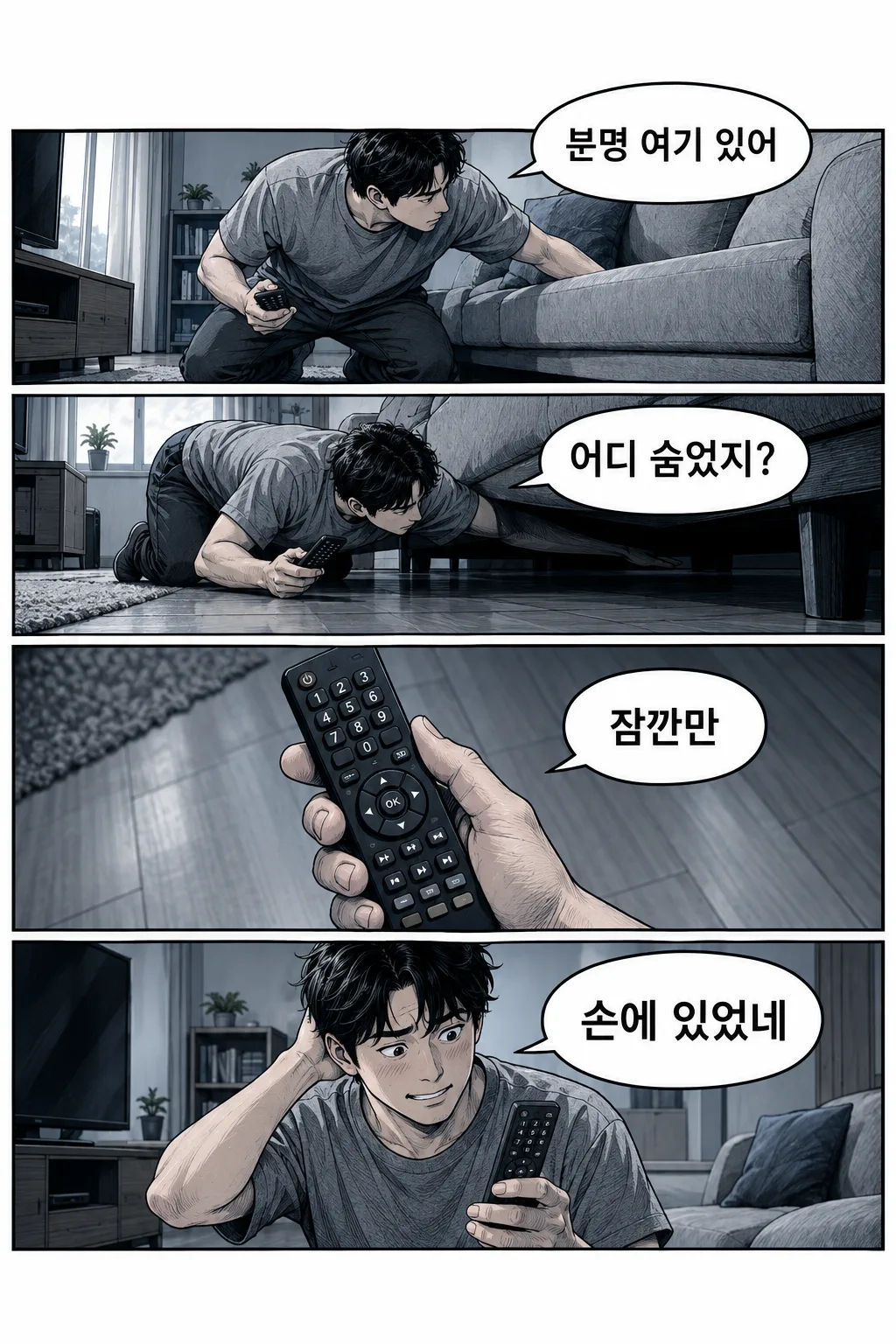
100극화풍 반전 4컷
사소한 일상을 거창하게 보이다 마지막에 웃기는 극화풍 4컷 한 장으로 스레드·인스타에 올려요.
칸 채우기
- 1칸을 채워요
- 2복사 버튼을 눌러요
- 3GPT 채팅창에 붙여넣어요
- 4제품·인물 사진을 쓰려면 사진과 프롬프트를 둘 다 넣은 뒤에 보내요 선택
프롬프트 원문 보기 5,762자
Generate this image now. Draw it directly - do not describe it, explain it, or ask questions.
Output size 2480x3508 pixels, A4 portrait, 300dpi, print-ready poster.

[Purpose]
Create exactly ONE finished Korean four-panel comic page, ready to upload unchanged as one Instagram or Threads image or send in a chat. The result is a single flat illustrated image containing exactly four panels, never four files, an animation, a carousel, a crop plan, a coding task, or a request for another prompt. Its fixed genre is cinematic deadpan parody. The chosen drawing style and panel geometry below are mandatory and are not options for the user.

[Scene and story]
The real-life seed is "【무슨 일이 있었는지】". The main character is "【주인공】". The setting is "【배경】". Take the supplied seed seriously and invent only the small connecting actions needed for a coherent comic; do not add a new family relationship, medical issue, prize, purchase, celebrity, brand or claim that was not supplied. Use the same characters and one coherent time and place across all four panels. Preserve their hairstyle, clothing, face shape, relative height and the visible location from panel to panel. Give the panels distinct camera distances: establishment, reaction, detail and payoff. Show action and expressions rather than explaining the plot in narration.
When the user's object is a TV remote, draw it as one long narrow physical remote with raised number buttons and a round directional pad. Keep that same remote visible in the protagonist's hand when the ending depends on it. A TV remote must never become a flat touchscreen phone between panels.

[Optional attached photo]
If the user attaches their own photo in the same message, use it only as reference for the consenting people and setting; the entire result stays a drawn four-panel comic.


[Fixed sequence]
Treat the user's mundane task with intense visual suspense in panels one and two; panel three isolates the ordinary object in an exaggerated close-up; panel four reveals the embarrassingly small stakes with a deadpan line. Do not invent a crime, danger or violent twist. Plan all four beats before drawing. Panel 1 clearly sets the situation, panel 2 complicates it, panel 3 increases the tension or feeling, and panel 4 delivers the ending. Use exactly the supplied last-panel line "【마지막 컷 한마디】" as the final caption or final spoken line. If that field says "알아서 골라줘", write your own original short Korean line that fits this story, then print ONLY that new line; never print the instruction phrase. The final line must make sense with panel 4 and must not appear in panels 1-3.

[Panel layout]
Use exactly four wide horizontal panels stacked in one vertical column, with complete black borders and narrow clean white gutters. The whole page should be a single coherent comic, not four separate posters. Make all four borders complete, gutters bright and clear, and reading order unmistakable. No inset, tiny fifth scene, fake phone screen, title banner or promotional cover. Put important drawing and lettering inside a generous central safe zone; leave the upper 12 percent and lower 15 percent free of essential text, because the site overlays a number and title there. Keep the panels large enough for each expression and line to be recognizable in a small card-list thumbnail.

[Speech and lettering]
YOU write the short intervening dialogue in natural Korean using "【대사 말투】". The user is not asked to script the comic. Use at most two speech balloons in each panel and keep each line compact, preferably 12 Korean syllables or fewer. Balloon tails must point to the correct speaker and stay entirely within their own panel. Put letters on solid pale balloon shapes with clear dark contrast. The final line is the visual emphasis of the last panel. Render only the dialogue you wrote and the final supplied line; do not print field names, placeholders, English translations, a title, timestamps, page numbers, UI labels, credits or sound effect clutter. Proofread Hangul syllable by syllable before rendering. Never leave an empty speech balloon.

[Style and visual rhythm]
Draw in this ONE fixed style on every panel: original dramatic graphic-novel ink art with heavy black shadow masses, sharp directional hatching, restrained steel-blue grayscale, cinematic low-angle framing and realistic adult proportions; maintain daylight readability and no horror imagery. Maintain the same palette, line treatment, shadows and character proportions through the entire page. Let the supplied location influence background details and light without changing the drawing style. Balance backgrounds against clean negative space behind the dialogue. Use a few purposeful details to make the memory personal; avoid repeated identical face crops, copy-pasted poses and four nearly identical camera views.

[Integrity]
This is an original scene based only on the user's own brief. Do not mimic a named artist, film, animation studio, comic series, actor or existing character. Do not draw a visible brand mark or add a slogan the user did not provide. If a user supplies a story about another real person, depict only what the seed supports; do not claim to know that person's inner thoughts. Do not turn a harmless everyday incident into violence, humiliation or sexual content. If the user later attaches a personal reference photo with the prompt, use it only to keep consenting depicted people recognizable, and still output the same fixed four-panel drawn comic as one image.

[Final check]
Count four and only four panels. Check the exact fixed layout, one consistent drawing style, one stable cast and location, natural Korean dialogue, a logically earned final line and complete central text-safe area. Return only the finished image, with no explanation, no code and no follow-up steps.
이 카드도 많이 사용해요
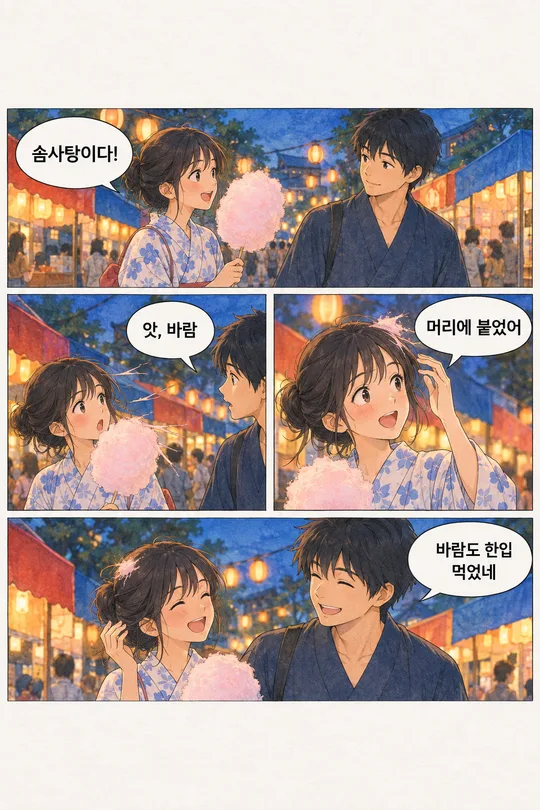
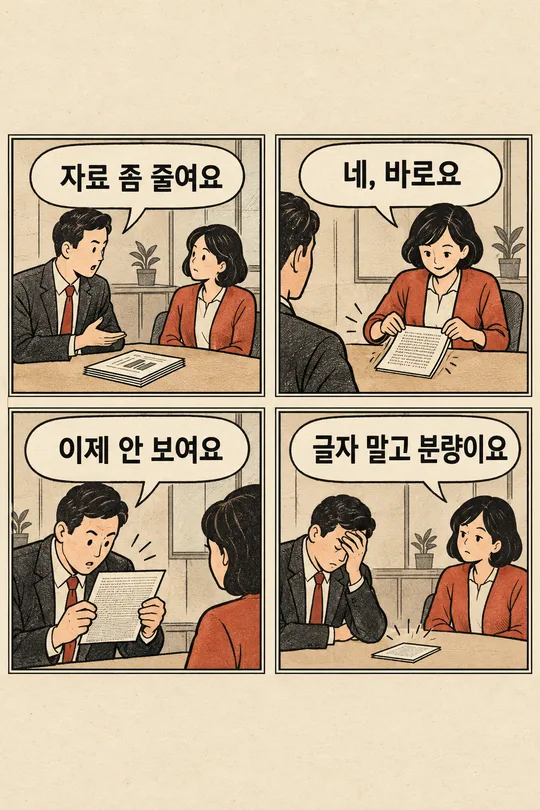
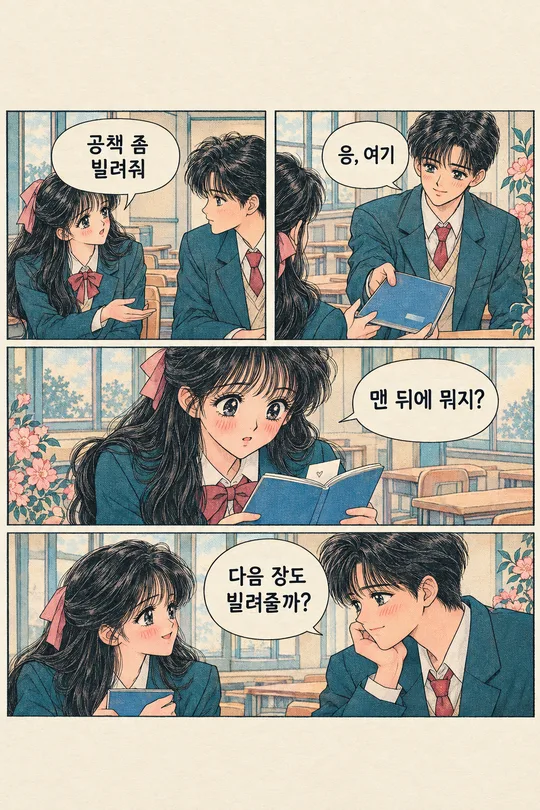
쓰는 법 · 자주 묻는 것
이런 때 쓰세요
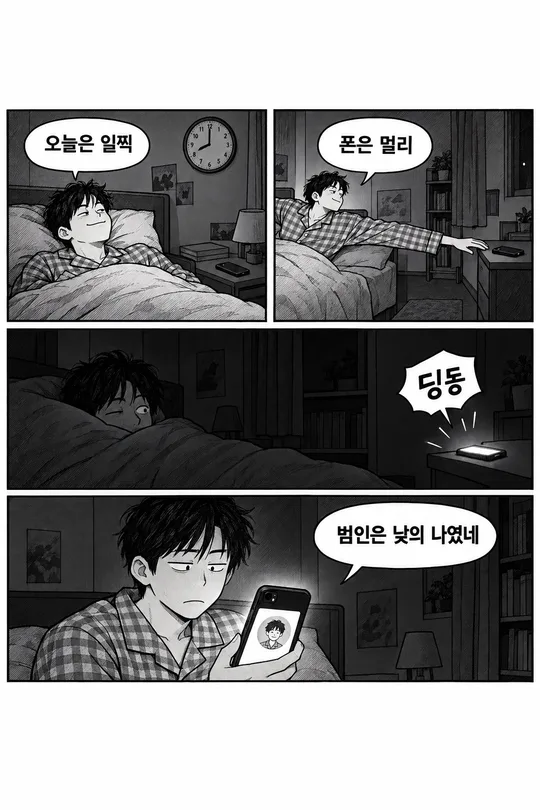
작은 물건 하나 찾는 일이 영화의 추적 장면처럼 느껴졌던 날을 웃기게 남깁니다. 인물 비율과 조명을 진지하게 유지하다 결말은 생활어 한 줄로 끝납니다. 093의 굵은 선 개그 웹툰과 달리 사실적인 손과 소파, 무거운 잉크 그림자가 이 카드의 모양입니다. 사소한 일상을 거창하게 보이다 마지막에 웃기는 극화풍 4컷 한 장으로 스레드·인스타에 올려요. 같은 일이 다시 생기면 이야기 한 줄만 바꿔서 또 만들 수 있습니다. 완성된 네 컷은 한 이미지 안에 들어 있어 바로 게시하거나 친구에게 보낼 수 있습니다.
칸 채우는 법
무슨 일이 있었는지는 실제 상황을 한 문장으로 적으세요. 앞뒤 사연을 길게 설명하기보다 눈에 보이는 사건을 주면 네 칸에 잘 나뉩니다. 주인공에는 등장하는 사람의 수와 알아볼 특징을 적고, 배경에는 네 칸 내내 이어질 장소를 적습니다. 그림체와 컷 모양은 이 카드에 고정되어 있어 고를 필요가 없습니다. 마지막 컷 한마디는 직접 적거나 「알아서 골라줘」를 누르세요. 그 값을 고르면 화면에 그 말이 찍히지 않고 GPT가 이야기와 맞는 짧은 한국어 문장을 씁니다. 대사 말투만 반말과 존댓말 중 고를 수 있습니다.
복사해서 만드는 순서
칸을 채운 뒤 프롬프트를 복사해 무료 GPT 이미지 대화창에 한 번 붙여넣고 보내세요. 대사를 따로 써서 보내거나 네 장을 각각 요청할 필요가 없습니다. 한 장 안에 네 컷과 대사가 모두 들어가게 지시했습니다. 본인 사진을 참고로 쓰고 싶다면 사진을 올린 뒤 아직 보내지 말고, 같은 입력창에 복사한 프롬프트를 붙여넣어 둘 다 들어간 것을 확인한 다음 한 번만 보내세요. 사진 없이도 일화만으로 만들 수 있습니다.
결과를 볼 때
네 칸의 읽는 순서와 주인공 얼굴·옷이 이어지는지 먼저 보세요. 다음으로 각 말풍선이 올바른 인물을 가리키는지, 마지막 말이 네 번째 칸에서 처음 등장하는지 확인하세요. 한글은 특히 작은 획이 깨지기 쉬우니 휴대폰 크기로 확대해 한 글자씩 봐야 합니다. 실제 인물이 알아볼 정도로 그려졌다면 SNS 공개 전에 상대의 동의를 받으세요. 특정 작품이나 캐릭터를 닮은 결과가 나왔다면 그대로 쓰지 말고 내 이야기와 독자적인 표현이 살아 있는 결과를 고르세요.
자주 묻는 것
- 몇 장이 나오나요? 한 장입니다. 그 안에 고정된 모양의 네 컷이 들어갑니다.
- 대사를 전부 써야 하나요? 아니요. 앞의 사건과 마지막 한마디만 적으면 중간 대사는 GPT가 짧게 채웁니다.
- 내 사진이 꼭 필요한가요? 아니요. 원하는 경우 인물 특징을 참고시키는 용도로 함께 보낼 수 있습니다.
- 다른 그림체도 이 카드에서 고르나요? 아니요. 이 카드의 썸네일과 같은 그림체만 나옵니다. 다른 그림체는 별도 카드로 만들었습니다.