

321시화 다꾸 페이지 — 시 한 줄과 수채 풍경, 도장 · 테이프가 어우러진 정크저널 한 장
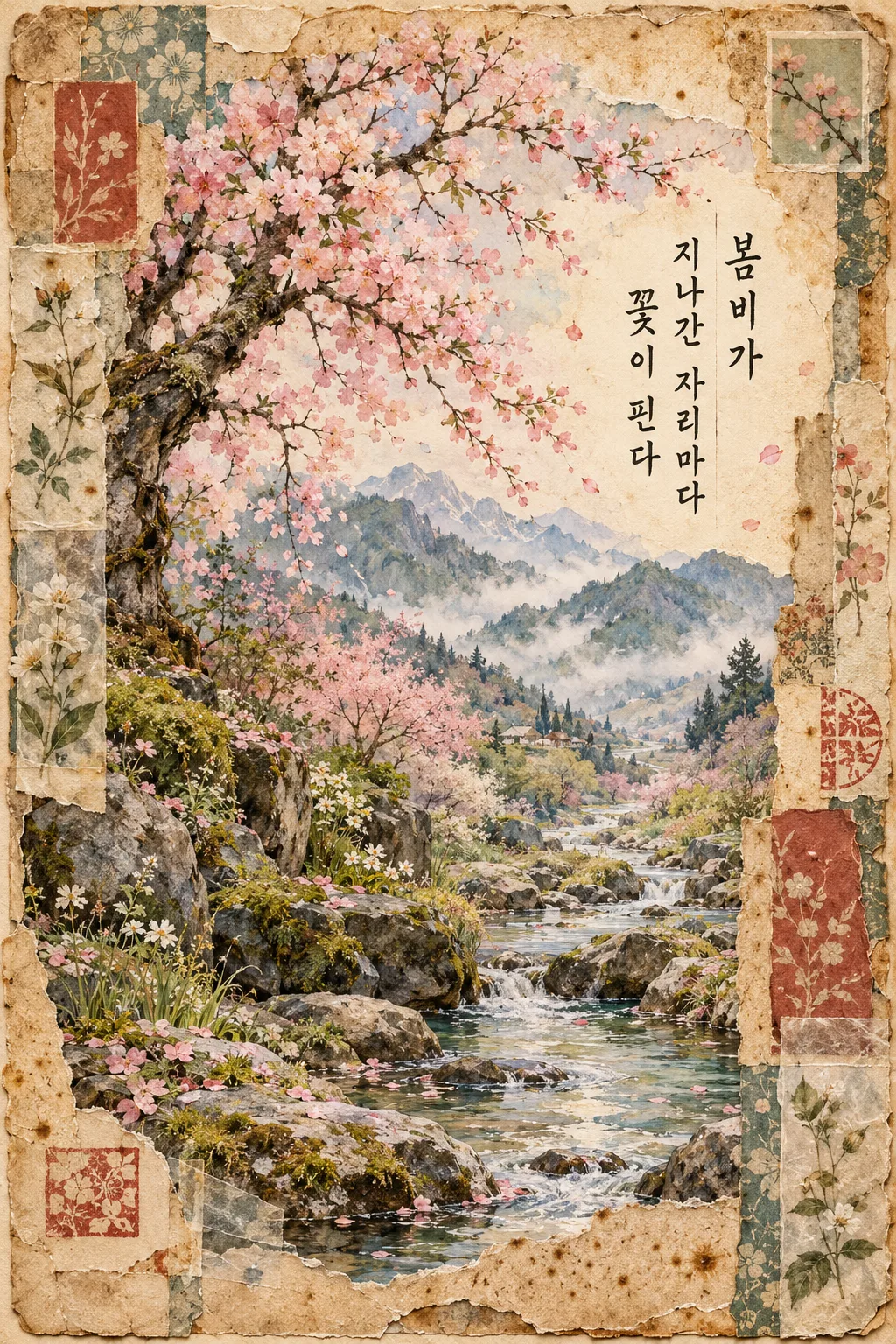
시 한 줄을 적으면 낡은 종이 위에 벚꽃 계곡 · 비 오는 절 같은 수채 풍경과 세로 시 글자, 도장 · 테이프 조각이 어우러진 다꾸 페이지가 나와요.
받는 것
- 시 한 줄과 수채 풍경의 다꾸 페이지 한 장
- 낡은 종이, 도장, 테이프, 우표 조각
- 세로로 쓴 내 시 글자
ChatGPT 무료 OK
칸 채우기
- 1칸을 채워요
- 2복사 버튼을 눌러요
- 3GPT 채팅창에 붙여넣어요
- 4그대로 보내면 썸네일 예시처럼 나와요
- 5카드에 맞는 실제 사진을 같이 넣으면 그 사진이 반영돼요 — 배경 카드는 배경 사진, 인물 · 음식 카드는 그 사진 선택
프롬프트 원문 보기 3,352자
Generate this image now. Draw it directly - do not describe it, explain it, or ask questions.
Output exactly one finished 2:3 portrait image, 1024x1536 pixels. Keep all important text inside the central 73% of image height: leave the top 12% and bottom 15% free of essential lettering.

Create one richly layered watercolor poetry journal page suitable for diary decoration or a postcard. If no size is supplied, use portrait 2:3. Show one finished page flat and front-facing.

POEM text: "【시】"
Print the quoted poem exactly once, preserving all characters, punctuation, word order, and Korean final consonants. Set it in readable vertical columns where suitable, reading each column top to bottom and successive columns right to left. Break only at natural phrase boundaries and preserve sentence order. If the supplied script or length is poorly suited to vertical columns, use a compact, carefully spaced horizontal stanza.
If this text line is missing or empty, create the complete illustrated journal page without poem lettering; do not invent a poem, title, caption, or placeholder.

LANDSCAPE selected: "【풍경】"
Interpret only the selected choice:
- 벚꽃 계곡: Paint flowering cherry branches, drifting pale pink petals, a winding valley stream, wet rocks, and distant misty mountains.
- 비 오는 절 돌계단: Paint rain-darkened stone steps leading to a fictional old temple gate, moss, a softly glowing lantern, foliage, and reflections in small puddles; omit all temple signage.
- 눈 덮인 소나무: Paint old pine trees carrying soft snow, fine dark needles, layered winter mountains, and a quiet stream or snow-covered stones.
- 가을 단풍길: Paint a winding autumn path with crimson and golden maple leaves, textured trunks, scattered fallen leaves, and softly receding hills.
If this selection line is missing or empty, use 벚꽃 계곡 only.

LETTERING selected: "【글씨】"
Interpret only the selected choice:
- 붓글씨: Use expressive but readable brush calligraphy with controlled ink variation and clearly formed characters.
- 손글씨: Use intimate, carefully written handwritten lettering with natural variation, consistent legibility, and accurate character shapes.
- 명조: Use refined serif lettering with crisp strokes, balanced spacing, and a literary print character.
If this selection line is missing or empty, use 붓글씨 only.

Use warm aged paper, visible fibers, subtle creases, foxing, torn edges, watercolor blooms, layered patterned scraps, translucent botanical tape, blank postage-style fragments, and abstract vermilion stamp impressions. Keep the main landscape detailed and substantial. Reserve a light, uncluttered area for the supplied poem while maintaining richly layered borders and tactile collage depth.

Every decorative paper scrap, stamp, seal, tape piece, and postage fragment must be original and nonverbal. Do not add faux handwriting, foreign-language passages, postal lettering, serial numbers, signatures, translations, or invented text. The supplied poem is the only permitted lettering. No recognizable brands, existing characters, watermarks, physical desk mockup, or multi-page spread.
The choice names in this prompt are internal labels only; never print them as text.

[Final output format]
Output exactly one finished 2:3 portrait image, 1024x1536 pixels. Keep all important text inside the central 73% of image height: leave the top 12% and bottom 15% free of essential lettering.
This selected output format takes priority over any fixed canvas size or aspect ratio elsewhere in this template. Adapt the composition, text zones and margins to the selected canvas without stretching or cropping essential content. Device safe areas apply only when a device is selected. Never print these format instructions on the image.
결과 어땠어요?
같은 분류의 다른 카드



쓰는 법 · 자주 묻는 것
시 한 줄을 옛 시화처럼
옛 그림을 보면 풍경 옆에 시가 세로로 적혀 있죠. 그걸 다이어리 꾸미기 한 장으로 만들어요. 바랜 종이 위에 수채 풍경이 있고 그 옆에 내가 적은 시 한 줄이 세로로 들어가요. 붉은 도장과 마스킹테이프, 우표 조각이 붙어서 손으로 꾸민 페이지 같아요. 「봄비가 지나간 자리마다 꽃이 핀다」와 벚꽃 계곡, 붓글씨로 만들어 보니 시가 오른쪽 열부터 세 줄로 읽혔고 누락이나 중복, 오자가 없었어요.
시는 스무 자 안쪽으로
한 줄만 적으면 돼요. 스무 자쯤이 제일 깔끔하게 들어가요. 길어지면 글씨가 작아지고 틀린 글자가 나올 가능성이 커져요. 좋아하는 시 구절이나 직접 쓴 한 줄을 그림과 함께 남기고 싶을 때 쓰세요. 엽서나 책갈피로 뽑아도 좋고 스레드에 시를 올릴 때 써도 어울려요.
받침을 한 글자씩 확인하세요
세로로 쓴 한글은 AI가 받침을 빠뜨리기 쉬워요. 그림이 나오면 시를 한 글자씩 짚어 가며 원문과 맞춰 보세요. 「핀다」가 「피다」로 나오는 식이에요. 한 글자라도 틀렸으면 「시 글자를 이 문장 그대로 정확히 다시 써 줘」라고 원문을 붙여서 보내 보세요. 이 문장은 시험하지 않았어요. 붉은 도장 안에 한자 비슷한 이상한 글자가 생기면 「도장 안 글자를 지우고 무늬만 남겨 줘」라고 하세요.
글씨체는 시에 맞춰 골라요
붓글씨는 옛 시화 느낌이 제일 진한 대신 획이 흘러서 틀리기도 쉬워요. 손글씨는 다이어리에 직접 쓴 것처럼 친근하고, 명조는 단정하고 글자가 제일 또렷해요. 받침이 많은 시라면 명조가 안전해요. 멋보다 정확한 게 먼저니까요. 시험한 건 붓글씨 한 가지예요.
풍경은 시의 계절과 맞추세요
벚꽃 계곡은 봄, 비 오는 절 돌계단은 여름 장마, 가을 단풍길은 가을, 눈 덮인 소나무는 겨울이에요. 「봄비가 지나간 자리마다 꽃이 핀다」에 눈 덮인 소나무를 붙이면 글과 그림이 따로 놀아요. 계절을 맞추면 한 장면처럼 이어져요. 풍경과 글씨는 선택 칸이라 비워도 돼요.
남의 시를 쓸 때
시에도 저작권이 있어요. 다른 사람의 시를 넣은 그림은 혼자 간직하는 용도로만 쓰고 어디서 온 구절인지 따로 적어 두세요. SNS에 올릴 건 내가 쓴 시로 하는 게 마음 편해요. 내 시를 올릴 땐 캡션에 직접 쓴 시라고 적어 두면 좋아요. 엽서 크기로 뽑아 손편지에 끼워 보내거나 길쭉하게 잘라 책갈피로 써 보세요.
이런 쓰임에 어울려요
다이어리 꾸미기, 엽서, 책갈피, 스레드에 올릴 시 한 장에 어울려요. 2:3 세로 한 장이고, 시험한 벚꽃 계곡 풍경에서는 벚꽃 가지와 흩날리는 꽃잎, 굽이치는 계곡물, 안개 낀 산이 수채로 그려졌어요. 낡은 종이와 찢긴 가장자리, 식물 테이프, 우표 조각, 붉은 추상 도장이 붙고 시 외의 글자나 서명은 들어가지 않았어요.
마지막 확인일 · 공개