전체 · SNS/카드뉴스 · 밈·공감
052오늘 먹을 밥 추천
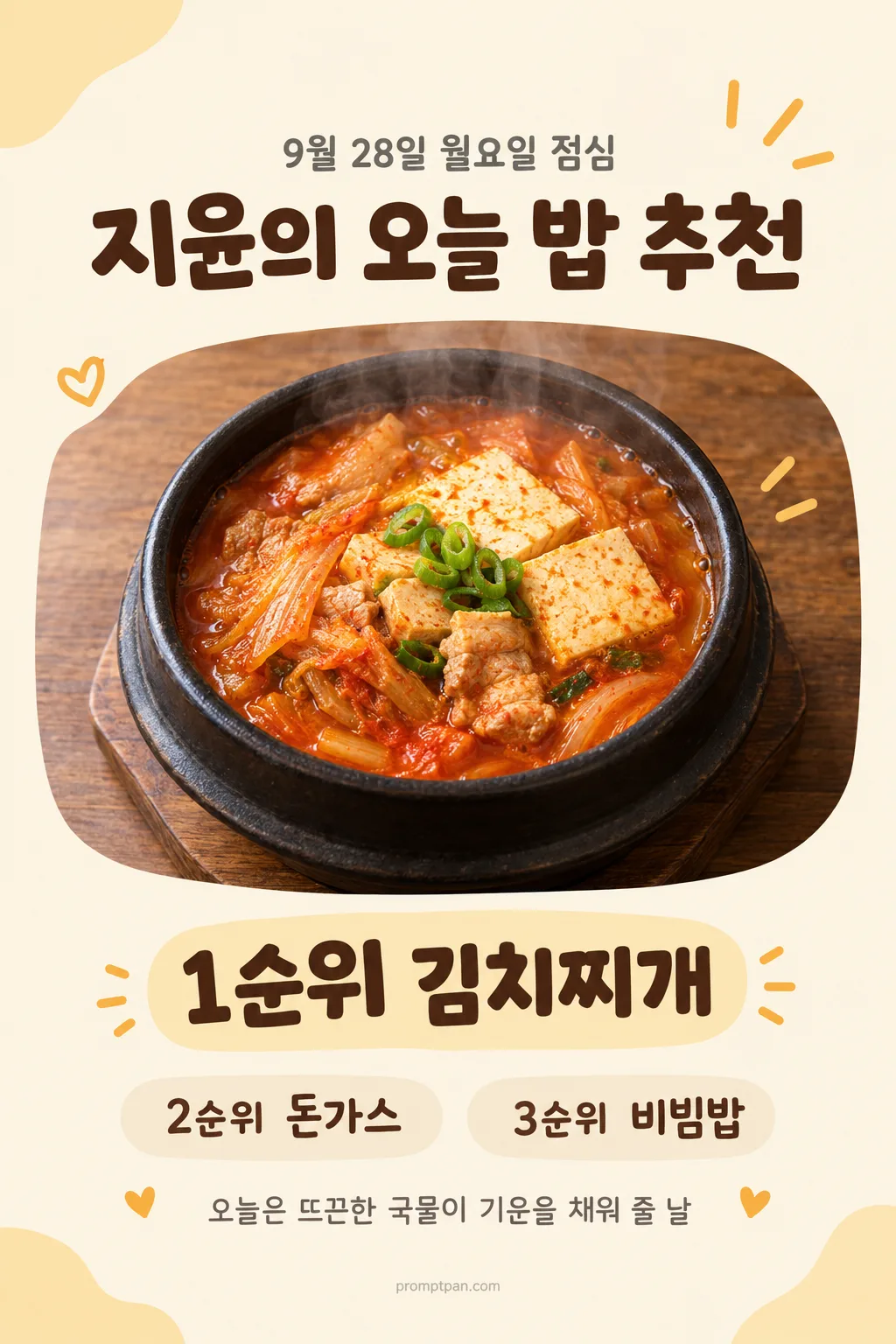
이름 · 생일 · 오늘 기분을 넣으면 지금 먹을 끼니에 맞춰 메뉴 1~3순위를 골라 주는, SNS에 올리기 좋은 밥 추천 밈 카드
칸 채우기
- 1칸을 채워요
- 2복사 버튼을 눌러요
- 3GPT 채팅창에 붙여넣어요
- 4제품·인물 사진을 쓰려면 사진과 프롬프트를 둘 다 넣은 뒤에 보내요 선택
프롬프트 원문 보기 10,819자
Generate this image now. Draw it directly - do not describe it, explain it, or ask questions.
Output size 2480x3508 pixels, A4 portrait, 300dpi, print-ready poster.

[Purpose]
Create ONE finished, personally shareable Korean meal recommendation meme card for the person named "【이름】". It must answer the very ordinary question "What should I eat right now?" in a way that makes the recipient want to screenshot and post "나 오늘 이거 먹으래ㅋㅋ". The birth date is "【생일】" and must contain birth year, month and day. Today's stated mood is "【오늘 기분】". They will eat with "【누구랑】". This is a playful reading and a practical menu nudge, not a factual personality assessment, diet prescription, or fortune prediction. Keep a light, quick Korean friend-to-friend voice. Produce the single card first; AFTER the image, output exactly one short Korean social caption as a separate plain chat-text line, not as writing inside the picture. Suggested caption style: "오늘 나 이거 먹으래ㅋㅋ 너도 해 봐". Do not add an explanation, analysis, list, or second picture after the caption.

[Optional MBTI input]
MBTI: "【MBTI】"

[Current moment and menu decision — do this silently before drawing]
Check the actual current date and time when this prompt is run, in the user's local time zone; use Korea Standard Time when no user location is known. If a clock is not exposed, use a live time lookup rather than the birth date, the examples in this prompt, or an old conversation date. Calculate the correct weekday for that current date. Determine the current meal by local hour: 04:00-09:59 breakfast ("아침"), 10:00-14:59 lunch ("점심"), 15:00-21:59 dinner ("저녁"), and 22:00-03:59 late-night food ("야식"). The date-and-meal label on the card must read like "9월 28일 월요일 점심" but use the REAL checked date, weekday, and meal, never this example. Do not ask the user for date, time, weather, location, or meal.
Use the current season and plausible in-season Korean ingredients. If live weather is available for a known or inferable location, adapt one choice to it, for example warm soup on a cold day or refreshing noodles on a hot day. Never claim a specific temperature, rain, or forecast without verified location-specific information. Account naturally for the weekday: an ordinary Monday work lunch, a relaxed Friday dinner, or a weekend meal may call for different choices. If a verified Korean holiday or widely recognized anniversary falls on the real date, it may inspire a menu, but do not invent one or print an unverified holiday name. These cues should influence the dishes, not crowd the card with explanations.
Interpret "【오늘 기분】" as a playful preference. If it is "알아서 골라줘", make the decision yourself and do not print that phrase as a result. Consider "【누구랑】" when choosing portion style and setting: a quick solo meal, shareable food for friends or family, a date-friendly choice, or an ordinary accessible meal with coworkers. Recommend three DISTINCT, specific, realistic dishes actually available or cookable in Korea, with no brand, shop, price, medical benefit, calorie promise, or claim to know the person's budget or allergies. The first pick should be the most inviting and meal-appropriate, not a generic food category. Picks 2 and 3 should be genuine alternatives, not near-duplicates of pick 1. Keep names compact enough to read at story size.
From "【생일】", derive the correct Western sun-sign name from month and day and a Korean animal-year label from the birth year. For a January or February birthday, verify the lunar new year boundary before assigning a traditional 띠; if verification is impossible, use a clearly labeled birth-year animal convention and avoid pretending a verified traditional reading. If the birth date is malformed, do not invent one: use the readable given date and keep the reading neutral. If the optional MBTI line is absent, make the one-line reading without MBTI, and do not show an empty MBTI tag or ask for it. If an MBTI is present, use only those four letters and a tiny, playful everyday association, never a fixed personality verdict. Blend name, sign, animal, MBTI when supplied, and mood into ONE witty Korean sentence that nudges toward the first dish. It should sound like a joke among friends, not a horoscope. Vary the wording for different people and dates.

[Scene]
A single flat vertical Korean social card, ready to save or screenshot, with no surrounding phone mockup. The hero is one generous, appetizing, true-to-life photograph-style image of the FIRST recommended dish occupying the middle of the card. It should be recognizable as that exact dish, with believable Korean ingredients, cookware or tableware, real serving proportions, tiny natural imperfections, and a clear point of focus. Before drawing, if web image reference is available, look at real photos of the chosen dish for its actual ingredients, color, cut, cooking marks, broth or sauce, and plating. Take only general visual reference; do not copy one source image, visible branding, or a restaurant's distinctive presentation. If image search is unavailable, use ordinary real-food photographic knowledge and keep the same realism. Show no photographic image for picks 2 and 3; they live as small text alternatives below. The scene may include a neutral tabletop and one subtle in-season ingredient near the plate, but the food must remain large. Keep strong clean negative space above and below the food for text. The card should feel like an actual lunch photo turned into a tidy shareable result, not an AI fantasy food illustration.

[Attached photo]
No user-uploaded photo is required. If the user happens to attach a food reference in the same message, use it only to improve ingredient and texture accuracy for the chosen first dish. Do not force the menu to match an unrelated attachment; the personal recommendation and the current meal still determine the dish. Never add a person, face, hand, logo, or copied text from an attachment.

[Text layout]
Use the following top-to-bottom reading order. The percentages are approximate; on 4:5 compress the gaps while keeping all text comfortably readable and uncropped. Render the resulting Korean strings exactly, using the computed date, selected dishes, and one-line reading. The quoted strings are text to draw, without quotation marks.
- 4-11%: "【이름】의 오늘 밥 추천" as the top headline, in large bold Korean lettering. This is the first line, not a small eyebrow label.
- 12-16%: the live label in the form "9월 28일 월요일 점심"; replace every example component with the actual checked current month, day, weekday, and meal. Place it on one centered line.
- 17-24%: ONE concise personalized interpretation sentence, no more than about 40 Korean characters. It must connect the birth sign and animal, the name, today's mood, and MBTI if present; it can omit a component from the printed sentence if space demands but must still feel individual. Example of tone only, never copy this specific line: "민지의 소띠·황소자리·ENFP, 지친 오늘은 뜨끈한 한 그릇!". Prefix or follow with a tiny "재미로 보는" label so nobody reads it as a diagnosis or prediction.
- 26-29%: a small but clear fixed label "오늘의 1순위".
- 30-63%: the large realistic hero food photograph with room for one big bold dish name "[first selected dish]" in a solid, high-contrast caption zone just below or along the photo's quiet edge. The name must match the photographed dish exactly and be readable at a glance. Do not overlay words on busy food detail.
- 66-75%: two compact lines with fixed rank labels and exact dish names: "2순위  [second selected dish]" and "3순위  [third selected dish]". Each line contains only one dish; give them enough space and contrast.
- 78-85%: two small playful notes: "먹을 때 한마디  [one short funny line to say before the first bite]" and "오늘의 행운 반찬  [one real side dish that goes with the first pick]". The lucky side dish is a wink, not a promise of luck. Keep both lines short and distinct.
- 96-98%: "promptpan.com" alone, very small and faint but still legible, centered at the bottom. It should quietly answer where the card was made. No other brand or website text.

[Style]
Contemporary Korean social meme card, friendly and a little cheeky, polished enough to post as is. Use a warm off-white or restrained seasonal background, dark charcoal Korean type, a single appetizing accent color drawn from the first dish, and simple rank pills or thin rules. Give the food photo most of the visual weight. The result should be instantly understandable from a phone screenshot: whose card, what day and meal, what to eat first, then the backups and two jokes. Create a new arrangement rather than imitating a restaurant menu or a food delivery ad.

[Visual hierarchy]
First read: "【이름】의 오늘 밥 추천". Second read: the first dish's photo and name. Third read: the current date/meal and 2·3순위. Last read: the playful interpretation, eating line, lucky side dish, and tiny site credit. The one-line reading remains legible even though it is secondary to the food. Use consistent wide margins; no text may touch the trim or be hidden by app story overlays.

[Lighting and texture]
Natural window or soft restaurant light, physically plausible shadows and highlights, realistic steam only when the hot dish truly calls for it. Preserve the exact tactile texture of cooked rice grains, meat fibers, vegetables, sauce, noodles, fried crust, or soup broth as appropriate to the chosen dish. Avoid waxy surfaces, plastic shine, over-smoothed ingredients, impossible plating, exaggerated steam, glowing food, or hyper-saturated AI image texture. The rest of the card should be clean and nearly flat so the food looks photographed rather than rendered.

[Text rules]
All writing inside the image is Korean except the optional four-letter MBTI and the exact footer "promptpan.com". Render the user's exact name from "【이름】" and the three decided dish names consistently in every place they appear. Show the date and weekday computed for generation time, not the birthday or an example. Never print bracketed instructions, example dish names, a weather claim without verified data, or the phrase "알아서 골라줘". Keep Korean syllables complete, accurate, and high contrast; use no emoji in the card. If space is tight, shorten the interpretation and jokes before shrinking the headline, menu names, or ranking labels. Draw only one first-place dish, two backup names, one eating line, one lucky side dish, and the one footer.

[Avoid]
horoscope certainty; fixed personality claims; invented current date, weekday, weather, holiday, or season; health or diet claims; restaurant brands; prices; logos; extra menu choices; multiple main food photos; faces, hands, utensils covering text; food illustration or 3D render; inedible or physically impossible ingredients; duplicate words; misspelled Korean; busy background; neon, lens flare, watermarks, large URL, or a caption printed inside the card
이 카드도 많이 사용해요
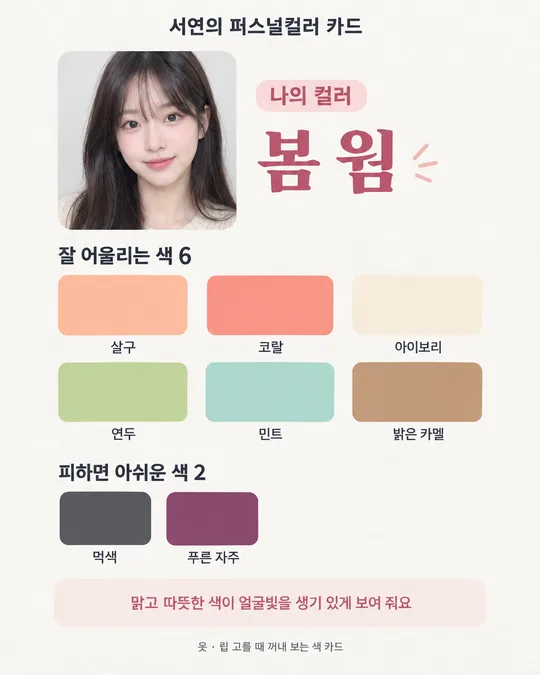
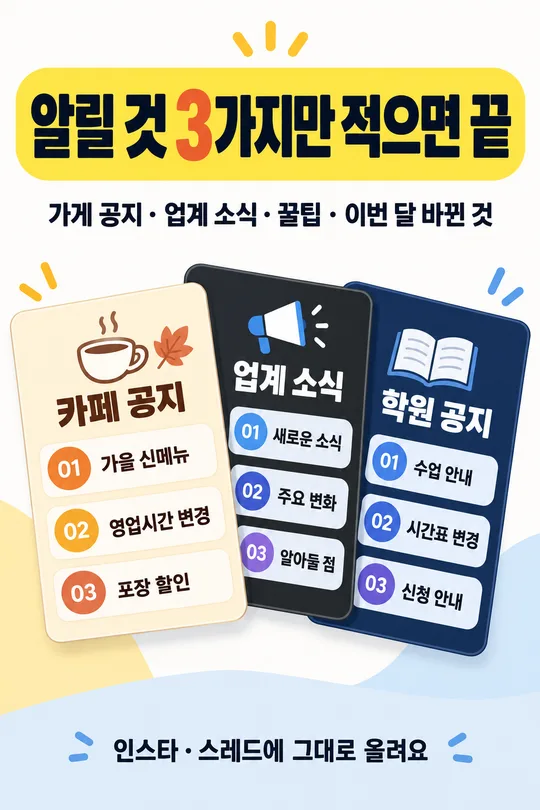
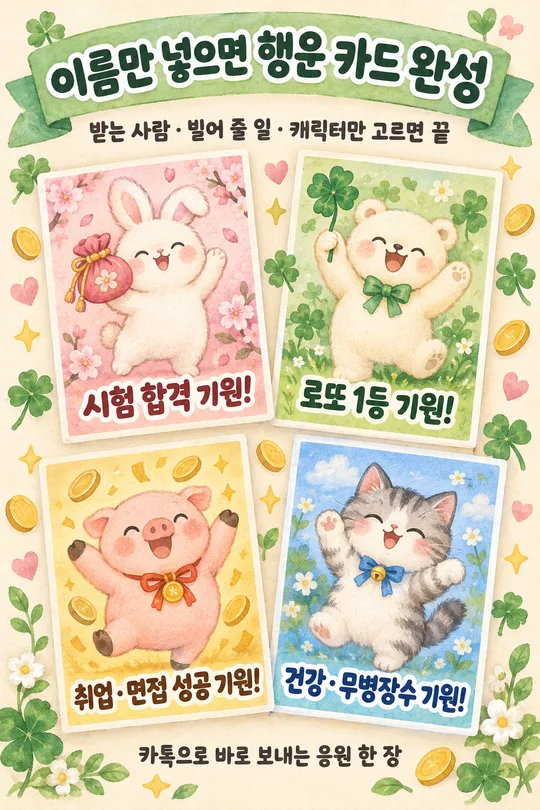
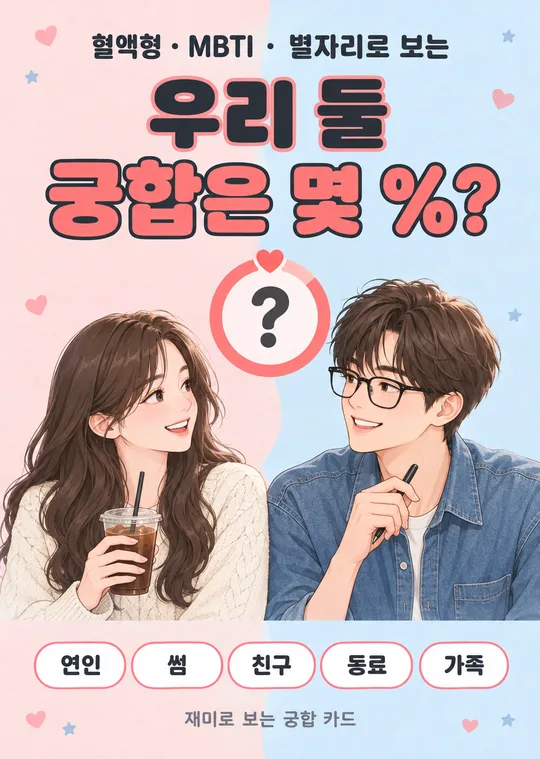
쓰는 법 · 자주 묻는 것
이런 때 쓰세요
점심시간에 메뉴를 못 정했거나 퇴근 후 저녁 한 끼가 고민될 때, 오늘의 밥 추천을 재미로 받아 보는 카드예요. 이름과 생일, 오늘 기분, 같이 먹을 사람을 넣으면 지금 날짜와 끼니에 어울리는 음식 세 가지가 한 장에 나옵니다. 가장 먹고 싶은 1순위는 실제 음식 사진 같은 질감으로 크게 보여 주고, 2·3순위는 간단히 남겨 둡니다. 결과를 저장해 인스타 스토리, 스레드, 카톡에 올리며 “나 오늘 이거 먹으래” 하고 친구와 메뉴 이야기를 시작해 보세요. 카드는 식성 검사나 운세가 아니라, 결정이 어려울 때 웃으면서 고르는 작은 놀이입니다.
칸 채우는 법
- 이름: 카드 맨 위에 들어갈 이름을 적어 주세요. 본명, 별명, 가족을 부르는 이름 모두 괜찮아요.
- 생일: 띠까지 보려면 `1997년 5월 17일`처럼 태어난 해·달·날을 모두 적어 주세요. 오늘 날짜를 적는 칸이 아닙니다. 특히 1~2월 생일은 음력 설 경계에 따라 띠가 달라질 수 있어요.
- MBTI: 알고 있으면 `ENFP`처럼 네 글자를 적고, 모르면 비워 두세요. 빈칸이면 MBTI 이야기를 빼고도 카드가 완성됩니다. 열여섯 유형을 고르는 긴 목록은 없습니다.
- 오늘 기분: 지침, 신남, 우울, 배고파 죽겠음 가운데 가까운 것을 고르세요. 고르기도 귀찮다면 `알아서 골라줘`를 누르면 됩니다. 이 말 자체가 카드에 찍히지는 않습니다.
- 누구랑: 혼자, 친구, 연인, 가족, 회사 사람 중 오늘 실제로 먹을 상대를 골라 주세요. 혼자 먹기 편한 음식과 여럿이 나누기 좋은 음식은 다르게 고릅니다.
오늘 날짜와 음식 사진
날짜·시간은 입력하지 않습니다. GPT에게 그림을 만드는 순간의 현지 날짜와 시각을 확인해 아침, 점심, 저녁, 야식 중 하나를 정하도록 시킵니다. 카드는 “9월 28일 월요일 점심”처럼 읽히는 날짜 줄을 넣지만, 이 문구는 예시이고 매번 그날로 바뀌어야 합니다. 계절과 제철 재료, 확인할 수 있는 날씨, 요일, 실제 기념일도 추천에 참고합니다. 현재 날씨를 확인할 수 없는데 비가 온다고 꾸며 말하지 않게 해 두었습니다. 1순위 음식은 웹에서 실물 사진을 참고할 수 있으면 재료와 질감을 확인해 사진처럼 그리도록 지시합니다. 사용자가 음식 사진을 따로 올릴 필요는 없습니다.
그림이 나오면 꼭 볼 것
맨 위에 내 이름이 정확한지, 날짜와 요일·끼니가 지금과 맞는지 먼저 확인해 주세요. 1순위 이름과 큰 음식 사진이 같은 메뉴인지, 2·3순위가 다른 음식인지도 보세요. 생일로 만든 별자리·띠와 선택한 MBTI가 맞는지 살피되, 이 한 줄은 어디까지나 재미로 읽어 주세요. 음식 사진에 재료가 뭉개졌거나 그림처럼 매끈하면 같은 대화에서 “음식의 실제 색과 재료 질감으로 다시 그려줘”라고 말하면 됩니다. GPT가 그림 뒤에 준 짧은 캡션은 이미지 속 문구가 아니니, 올릴 때 글 입력칸에 붙여 주세요. 맨 아래의 작은 `promptpan.com`은 친구가 어디서 만들었는지 궁금할 때 찾을 수 있는 출처입니다.
자주 묻는 것
- 오늘의 밥 추천은 매일 같나요? 생성 시점의 날짜·끼니와 그날 고른 기분·상대에 따라 메뉴를 다시 고르므로 다른 결과를 기대할 수 있어요. 마음에 안 들면 같은 칸으로 다시 만들어 보는 것도 재미입니다.
- MBTI를 몰라도 만들 수 있나요? 네. MBTI는 선택 칸입니다. 비워 두면 이름·생일·기분·함께 먹는 사람으로 재미있는 한 줄과 메뉴를 만듭니다.
- 띠와 별자리가 성격이나 식성을 증명하나요? 아니요. 개인 맞춤 느낌을 내는 밈 장치예요. 알레르기, 식단 제한, 실제 영업 여부는 이 카드가 확인해 주지 않습니다.
- 인스타 스토리와 스레드에 모두 올릴 수 있나요? 기본은 세로 9:16이라 스토리에 맞고, 화면 비율에서 4:5를 고르면 피드에도 올리기 편합니다. 저장한 그림에 GPT가 따로 준 캡션 한 줄을 곁들이면 됩니다.