
All · Comics & illustration · People · Scenery
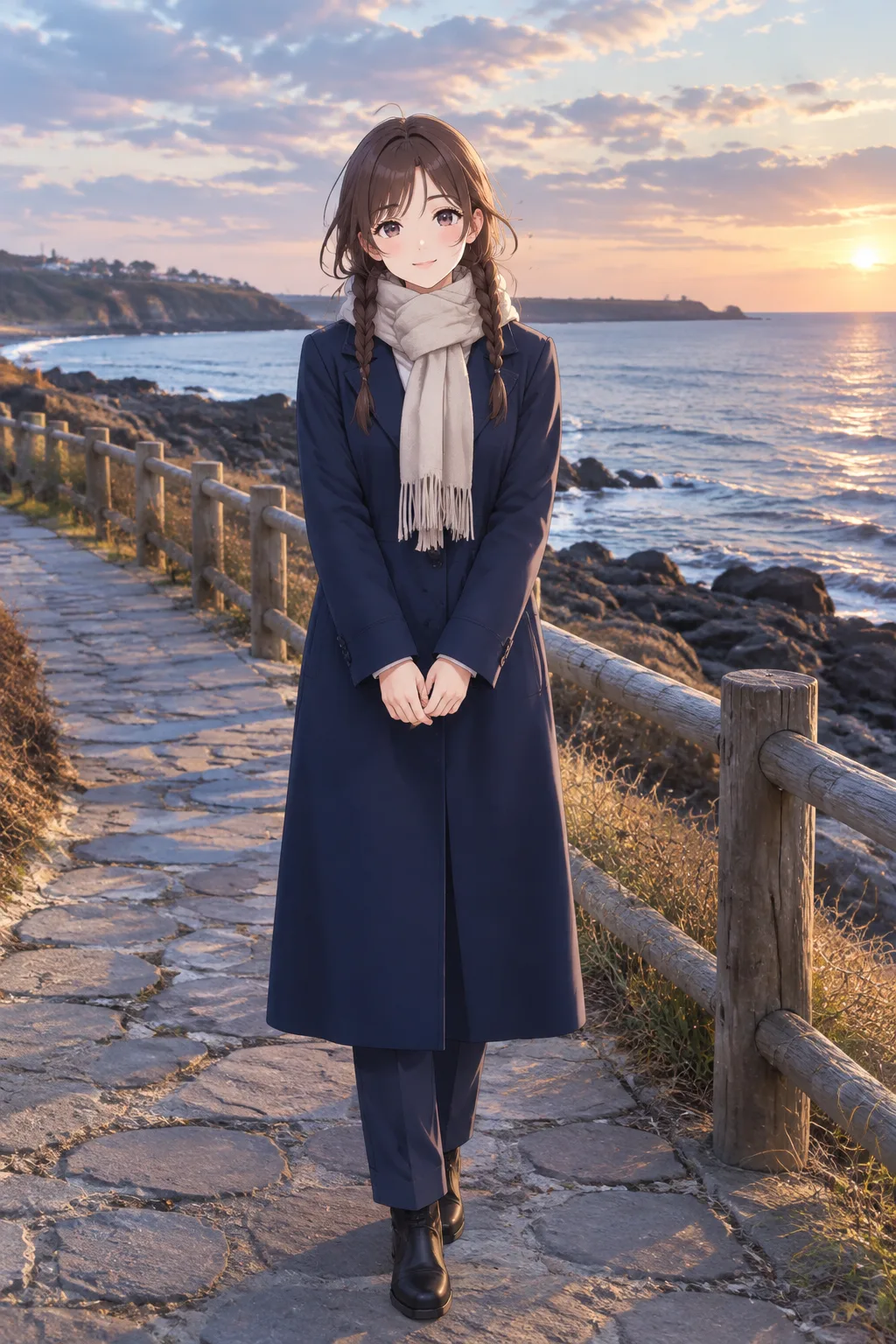
269An Anime Character in My Landscape Photo — One 2D Figure in Your Travel Shot
Your travel or neighborhood photo stays photographic, and a crisp 2D anime character stands inside it. Without a photo, a fictional realistic landscape is used.
ChatGPT Free OK
Fill in the fields
- 1Fill in the fields
- 2Copy the prompt
- 3Paste it into a GPT chat
- 4Send it as is and you get an image like the thumbnail example
- 5Attach one landscape photo (optional) with the prompt and your photo is used in the result Optional
Full prompt 11,376 characters
Generate this image now. Return exactly one finished landscape-photo scene inhabited by one original 2D anime adult; draw it directly without explanations, code, plans, or questions.
Output exactly one finished 2:3 portrait image, 1024x1536 pixels. Leave the top 12% and bottom 15% free of essential text.
PHOTO RULE (this overrides any other line in this prompt, before or after it, that calls the photo required or mandatory or says to ask for it): if a photo is attached, use it exactly as the instructions below describe. If no photo is attached, never ask for one and never stop — invent a fitting fictional subject (person, pet, food, product or place, whatever this card is about) in the spirit of the card's example image, and finish the image.

[Resolve all changeable inputs before drawing]
BACKGROUND_INPUT = "【My background photo】".
FICTIONAL_SCENERY = "【Fictional scene】".
ADULT_PRESENTATION = "【Character】".
HAIR = "【Hair】".
CLOTHING = "【Outfit】".
POSE = "【Pose】".
PLACEMENT = "【Position】".
Read Korean menu values by their meaning. Resolve a blank or absent optional definition to: BACKGROUND_INPUT = no photo; FICTIONAL_SCENERY = coastal walking path; ADULT_PRESENTATION = adult woman; HAIR = brown braided hair; CLOTHING = navy coat and scarf; POSE = standing toward the camera with a soft smile; PLACEMENT = center. Any "Choose for me", "Choose for me", or choose-for-me input is a menu command: silently select one concrete compatible option before drawing. Never print a field value, attachment instruction, menu command or default label in the artwork. All later sections use these resolved values; a chosen hairstyle, outfit, pose or position must not drift back to the defaults.

[Photo roles and precedence]
This is a landscape-background card, not a face-likeness card. A usable attached landscape photograph is the scene plate and takes priority over BACKGROUND_INPUT and FICTIONAL_SCENERY, even if the menu still says no photo. A promise to attach a photo without an actual usable landscape image does not count as a photograph: finish using FICTIONAL_SCENERY immediately. The user's private input is their actual travel or neighborhood photograph; do not infer a place or personal history from the generic attachment phrase. Preserve its recognizable landforms, buildings, trees, shoreline, horizon, pathways, perspective and existing light direction. Add the new illustrated adult within that place rather than replacing it with a loosely similar painted landscape. The photo does not supply the new character's facial identity, clothing or age. If it contains distant people, leave them as unobtrusive photographed background figures; do not trace their faces or turn them into the new character. If only a portrait or unusable screenshot is attached, invent FICTIONAL_SCENERY and an original adult without borrowing its face. Use any separate illustration reference only for broad rendering, light, color, composition and texture cues, never as a scene plate or character identity source. Landscape-photo recognition and physically plausible placement outrank a preferred left/center/right position when the requested spot has no safe ground.

[One fixed hybrid visual medium]
Keep the environment genuinely photorealistic: natural camera perspective, irregular stone and snow textures, individual grass, atmospheric distance, real water reflections and believable buildings. It must still look like a photograph after the character is added. Render the new character with clean, confident fine 2D anime contours, clearly designed cel-shaded shapes, a restrained soft gradient within those shapes, crisp eyelashes, luminous illustrated irises and fine tapered hair strands. Keep the face unmistakably drawn and the environment unmistakably photographed. Use a subtle warm blush and graceful adult proportions around seven heads tall, with natural hands and joints. Do not use a photographic face, photoreal skin pores, a silicone-doll portrait, a glossy 3D figurine, a thick white sticker border or a uniformly anime-painted background. The deliberate photographic/illustrated contrast is the defining look; realistic light and contact integrate the two media without erasing that difference. Make a new scene in the same visual family, with a newly designed face and costume details, rather than reconstructing any reference image or recognizable character.

[Landscape photograph or original camera-like setting]
With a usable photograph, keep the scene geometry, recognizable details and weather. Preserve its main photographic crop whenever possible; if the requested aspect ratio differs, crop minimally or extend only peripheral background while retaining the important horizon and path relationships. Do not replace a snowy afternoon with an orange sunset merely to match a default. FICTIONAL_SCENERY applies only when no usable landscape plate exists. For a coastal walking path, create an original rocky shore with a walkable stone path, blue-gray water, irregular nearby rocks and a softly clouded sky with pale peach light near the horizon. For a snow-covered neighborhood lane, create a believable packed-snow footpath, piled snow, ordinary houses and tall trees with long cool shadows and low winter sun. For a sunset urban waterfront, create an original riverside or seaside walking path, a distant generic skyline and a blue-to-orange sunset reflected naturally in the water, without copying a famous city or landmark. For a field footpath, create a narrow earthy walking trail through wind-stirred grasses, a few ordinary poles or a small distant house, blue sky and low warm sunlight. These are camera-like environments with rich real-world texture, not matte paintings. Use only the resolved setting and one coherent time of day. Keep any accidental signage unbranded and unreadable, and omit platform UI or watermarks from an input screenshot instead of treating them as scenery.

[Original adult, hair and fully covering clothes]
Create exactly one new, clearly adult anime figure matching ADULT_PRESENTATION. Adult woman, adult man and androgynous adult choices change the figure's presentation within the same illustrated medium; all remain adults with individual facial features rather than a celebrity or familiar franchise face. HAIR controls both shape and color: black bob means a neat chin-length black bob; brown braids means two loose medium-brown braids with a few windblown strands; long silver hair means flowing silver hair with fine layered ends; short black hair means a softly textured short black cut. Use small natural variations within the selected design and no copied signature hair accessories. Apply CLOTHING consistently. A navy coat and scarf means an opaque, closed, long-sleeved navy coat, a light scarf covering the neck, full-length trousers and boots. A white knit and trousers means a high-neck long-sleeved opaque white sweater, full-length neutral trousers and closed shoes. A white blouse and long skirt means a lined opaque long-sleeved blouse closed to the collar, an ankle-length opaque skirt and closed shoes. A black jacket and trousers means a closed, long-sleeved black jacket over a high-neck opaque layer, full-length trousers and closed shoes. Clothing suits the photographed weather through lining and fabric weight without changing the selected outfit family. Cover the neck, shoulders, chest, torso and legs; only the face and hands may be exposed. No school uniform, bare shoulders, cleavage, bare midriff, short skirt, lingerie, transparent fabric or suggestive pose. Give fabric clean anime shading and small highlights responding to the real setting rather than photographic fabric pasted onto the drawing.

[Pose, placement and grounded composition]
Use one continuous full-bleed scene, generally an eye-level or slightly elevated travel snapshot with the character large in the near foreground and enough visible landscape to recognize the place. Prefer full-body framing when there is ground; keep the head and visible hands comfortably inside the canvas. The character should occupy roughly half to two-thirds of the image height rather than becoming a tiny distant sticker or a face-only portrait. Left, center and right PLACEMENT refer to the figure's approximate horizontal position within a safe part of the photo; retain useful scenery on the remaining side. For standing toward camera with a smile, use relaxed shoulders, an unobstructed face, open softly smiling eyes and hands resting naturally together near the waist. For walking while looking aside, show one believable gentle step and a relaxed sideward gaze, with wind moving a few hair strands. For sitting and resting, use a visible existing bench, broad stable rock or suitable ground supported by the landscape; fold the covered legs naturally and rest the hands without obstructing the face. If the scene has no safe sitting surface, use a low stable foreground surface that fits the original geometry, without covering a landmark or changing the place. Do not place the person on deep water, unsupported snow, a dangerous rock edge or empty air. Preserve coherent limb counts and overlapping fingers, sleeves and hair; no duplicate character, separated cutout fragments or collage panels.

[Light matching without loss of 2D clarity]
Match the scene's light direction, warmth, ambient fill and contrast on the illustrated figure. A sunset produces a restrained amber rim on hair and coat, snowy shade a cool blue fill, and overcast coast a soft neutral key. Keep the core 2D contours and cel shading sharp under that light. Add a plausible small contact shadow directly under each shoe or seated contact and a cast shadow in the same direction and softness as other scene shadows. Make snow compress slightly at a shoe contact when appropriate; let a foreground grass blade, path railing or rock occlude the character only where its true depth would do so. Respect the plate's vanishing point and ground plane: the character scale, foot angle and relative horizon height must agree. A little photographic grain and optical softness may harmonize the finished scene, but do not blur the anime face, add a sticker halo or smear the entire background. Skin remains naturally shaded illustrated color, not an overexposed white patch. Wind and reflected light connect character and place without adding magical particles or unrelated props.

[Finished result]
Deliver one polished standalone travel scene at the requested aspect ratio, with no source-photo inset, before/after comparison, card advertisement, caption, title, location label, timestamp, signature, watermark, brand logo or real platform interface. Transfer only general style, rendering, light, color, composition grammar and texture from any visual reference. Do not reuse its particular face, outfit design, recognizable fictional character, artist signature, logo or exact scene arrangement. Keep the photographic setting and original 2D adult both clearly readable in a small preview. Complete the image with the same visual quality whether a landscape photo is attached or absent.

[Final output format]
Output exactly one finished 2:3 portrait image, 1024x1536 pixels. Leave the top 12% and bottom 15% free of essential text.
This selected output format takes priority over any fixed canvas size or aspect ratio elsewhere in this template. Adapt the composition, text zones and margins to the selected canvas without stretching or cropping essential content. Device safe areas apply only when a device is selected. Never print these format instructions on the image.
How did it turn out?
You may also like
- 276Sunlit Selfie-Mood Illustration — High-Key Anime Portrait Full of Sparkles
- 272My Portrait Dissolving Into Light Particles — Melting Into Backlight
- 268My Name Gothic Punk Chibi — Button-Eyed Plush and a Chrome Name Logo
- 265Horizontal Glitch Portrait of Me — A Figure Sliced and Shifted on White
- 263Cute Halloween Sticker Sheet — Ghosts, Pumpkins, Bats and Candy

- 258Pink-Sunglasses City-Pop Anime Profile — Your Photo as a '90s Anime Illustration
How to use it · FAQ
When to use it
Keep your travel or neighborhood photo exactly as it is and place one crisp 2D anime character inside it. The contrast between a real background and an anime figure turns an ordinary trip photo into a scene from an anime. Great for travel diaries and feeds.
Filling in the fields
Without a photo, a fictional realistic scene is drawn, such as a seaside walkway or a snowy street. Choose the character, hair, outfit, pose and position.
To use your own landscape: upload it first (don't send yet), paste the prompt into the same box, and send when both are there.
What to check
- Is your scene still recognizable?
- Do the character's feet and shadow touch the ground naturally?
- Is the character a sensible size for the scene?
Fixing what's off
Ask in the same chat: "Move the character to the right", "Make the shadow darker".