All · Comics & illustration · People
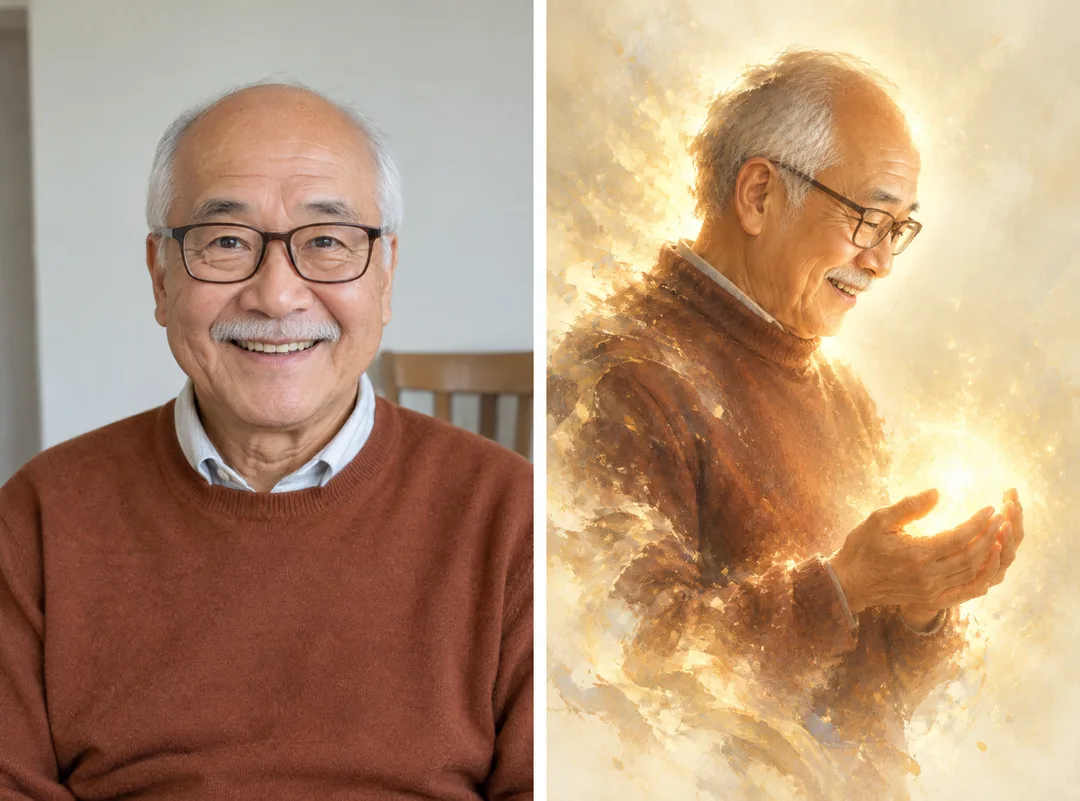
272My Portrait Dissolving Into Light Particles — Melting Into Backlight
Light in your hands lights your face while your hair and clothes scatter into brushstrokes and glowing particles.
ChatGPT Free OK
Fill in the fields
- 1Fill in the fields
- 2Copy the prompt
- 3Paste it into a GPT chat
- 4Send it as is and you get an image like the thumbnail example
- 5Attach one photo of yourself (optional) with the prompt and your photo is used in the result Optional
Full prompt 7,655 characters
Generate this image now. Return exactly one finished painterly portrait whose edges dissolve into luminous particles and translucent brushwork; draw it directly without explanations, code, plans, or questions.
Output exactly one finished 2:3 portrait image, 1024x1536 pixels. Leave the top 12% and bottom 15% free of essential text.
PHOTO RULE (this overrides any other line in this prompt, before or after it, that calls the photo required or mandatory or says to ask for it): if a photo is attached, use it exactly as the instructions below describe. If no photo is attached, never ask for one and never stop — invent a fitting fictional subject (person, pet, food, product or place, whatever this card is about) in the spirit of the card's example image, and finish the image.

[Resolve the portrait inputs first]
PHOTO_MODE = "【My photo】".
POSE = "【Pose】".
LIGHT_COLOR = "【Light color】".
DISSOLUTION = "【Dissolve】".
Interpret Korean menu values by meaning. Empty or absent inputs resolve to PHOTO_MODE no photo, POSE side profile, LIGHT_COLOR gold, and DISSOLUTION medium. Any "Choose for me", "Choose for me", or choose-for-me input is a menu command: choose one fitting listed value here and never put those words into the artwork. LIGHT_COLOR gold resolves to pale golden light with ivory highlights and muted ocher shadows; peach resolves to soft peach light with warm-white highlights and muted rose shadows; teal resolves to pale teal light with ivory highlights and deep blue-green shadows. Preserve natural skin pigmentation within this palette. POSE controls the head and shoulder orientation, while DISSOLUTION controls how far clothing and hair edges transform into the one fixed luminous painting effect. PHOTO_MODE governs only the optional likeness workflow; an attached personal portrait overrides a no-photo value, and a selected photo value without an attachment still yields a finished fictional portrait.

[Personal likeness, separate from style reference]
If the user supplies a personal human photo, retain the person's identifiable forehead and nose profile, lips, jaw, skin tone, hairline, hairstyle silhouette, eyewear, facial hair, visible marks and apparent age. Translate that identity into a finely painted semi-realistic illustration rather than pasting a photographic face into an unrelated painting. An orientation change may reconstruct a believable profile from those cues without inventing a famous person's features. If a reference contains several people use the most prominent one and show only that subject. Without a personal photo invent one distinctive fictional adult and complete the picture. Style-reference artwork guides only the soft layered paint, radiant backlight, restrained palette and melting contours. Do not take its specific face, costume design, signature or character identity. Create a new composition in the same visual family, with original anatomy and brush rhythms.

[Quiet pose and a single light source in the hands]
Compose a head-and-upper-body portrait, with a large clear profile or three-quarter head in the upper half and the subject's hands gently cupping one small luminous sphere below the face. For side profile turn the nose to one side and keep a calm lowered gaze; for slightly lowered head use a softly bowed three-quarter view; for turning back rotate the shoulders away while the face turns partway back and the hands remain naturally in front of the torso. Show exactly two coherent hands, softly relaxed fingers and believable wrist connections. Do not stretch arms across the frame to force the pose. The light sphere is a compact source of diffuse radiance with a barely perceptible core, not a labeled glass product, eyeball, mechanical object or second face. Its bright center lights the fingertips and nearby chin; a broad soft backlight behind the head contributes luminous hair edges. Keep the forehead, nose, mouth and chin readable even near the glow. Use a high closed collar and opaque long sleeves, with chest, shoulders, abdomen and arms fully covered. No bare torso, low neckline, exposed midriff or suggestive pose.

[Painted material turning into light]
Use sophisticated semi-realistic digital painting with layered thin glazes, soft wet brush edges, delicate hair lines and a few broken textured strokes. The effect is a visible transformation of the subject's own material: begin with solid hair and fabric near the face and central torso, then stretch individual edge strands and folds into translucent painted ribbons, flecks and glowing motes that merge with the surrounding atmosphere. Continue the original strand or fold direction before it disperses, so the fragments are causally attached to the silhouette. Do not place a conventional intact portrait beneath a uniform glitter overlay. Some shoulder and lower-torso boundaries should become incomplete, with the pale background shining through their painted gaps. Let the scattering form a loose curved flow around the sphere and along the outside shoulder, using small points, short feathered brush dashes and broad faint luminous washes at different scales. Keep the face's central landmarks intact and let the transformation concentrate at hair tips, the far shoulder, sleeves and lower body. No literal flames, floral bouquet, butterflies, shards, square glitches, star-filled silhouette or cybernetic interface; this card has one fixed light-and-paint dissolution style.

[Strength changes extent rather than art style]
For slight DISSOLUTION keep the core clothing silhouette mostly solid, dissolving only the outer hair tips, distant shoulder and a few sleeve folds. For medium allow the far shoulder and lower torso to fade into clear translucent gaps and a moderate curved trail while retaining a complete head and joined hands. For strong extend the scattering farther through the lower torso and outer hair, with broader washes and richer flecks, but retain the nose-to-chin contour, near eye area, central upper chest fabric and hand anatomy. Strong never erases the whole person or changes the image into abstract smoke. Every setting remains this same painterly illustration with the same composition, light source and material language. Scale the trail within the requested aspect ratio without cutting off the crown of the head or essential fingers.

[Radiant color and depth without blown-out anatomy]
Use a pale ivory atmospheric background, lightly washed with LIGHT_COLOR and muted cool neutral shadows for depth. Separate a warm or teal light plane near the hands from a softly shaded face plane, maintaining luminous contrast without turning the entire frame white. The brightest glow sits near the sphere and behind the hair, while lips, lashes, jaw edges and garment folds remain deliberately controlled. Blend the scattering into the background gradually with transparent paint, soft focus and tiny concentrated highlights, never a hard cutout edge. Add restrained grain and irregular pigment texture in the broad passages while keeping the facial drawing fine and confident. The scene should feel quiet, radiant and slightly transient, with a balanced diagonal from the profile to the cupped light. Deliver the single finished artwork itself, edge to edge, without poster title, written caption, name, number, brand logo, copied signature, watermark, screenshot overlay, comparison strip or tutorial graphics.

[Final output format]
Output exactly one finished 2:3 portrait image, 1024x1536 pixels. Leave the top 12% and bottom 15% free of essential text.
This selected output format takes priority over any fixed canvas size or aspect ratio elsewhere in this template. Adapt the composition, text zones and margins to the selected canvas without stretching or cropping essential content. Device safe areas apply only when a device is selected. Never print these format instructions on the image.
How did it turn out?
You may also like
- 276Sunlit Selfie-Mood Illustration — High-Key Anime Portrait Full of Sparkles
- 269An Anime Character in My Landscape Photo — One 2D Figure in Your Travel Shot
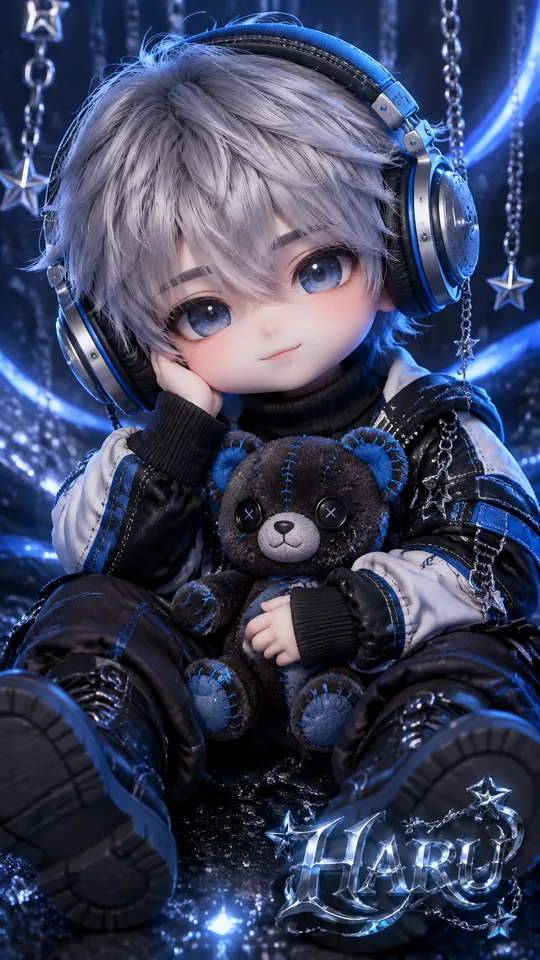
- 268My Name Gothic Punk Chibi — Button-Eyed Plush and a Chrome Name Logo
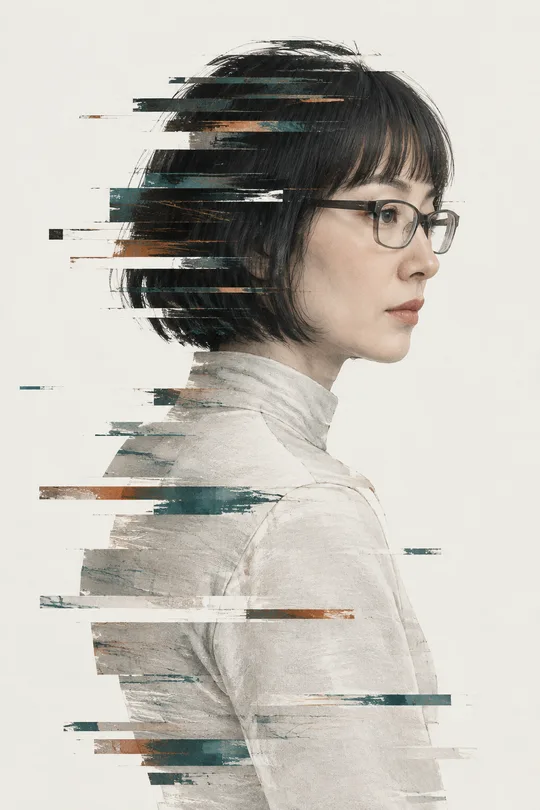
- 265Horizontal Glitch Portrait of Me — A Figure Sliced and Shifted on White
- 263Cute Halloween Sticker Sheet — Ghosts, Pumpkins, Bats and Candy

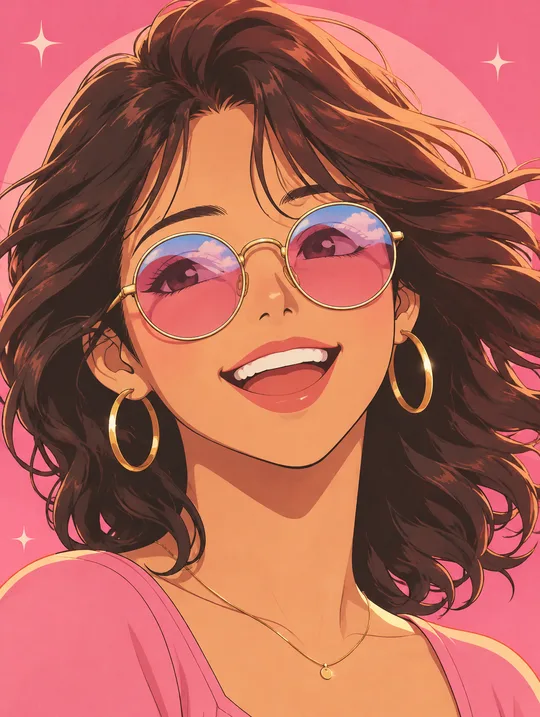
- 258Pink-Sunglasses City-Pop Anime Profile — Your Photo as a '90s Anime Illustration
How to use it · FAQ
When to use it
Light gathered in your hands lights up your face, while the edges of your hair and clothes break into brushstrokes and glowing particles and melt into the backlight. The face outline stays clear and everything else dissolves, like the same person stepping into a dream.
Filling in the fields
Just pick a light color. Gold feels warm; teal feels cool and mysterious. Set the dissolve to "Strong" and half the body turns to light.
Adding your photo (optional)
Without a photo, a fictional person is drawn, like the cover. To make it look like you:
- Upload a clear photo — don't send yet
- Paste the copied prompt into the same message box
- Check that both are there, then send
What to check
- Do the nose, mouth and jaw remain readable?
- Do hair and clothes flow naturally into particles?
Fixing what's off
Ask in the same chat, one thing at a time, e.g. "Keep the face clearer".