

All · Comics & illustration · People
193Monochrome Pen Portrait
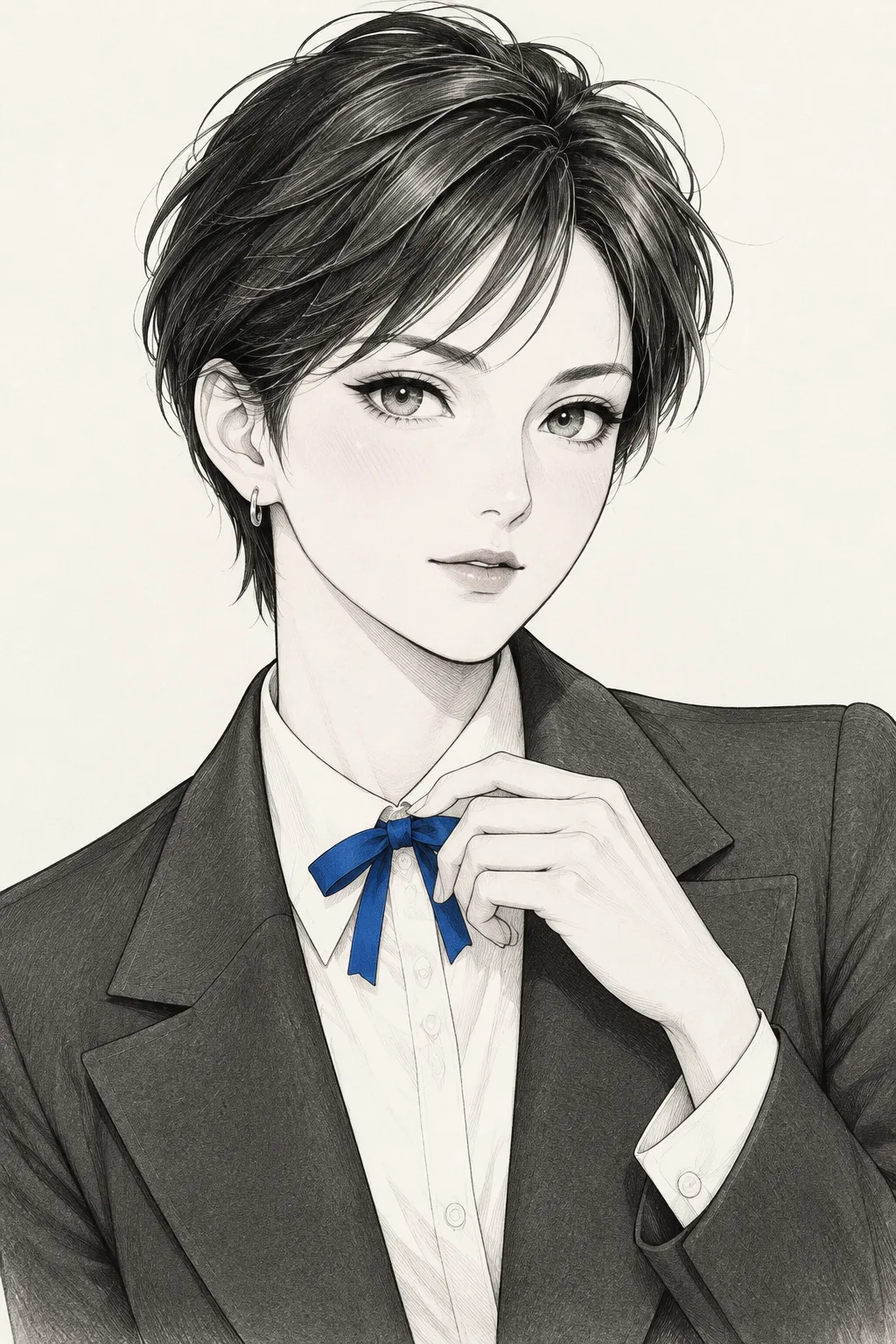
A fashion portrait built from directional ink hatching, with one small color accent.
What you get
- A pen portrait with directional hatching
- One localized color accent
- A rhythm control that changes ink density
Fill in the fields
- 1Fill in the fields
- 2Copy the prompt
- 3Paste it into a GPT chat
- 4Send it as is and you get an image like the thumbnail example
- 5Attach One adult reference photo (optional) with the prompt and your photo is used in the result Optional
Full prompt 2,806 characters
Create one finished fine-pen anime fashion portrait. Construct the cheek, nose side, jaw and bent sleeve using spacing and direction of individually visible black ink strokes. Leave lit planes as untouched paper. No grey wash, airbrush, pencil smudging or painted tonal gradients beneath the strokes.
Output exactly one finished 2:3 portrait image, 1024x1536 pixels. Leave the top 12% and bottom 15% free of essential text.
SUBJECT: 【Person】. An original adult with mature features retained. If a photo is attached, retain its adult facial identity, hair and visible distinguishing features; otherwise draw the fictional person immediately.
CROP AND GESTURE: 【Framing】. Keep the face and bent sleeve visible.
GARMENT CONSTRUCTION: 【Garment structure】. Lapels, seams and overlapping cloth edges define the garment, rather than a solid black silhouette.
FOLD ORIGINS: 【Fold origins】. Gather strokes at compression creases and spread them as cloth opens. Turn stroke direction with the cheek plane; increase density beneath nose and jaw. Leave nose ridge, lit cheek and projecting fold ridges uninked.
PAPER: 【Paper】. Continuous paper field, open margin around shoulders, no scenery.
SOLE COLOR ISLAND: 【Single color location】. Exactly one small contiguous colored object. Eyes, skin, lips, hair and cloth remain achromatic; paper retains its natural ivory. No reflected colored glow.
HATCH RHYTHM: 【Hatch rhythm】. Apply the selected rule to facial planes AND cloth:
Sparse horizontal → fine mostly horizontal strokes, widely spaced with small directional bends around cheek and folds; broad untouched cheek and sleeve areas, airy middle tones, few crossings.
Dense crosshatching → two intersecting families of fine strokes tightly packed in cheek shadow, under jaw and inside elbow; much heavier dark masses and visibly smaller paper gaps on those same planes. Keep lit ridges white. Do not merely darken a fill or change accent color.
Bold diagonal → thicker oblique parallel pen cuts following cheek slope and fold tension; broad white channels between strokes, angular graphic shadows.
Concentrated cluster → cluster almost all shadow strokes around the under-jaw-to-collar junction; let outer cheek and sleeves dissolve into sparse unfinished lines, opening the outer paper field.
Contemporary anime facial grammar: crisp expressive grayscale eyes, elegant thin contours, separated hair locks and fine flyaways. Hatching is structural, not uniform texture pasted over a smooth face. One portrait, natural anatomy, no letters, signature or watermark.

[Final output format]
Output exactly one finished 2:3 portrait image, 1024x1536 pixels. Leave the top 12% and bottom 15% free of essential text.
This selected output format takes priority over any fixed canvas size or aspect ratio elsewhere in this template. Adapt the composition, text zones and margins to the selected canvas without stretching or cropping essential content. Device safe areas apply only when a device is selected. Never print these format instructions on the image.
How did it turn out?
More cards in this category
How to use it · FAQ
Less bare paper made the jacket feel heavier
In two drawings of the same person and clothes, horizontal strokes shaped the cheek while closer lines darkened the underside of the jaw. At the inner elbow, clustered ink alternated with exposed paper, making the bent sleeve readable without a grey wash. Both drawings kept blue exclusively on the small round lapel pin.
For the third drawing, only Hatch rhythm changed to Dense crosshatching. Intersecting lines appeared on the cheek; the jaw shadow and armpit became much darker. Hatching spread across the jacket front, giving the garment more weight. The change came from smaller gaps of bare paper, rather than added color.
Describe where the cloth is pulled
The test used “Inside the bent elbow, diagonals pulling from the armpit.” Lines gathered at compressed folds instead of covering the whole shoulder at equal spacing. When changing the sleeve, specify the bend or pulling point rather than simply asking for more wrinkles.
The two base drawings differed slightly in face angle and hand position. Changing one setting does not lock the composition pixel for pixel. Compare the intersecting cheek strokes, weight under the jaw and white gaps inside the sleeve. If smooth grey fills the spaces beneath the ink, ask: “Remove the grey underpainting and leave visible paper between the strokes.”
Last checked · Published