

All · Comics & illustration · People
115Turn My Photo into a Chibi Selfie
Turn a personal photo into a large-eyed chibi selfie, choosing an arm-length view or a bedroom mirror reflection.
What you get
- One pastel hand-drawn chibi selfie
- An arm-length portrait or a mirror portrait with a visible taking phone
ChatGPT Free OK
Fill in the fields
- 1Fill in the fields
- 2Copy the prompt
- 3Paste it into a GPT chat
- 4Send it as is and you get an image like the thumbnail example
- 5Attach One personal portrait with the prompt and your photo is used in the result Optional
Full prompt 3,782 characters
Draw one finished chibi anime selfie, portrait Output exactly one finished 2:3 portrait image, 1024x1536 pixels. Leave the top 12% and bottom 15% free of essential text.. The picture is the selfie itself, suitable for sharing as a personal story.

SELFIE GEOMETRY
The central device is the relationship between the face, the taking phone and the room: a direct front-camera image versus a reflection photographed inside a bedroom mirror. Choose the camera geometry before drawing the portrait. A mirror selection changes the boundary of the whole portrait, not just an accessory behind the head.

FACE ANCHORS: 【Face anchors】
SELFIE EXPRESSION: 【Selfie expression】
ROOM CLUES: 【Room clues】
WRITTEN CAPTION: 【Selfie caption】
TAKING VIEW: 【Taking view】

Translate an attached personal portrait into an original chibi drawing. Keep its hair silhouette, existing glasses, skin tone and visible distinguishing marks; photo evidence overrides conflicting FACE ANCHORS. Without a photo, invent the adult described by FACE ANCHORS and finish immediately. Do not claim photographic likeness without a reference. An attached child's age must remain a child's. Exaggerate the head and round anime eyes, with a tiny nose, soft cheeks and a compact torso. Use lively cocoa ink outlines, flat pastel cel shading, lavender and peach highlights, warm cheek blush and a faint paper grain. This is a hand-drawn anime illustration rather than a plastic figurine. Opaque casual clothing covers the torso.

Use exactly the selected TAKING VIEW:
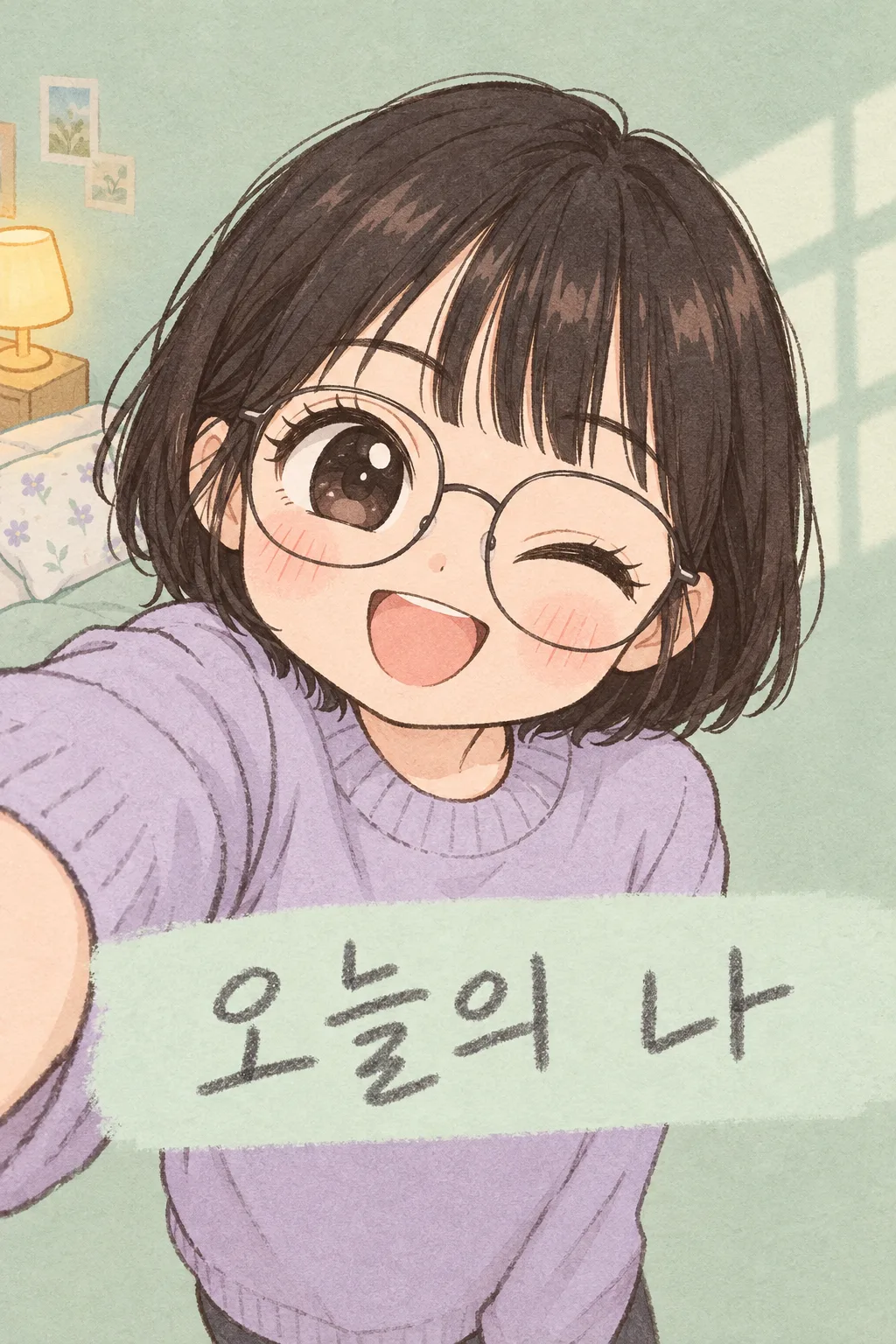
Arm-length selfie: the image plane IS the front camera view. A large face fills the upper middle, seen from slightly above. One sleeve and a foreshortened arm extend toward the lower foreground and disappear beyond the picture edge where the taking phone would be. The phone is outside the crop. The mint bedroom fills the entire background with no mirror border anywhere. The caption is handwritten across the quiet lower room area.
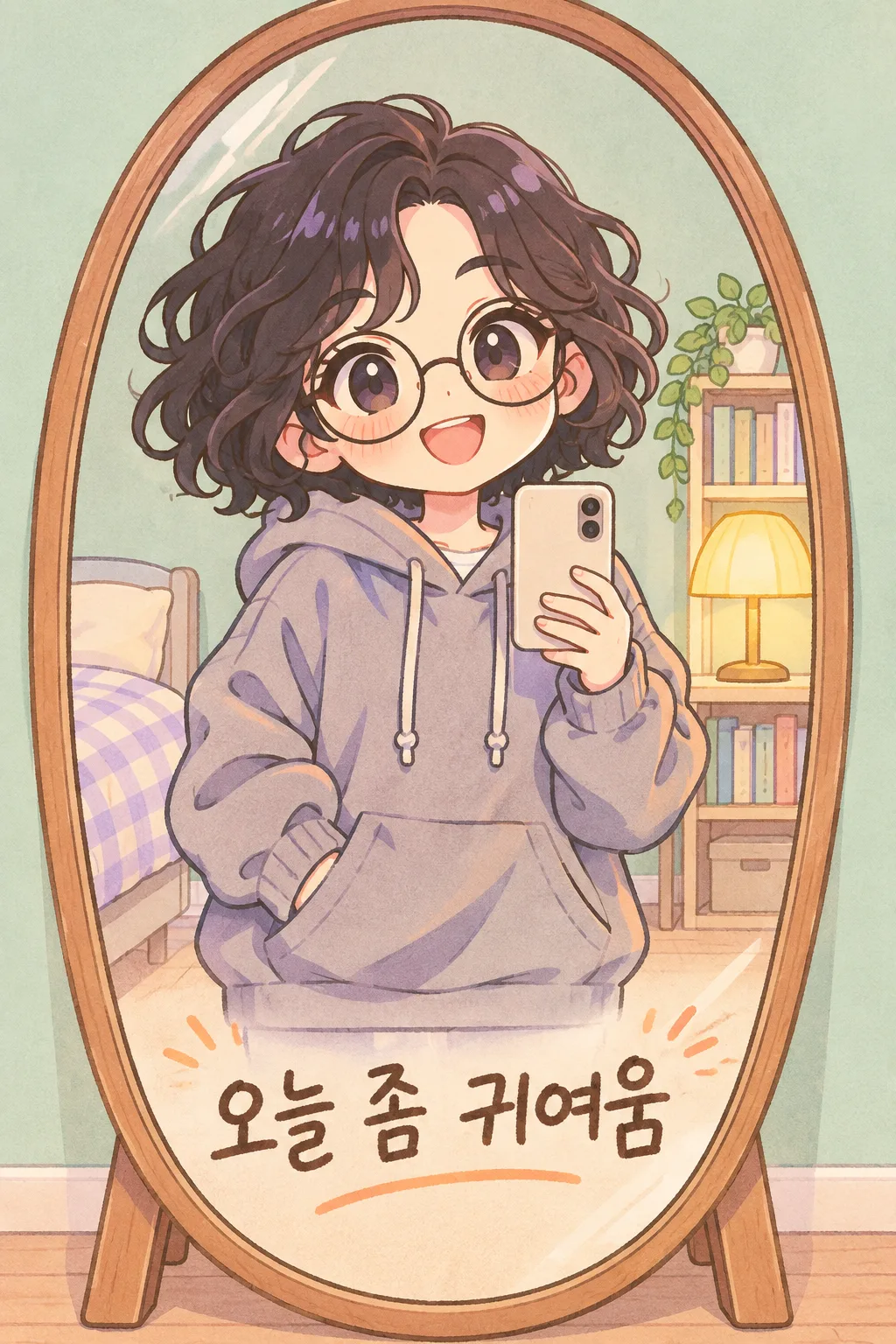
Mirror selfie: the image plane shows a tall freestanding oval bedroom mirror, with its entire wooden rim and short supporting feet visible inside the canvas. Put the chibi person ONLY INSIDE the mirror's reflective opening, from head to covered hips. The reflected person holds a visible plain phone beside the chest, below and clear of the face; its back faces the mirror. The mirror contains the person and reflected room clues. Outside the oval, show a strip of bedroom wall and the floor supporting the mirror; never put a second person outside it. Write the caption on the lower mirror glass below the reflected torso. No close face floating over the rim, no second portrait and no phone screen inset.

ROOM CLUES become simple bedroom objects placed behind the person, not floating stickers. Use the same mint room, pale yellow lamplight, outfit and ink treatment for either view. Keep the eyes looking toward the taking phone's lens. The requested expression changes eyebrows, eyes and mouth without hiding the face anchors. Draw coherent wrists and arms, but never make a particular finger gesture the subject of the picture.

Print WRITTEN CAPTION once, exactly, in large legible handwritten lettering. All other supplied notes are directions, never visible labels. Keep the caption clear of eyes, glasses, phone and mirror rim. Leave comfortable trim space around the head and lettering. One continuous illustration with one person; no interface, panels, comparison image, commercial logo, named franchise, signature or watermark. Return the artwork directly.

[Final output format]
Output exactly one finished 2:3 portrait image, 1024x1536 pixels. Leave the top 12% and bottom 15% free of essential text.
This selected output format takes priority over any fixed canvas size or aspect ratio elsewhere in this template. Adapt the composition, text zones and margins to the selected canvas without stretching or cropping essential content. Device safe areas apply only when a device is selected. Never print these format instructions on the image.
How did it turn out?
More cards in this category


How to use it · FAQ
From an extended sleeve to a mirror portrait
Both direct-view tests kept the short black curls, round glasses and broad smile. The face filled the picture and a grey hoodie sleeve reached toward the lower edge, leaving the taking phone outside the crop. Changing only Taking view to Mirror selfie placed the person inside a wooden oval mirror, visible below the waist, holding a phone beside the chest. The mirror feet and the back of the phone became visible. The space enclosing the face and the amount of body shown changed together.
The caption can overlap the hoodie
The supplied Korean test caption was correct in all three images. In the second direct view it climbed onto the hoodie despite the request for quiet room space below. If clothing detail matters, follow up with: “Leave visible room floor below the caption and separate the lettering from the clothes.” The mirror version put the writing on the glass below the reflected body. Its upper rim touched the canvas edge, so check the rim before cropping.
These tests used a fictional adult without a photo; real portrait likeness was not tested. The age of 28 still became a youthful chibi face with large eyes and a tiny nose. Use hair and glasses as identifying anchors rather than expecting realistic age rendering. When using a photo, send one clear portrait and the completed prompt in the same message. Room clues become objects behind the face, such as a bookcase or lamp; they are not objects to hold.
Last checked · Published