
All · Social posts · Memes
167What Gem Is My Vibe?
Turn your own face photo and chosen mood into one gem result for Stories or Threads.
Fill in the fields
- 1Fill in the fields
- 2Copy the prompt
- 3Upload One clear face photo and paste the prompt into your GPT chat
- 4Check that both the photo and prompt are attached, then send
Full prompt 5,411 characters
Generate this image now. Draw it directly - do not describe it, explain it, or ask questions.
Output one landscape A3 poster, 420 x 297 mm, aspect ratio 1.414:1. Use the largest supported resolution. Final print target: 4961x3508 pixels at 300dpi. Keep all text at least 10 mm inside the edges.

[Purpose]
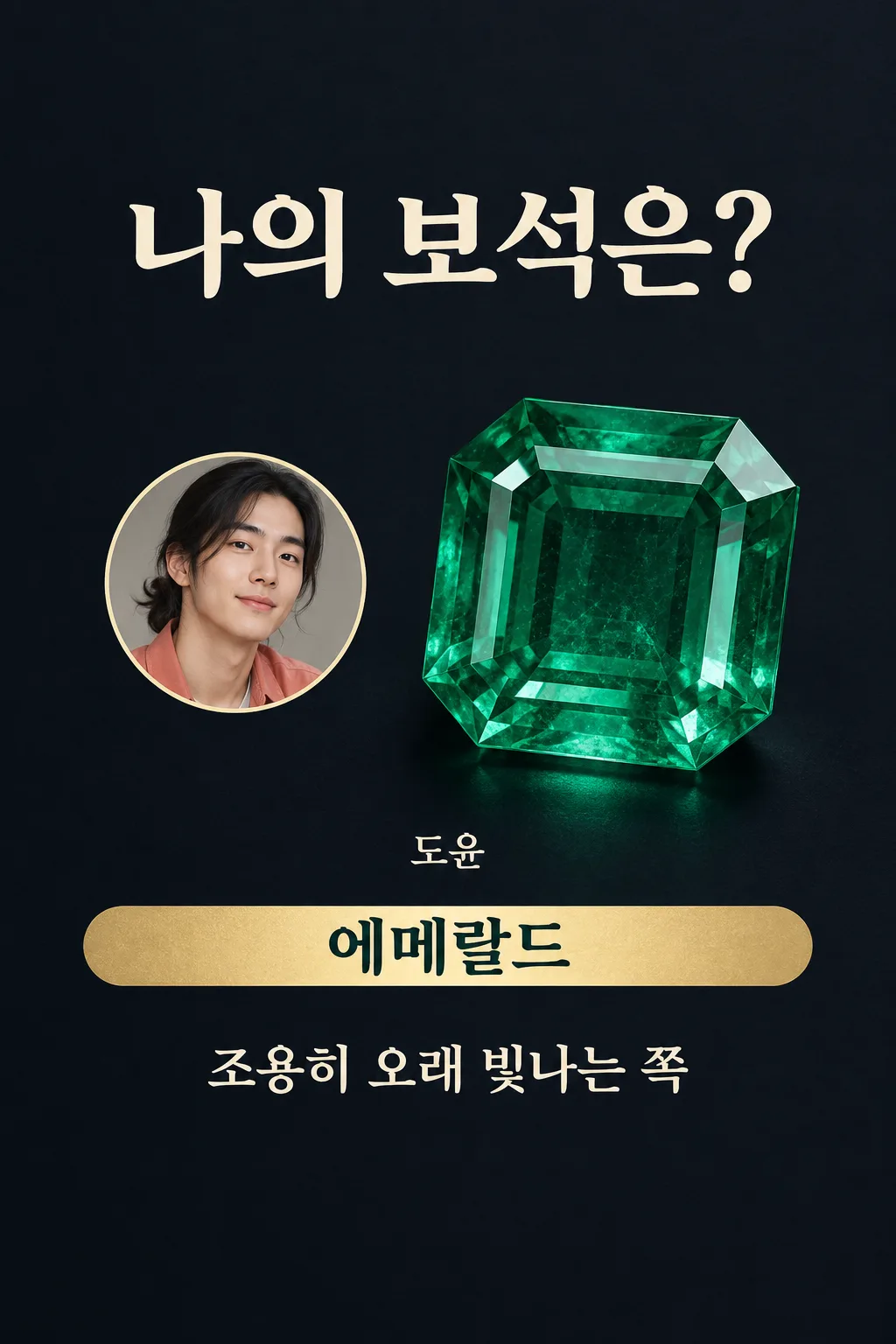
Create one finished social result card asking "What Gem Is My Vibe?". The user shares a personal face photo and self-described mood. Choose exactly one gemstone as a visual metaphor for that description; keep a small recognizable photographic portrait beside a much larger gemstone. This is a playful self-introduction for Stories and Threads. It is not a birthstone calculation, gem appraisal, personality diagnosis, spiritual reading or shopping recommendation. No property of the face implies a private trait.

[Scene]
Use "【My chosen mood】" as the sole basis for the symbolic choice. Select one ordinary gemstone from emerald, sapphire, ruby or amethyst. Match its recognizable ordinary color: emerald green, sapphire blue, ruby red, amethyst violet. The user cannot select an illustration technique or layout; every result remains a dark museum display with one realistic faceted stone. The brief explanation uses the tone "【Line tone】". Explain the chosen color with a light metaphor drawn from the supplied mood, never a claim about health, destiny, luck, wealth or the person's actual biology. Give no score, chemical data, carat weight, price or scientific assertion.

[Attached photo]
Use the attached single face photo for one circular photographic cameo, preserving actual facial proportions, hairstyle, skin tone, real glasses and visible expression. Do not replace the person with a generic fashion model. Only the portrait cameo is photographic identity material; the stone is one original, realistically rendered display object. Crop the photo within the circular cameo in the generation itself, not as a separate task for the user. No extra human figure appears.

[Text layout]
All visible text is in English. On a matte midnight-ink ground, put the question in large warm-ivory lettering across 13-26% height. The gemstone, a single substantial octagonal step-cut object with coherent facets and a contact shadow, occupies the right-center between 30-63%, viewed from slightly above. Put the circular portrait in the left-center at 42-57%, with a thin ivory rim; it occupies only 22% of the width. A restrained horizontal pale-gold result strip spans 67-74%; print only the selected gemstone name in it using the corresponding natural name from "Emerald", "Sapphire", "Ruby", "Amethyst". Below at 77-82% place one short explanation, at most two short lines, in large enough ivory letters to read on a phone. No extra microtype or mineral facts.
If supplied, print "【Name】" once as a small personal signature above the result strip at 62-65%. Do not invent a name when this instruction is absent.

[Style]
One fixed refined museum-specimen card, original realistic gemstone rendering, dark flat paper, precise broad typography, and one gold result strip. Do not use flower petals, food plates, tarot symbols, ornate frames, constellation charts, simulated grading certificates or a jewelry advertisement. A solid stone volume should have connected planar facets and a consistent perspective, not a pile of crystal shards. Keep its front face crisp and its reflected light controlled; there is no glow cloud or starburst effect. The round identity photo and faceted specimen make a deliberate asymmetric composition rather than an equal before-and-after split.

[Visual hierarchy]
At small list size the large question, colored gem and answer strip explain this card immediately. The answer is second only to the question; the user's signature stays subordinate. Keep the cameo clearly readable without letting its edge touch the gemstone. Use empty dark space to separate the three elements. Text stays wholly inside 12-85% height, with at least 7% side margins. One line of explanation never repeats the question or gemstone name.

[Lighting and texture]
Subtle studio light from upper left passes through the gemstone, producing believable internal tones and a small shadow beneath it. The matte background remains almost untextured. Avoid neon, excessive lens flares, glitter storms, a plastic toy surface or letters made of gemstones.

[Text rules]
All quoted visible copy belongs to the artwork, while input labels and instruction headings do not. Resolve any automatic wording control into a short original sentence before drawing; never print that control literally. Preserve provided spelling and numbers, and use the target language consistently. Keep readable letters separate from highlights, folds, shadows and decorative marks. Do not invent a price, discount, date, availability, award, endorsement, biography or purchasing condition. The fixed composition and medium stay the same for every user; personal inputs change its content only.

[Avoid and final delivery]
Deliver exactly ONE finished raster image in this response. Draw it directly with image generation. Do not execute code, give drawing instructions instead of an image, offer multiple versions, create separate pages, ask for a next message, or require cropping and assembly. No phone mockup, browser frame, watermark, publisher logo, branded packaging, existing character or celebrity likeness. Finish all artwork within the selected aspect ratio, preserving the composition and large readable lettering. Leave the upper 12% and lower 15% free of essential lettering and maintain generous side margins.
You may also like
How to use it · FAQ
When to use it
Share a lighter introduction than a long biography: which gem would represent the mood you choose for yourself? A face photo and your own description become one finished display card. One large stone sits on the right, a small round photo sits on the left, and the answer appears in a pale gold strip. Post the complete image to Stories or Threads and let friends try their own descriptions. This card is a visual game, not a birthstone chart or a recommendation to buy jewelry.
Fill the fields
Describe the mood you want to present, such as calm and steady or bright and bold. Two short ideas give the explanation room to breathe. The photo does not supply a hidden personality test. Choose a gentle, witty or plain sentence tone; it changes the explanation only. The name is optional. A supplied name becomes a small signature above the result strip. An empty name removes that instruction without making up a replacement identity.
Send the photo and prompt together
Add one clear photo of your own face to the GPT composer and do not send it yet. Paste the completed prompt into the same composer, confirm that both attachments and text are present, and send once. Real glasses, hair and facial proportions should remain recognizable in the circular cameo. A clear single-person photo makes this easier to check than a distant group picture. Use another person's photograph only with their permission.
Check the finished card
There should be one question, one portrait, one gemstone, one result strip and one short explanation on a single canvas. Four stones presented as choices are not the intended result. Emerald should read green, sapphire blue, ruby red and amethyst violet. Check that the printed answer agrees with the visible color and that the cameo still looks like the attached person. Remove any claim about healing, guaranteed luck, wealth or destiny. These are not part of the metaphor.
Keep the explanation useful
A short mood description produces a clearer personal line than a long list of traits. Let GPT choose the gem rather than inserting the name of a stone into the mood field. Use Witty for a light joke or Plain for a quieter introduction. If text or likeness fails, send the photo with corrected inputs in a new message and request the same complete image. No cutting, assembling or external caption editor is needed to use the finished result.
Questions
- Does it analyze my face? No. The symbolic answer comes from the mood you write. The photo identifies the owner of the card.
- Does the gem promise luck or healing? No. The result is a color metaphor, not a health or spiritual claim.
- Can I leave my name blank? Yes. Only the small signature disappears; the question, stone and explanation remain.
- Was it tested in the free GPT interface? The cover was checked through the image API during production. We did not run a direct free-interface generation test. Image availability depends on your account's current limits.