

All · Comics & illustration · Characters
117My Character Profile Poster
Turn an everyday skill into a signature belonging on an illustrated full-body character profile.
What you get
- A character profile poster with a signature belonging
- A circular detail or a physical display rack
Fill in the fields
- 1Fill in the fields
- 2Copy the prompt
- 3Paste it into a GPT chat
- 4Send it as is and you get an image like the thumbnail example
- 5Attach One personal portrait, optional with the prompt and your photo is used in the result Optional
Full prompt 4,020 characters
Draw a finished original character profile poster for a creative account introduction. Deliver the illustration itself, portrait Output exactly one finished 2:3 portrait image, 1024x1536 pixels. Leave the top 12% and bottom 15% free of essential text..

THE SKILL BECOMES A BELONGING
Make the person's real everyday skill visible through a personal tool, then link that tool to a short profile statement. This is an editorial character dossier, with a full-body urban explorer and a dedicated illustrated inventory area. The tool is the evidence of the skill, not a magic power, rating or achievement.

PROFILE NAME: 【Display name】
EVERYDAY SKILL: 【Everyday skill】
SIGNATURE BELONGING: 【Signature belonging】
PERSONAL MANNER OF USING IT: 【Wear from use】
CHARACTER QUOTE: 【Character quote】
APPEARANCE ANCHORS: 【Appearance anchors】
INVENTORY ARRANGEMENT: 【Inventory arrangement】

The full-body person wears an unbranded everyday jacket, trousers and comfortable shoes. Preserve age, face shape, complexion, hair and existing glasses from an attached portrait; the portrait takes priority over conflicting appearance notes. Without a portrait invent the person described by APPEARANCE ANCHORS and complete the page immediately. Never claim a resemblance has been tested without a photo. Keep an attached child's actual age. No extra person, alternate pose or duplicate portrait.

Use refined original editorial anime illustration: dark teal ink outlines, fine pencil shading, cream paper grain, ocher accents, restrained desaturated teal and soft afternoon side light. One flat illustrated magazine page. No game interface, statistics, armor, franchise costume, plastic figure or photographic mockup.

Compose the name and skill in the upper-left column; the person stands full length on the right with both shoes visible. The lower-left is a generous dedicated inventory area. Print PROFILE NAME once as the largest lettering. Under it print EVERYDAY SKILL once. Place CHARACTER QUOTE once below the skill in legible pencil handwriting. Print no headings or other text. Keep words inset from the paper edges and away from the figure.

Render SIGNATURE BELONGING as a plausible portable everyday object. PERSONAL MANNER OF USING IT must be physically visible as creases, tabs, repairs or wear on that object, with no legible writing on its surfaces. The person carries the same object in a closed or folded state. The inventory shows a larger inspection view of that belonging, not additional possessions. Keep the tool design and wear coherent between the carried version and the inspection view.

Execute ONLY the selected INVENTORY ARRANGEMENT:
Circular detail: the lower-left inventory is an oversized circular magnifying diagram of the belonging opened flat, surrounded by cream paper. A thin teal leader line connects this circular detail to the small carried object. No shelf or pegs. This is a printed diagram rather than a physical magnifying glass.
Display rack: replace the entire circle and leader line with a small upright wooden display rack at the character's left, occupying the lower-left inventory area. The opened belonging hangs from the rack's upper rail, its weight and shadow visible. The person remains standing beside the rack. No circular inset or connecting leader. This is a physical rack on the same ground as the character, not a wall background.

The branch names are internal instructions and never printed. Keep all other inputs, palette and illustration style unchanged between arrangements. Use supplied profile text verbatim in its own language, never print braces, field names, labels, pseudo-text, logos, signatures or watermarks. Thumbnail reading: name, full-body character, then an opened personal belonging revealing the skill.

[Final output format]
Output exactly one finished 2:3 portrait image, 1024x1536 pixels. Leave the top 12% and bottom 15% free of essential text.
This selected output format takes priority over any fixed canvas size or aspect ratio elsewhere in this template. Adapt the composition, text zones and margins to the selected canvas without stretching or cropping essential content. Device safe areas apply only when a device is selected. Never print these format instructions on the image.
How did it turn out?
More cards in this category

How to use it · FAQ
The folded map opened into a profile detail
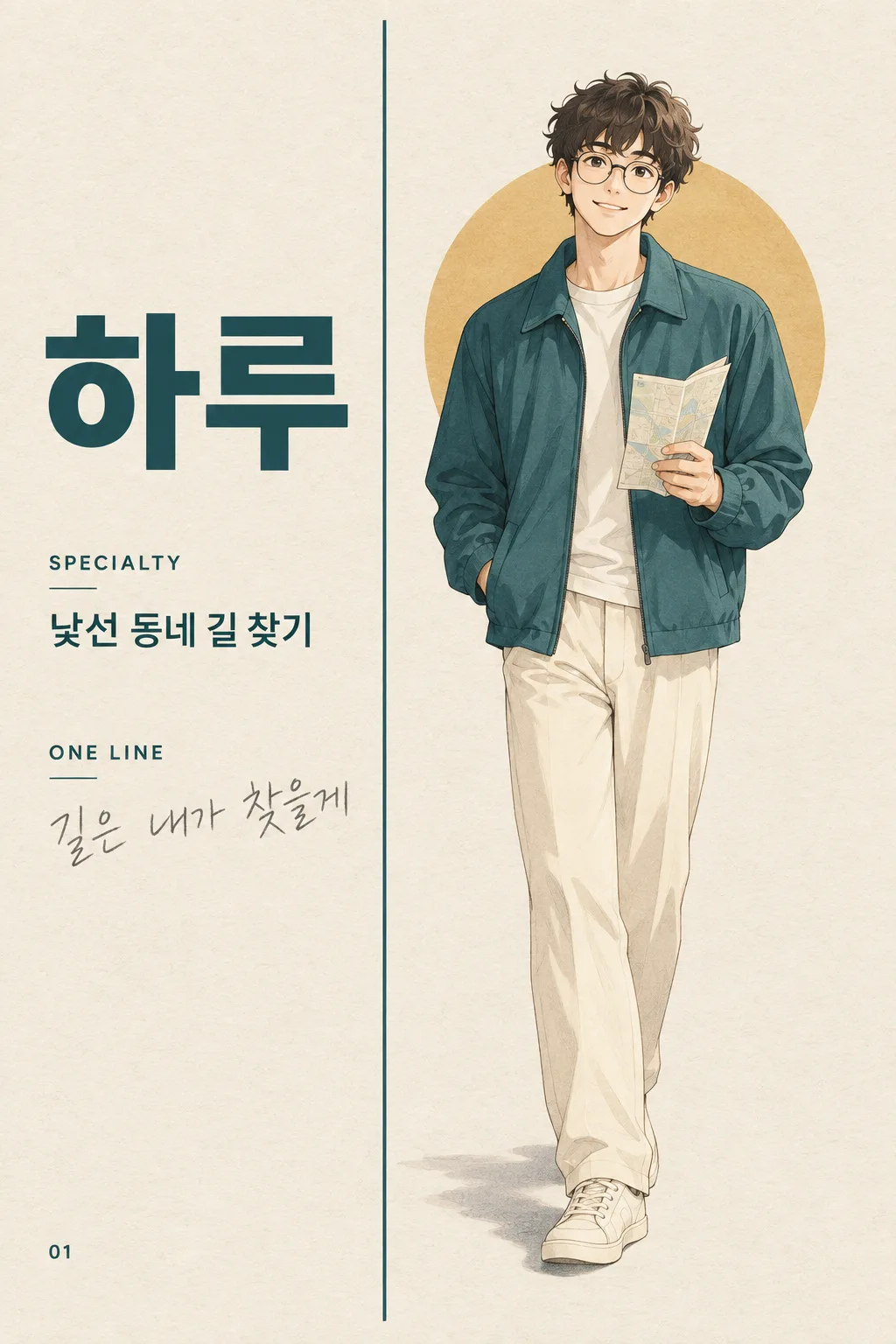
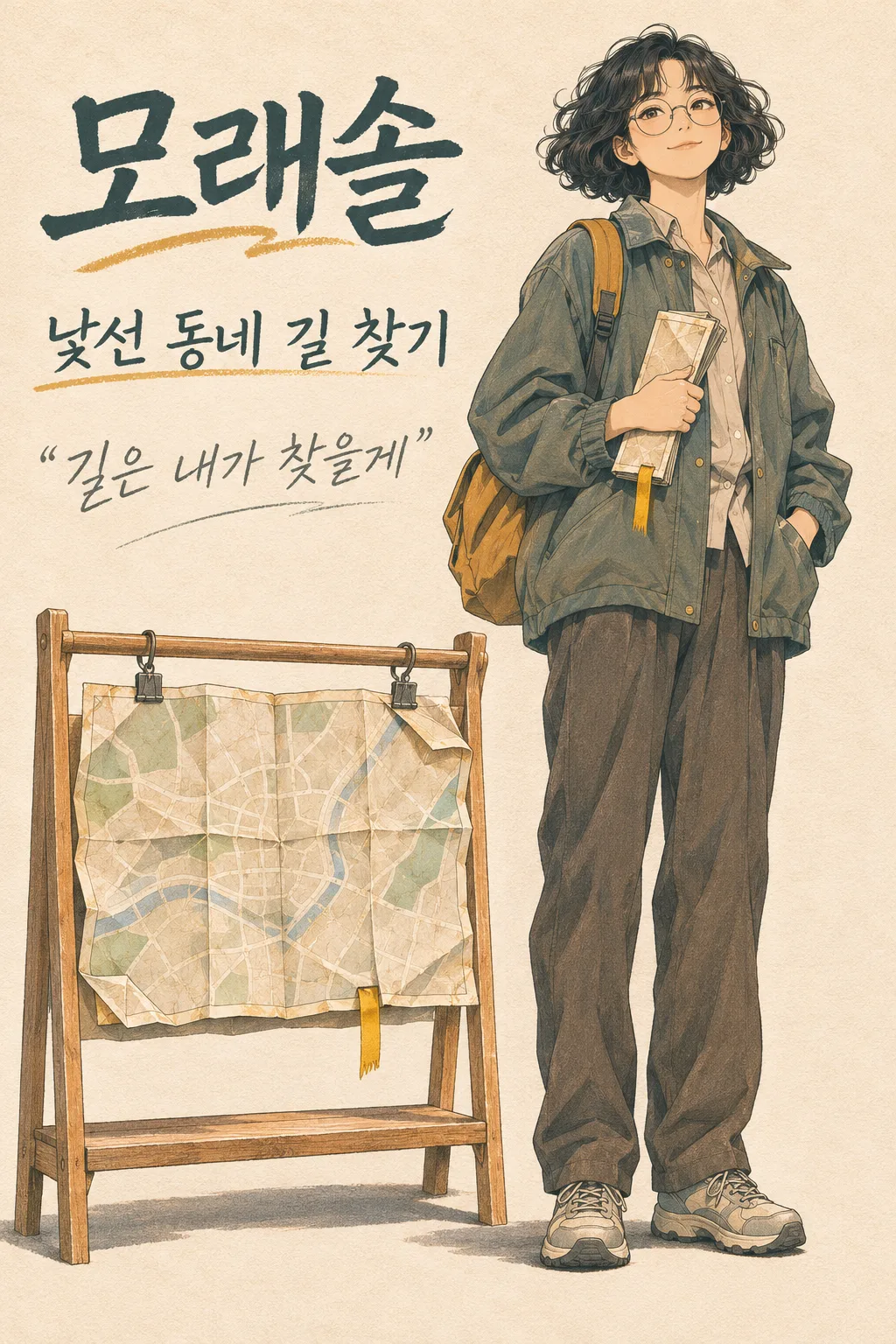
Two runs with identical inputs showed a carried folding map and a large circular inspection view at lower left. Creased corners and a mustard bookmark made route finding visible through a used belonging. The supplied name, skill and quote were readable in all three Korean test images. The English wording shown here has not been image-tested.
A diagram becomes a small exhibit
Changing only Inventory arrangement to Display rack removed the circle and leader line. The opened map hung from clips on a wooden rack, whose feet shared the character's floor. The cream paper, teal ink and full-body illustration remained. The cover and first example show the circular version; the second example shows the rack.
Pair a skill with something used to practice it: recording conversational ideas with a pocket notebook, for example. Wear from use describes physical creases, tabs or repairs. It does not create credentials or ability scores.
One leader line missed its object
In the second default run, the leader ended on the sleeve instead of the carried map. A useful follow-up is: “Move the leader endpoint onto the map in the character's hand.” Street patterns and jacket colors also varied between runs; the tool's fine design was not copied exactly. These tests used an invented adult without a portrait, so photographic likeness was not evaluated.
Last checked · Published