

All · Wallpapers · Fantasy
616Pastel Planet Wallpaper
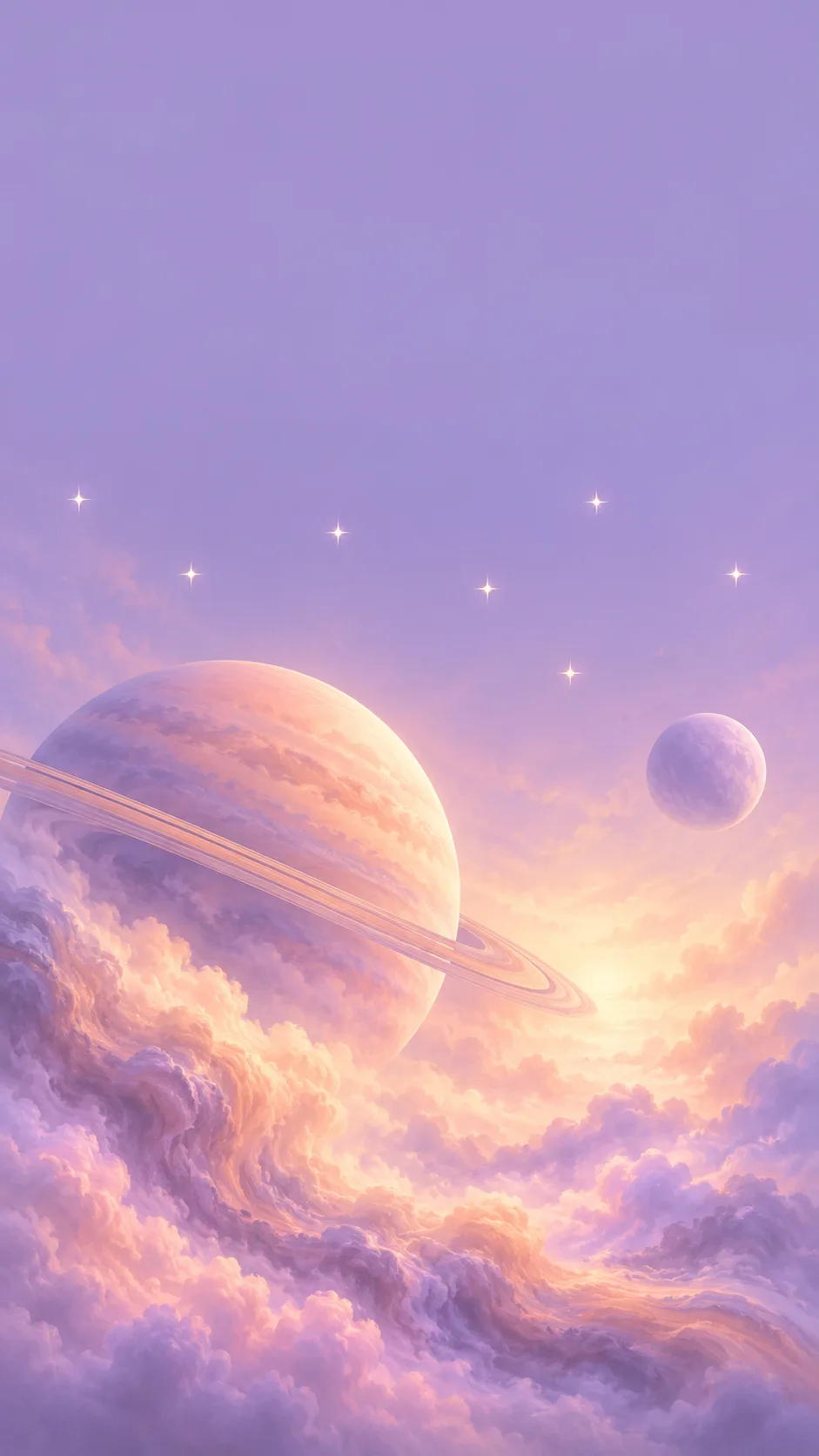
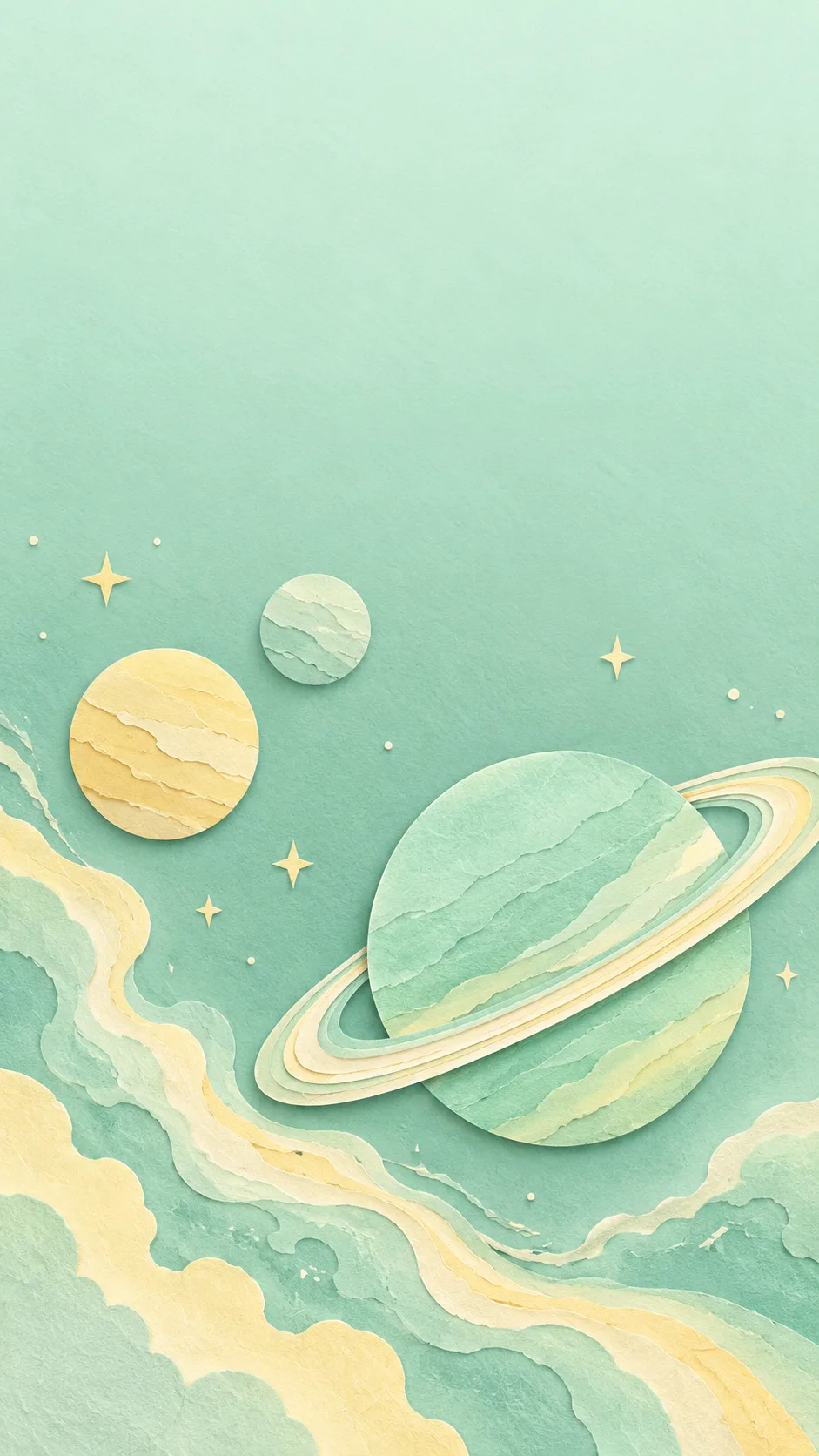
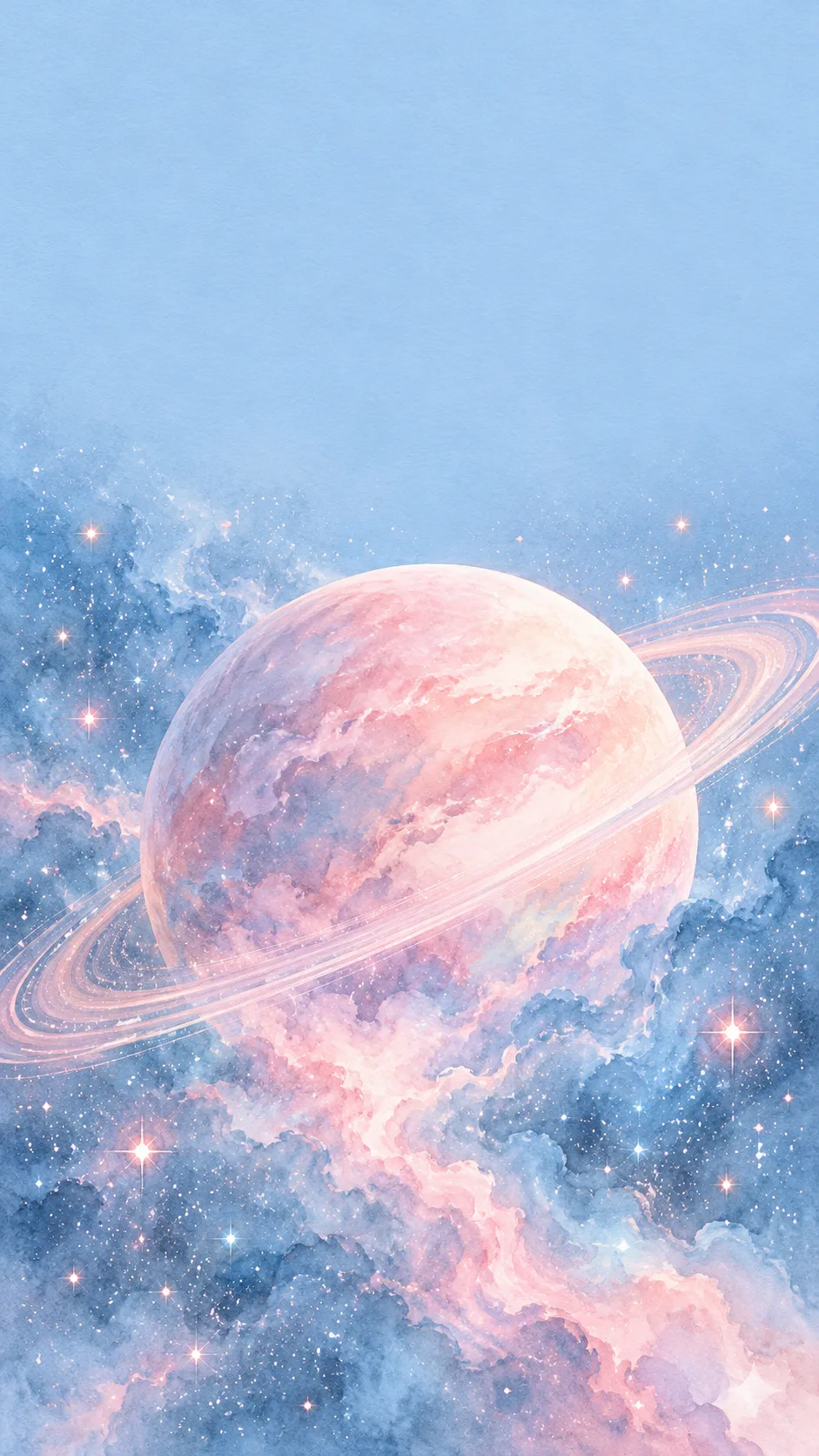
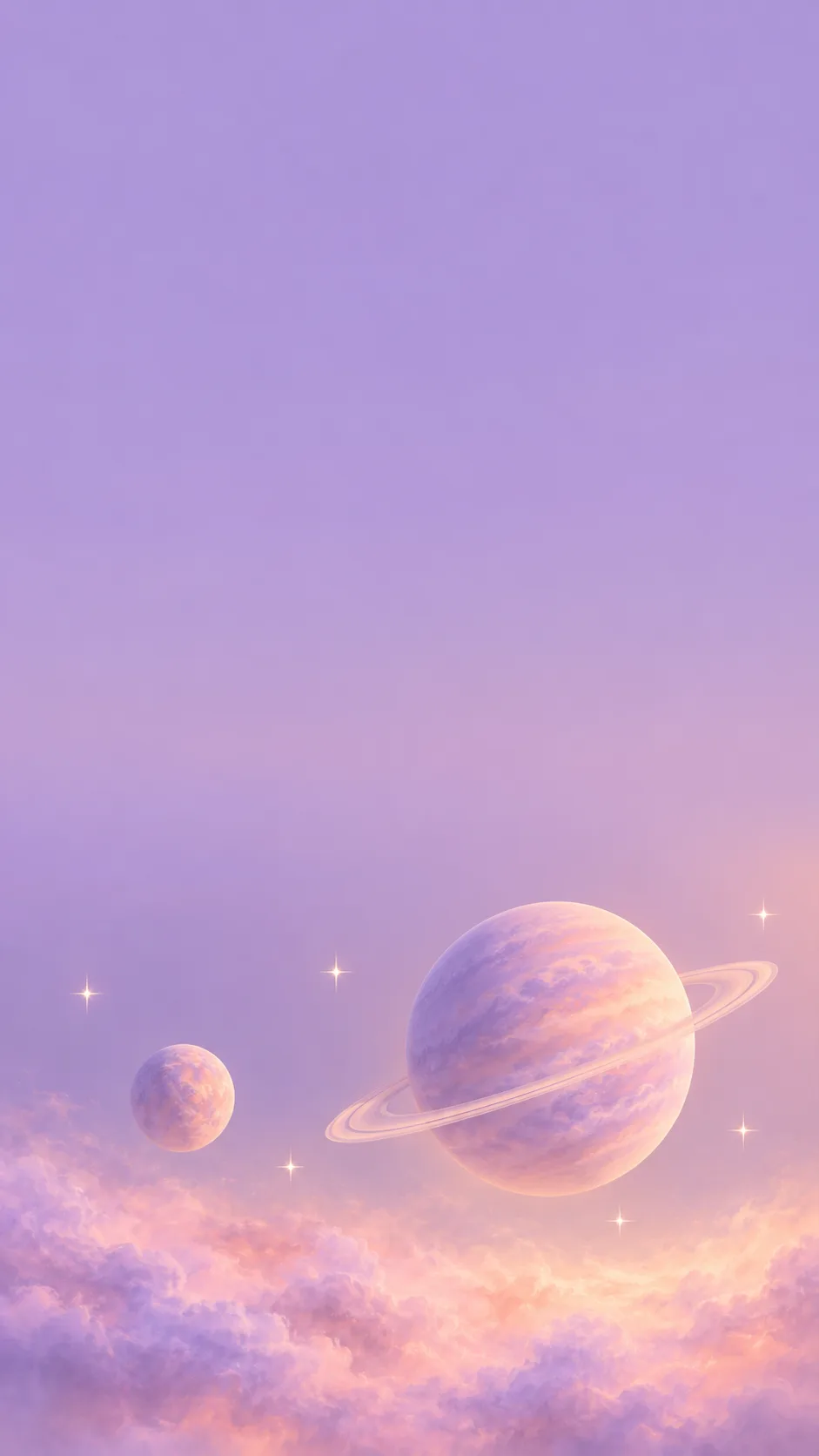
Soft planets and nebulae beneath quiet sky reserved for your lock-screen clock.
Fill in the fields
- 1Fill in the fields
- 2Copy the prompt
- 3Paste it into a GPT chat
- 4Send it as is and you get an image like the thumbnail example
- 5Attach a real photo that fits the card and it is used in the result: a background photo for background cards, a person or food photo for those cards Optional
Tested by us
- Test date
- 2026-10-29
- Tool
- ChatGPT image model (run in Codex) — same model as free ChatGPT, only limits differ
- Result
- Pass
- What worked
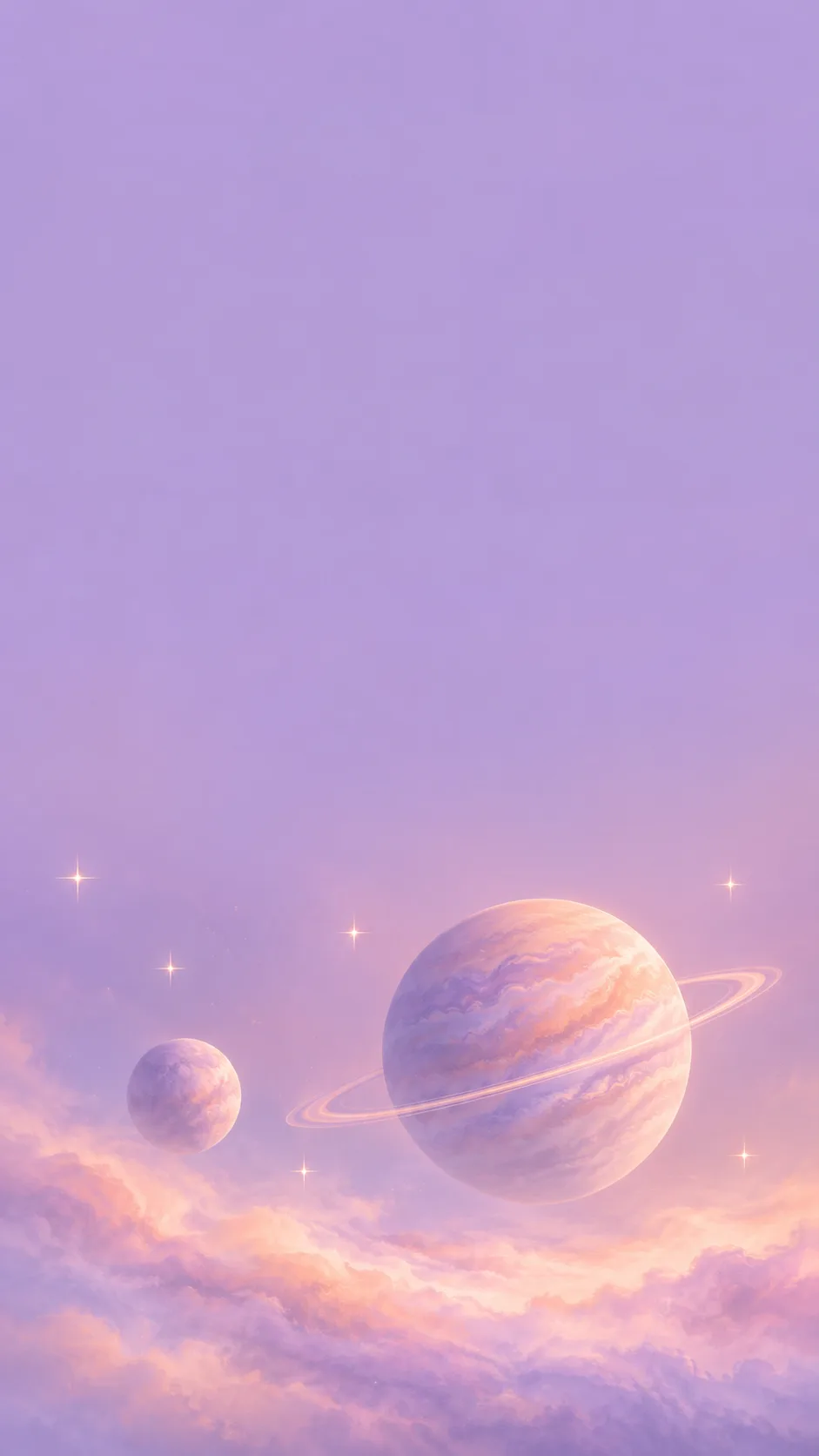
- Both final results confirmed 2 planets of different sizes and only the 1 ring on the larger planet. There are lavender and peach 3D spheres and a bottom fog nebula, and the upper 28% is free of planets, stars, rings, nebulae, clock, and text. Planets and rings are within the bottom 40%, and the large planet diameter is about 20% of the screen height. No borders, phone mockups, text, or watermarks are visible.
- What did not work
- None
- How to improve
- Actually, changing it to "nebula is a horizontal fog band in the very bottom 15%" caused the upward-surging nebula to move down and widened the clock margin. However, the sentences resolving 7 stars, removing micro light dots, nebula boundaries, and output ratios were not found in this test. Manually check the star count and top margin before saving.
Full prompt 2,438 characters
Generate one finished pastel cosmic planet wallpaper now. Output one image without explanation, code or questions.
Aspect ratio: Output size 1080x1920 pixels, 9:16 portrait story. Keep all text inside the central 80% of the height., default portrait 9:16. Fill every edge without borders, phone mockups or multiple panels.
Color: 【Color】. Planet count: 【Planet count】. Stars: 【Stars】. Blank values default to Lavender and peach, 2 and Few respectively.
Invent a cosmic scene with exactly the selected number of differently sized planets. Give only the largest planet a fine ring and leave all others ringless. Leave the entire top 60% as smooth sky in the selected palette without objects or clouds. Fit all planets, rings and stars completely within the bottom 40%. Render the nebula as a single smooth horizontal mist band confined to the bottom 15%. Do not extend cloud columns or light beams upward from it. Do not draw zone boundary lines. Keep the largest planet small, about 20% of the image height in diameter. Do not add moons or circular ornaments that increase the planet count.
Use the complete treatment linked to the selected palette: Lavender and peach means softly dimensional spheres and misty nebulae at serene dawn; Mint and butter yellow means fresh morning in flat layered paper craft with visible fibers; Powder blue and rose pink means dreamy night with transparent watercolor washes and fine starlight. Use only the selected treatment without imitating any specific artist or artwork.
Many means abundant small stars of varied sizes in the lower area. Few means exactly 7 distinct small cross-shaped stars spaced apart in the lower area. Omit all other dots and microscopic sparkles; render nebulae as smooth mist without light dots.
Reserve the top 28% for quiet single-hue sky with little brightness variation. Keep planets, rings, nebulae, stars and light sources out. Leave room for a clock but do not draw one.
No text, numbers, dates, weekdays, names, icons, logos, signatures, watermarks, real brands, people or existing characters. Before output verify palette, treatment, exact planet count, star density and upper negative space.

[Final output format]
Output size 1080x1920 pixels, 9:16 portrait story. Keep all text inside the central 80% of the height.
This selected output format takes priority over any fixed canvas size or aspect ratio elsewhere in this template. Adapt the composition, text zones and margins to the selected canvas without stretching or cropping essential content. Device safe areas apply only when a device is selected. Never print these format instructions on the image.
How did it turn out?
You may also like
How to use it · FAQ
Create a fictional pastel lock-screen cosmos with the top 28% kept quiet for your device clock. No photo is needed. The default is portrait 9:16; no clock or phone frame is drawn. The catalog cover is an independently generated 2:3 result.
The three required fields are Color, Planet count and Stars. Each palette also determines the medium: Lavender and peach gives dimensional dawn, Mint and butter yellow gives fresh layered paper craft, and Powder blue and rose pink gives transparent watercolor night. There is no separate style selector. Choose 1, 2 or 3 planets; only the largest receives a ring. Many adds abundant stars; Few requests exactly 7 small cross-shaped stars without fine sparkle clouds. Blank values use Lavender and peach, 2 and Few.
Example 1 has two lavender-and-peach planets, Example 2 has three mint-and-yellow planets with Few stars, and Example 3 has one blue-and-pink watercolor planet with Many stars. Example 1 also uses Few stars. Every gallery image differs from the cover. There is no name field, so Haru is not drawn.
Paste the completed prompt into an image AI once to request one image. Count planets and inspect the upper sky before saving. If Few produces too many dots, request a redraw removing microscopic sparkles as well. Check the wallpaper on your own lock screen because clock placement varies by device. These imaginary planets are decorative rather than astronomically accurate.