

All · Comics & illustration · Animals
151Pet Picture-Book Cover
Turn a pet’s comfort blanket into a meadow picnic or a tiny tent on an original gouache picture-book cover.
What you get
- One original pet cover with a patterned blanket shelter
Fill in the fields
- 1Fill in the fields
- 2Copy the prompt
- 3Paste it into a GPT chat
- 4Send it as is and you get an image like the thumbnail example
- 5Attach One pet photo with the prompt and your photo is used in the result Optional
Full prompt 2,994 characters
Paint ONE finished portrait 2:3 picture-book cover for a pet owner's social account. Return the flat cover artwork itself.
Output exactly one finished 2:3 portrait image, 1024x1536 pixels. Leave the top 12% and bottom 15% free of essential text.

PET NAME: 【Pet name】
PET MARKS: 【Pet markings】
COMFORT BLANKET PATTERN: 【Blanket pattern】
LITTLE DISCOVERY: 【Meadow discovery】
COVER TITLE: 【Cover title】
BLANKET SHELTER: 【Comfort blanket】

The story device is the pet's familiar comfort blanket becoming its own tiny meadow expedition camp. Repeat the supplied blanket pattern on the actual fabric, so the owner's domestic object anchors this imaginary adventure. One large pet explores the supplied little discovery beside the blanket; no human, second animal or dangerous event. Keep a low moss-green meadow, oversized rounded leaves and a generous warm ivory title sky.

BLANKET SHELTER changes the physical scene:
Spread on the grass = a broad flat blanket lies on the meadow as a picnic island. Show its complete near edge, a low folded corner and the pet sitting on its surface. Open sky behind the pet; no upright cloth, poles or tent.
Make a tiny tent = the SAME patterned blanket forms a pitched triangular shelter over two plain wooden supports. A large triangular opening surrounds the seated pet; the roof and hanging cloth sides are visibly above and beside its body. A little of the blanket rests on the ground at the entrance. No separate picnic rectangle. This is a fabric shelter in a meadow, never a house or a shop.

If a pet photo is attached, preserve that pet's species, muzzle, ears, coat markings and age impression; use PET MARKS only to clarify. Without a photo, invent one fitting pet from PET MARKS and finish without asking. Do not claim to have matched an unseen photo. Keep natural quadruped anatomy, no clothes or human hands.

Use opaque matte gouache shapes, dry-brush edges and fine colored-pencil fur accents, with cream, moss green and ocher around the pet's own colors. Handmade original picture-book art, not transparent watercolor, glossy 3D or a photograph. Keep the pet and blanket together in the lower two thirds. The little discovery sits at the entrance or blanket edge, close to the pet, not as a separate inset.

Print only COVER TITLE, exactly once, in large dark moss handmade block lettering in the ivory upper third. Keep the full title readable and separate from ears and fabric roof. PET NAME informs the character but is not an extra label; do not append it if it is already in the title. No author, publisher, subtitle, barcode, logo, signature, mockup, panels or source-photo inset. Leave breathing room around the cover edges. Produce one complete imaginary cover, not interior pages.

[Final output format]
Output exactly one finished 2:3 portrait image, 1024x1536 pixels. Leave the top 12% and bottom 15% free of essential text.
This selected output format takes priority over any fixed canvas size or aspect ratio elsewhere in this template. Adapt the composition, text zones and margins to the selected canvas without stretching or cropping essential content. Device safe areas apply only when a device is selected. Never print these format instructions on the image.
How did it turn out?
More cards in this category


How to use it · FAQ
The acorn blanket became a roof
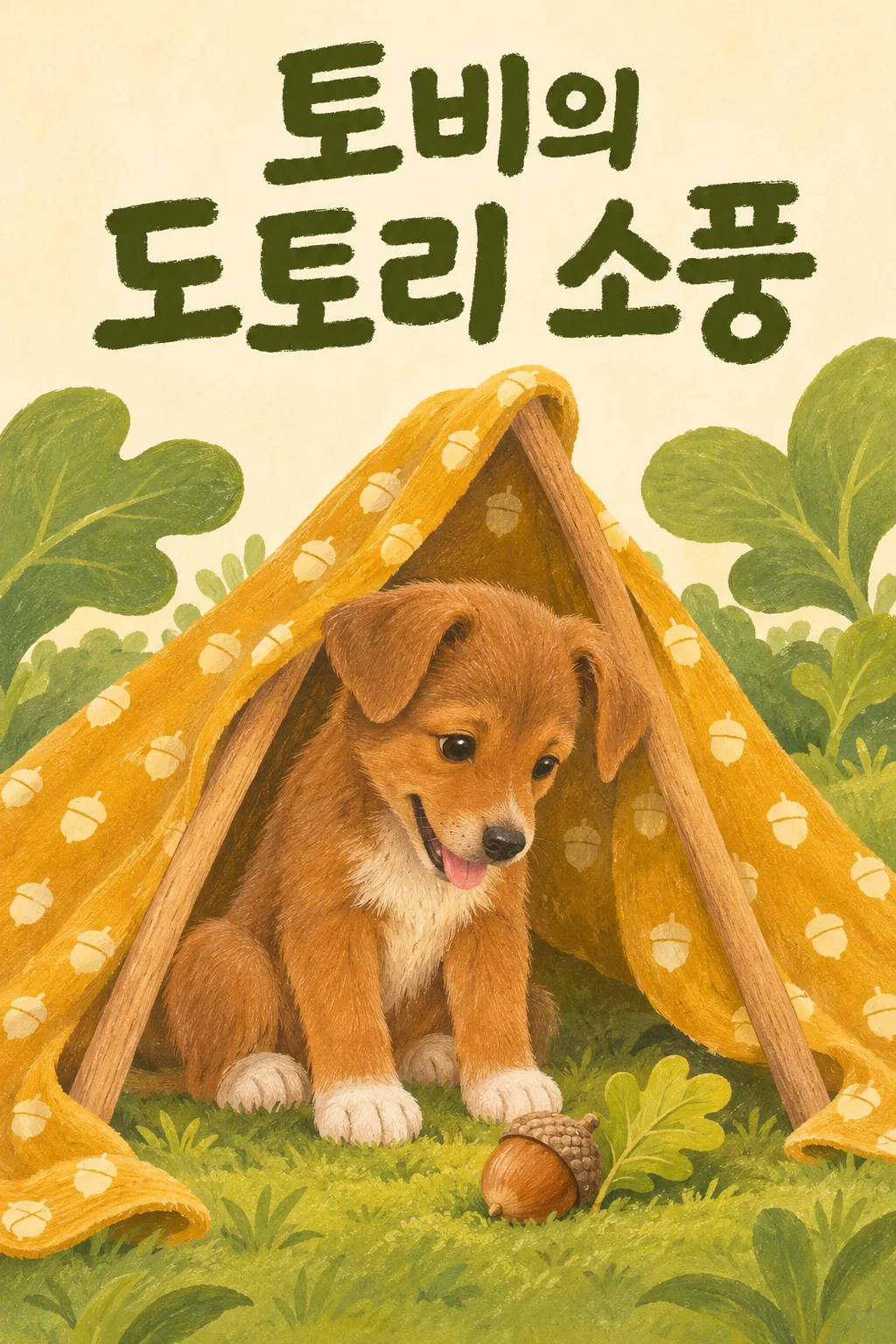
Two runs with the same inputs placed a broad mustard blanket beneath the puppy. Both retained the small ivory acorns and a folded front corner, with an actual acorn and oak leaf close to the paws. Changing only “Comfort blanket” to “Make a tiny tent” raised the patterned fabric into a triangular roof and side walls. The puppy sat in the entrance, and the broad picnic rectangle disappeared. The colors stayed similar while the space changed from picnic to campsite.
Bring a familiar fabric into the story
The blanket connects home to this imaginary meadow. Describe its ground color and repeating motif together, such as “Navy ground, broad ivory stripes.” Choose a discovery that can be distinguished from the printed pattern. Here, tiny acorns on the cloth remained separate from the solid acorn in front of the paws. The supplied title appeared once in all three images, without a name tag or publisher credit.
The tent roof took up room, making the puppy’s face smaller than in the picnic versions. Choose the spread blanket when the face matters most; choose the tent when the shelter is part of the story. This makes one imaginary cover for a pet account, without continuing into interior pages.
These tests used a fictional puppy without a reference photo. Photo likeness was not tested. With your own photo, check the ears, muzzle and chest markings before judging the blanket.
Last checked · Published