

All · Comics & illustration · People · Characters
199Paint Splash Pop
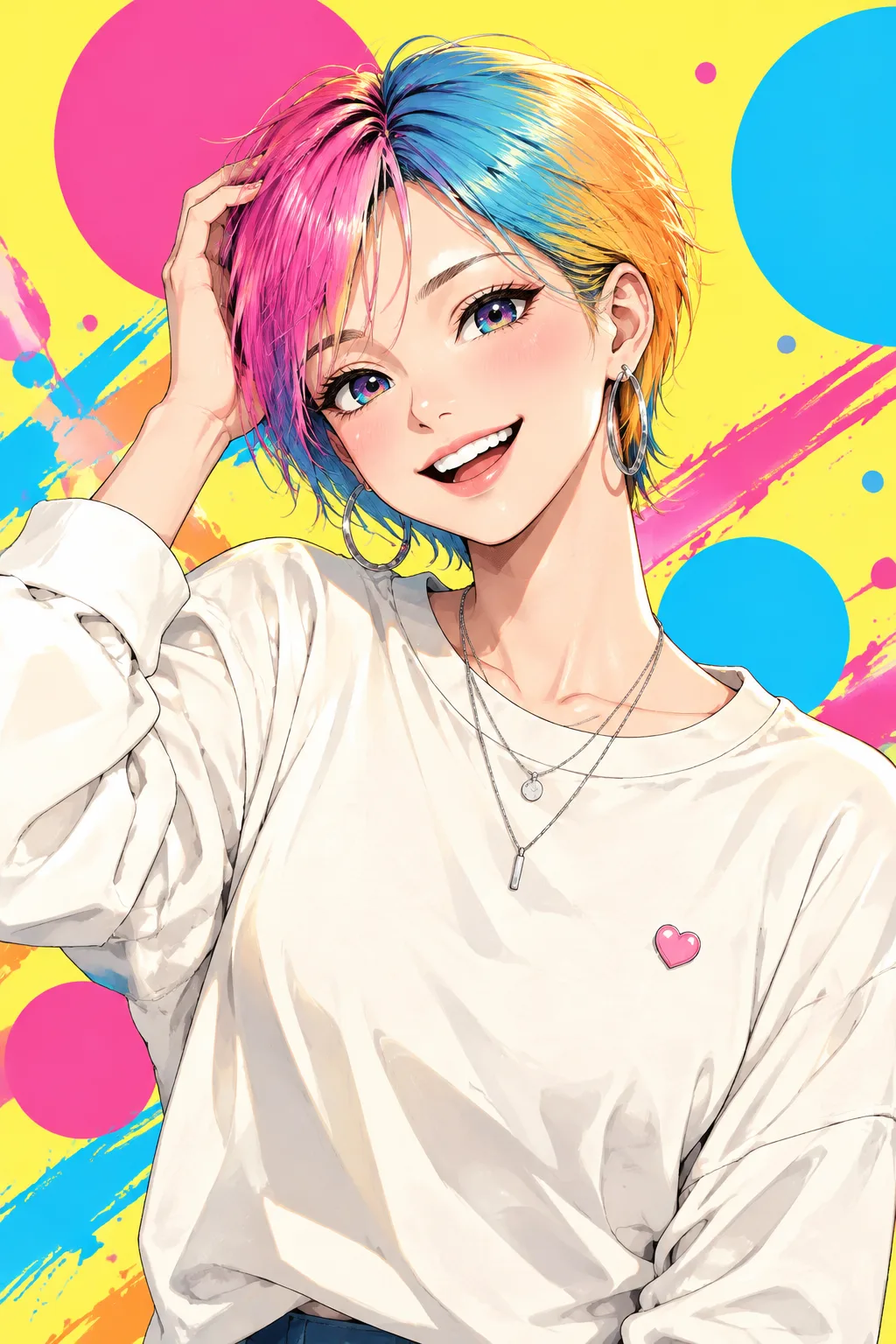
A fashion-pop anime portrait with paint behind the figure and a separate splash in front. Overlap changes depth and the shirt silhouette.
What you get
- A fashion-pop illustration with separate rear and foreground paint
- Overlap controls that change occlusion and foreground volume
Fill in the fields
- 1Fill in the fields
- 2Copy the prompt
- 3Paste it into a GPT chat
- 4Send it as is and you get an image like the thumbnail example
- 5Attach One adult reference photo, optional with the prompt and your photo is used in the result Optional
Full prompt 4,125 characters
Create one portrait-format 2:3 fashion-pop anime illustration. OVERLAP is the master switch for paint depth. Read only the selected rule below; the other three rules describe unselected alternatives and must not appear. When selected overlap is thin behind only, all connected paint stays BEHIND the person and NO foreground wave or side ribbon exists: only tiny detached droplets outside the body. When selected overlap is thick in front, a separate large foreground wave covers the lower quarter of the shirt, while the rear sheet stays behind the head. Keep the face and hand clear in every mode.

PERSON: 【Person】. POSE: 【Pose】. Depict one adult aged at least 20, head to hips. Without a photo, invent this adult immediately. With an adult reference photo, retain their face shape, skin tone, apparent age, hair cut, glasses and facial hair; retain hair color unless the person field explicitly requests a new color. The pose follows POSE. Wear an unbranded ivory short-sleeved shirt and a small metal ear cuff.

REAR POSITION: 【Rear paint position】. A large ring behind the head creates an incomplete circular sheet, with its central opening wider than the face; a band behind the shoulders instead follows shoulder height horizontally. Whichever rear placement is supplied, the head and shoulders occlude it: paint terminates at those contours and resumes beyond them. Keep a narrow clean gap around cheeks and hair tips.
FRONT POSITION: 【Front paint position】. A lower-frame placement enters upward from the bottom edge; a right vertical ribbon rises along the right edge. Other supplied positions are interpreted literally below the chin. Near paint has larger lobes and droplets than rear paint. Leave eyes, nose, mouth, jaw and the gesturing hand unobstructed.
PAINT SURFACE: 【Paint texture】. Show the specified surface consistently on both planes. Use cyan, magenta and tangerine paint against a pale butter-yellow ground; give raised wet edges small sharp highlights and contact shadows. Hair strands carry vivid rainbow gradients. Keep this palette fixed when changing overlap.

OVERLAP: 【Overlap】. Apply exactly one rule:
Thin behind only → flatten the rear paint into a thin sheet entirely behind the adult; keep the complete shirt and shoulder contours visible. At FRONT POSITION allow only a few isolated tiny droplets outside the body, never a broad foreground ribbon.
Ribbon behind shoulders → gather rear paint into an arcing ribbon behind both shoulders; its middle disappears behind the torso and its ends emerge outside the arms. Keep foreground droplets sparse.
Thick in front → keep the same rear placement but build a thick continuous near-camera wave at FRONT POSITION, covering the bottom quarter of the shirt and breaking the lower torso outline. Large curled lips, bulbous lobes, dark undersides and cropped droplets establish tangible foreground depth. Face and hand remain clear.
Break parts of the outline → let three separated near-camera paint tongues cross short sections of the lower shirt and outer sleeve contours, leaving visible gaps between tongues; retain most of the silhouette and all facial features.

RENDERING: Contemporary polished anime fashion art. Thin colored contours, sharply cut cel shadows with translucent graded light, luminous layered irises, precise eyelashes and individually separated curly hair strands. Concentrate fine detail at the eyes and paint rims; keep broad shirt planes quiet. The person is drawn, never a photographic face pasted into paint. Paint may be tactile but does not turn the character into an oil painting. One coherent original composition, natural anatomy, no lettering, signature, watermark, brand, existing character or comparison layout. Return the image directly.

[Final output format]
Output exactly one finished 2:3 portrait image, 1024x1536 pixels. Leave the top 12% and bottom 15% free of essential text.
This selected output format takes priority over any fixed canvas size or aspect ratio elsewhere in this template. Adapt the composition, text zones and margins to the selected canvas without stretching or cropping essential content. Device safe areas apply only when a device is selected. Never print these format instructions on the image.
How did it turn out?
More cards in this category
How to use it · FAQ
The thin setting still produced a wave
The first two images had a thick wave along the bottom even with “Thin behind only” selected. The opening instruction to build two paint planes competed with the overlap switch. Revising only that paragraph to give the selected rule priority fixed this in both retry images: the ring disappeared behind the shoulders and the shirt outline stayed visible down to the bottom. Paint did not cover the face.
Covering the shirt hem brings the paint forward
We kept the person, pose and cyan, magenta and tangerine palette, changing only Overlap to “Thick in front.” Large paint lobes rose from the lower edge and obscured the lower shirt. The rear ring still disappeared behind the shoulders. Depth came from opposing occlusions, rather than a palette change. Eyes, nose, mouth and the hand beside the waist remained clear.
The requested open hand instead rested on the hip, and the shirt collar varied between identical-input images. This does not lock a precise gesture or garment shape. “Ribbon behind shoulders” and “Break parts of the outline” were not generation-tested in this trial. If paint reaches the face, ask: “Keep foreground paint below the chin and along the frame; leave the eyes and mouth clear.”
Last checked · Published