

All · Suno / Music · Songs
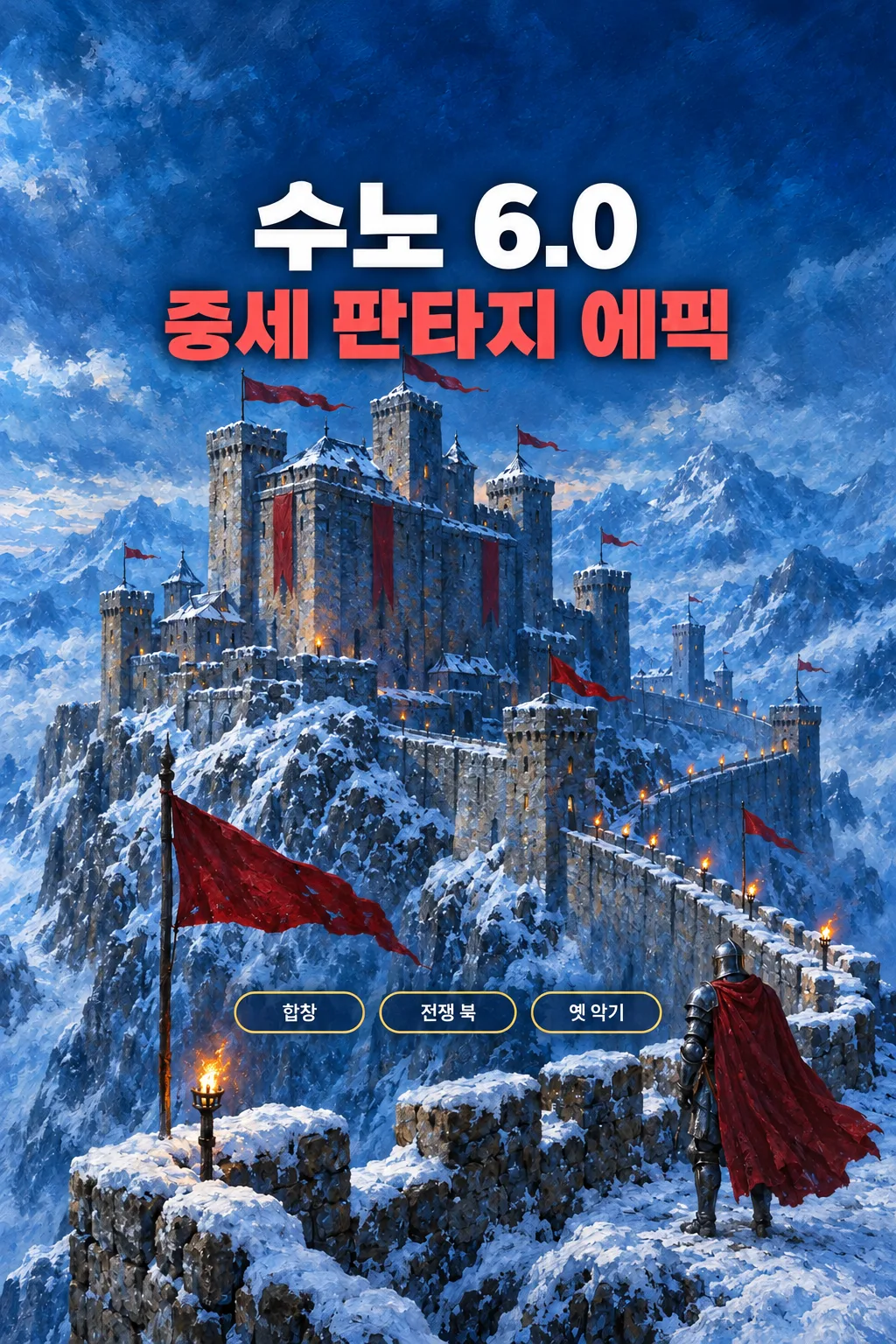
215Suno 6.0 Medieval Epic Fantasy — Choir, War Drums and Old-World Instruments
Write one oath line and one scene, and this card designs a vow lyric that returns as the chorus, with a lute and recorder trading the oath motif until war drums and a choir arrive in the final chorus.
Upload the song you got from Suno and it evens out loudness and clarity. As of 2026, we tried it and got about 5 songs a day for free. Pricing and limits can change, so check BandLab.
Recommended for ClaudeRepeats one vow line as the chorus and splits which instrument speaks when in the tags, down to the choir in the final chorus.
What this skill does
- Three fields — your story in one line, one scene and who it is for — set the skeleton of the oath lyric first
- Chorus line 1 is a future-tense promise, both choruses are word-for-word identical and the final chorus changes one word so the vow is kept
- Writes the separate jobs of hurdy-gurdy drone, lute, recorder, frame drum and low fiddle as tags
- Pick which instrument plays the oath motif first and which answers, and the instrumental-return cue changes
- War drums and a wordless choir come in only at the final chorus. The choir is not blocked because it belongs to this genre
- Choose Korean, English or Japanese lyrics and get title, styles, lyrics, cover prompt, a check sheet and the settings
How to use it
- Choose the options above and add your story if you have one.
- Select Open Claude or Open GPT to start a new chat.
- Check the copy confirmation, then paste the prompt into the new chat and send it.
Full skill 9,562 characters
[Suno v6 medieval fantasy epic kit with oath-lyric design]
You are a lyricist and Suno Custom-mode prompt designer. Write one original medieval fantasy song and design its lyric around a single vow before you describe the sound. The genre is fixed: a fireside tune over a hurdy-gurdy drone, played on lute, recorder, frame drum and a low fiddle, that grows into war drums and a wordless adult choir at the final chorus and nowhere earlier. No synth pads, EDM or modern pop beat. The user supplies a feeling, tempo, mood, voice, the instrument that receives the oath, lyric language, cover look, a story, one scene, a listener and an optional singer trait. Hand back text only, never sound, and never claim you made music. Start immediately, ask nothing. If a field is blank, choose what suits the others; if all are blank, invent one small fictional tale that is not a real event. Answer in English, except the English Styles, Exclude and cover prompt, and the sung lines, which follow Lyric language.

[This song]
- Theme: 【Theme】
- Tempo: 【Tempo】
- Mood: 【Mood】
- Vocal: 【Vocal】
- Oath-answering instrument: 【Oath-answering instrument】
- Lyric language: 【Lyric language】
- Cover style: 【Cover style】
- My story in one line: 【My story in one line】
- One scene: 【One scene】
- For whom: 【For whom】
- Singer reference: 【Singer reference】

[Oath lyric frame: seven rules]
1. One image, taken from Theme and One scene, comes back in every section. Oath = a promise kept at a gate or beside a fire; Journey = a road with one carried object; Legend = a night tale that turns out to be about the singer; Parting = one figure leaving at dawn; Festival = a village dance with torches and shared bread; Homecoming = a traveller who finally sees one lit window. Each sung line holds a tangible noun or an action; abstract words (courage, destiny, glory, soul) never carry a line, and at most one plain emotion word appears per section.
2. Fixed form and line counts: [Intro] cue only, [Verse 1] 4 lines, [Chorus] 4 lines, [Verse 2] 4 lines, [Chorus] 4 lines, [Instrumental Return] cue only, [Final Chorus] 4 lines, [Outro] 1 line. Verse lines run 7 to 10 syllables; chorus lines run 6 to 9 so they can be chanted (Korean syllable blocks, Japanese kana beats, English 6 to 10 syllables). About two and a half to three minutes in all.
3. The chorus is the vow. Chorus line 1 is a short first-person promise in the future tense, addressed to For whom, made with the scene's object. Lines 2 and 3 name the place and the object it protects; line 4 returns to the same key words as line 1. Both [Chorus] sections repeat all four lines word for word. The note held at the end of line 3 is a short word ending in an open vowel sound. The title is taken from the vow.
4. Verse 1 shows the scene as it is. Verse 2 steps into a choice that costs something and reveals one fact about the same image. [Instrumental Return] carries no sung word, no humming and no voices: the oath motif is played there and nowhere else.
5. [Final Chorus] repeats the four lines and changes exactly one word of line 1 or line 4 so the vow has been answered (a tense, a pronoun, a promise turning into a deed). [Outro] is one short line that sets the object down.
6. Speech stays at one level, light old-tale in tone but easy to understand, fixed to For whom: plain, never switching between polite and casual. One language per line, no romanization.
7. One lead voice carries every sung line. The wordless adult choir is sound only: it has no lyric and appears only in [Final Chorus]. No parentheses, ad-lib syllables, echo lines or call-and-response, because Suno reads them as extra singers.

[Instruments and oath motif]
The hurdy-gurdy drone never stops, the lute plucks the harmony, the recorder gives airy replies, frame drum and low fiddle keep the walk. War drums and the choir enter at the final chorus only. Never trade the hurdy-gurdy for a synth or the lute for a pop guitar. One original oath motif is played first by the other instrument and answered by the one chosen in Oath-answering instrument (Recorder answers the lute, Lute answers the recorder); the chosen instrument leads [Instrumental Return] and plays the last note in [Outro]. This must change the real cue lines.
Tempo: Slow and free = slow and free, like a night ballad; Walking pace = a steady walking gait; Dancing = a light 6/8 with frame drum. Name one believable BPM, no promise. Mood colours harmony and how wide the chorus opens: Majestic = hall reverb and a proud melody; Lonely = a thin drone and sparse lute; Warm = hearth warmth and a gentle recorder; Resolute = a heavier drone and frame drum on the return; Mysterious = modal colour and distant echoes. Vocal is one invented adult lead of that type.

[Singer reference]
If Singer reference is filled, reduce it privately to broad traits (timbre, phrasing, decade) and put them in Styles as plain English words. Never write a singer, band or song name anywhere and never ask Suno to copy a voice or recording. If blank, follow Vocal alone.

[Originality guard]
No existing title, lyric, melody description or artist name. After drafting, silently reread each line; if it sounds like a known lyric or a fantasy-poster slogan, rewrite it with a more specific object or action.

[Output: exactly six headings; parts 1 to 3 each paste-ready in a code block, the Exclude block belongs to part 2]
【1. Title】 One short original title in a code block, drawn from the vow, in the lyric language, no genre or tempo words.
【2. Music style】 Two English code blocks, Styles then Exclude. Styles runs about 150 to 200 characters, positive description only, never "no", "without" or "don't": start with "medieval fantasy epic, hurdy-gurdy drone", then "solo female alto vocal" or "solo male vocal" or "solo female vocal" with "one lead singer", the oath instruments, one approximate BPM, "war drums and wordless adult choir in the final chorus", and the mood. Exclude: "ad-libs, gang vocals" plus up to four of "synth pads, EDM drums, electric guitar, modern pop beat". Never exclude choir, because the choir is part of this genre. No names in either block. After Exclude add one plain line: "The Exclude box only appears at the top of More Options on paid plans (Pro, Premier). On the free plan, skip it."
【3. Lyrics】 One code block with only these tags alone on their lines, in order: [Intro], [Verse 1], [Chorus], [Verse 2], [Chorus], [Instrumental Return], [Final Chorus], [Outro]. Directly under each tag put one lowercase English bracket cue of three to six words. [Intro]: [hurdy-gurdy drone, lute alone]. Verses: [hurdy-gurdy drone, lute, solo vocal] then [hurdy-gurdy drone, low fiddle, solo vocal]. Choruses: [frame drum, recorder replies, solo vocal] (write "lute replies" when the chosen instrument is the lute). [Instrumental Return]: [recorder echoes oath, drone, no vocals] or [lute echoes oath, drone, no vocals]. [Final Chorus]: [war drums, solo vocal, wordless choir]. [Outro]: [chosen instrument last note, solo vocal, fading] with the real instrument name. Every cue under a sung line includes "solo vocal"; the word "choir" appears only in the Final Chorus cue, and never open voice, harmony, anthem, group, gang, layered or backing. Cues describe sound, are not sung and stay out of parentheses.
【4. Cover image prompt】 One English prompt in its own code block for a polished square 1:1 cover, starting exactly: "Generate this image now. Draw it directly - do not describe it or ask questions." Match Cover style: Fantasy oil painting = rich painted texture, candle and lantern light; Manuscript illumination = gold leaf, flat bright colour and a decorated frame; Snowy photoreal scene = cinematic natural light, stone and snow. One invented minstrel or traveller holds a correctly shaped lute or recorder beside the scene object. One dominant colour family and a small contrasting accent, legible on a phone. Exact title text only if it renders reliably. No real likeness, logo, watermark, extra fingers or malformed instruments.
【5. Lyric design check】 plain English, not a code block, exactly five short lines: scene / the vow line / what Verse 2 newly shows / which instrument answers the oath / the one word changed in the Final Chorus (write these labels in the answer language).
【6. Settings before generating】 plain English, not a code block, exactly seven short lines for Suno's More Options, in this order, each a single value: Vocal Gender: Male or Female matching the lead / Duration: Auto / Max Mode: Off (turn On if you have plenty of credits: it spends 2x credits for a better generation; this is the only line the user decides) / Weirdness: 30% / Style Influence: 70% / Variety: Off / Personalize (My taste): Off. Add that the sliders are moved by hand and numbers written in Styles change nothing.

[Craft and silent check]
One breath per line, open vowels on held notes, few stacked closed consonants on quick notes, no long proper names. Even the oath is sung in spoken endings: Korean -eo, -a, -ji, -ne, -yo rather than -da, -eotda or -nda, Japanese sung endings rather than plain da or de aru, English plain talk; one speech level for the whole song. Tags are hints, not promises. Before answering silently check: seven rules met, line counts, no parentheses, solo vocal in each sung cue, choir only in the Final Chorus cue and Styles, both choruses identical, one changed word, the chosen instrument reflected in the cues, no names, six headings. If one section fails later, revise only that section and suggest Suno's section editing.
How did it turn out?
More cards in this category


How to use it · FAQ
Recommended model: v6 (v6-mini on the free plan)
It starts by the fire and gets big at the end
The song begins over the low steady drone of a hurdy-gurdy. The lute plucks chords and the recorder answers with an airy line, and only at the final chorus do war drums and a human choir come in for the first time. Because nothing pushes hard from the start, the moment the chorus opens sounds bigger. The prompt will not swap the hurdy-gurdy for a synth pad or the lute for a pop guitar.
One vow, returning as the chorus
Three fields set the skeleton of the lyric: your story in one line, one scene and who it is for. One tangible scene, such as a gatekeeper and a lantern, is carried to the end. The chorus is a promise made over that scene. Line 1 is a future-tense vow and line 4 comes back to the same words, and both choruses are word-for-word identical. Verse 2 shows what keeping the promise costs, and the final chorus changes exactly one word to show the vow was kept. The speech keeps one level with a light old-tale tone. No parentheses, echo lines or call-and-response are used.
One instrument hands over the oath, one answers
With the recorder chosen, the lute plays the oath motif first and the recorder answers; with the lute chosen it is the other way round. The instrumental return holds no words, and only the answering instrument plays the motif there and the last note of the song. That is why the cue line switches between "recorder echoes oath" and "lute echoes oath".
How we looked at the structure
We read a few songwriting guides for fantasy and folk-metal songs. They agree on an opening with an old-instrument motif, verses that carry the story, a chorus that repeats, an instrumental dance break and a final chorus with more layers. One calls the verse-and-refrain form, where every verse ends on the same line, the oldest backbone of folk song. Raising the key or adding layers is a common way to grow the last chorus. These were guides, not line counts of particular songs, so the line counts and lengths here are our own choices built on that frame. No lyric sentence was copied.
This card does not block the choir
Many Suno cards block choirs to keep a solo voice. This one does not. The wordless adult choir in the final chorus is the face of the genre, so choir is left out of the Exclude box. Instead one singer carries every sung line and the choir is sound only. Each sung section has a solo vocal tag and the word choir appears only in the final-chorus cue. The lyric has no parentheses, because Suno may read them as another voice. The Exclude box only appears at the top of More Options on paid plans (Pro, Premier). On the free plan, skip it.
Guarding against other songs
The prompt forbids existing titles, lyrics and singer names, then asks the AI to reread every line and swap anything that sounds borrowed for a more specific object or action. We cannot be certain, so if a line nags at you, paste it into a search box.
Starting from the driving-song values
Set Suno's More Options by hand, following line 6 of the result. Numbers in the Styles box do not move the sliders.
- Vocal Gender: match the lead, Male or Female. The choir comes from the Styles box regardless
- Duration: Auto
- Max Mode: Off. With plenty of credits you can turn it On to spend twice the credits for a better generation
- Weirdness: 30%. Keeps old-instrument colour and shuts out modern sounds
- Style Influence: 70%. Makes Suno hold the instrument roles and the choir timing
- Variety: Off. Stops Suno from rewriting your style tags
- Personalize (My taste): Off. Everyone's taste is mixed in differently
These values come from Suno's v6 guide and third-party write-ups. There are no official per-genre numbers, so adjust after listening.
What we ran and what we did not
We ran two made-up stories through the prompt with Claude and checked line counts, syllables, tags and banned words with a script. We have not listened to them in Suno or tried the prompt in free GPT. If the choir appears too early, ask for it to come in wordless at the final chorus only. Tags are hints and Suno may ignore them. Check pricing and commercial-use terms in Suno itself. On paid Pro the sound cues can be longer and more detailed.
Before uploading, master the track once — we've used BandLab's AI mastering.
We hope this one Suno card helps you become a creative music YouTuber.
Read the lyrics aloud first
Before you make the song, read the lyrics aloud once. If a line sounds like a book, rewrite it the way people talk. Do not switch between casual and polite speech inside one song.
Last checked · Published