

All · Comics & illustration · People · Characters
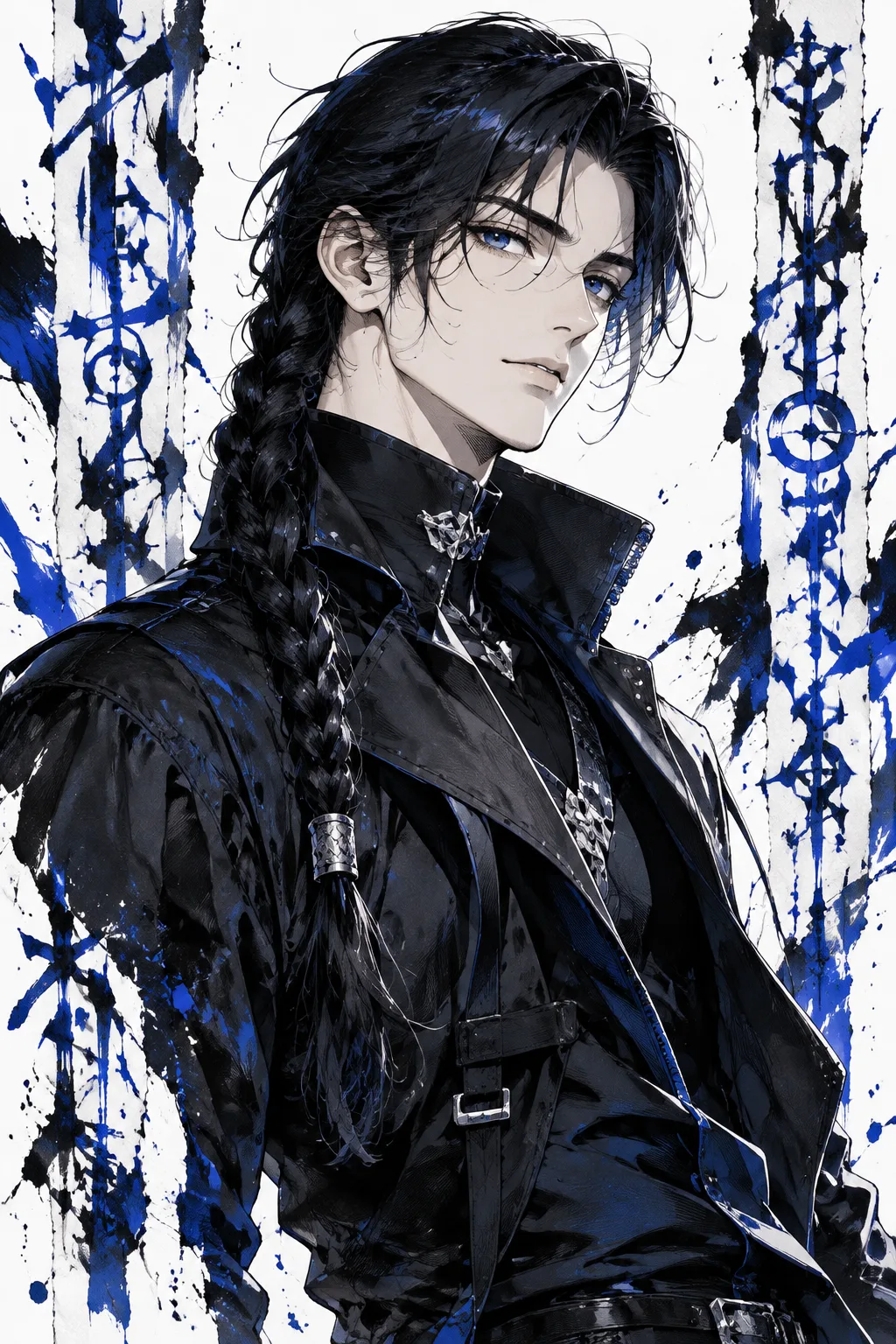
211Ink Glyph Collage
Torn paper cuts across an ink portrait, with the jacket and paper trading foreground and background.
What you get
- One blue-and-black anime ink portrait with physical torn-paper layers
- A layer-order control that changes face coverage and overlap
Fill in the fields
- 1Fill in the fields
- 2Copy the prompt
- 3Paste it into a GPT chat
- 4Send it as is and you get an image like the thumbnail example
- 5Attach One adult portrait photo (optional) with the prompt and your photo is used in the result Optional
Full prompt 3,908 characters
Draw a torn-paper portrait whose depth is readable from occlusion, not from decoration. Return one finished vertical contemporary anime ink collage.
Output exactly one finished 2:3 portrait image, 1024x1536 pixels. Leave the top 12% and bottom 15% free of essential text.
PERSON: 【Person】
TEAR LOCATIONS: 【Tear locations】
PAPER STOCK: 【Paper stock】
TORN EDGE: 【Torn edge】
GLYPH INK: 【Glyph ink】
LAYER ORDER: 【Layer order】

Build three physical planes: a rear sheet with invented brush symbols, an adult portrait from head to waist, and detached torn strips. Two broad irregular tears enter at the specified face and shoulder locations. Paper must visibly interrupt a facial contour and the black jacket silhouette; leave an open aperture containing at least one complete eye, the nose and the mouth. Keep the face identifiable. Opaque paper hides what it covers, never a translucent overlay. Fibrous edges curl away with narrow contact shadows and white exposed pulp. Ink symbols stay on paper; no writing painted on skin.

LAYER ORDER is a structural instruction. Paper in front → both torn strips pass in front of the portrait, one covering the outer part of the left eye region and temple, the other crossing below the right jaw and over the shoulder; cover about one quarter of the face, with small rear-sheet fragments still visible behind the hair. Paper behind → both main strips sit behind the head and shoulders; the entire facial outline is visible, hair and jacket overlap their torn edges, only a small foreground paper tab crosses the outer shoulder. Alternating sides → the left strip starts in front at the temple then disappears behind the left shoulder; the right strip starts behind the hair then emerges in front below the jaw. Make two unmistakable T-junctions with opposite overlap directions. Reveal both eyes and cover less than one eighth of the face; a wider zigzag opening and deeper gaps distinguish this from the front-paper version. For Alternating sides specifically: pull the left strip completely off the eye and temple into the outer left margin, showing the entire left cheek and ear; its lower end MUST disappear beneath a large black jacket lapel. Push the right strip forward across the chest only, with its upper end hidden behind the hair. Open a broad uninterrupted white facial oval between the two strips. Unlike Paper in front, neither strip may touch either eye or cheek. Show a large black lapel visibly ON TOP OF the left paper at bottom left, and right paper visibly ON TOP OF black chest at bottom right. Apply exactly the selected value; absent selection uses Paper in front.

Maintain a fine-lined modern anime face with mature features, sharp upper lashes, clear irises, separate curled hair strands, restrained cel shadows and fine ink hatching. Broad carbon-black jacket masses, tiny metal fastenings, white negative space and cobalt-blue brush pigment form the visual language. Map the supplied glyph ink to the paper symbols; use black and white for portrait shading, no natural skin pigments. The torn stock and edge instructions must show physically, not as a printed texture. Frame the portrait close enough to inspect the tears. Keep the background sparse so cut contours remain readable.

If an adult portrait photo is attached, preserve its face shape, apparent age, hair and distinguishing features within this ink drawing. Without a photo, draw the specified fictional adult immediately. Use only invented nonlinguistic glyphs, never readable words, signatures, existing characters or copied costumes. No frame, watermark, explanatory labels or comparison layout. One coherent illustration.

[Final output format]
Output exactly one finished 2:3 portrait image, 1024x1536 pixels. Leave the top 12% and bottom 15% free of essential text.
This selected output format takes priority over any fixed canvas size or aspect ratio elsewhere in this template. Adapt the composition, text zones and margins to the selected canvas without stretching or cropping essential content. Device safe areas apply only when a device is selected. Never print these format instructions on the image.
How did it turn out?
More cards in this category
How to use it · FAQ
Pulling the paper away from the eye
Both default trials brought torn paper close to the left eye and laid another piece over the jacket below the right jaw. Other paper disappeared behind the hair. The eyes, nose and mouth remained readable, although the requested quarter-face coverage was not exact. This is a way to compose an interrupted portrait, rather than measure a precise covered percentage.
The first Alternating sides trial looked too similar to the default. We strengthened only that option: move the left paper away from the eye and cheek and tuck its lower end behind the black lapel. The retry opened the facial outline, with left paper behind the jacket and right paper across the chest. The blue stayed the same; coverage and depth changed.
White fibers against a black jacket
Thin cotton paper with pressed creases produced bright fibers and folded-edge shadows. Symbols stayed on the paper instead of spreading onto the face. Some invented marks may still resemble writing; if a readable character appears, ask to replace that piece with unreadable brush marks.
Paper behind is designed to expose the whole face but was not separately tested. These observations cover two default fictional adult portraits, the first changed-condition image and its retry, without a photo.
Last checked · Published