

All · Comics & illustration · People · Characters
303Whimsical Ink Character
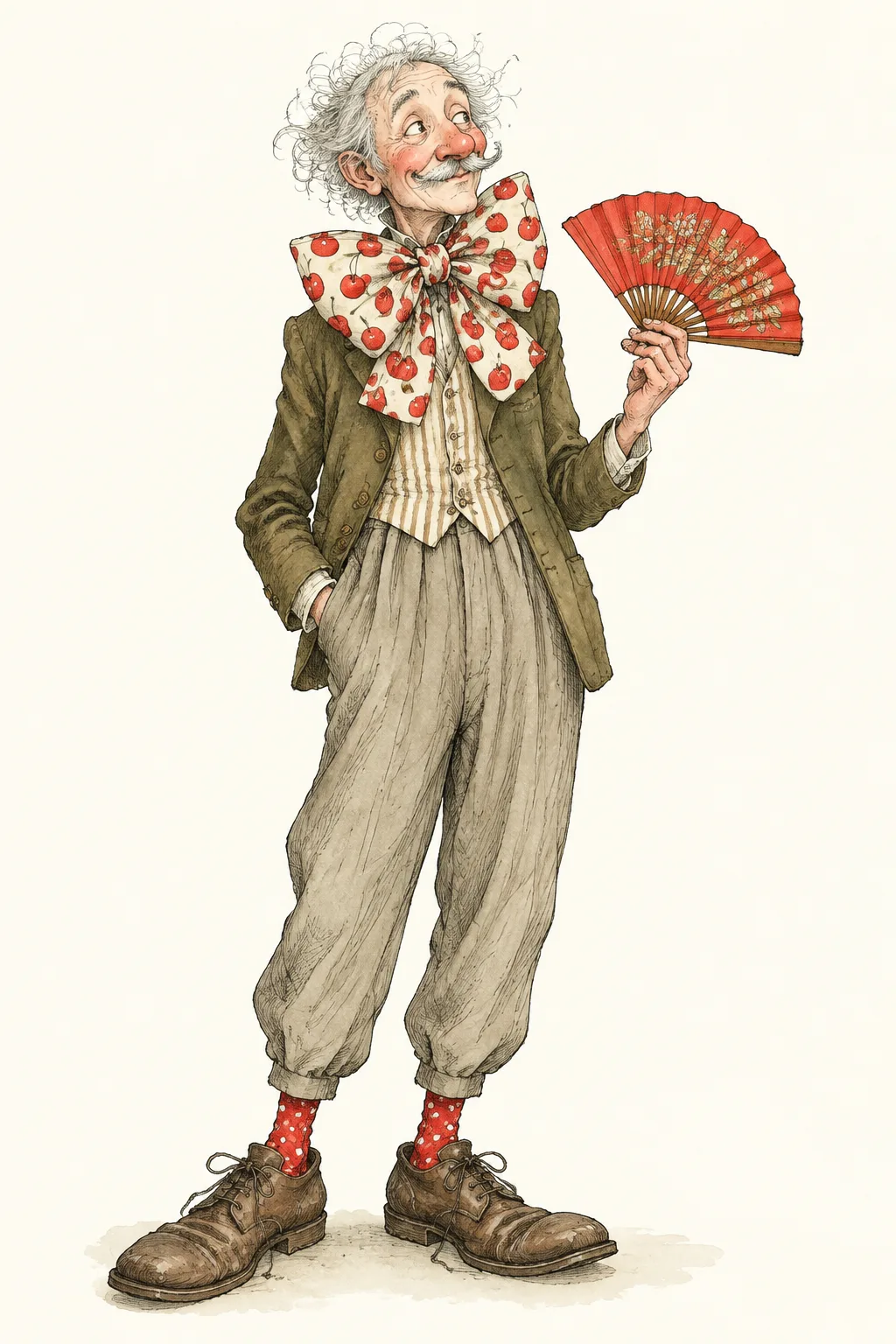
An elongated pen-and-watercolor character carries a notebook of occupational doodles, or stands beside its unfolded concertina pages.
What you get
- One elongated character in fine ink and pale watercolor
- Occupational object drawings inside a large notebook
- A bound spread or a freestanding concertina screen
ChatGPT Free OK
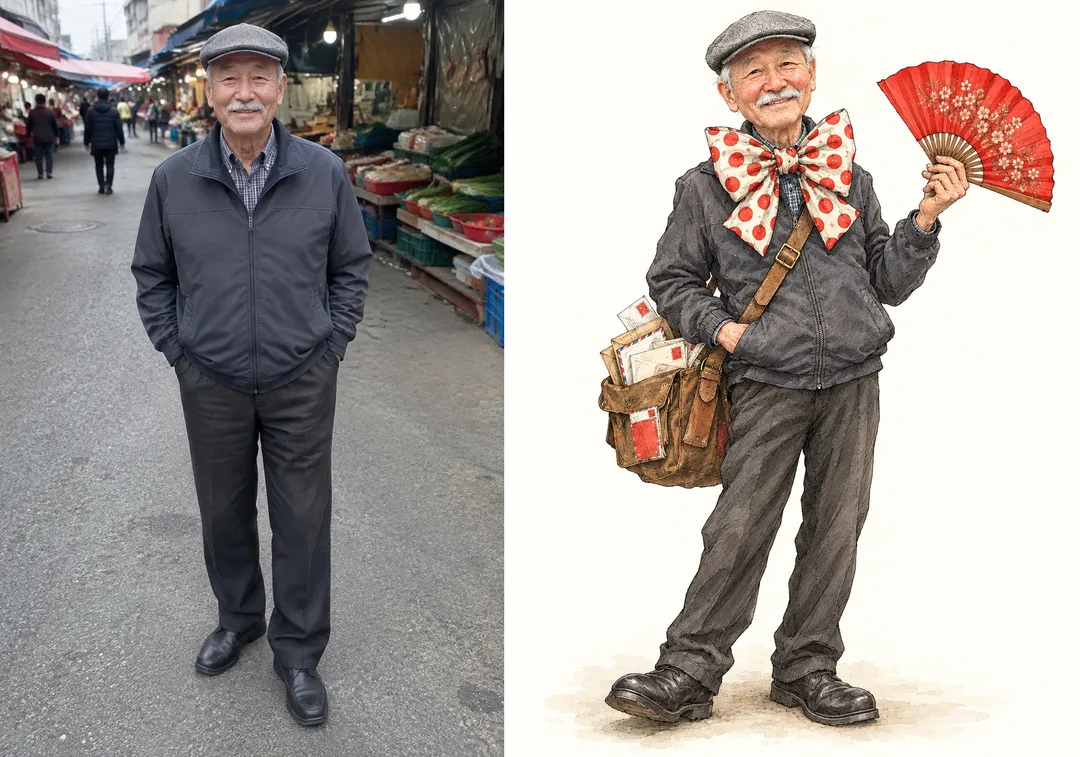
Fill in the fields
- 1Fill in the fields
- 2Copy the prompt
- 3Paste it into a GPT chat
- 4Send it as is and you get an image like the thumbnail example
- 5Attach One portrait photo, optional with the prompt and your photo is used in the result Optional
Full prompt 3,465 characters
Draw a finished whimsical pen-and-pale-watercolor character illustration. Output size 1080x1440 pixels, 3:4 portrait, social media post.
Build the character's little biography into an OVERSIZED DOODLE NOTEBOOK: its paper carries small observational ink sketches from their occupation, never writing. The notebook is a physical prop sharing the scene with the person, not separate panels of the output.
CHARACTER: 【Notebook owner】
NOTEBOOK PICTURES: 【Occupational doodles】
PAPER CONSTRUCTION: 【Notebook construction】
CONSTRUCTION OVERRIDE: resolve PAPER CONSTRUCTION before drawing: for Concertina screen draw the zigzag paper standing on the floor FIRST, then the standing person beside it with both hands away from paper; ignore the bound-book branch entirely. For Open notebook draw only the waist-level bound spread.
Read the construction as an exclusive choice:
Open notebook: a large open bound notebook held across the person's waist, its left and right pages joined by a visible central spine. Rounded paper corners, a thin visible cover, pictures on both facing pages. Keep legs and oversized shoes visible below it. No paper touches the floor.
Concertina screen: the notebook unfolds into a freestanding zigzag concertina on the floor beside the person, reaching roughly their knees. Alternating upright paper faces and visible valley folds spread sideways across the lower scene; pictures continue over these faces. The person stands beside it with their waist unobstructed, holding no open book. No conventional bound spread remains.
Empty construction defaults to Open notebook. Keep the person and notebook fully inside the canvas, with blank warm-white margins. Show paper folds and the pictured occupation clearly; never simply decorate the background with unrelated icons.
Invent an eccentric adult from CHARACTER, defaulting to a curly-haired village baker in a long apron. Draw narrow shoulders, an elongated slim torso and legs, enormous rounded shoes, a gently crooked smile, rosy cheeks and untidy scribbled hair. Fine jittery black pen contours, irregular crosshatching, clothing seams and small ink flecks are visible. Pale terracotta, mustard and grey-blue watercolor pools leave much of the paper unpainted. The notebook pictures are simple black-ink object drawings with sparse washes, recognizable at a glance. Default pictures: a loaf cross-section, a mixing bowl and a wheat sprig. These are drawings on paper, not loose props or floating objects.
If a portrait photo is attached, interpret its facial shape, hair and visible distinguishing features in this elongated illustration style. The chosen notebook construction governs the scene regardless of the photo pose. Without a photo, finish the fictional subject without asking. Identity likeness is not a reason to paste photographic skin or a photographic background.
One person on a warm-white background with a faint grounding wash, no furnished scene. Portrait 3:4 if no ratio supplied. Full figure and all paper edges uncropped. No readable text, letters, numerals, logos, existing characters, artist references, signatures or watermark. Deliver only the artwork.

[Final output format]
Output size 1080x1440 pixels, 3:4 portrait, social media post.
This selected output format takes priority over any fixed canvas size or aspect ratio elsewhere in this template. Adapt the composition, text zones and margins to the selected canvas without stretching or cropping essential content. Device safe areas apply only when a device is selected. Never print these format instructions on the image.
How did it turn out?
More cards in this category
How to use it · FAQ
Both notebook tests put a loaf cross-section on the left page and a mixing bowl with wheat on the right. The baker's work became drawings on paper rather than objects in her hands. A central spine divided the spread; her long apron and oversized shoes remained visible beneath it, with layered fine pen lines around her curls and round glasses.
A book at the waist became a screen at her feet
The first concertina test still showed a bound book in her hands. We added one sentence telling the generator to build the selected paper structure first, then repeated the tests. The new variation placed the person on the left and a freestanding zigzag sheet on the floor to her right. The waist-level book disappeared while the bread, bowl and wheat remained on the folded paper. The cover and first example show the revised open-notebook test; the second example shows the concertina.
Folded paper needs more breathing room
The screen pushed the person toward the left edge and brought its right end close to the canvas boundary. It also looked taller than the requested knee height, leaving a large empty area above it. This changes the visual balance of a postcard. For trimming, try: “Make the complete person and concertina slightly smaller, leaving white space beyond every paper edge.” That follow-up has not been tested.
Choose objects with different silhouettes for the notebook. Our bowl gained a spoon and the bread gained extra pieces, so object counts are not fixed. These tests used a fictional person without a photo. Portrait likeness and image generation from the English and Japanese versions remain untested.
Last checked · Published