

154前世のギルド職業は?
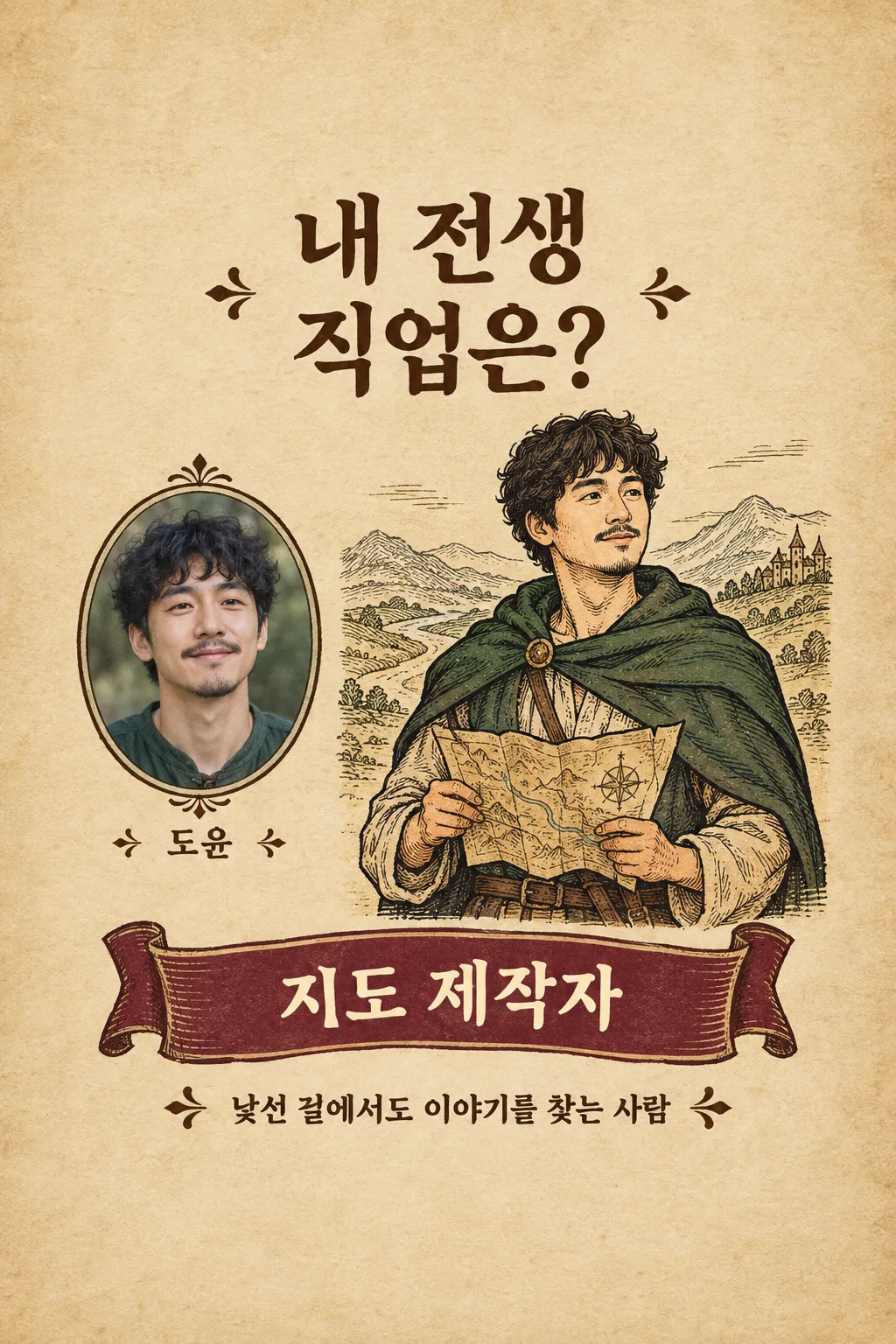
普段の習慣と架空の依頼から、木版画の職業紹介を作ります。石の工房と移動荷車で仕事場の構造が変わります。
受け取れるもの
- 羊皮紙と木版画で描いた、共有用のギルド職業紹介一枚
- 未完成の依頼品、働く人物、完成品を同じ作業台に配置
- 石のアーチ工房から車輪のある開放的な荷車へ変わる仕事場
項目を入力
- 1項目を入力します
- 2プロンプトをコピーします
- 3GPTのチャットに貼り付けます
- 4そのまま送ると、サムネイルの例のような画像になります
- 5本人の顔写真1枚、任意。写真がなければ架空の成人を描きますをプロンプトと一緒に入れると、その写真が反映されます 任意
プロンプト全文を見る 3,979文字
Draw one finished Japanese social illustration revealing an imaginary medieval guild occupation. Vertical 2:3. This is a playful invented past-life story based on a volunteered habit, never a factual reading of a face.

HABIT: 【普段の習慣】
GUILD COMMISSION: 【ギルドへの依頼】
GUILD NAME: 【ギルド名】
OWNER NAME: 【名前】
FALLBACK PERSON: 【写真がない場合の人物】
WORKPLACE: 【ギルドの仕事場】

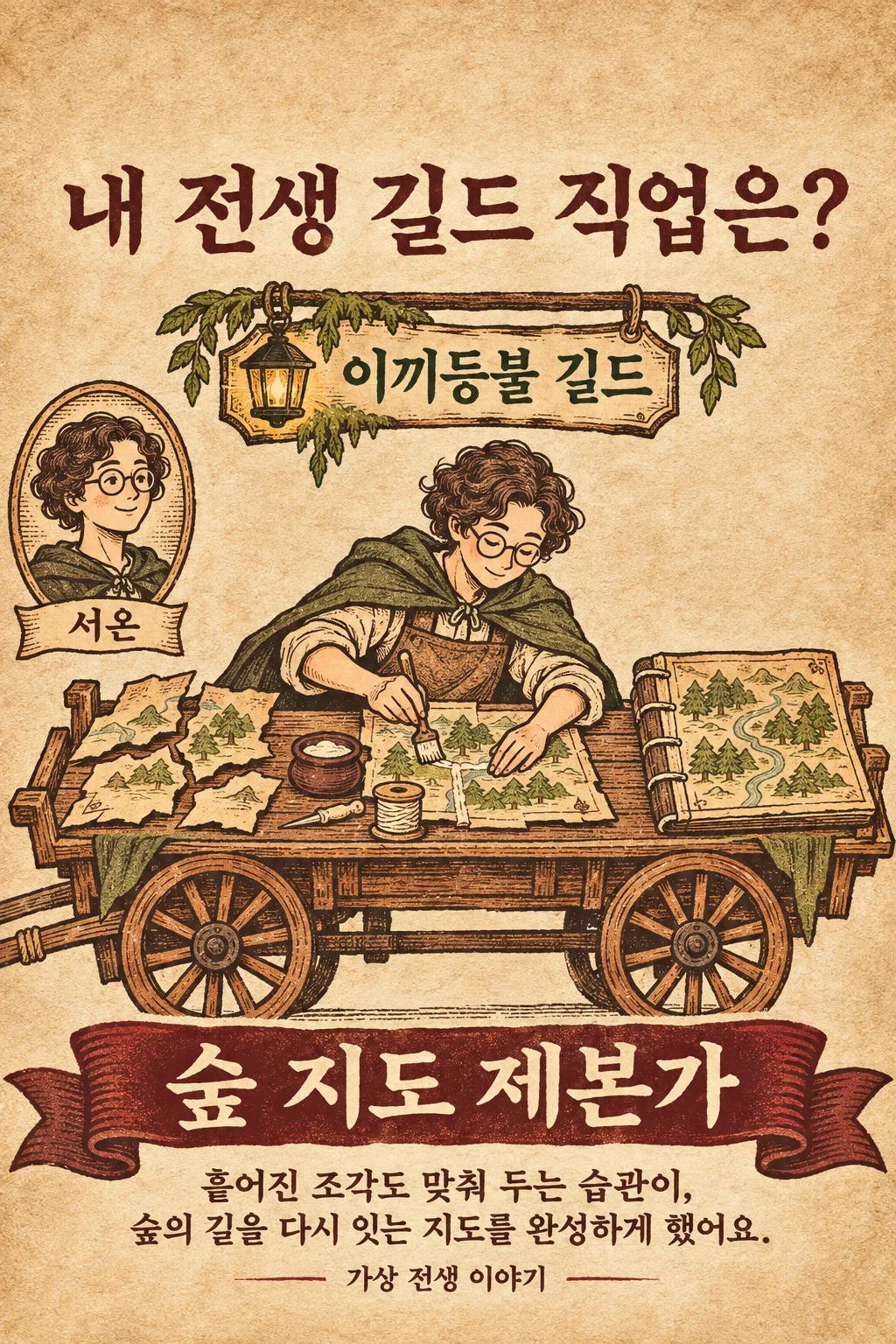
The occupation is revealed through WORK, not a generic costumed hero. Derive one short Japanese guild job from HABIT and COMMISSION together. Show the commissioned unfinished object at the left end of the work surface, the same person's woodcut character working in the middle, and the finished version at the right end. Make the difference between unfinished and finished physically visible. For a damaged map, left is torn loose parchment, right is a bound, joined map. These are two stages of the same commission, not a collection of unrelated props. Use the tool that joins them. Do not print stage labels or the habit verbatim.

WORKPLACE is a structural choice. アーチの工房: contain the worker and fixed horizontal bench in one large stone arch with visible side piers, a curved lintel, and a rear workshop wall. Bench legs reach the floor; there are no wheels or towing shafts. 移動荷車: replace the ENTIRE arch, piers and rear wall with an open wooden artisan cart. The work surface IS the cart deck, with clearly visible spoked wheels underneath, an axle and towing shafts projecting sideways. Show the worker behind the deck against open parchment, not inside a building. No arch, doorway, roof, walls or separate fixed bench. Preserve the same commission, occupation, face, palette and lettering hierarchy. This switch changes architecture and support structure rather than hue or mood. Never print either option name.

An attached portrait, if present, supplies only the owner's likeness: retain apparent age, face proportions, hairstyle, glasses and skin tone in the illustrated worker and a small photographic oval cameo beside the scene. Without a photo, finish immediately using FALLBACK PERSON as a fictional adult; put a small WOODCUT bust of the same person in that oval, never pretend it is a real submitted photo. No photo request. Clothing is practical linen and a muted green cloak, with no famous insignia.

Use original medieval storybook woodcut: fine carved hatching, restrained opaque gouache tint, warm parchment grain, ocher, burgundy and forest green. Flat illustrative light. Keep the workplace readable as a large silhouette rather than dense miniature decoration. The upper 12% and lower 15% are quiet parchment without lettering. Within the central safe area: at 15–25% write exactly "前世のギルド職業は?"; at 27–32% print GUILD NAME once as a small guild sign; at 33–67% show the complete workplace, worker and commission objects. The small oval cameo sits outside the scene at the left without covering the unfinished object, with OWNER NAME beneath it if supplied. At 70–77% one broad burgundy ribbon states the single invented Japanese occupation, large ivory type. At 79–84% print one short original Japanese sentence connecting the habit to the task, followed by the small exact note "架空の前世物語". Reserve enough room for both lines. Omit an empty name or guild name without inventing one.

Only the question, supplied guild and owner names, occupation, explanation and fiction note may be lettered. Keep all lettering inside 8–92% width. No ability scores, ranks, true-past-life claims, fortune predictions, psychological diagnosis, real heraldry, existing characters, brand marks, watermark or website. Deliver the illustration itself.

[Final output format]
完成した2:3の縦型画像を1枚、1024×1536ピクセルで出力してください。重要な文字は上12%と下15%に置かないでください。
This selected output format takes priority over any fixed canvas size or aspect ratio elsewhere in this template. Adapt the composition, text zones and margins to the selected canvas without stretching or cropping essential content. Device safe areas apply only when a device is selected. Never print these format instructions on the image.
結果はどうでしたか?
同じ分類のほかのカード



使い方・よくある質問
破れた地図から仕事が決まりました
破れた紙をつなげて保管する習慣と、森の地図を修復して製本する依頼を組み合わせました。通常設定の二枚とも、左に破れた地図、中央に修復作業、右に綴じた地図帳が描かれました。結果の帯には森の地図を製本する職業が出ました。衣装だけでなく、何を預かり、何にして返す仕事なのかが見える結果でした。
工房を離れても依頼は同じです
「ギルドの仕事場」だけを移動荷車に変えると、石のアーチと奥の壁が消えました。作業板の下にはスポークのある車輪と車軸、左には牽引棒が現れました。地図の切れ端と完成した地図帳は、作業板の両端に残っています。旅をしながら働く人物として見せたいときに合います。羊皮紙、木版の線、緑のマントは引き継がれました。
職業名の表記は完全には固定されませんでした。韓国語の試験画像では、工房と荷車で製本をする人を表す同義の呼び方が使われました。比較して投稿するときは、帯の表記を先に確かめてください。言葉の違いだけで別の職業とは限りません。
顔よりも依頼の中身を具体的に
習慣は仕事を選ぶ手掛かりで、依頼は絵に置く品物を決めます。「冒険が好き」より「初めて通る分かれ道を手帳に記録する」の方が地図の仕事につながります。紙を保管する習慣に風見の修理を組み合わせると、手掛かりが別々の職業を指します。見せたい仕事に合わせて、習慣と依頼をつなげてください。顔から性格や本当の前世を判断する機能ではありません。
今回の三枚は写真を使わず、架空の成人を描きました。小さな楕円も写真ではなく木版の肖像です。実際の写真の顔がどれだけ保たれるかは未検証です。本人の写真を使う場合はプロンプトと一緒に送り、楕円と作業中の人物で眼鏡、髪、年齢の印象を見比べてください。
下の説明が余白にはみ出しました
説明文が長くなり、架空の物語であることを示す注記が、指定した下の余白に入りました。共有するときは注記を切らず、画像全体を残してください。下部が窮屈なら「説明を短い一文にして、架空の物語という注記と一緒に結果の帯のすぐ下へ移して」と頼めます。これは内蔵画像生成での観察です。別のサービスで同じ結果になるかは試していません。
最終確認日 · 公開