008청춘 웹툰 4컷 만화 — 내 이야기 한 줄
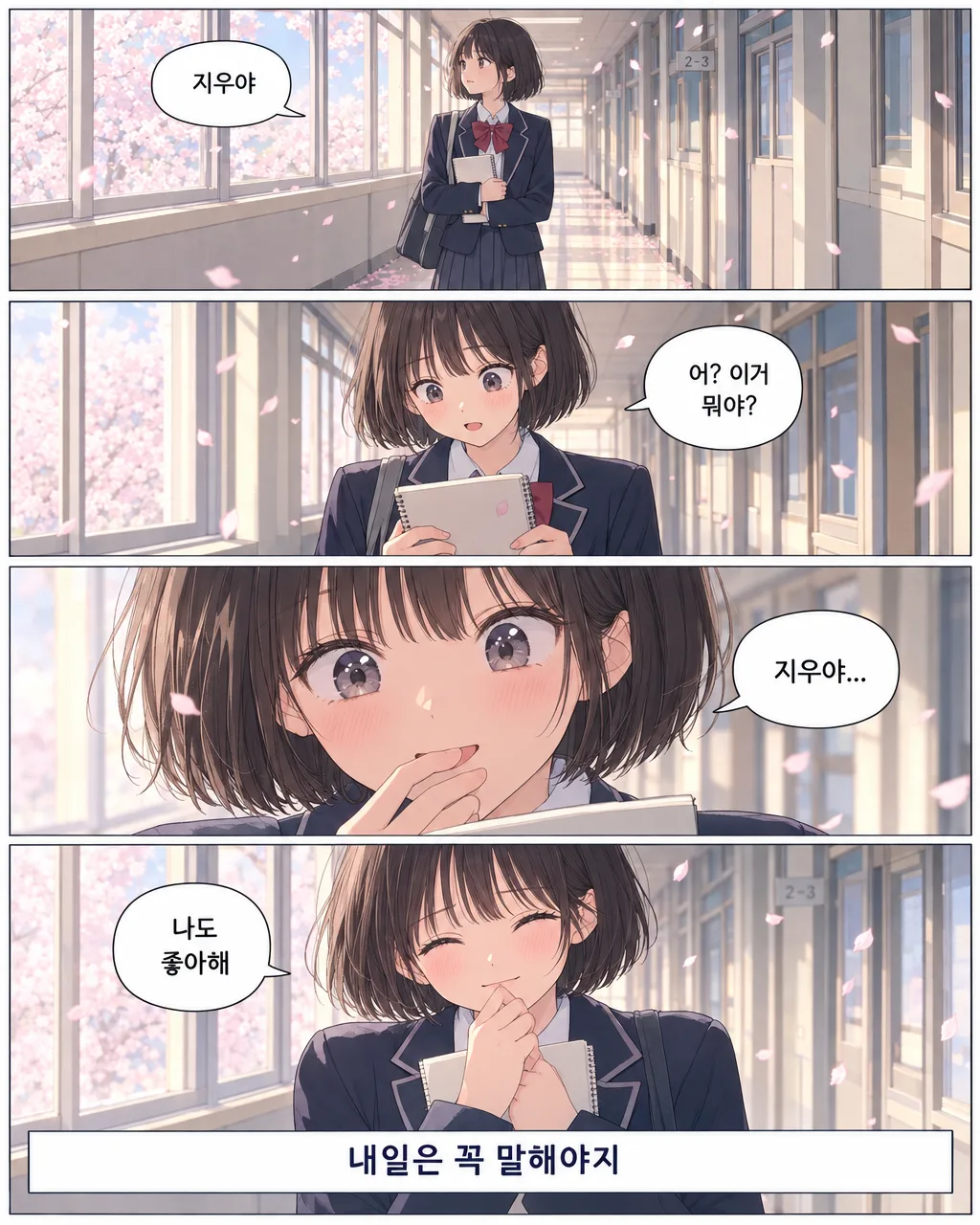
있었던 일 한 줄과 감정 흐름만 고르면 대사까지 알아서 채워지는 청춘 웹툰 4컷 만화 — 네 컷은 가로로 긴 띠로 위에서 아래로
칸 채우기
- 1칸을 채워요
- 2복사 버튼을 눌러요
- 3GPT 채팅창에 붙여넣어요
- 4그대로 보내면 썸네일 예시처럼 나와요
- 5카드에 맞는 실제 사진을 같이 넣으면 그 사진이 반영돼요 — 배경 카드는 배경 사진, 인물 · 음식 카드는 그 사진 선택
직접 해 봤어요
- 시험일
- 2026-11-02
- 도구
- ChatGPT 이미지 모델(코덱스에서 실행) — 무료 ChatGPT와 같은 모델, 한도만 다름
- 결과
- 통과
- 지켜진 것
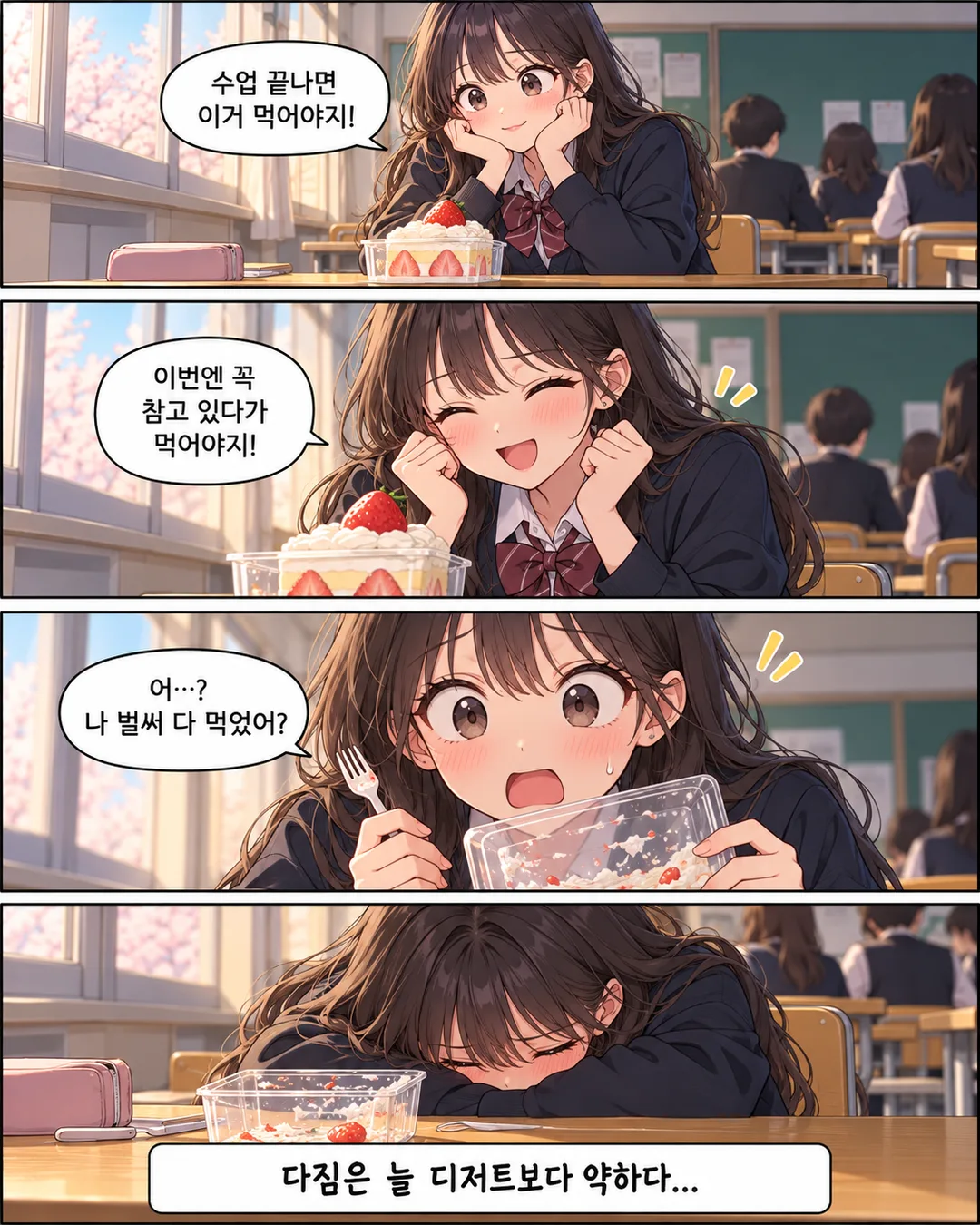
- 정확히 네 개의 가로 띠 컷이 위에서 아래로 이어지고 흰 간격과 검은 테두리로 구분된다. 갈색 긴 머리·갈색 눈·남색 교복·붉은 리본의 여학생과 봄 교실의 빛이 유지된다. 1~3컷 말풍선에 각각 「수업 끝나면 이거 먹어야지!」, 「이번엔 꼭 참고 있다가 먹어야지!」, 「어…? 나 벌써 다 먹었어?」가 읽히며 빈 말풍선·한글 오탈자가 없다. 4컷 아래 띠의 「다짐은 늘 디저트보다 약하다…」도 정상이다. 디저트를 기다리겠다는 다짐→이미 비어 있는 통을 발견하는 반전→책상에 엎드리는 결말이 소품과 행동으로 연결된다. 선명한 선·셀 채색·부드러운 역광의 청춘 웹툰 그림체가 유지된다.
- 안 된 것
- 없음
- 이렇게 하면 나아요
- 기본 예시값을 그대로 사용해도 사건·인물·대사·마지막 문구가 자동으로 채워졌다. 원하는 문구를 고정하거나 입력을 바꾸는 방법은 이번 시험에서 별도로 실행하지 않았다.
프롬프트 원문 보기 8,512자
Generate this image now. Draw it directly - do not describe it, explain it, or ask questions.
Output size 1080x1350 pixels, 4:5 portrait, Instagram standard.

[Purpose]
Create one finished four-panel Korean comic page that a person can post straight to social media or send to a friend in a chat. The reader should be able to follow the whole little story in one scroll, with short spoken lines inside speech balloons. Deliver the flat comic artwork only: no phone frame, no desk, no hands holding it, no presentation mockup, no surrounding border decoration.

[Automatic story choice]
If "【무슨 일이 있었는지】" is "알아서 골라줘" or blank, choose the best-fitting ONE of seven formulas: (1) big expectation → stronger vow → the original prop betrays the vow → brief self-own; (2) spoken words versus private wish → hope grows → the other person makes the same secret move → both are caught; (3) small goal → bold attempt → pet, friend or object unexpectedly takes control → nickname punch; (4) visible clue → confident assumption → the same clue suddenly means the opposite → one-line reveal; (5) ordinary promise → warm expectation → actual behavior breaks that promise → affectionate jab; (6) relatable habit → vow to change → the body repeats the habit before the mind notices → one 'Just me?' image instead of a joke; (7) repeat the SAME action in panels 1, 2 and 3 with rising size or confidence, but make the third repetition unexpectedly backfire → panel 4 breaks the pattern with a visual punch. Base every formula on ki-sho-ten-ketsu: panel 1 shows a concrete situation, panel 2 grows the hope or vow, panel 3 BETRAYS the expected outcome with a visible reversal in action (never a scene of conflict, worry or mere pause), and panel 4 lands one unexplained visual or spoken hit (never a lesson, recap or explanation). Plant one small prop in panel 1 and pay it off; keep short natural dialogue, clear changing expressions and this card's fixed art style. For formula 6, the fourth panel is a recognizable 'just me?' moment rather than a gag. Honor a user-written final line by choosing a formula whose ending fits it. Invent a concrete, relatable school or young-adult everyday incident, a distinctive but cute protagonist, a fitting place and a small recurring prop. Prefer a crush, friendship or embarrassing self-own with a fourth-panel laugh or instant recognition. If "【감정 흐름】", "【주인공】" or "【배경】" is automatic, choose it to match the incident. Honor every field the user did fill. If "【이름 넣기】" is automatic, choose a short fictional name only when someone says it; otherwise omit names. Automatic scenes are fiction, not claims about the user. Never print "알아서 골라줘".

[Scene]
All four panels happen in one consistent place: "【배경】". Keep the same location, the same time of day and the same weather across every panel, changing only the camera angle and how close the camera sits. The main character is "【주인공】". Draw exactly the same face, the same hairstyle and length, the same eye colour and the same uniform in all four panels, so a reader instantly recognises the same person; if the description includes two people, both must stay consistent too. Vary the shots so the page does not feel static: one wide establishing shot, one medium shot, one close-up on the face or hands, and one final shot that lands the ending.

[Story]
The chosen or supplied incident is "【무슨 일이 있었는지】". The chosen or supplied emotion arc is "【감정 흐름】". Turn them into four distinct beats. For a youthful school or young-adult moment, show the small prop and the character's hopeful glance in panel 1; let a spoken promise or private wish make the hope bigger in panel 2. In panel 3, the prop or the other person's action unexpectedly reveals the opposite of what the protagonist assumed: use a startled face and a clear physical action, not a worried stare. In panel 4, reuse the prop for a tiny shared embarrassment or an instantly understood 'just me?' image. A sentimental pause alone is not an ending; keep the supplied emotion arc but let the visible reversal earn the last line. Keep the emotional arc, but land a specific laugh or instantly recognizable moment rather than a generic sentimental lesson. Write the dialogue yourself. Use one short Korean balloon in each of panels 1, 2 and 3, ideally 4–10 Hangul syllables; add a second only if the reply is necessary. "【말투】" decides 반말 or 존댓말 only. "【성격】" decides 친근하게 (playful), 부드럽게 (warm), 강하게 (brisk), or automatically the best fit. Preserve the selected speech level across personalities. Use "【이름 넣기】" only if a character actually calls someone. Let cute faces, big readable reactions and body posture carry the humor within the fixed webtoon style.

[Text layout]
Arrange the page as exactly four panels stacked top to bottom, each one a wide short horizontal band spanning the full width of the page, read from top to bottom. No other layout: no grid, no side-by-side panels, no large final panel.
Separate the panels with thick, clean white gutters and give each panel a thin dark outline so the boundaries stay crisp. Place white rounded speech balloons with pointed tails inside the panels, each balloon fully inside its own panel and never crossing a gutter. Inside the final panel, place one horizontal caption band across the lower part and render "【마지막 컷 한마디】" exactly if the user wrote a line. If it is "알아서 골라줘" or blank, invent one short Korean payoff tied to the earlier prop and render that instead. Every Korean character must sit fully inside its balloon or band with comfortable margins.

[Style]
Draw the whole page as a Korean coming-of-age webtoon: crisp cel shading, clear backlight and a sense of open air, delicate highlights in the eyes, pastel skies, thin tidy linework, full soft colour.
Keep to this one look on every panel. Give the character a soft, cute silhouette and let surprise or embarrassment briefly exaggerate the eyes, blush or pose without changing their identity. Never name or imitate a specific studio, artist, film, series or existing character.

[Visual hierarchy]
The dialogue is the first thing a reader notices, then the character's face, then the background. The final caption band is the single strongest line on the page. Keep backgrounds simple enough that the balloons always read clearly against them.

[Lighting and texture]
Light the scene to match the chosen background and keep that lighting consistent through all four panels. Use soft natural light rather than harsh contrast, and let the chosen drawing style decide the surface texture.

[Text placement check]
Panels 1, 2 and 3 must each contain one filled speech balloon. Panel 4 must contain the final caption in a horizontal band; this caption is sufficient instead of a fourth speech balloon. All lettering belongs inside these balloons or the final caption band. Keep books, notebooks, signs, boards, packaging and phone screens unlettered, using plain surfaces or simple non-letter shapes. Show the reversal through a physical action or a drawing, rather than writing on a prop.

[Text rules]
Spell every Korean word correctly. The dialogue is written by you, so proofread each line before drawing it and use only standard, correctly spelled Korean - never drop, swap or duplicate a syllable (for example write "좋아해", never "좋야해"). Render only Korean text: the dialogue you wrote, and the final caption chosen under [Text layout]. Preserve every character of a user-written caption; never print an automatic-choice instruction. Every balloon must contain text - never leave an empty balloon. Do not add sound effects in other alphabets, page numbers, titles, credits or signatures.

[Avoid]
No named studios, artists, films, series or their characters, and no recognisable existing character designs. No real celebrity faces. Never let the character's face, hair, eye colour or uniform change between panels. No non-Korean lettering, no broken, mirrored, doubled or misspelled Korean, no text spilling outside a balloon, no empty balloons, no watermark, no page number, no blurred or missing panel gutters, no fifth panel, no inset panel. No suggestive posing, no exposure beyond an ordinary school uniform, no alcohol, no violence, no blood.

[Final output format]
Output size 1080x1350 pixels, 4:5 portrait, Instagram standard.
This selected output format takes priority over any fixed canvas size or aspect ratio elsewhere in this template. Adapt the composition, text zones and margins to the selected canvas without stretching or cropping essential content. Device safe areas apply only when a device is selected. Never print these format instructions on the image.
결과 어땠어요?
이 카드도 많이 사용해요
쓰는 법 · 자주 묻는 것
이런 때 쓰세요
오늘 있었던 일을 그림 한 장으로 남기고 싶을 때 쓰는 카드예요. 학교에서 있었던 작은 일, 친구랑 주고받은 말, 혼자만 알고 있는 마음 같은 것들이요. 인스타 게시물이나 스토리에 올려도 되고, 그 사람에게 카톡으로 보내도 좋아요.
특히 이런 때 잘 어울려요. 짝사랑 일기를 남길 때, 친구에게 장난으로 우리 얘기를 만화로 보낼 때, 개학·졸업·생일처럼 날짜가 있는 날을 기록할 때, 블로그나 스레드에 올릴 가벼운 그림 네 컷이 필요할 때요.
이 카드가 다른 4컷 카드와 다른 점이 하나 있어요. 보통은 대사까지 프롬프트에 적혀 있어서, 누가 뽑아도 똑같은 이야기가 나와요. 배경만 바뀌는 셈이지요. 이 카드는 그렇지 않아요. 이야기는 내가 적은 한 줄에서 나오고, 그림은 늘 이 청춘 웹툰 그림체로 나와요.
칸 채우는 법
- 무슨 일이 있었는지: 이야기가 없으면 「알아서 골라줘」 그대로 두세요. 직접 적는다면 가장 중요한 칸이에요. 설명하지 말고 장면 하나만 적으세요. 「친구랑 싸웠다」보다 「빌려준 노트에 답장이 적혀 있었다」가 훨씬 잘 나와요. 앞의 것은 그릴 그림이 없고, 뒤의 것은 손에 든 노트가 바로 보이니까요. 한 줄이 너무 길면 네 컷에 욱여넣느라 뭉개져요. 25자 안쪽이 좋아요.
- 감정 흐름: 자동으로 두면 사건에 맞게 고릅니다. 직접 고르면 이야기가 어디서 어디로 가는지 정해요. 「무슨 일이 있었는지」와 어울리는 걸 고르세요. 노트에 답장이 적혀 있었다면 「설렘 → 고백」이나 「짝사랑 → 들키기」가 맞고, 우산이 하나뿐이라면 「평범한 하루 → 작은 기적」도 어울려요.
- 주인공: 자동으로 두면 사건에 맞는 귀여운 인물을 만듭니다. 직접 적을 땐 머리 모양과 옷까지 적어 주세요. 「단발 여고생 · 교복」처럼요. 두 사람이 나오는 이야기면 「여학생과 남학생 둘」을 고르면 돼요.
- 배경: 자동으로 두면 사건에 맞는 한 장소를 고릅니다. 네 컷이 모두 여기서 일어나요. 장소가 바뀌면 이야기가 흩어져 보여서, 한 곳으로 묶어 뒀어요.
- 마지막 컷 한마디: 자동으로 두면 1컷에 나온 소품을 다시 꺼내 짧게 마무리하는 문장을 씁니다. 직접 적은 문장은 마지막 컷 아래 띠에 그대로 들어갑니다.
- 말투: 말풍선의 반말 · 존댓말만 정해요. 친구 사이 이야기면 반말, 선후배나 처음 만난 사이면 존댓말이 자연스러워요.
- 성격: 같은 말투 안에서 대사의 온도를 바꿔요. 「친근하게」는 장난스럽게, 「부드럽게」는 다정하게, 「강하게」는 짧고 툭 던지듯 나와요. 짝사랑 이야기에 「강하게」를 고르면 무뚝뚝한데 속은 다정한 인물이 돼요.
- 이름 넣기: 자동이면 이름이 필요한 장면에만 짧은 이름을 붙입니다. 직접 적은 이름은 그 인물을 부를 때 씁니다.
덤컷이나 「너희는 어때?」는 원하면 게시물 캡션에 적고, 그림은 네 컷만 만드세요.
대사는 누가 쓰나요
우리가 대사를 정해 두지 않았어요. 적어 주신 한 줄과 감정 흐름을 보고 GPT가 그 자리에서 네 컷의 이야기를 짜고, 컷마다 대사를 새로 씁니다.
그래서 같은 칸을 넣어도 뽑을 때마다 조금씩 다른 이야기가 나와요. 이게 이 카드의 재미이기도 하고, 가끔 아쉬운 점이기도 해요. 마음에 안 들면 「다시 그려 줘」라고만 해도 새 이야기가 나옵니다. 마음에 드는 대사가 따로 있다면 「3컷 대사를 '나도 들은 것 같아'로 바꿔 줘」처럼 콕 집어 말해도 돼요.
그림이 나오면 꼭 볼 것
- 네 컷의 주인공이 같은 사람인가요. 머리 길이나 교복 색이 컷마다 달라지는 일이 가끔 있어요. 이게 제일 자주 나는 실수예요.
- 대사가 말풍선 밖으로 넘치지 않았는지, 빈 말풍선이 없는지 보세요.
- 마지막 띠의 글자가 적어 주신 그대로인지 확인하세요. 이 문장만은 글자가 달라지면 안 돼요.
- 컷이 정확히 넷인지 보세요. 가끔 다섯 컷으로 그리기도 해요.
틀린 곳 고치는 법
그림이 나온 다음 그 대화창에서 이어서 말하면 돼요. 처음부터 다시 할 필요 없어요.
- 「3컷 얼굴이 달라요. 1컷과 같은 사람으로 다시 그려 주세요」
- 「2컷 대사가 말풍선 밖으로 나갔어요. 더 짧게 줄여 주세요」
- 「컷이 다섯 개예요. 정확히 네 컷으로 다시 그려 주세요」
- 「마지막 띠 글자가 틀렸어요. '내일은 꼭 말해야지'로 정확히 다시 써 주세요」
자주 묻는 것
- 대사를 제가 정하고 싶어요. 네, 됩니다. 그림이 나온 뒤에 「1컷 대사를 이걸로 바꿔 줘」라고 말하면 돼요. 처음부터 정하고 싶으면 「무슨 일이 있었는지」 칸에 대사를 따옴표로 적어 두셔도 그 말을 살려서 그려 줍니다.
- 말풍선 대사가 자꾸 틀려요. 네 컷이라 글자가 많은 편이에요. 프롬프트는 말풍선 하나에 4~10글자로 짧게 쓰도록 되어 있어요. 그래도 틀리면 「2컷 대사를 '나도 들은 것 같아'로 정확히 다시 써 줘」처럼 컷 번호와 문장을 함께 적으세요.
- 좋아하는 만화 그림체로 해도 되나요? 특정 작가나 작품 이름은 넣지 않으셨으면 해요. 상표와 저작권 문제가 생길 수 있고, 요즘은 그렇게 적으면 그림이 아예 안 나오기도 해요. 대신 「큰 눈과 반짝임, 가는 선」처럼 느낌으로 적으면 비슷하게 나옵니다. 이 카드의 청춘 웹툰 그림체도 그렇게 만들어 뒀어요.
- 6컷이나 8컷도 되나요? 이 카드는 네 컷에 맞춰 만들었어요. 컷을 늘리면 대사 자리가 좁아져서 글자가 잘 깨져요. 이야기가 길면 네 컷짜리를 두 장으로 나눠 뽑는 쪽이 더 잘 나옵니다.
- 인쇄해도 되나요? 돼요. 화면 비율을 A4 포스터로 바꿔서 뽑으면 인쇄용으로 나와요. 학급 문집이나 졸업 앨범에 넣을 그림으로도 쓸 수 있어요.
그림체 예시
예시는 합치기 전 카드의 결과입니다. 위 복사 프롬프트는 대표 카드의 기본 결과를 유지합니다. 다른 구성을 원하면 생성 후 이 예시를 첨부하고 원하는 차이만 요청하세요.
병맛 낙서 인스타툰
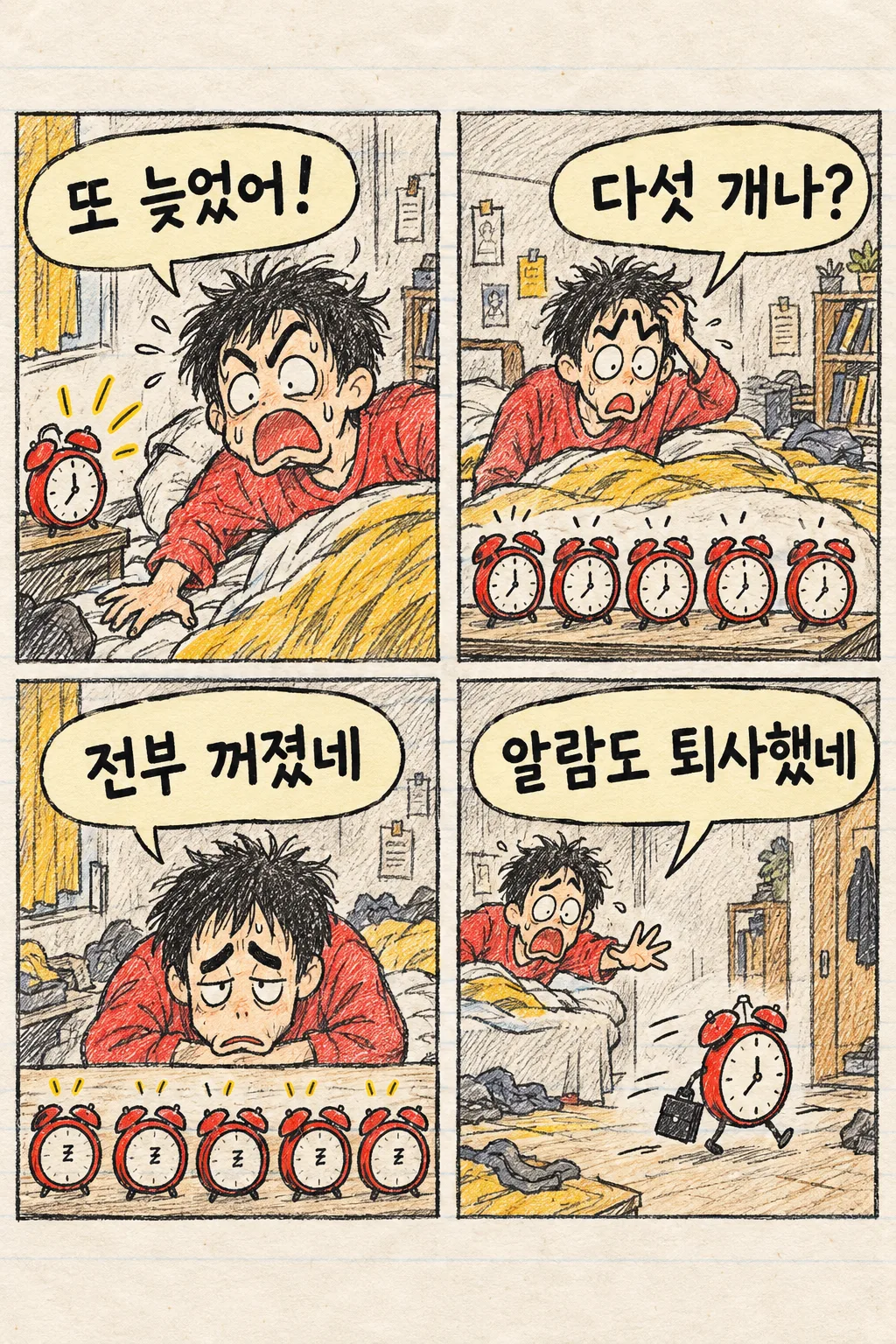
작은 결심이 무너진 일상을 낙서선과 구겨진 표정으로 웃기게 그리는 4컷 — 알람이나 운동 포기처럼 내 실패가 소재예요.
로코 순정 인스타툰
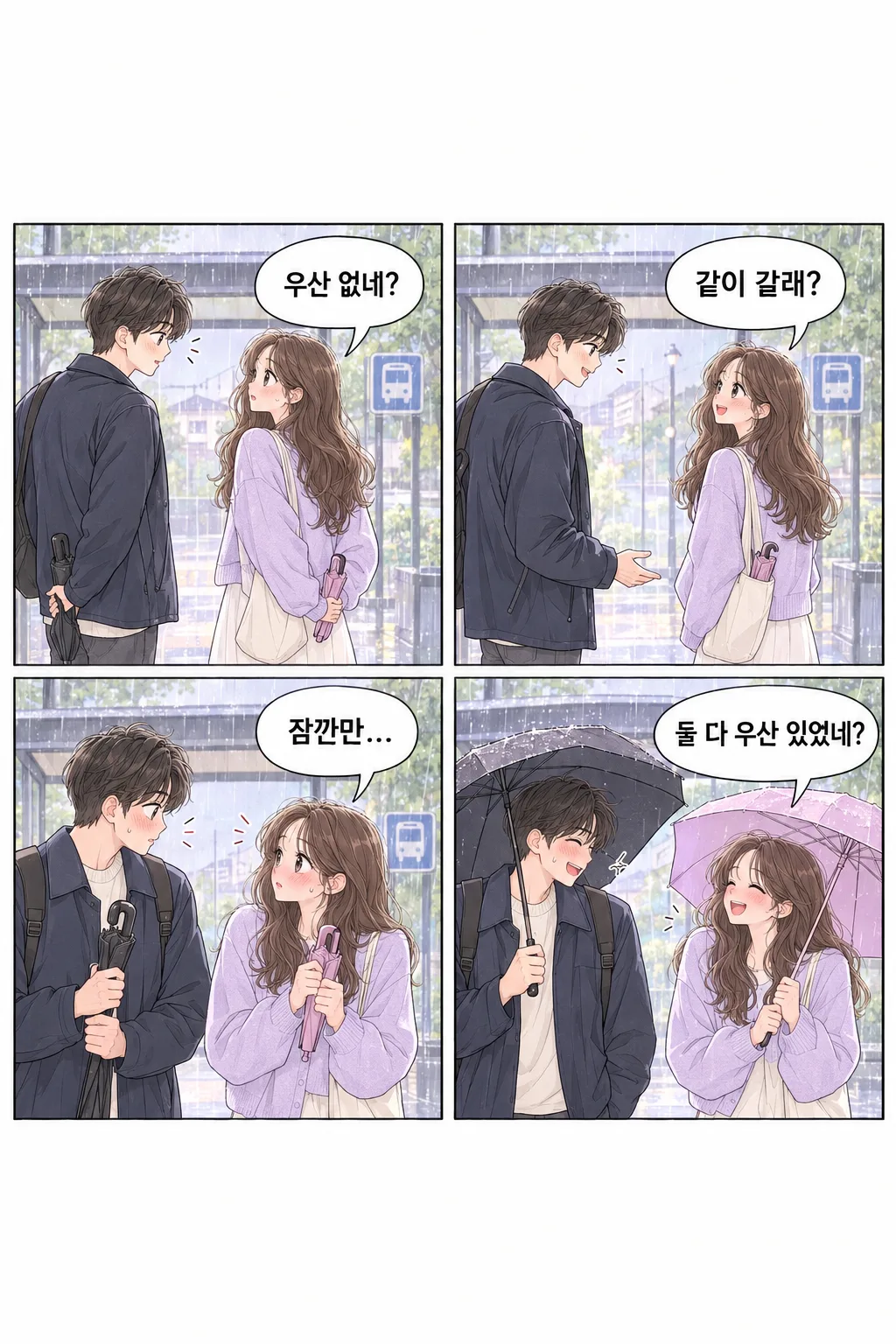
서로 마음을 숨긴 두 사람의 작은 행동이 들키는 로코 4컷 — 우산처럼 관계를 드러내는 소품과 눈빛이 중심이에요.
반전 개그 인스타툰
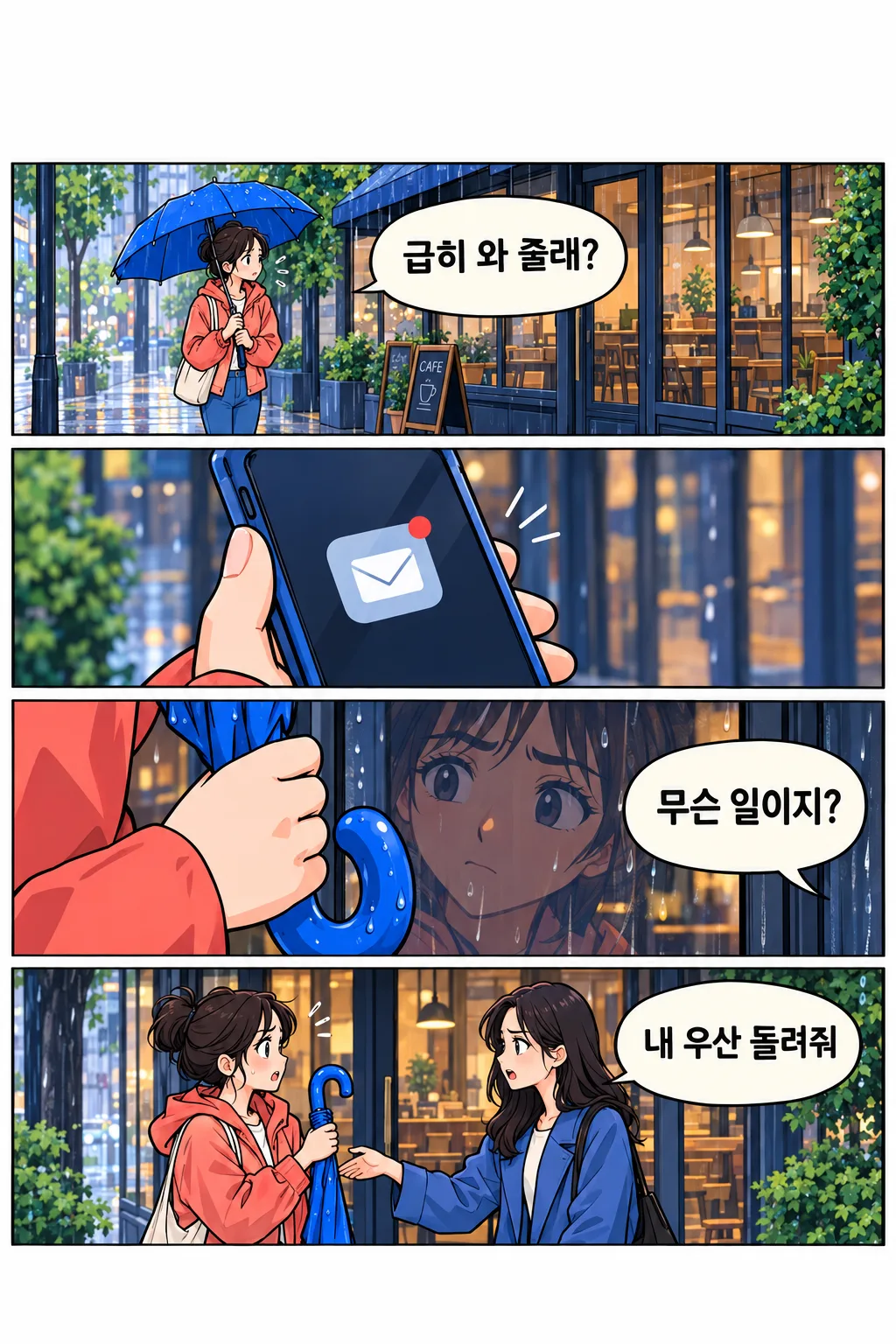
친구의 말을 잘못 알아듣고 혼자 키운 기대가 물건 하나로 뒤집히는 4컷 — 굵은 선과 큰 표정으로 반전을 보여줘요.
귀여운 SD 개그 인스타툰
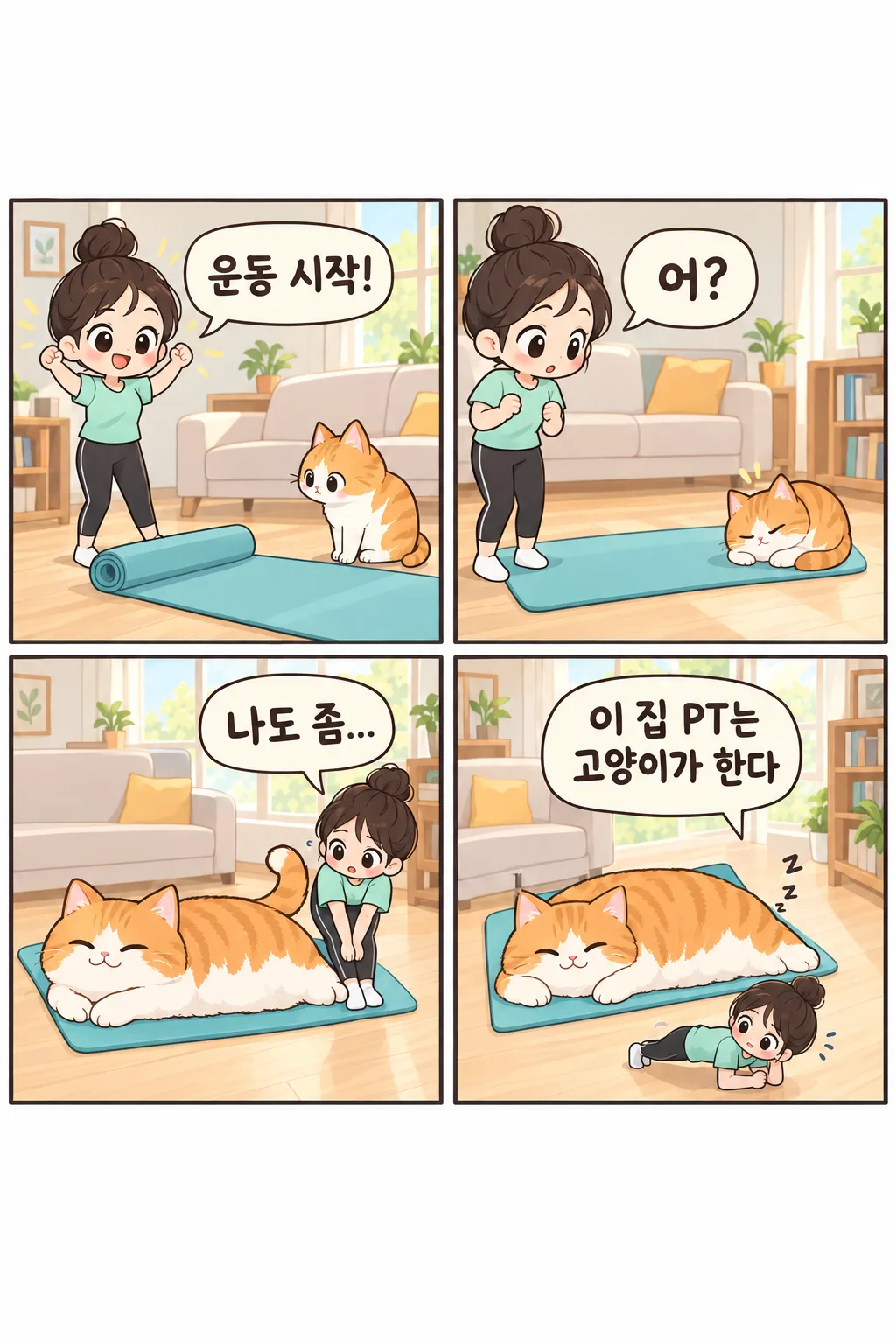
운동이나 집안일을 가로채는 반려동물의 행동을 큰 얼굴·작은 몸의 SD 캐릭터로 그리는 귀여운 4컷이에요.
맑은 수채 감성 인스타툰
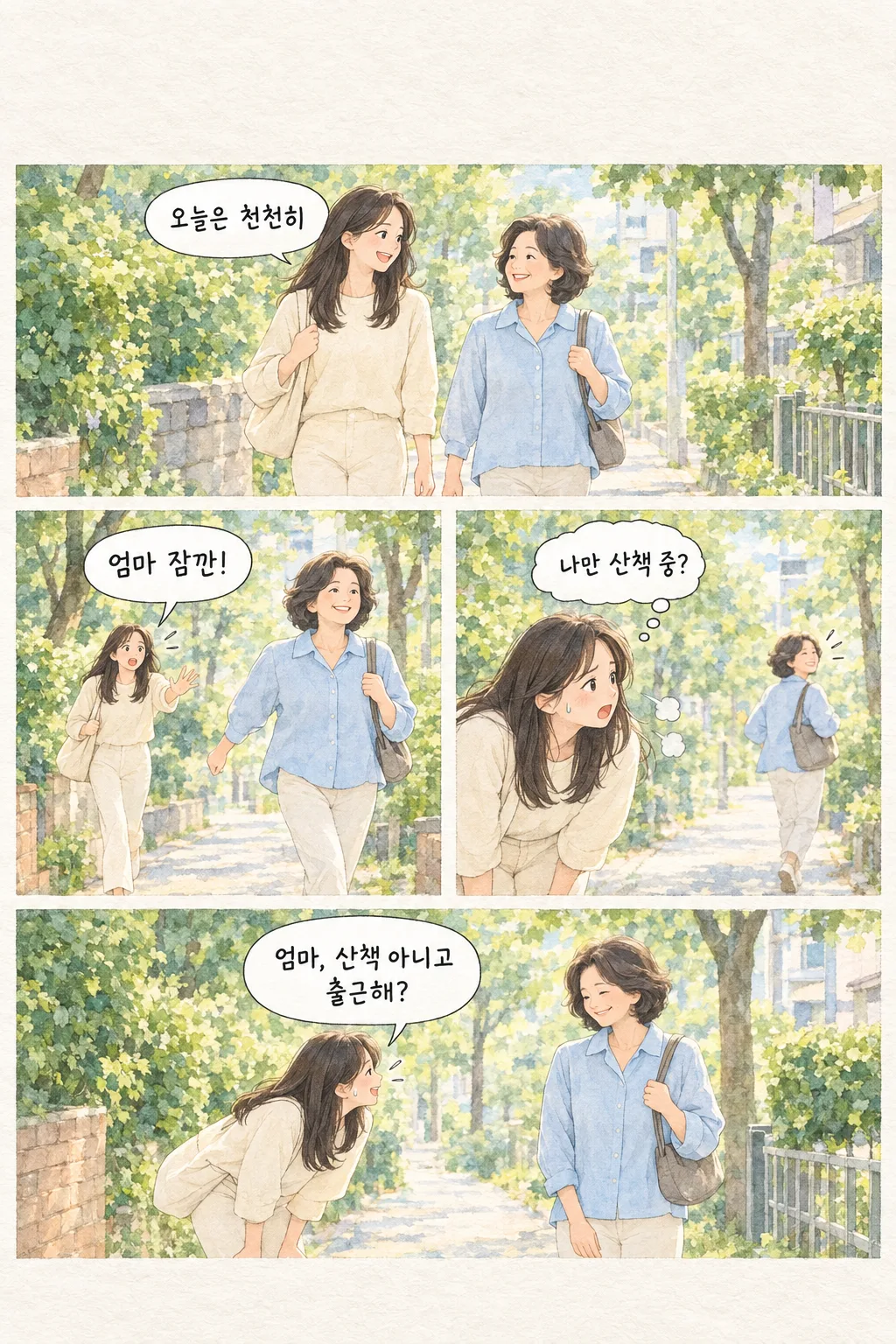
가까운 사람과의 산책에서 발견한 뜻밖의 습관을 오후 빛과 맑은 수채 색으로 담는 다정한 4컷이에요.
흑백 펜화 인스타툰
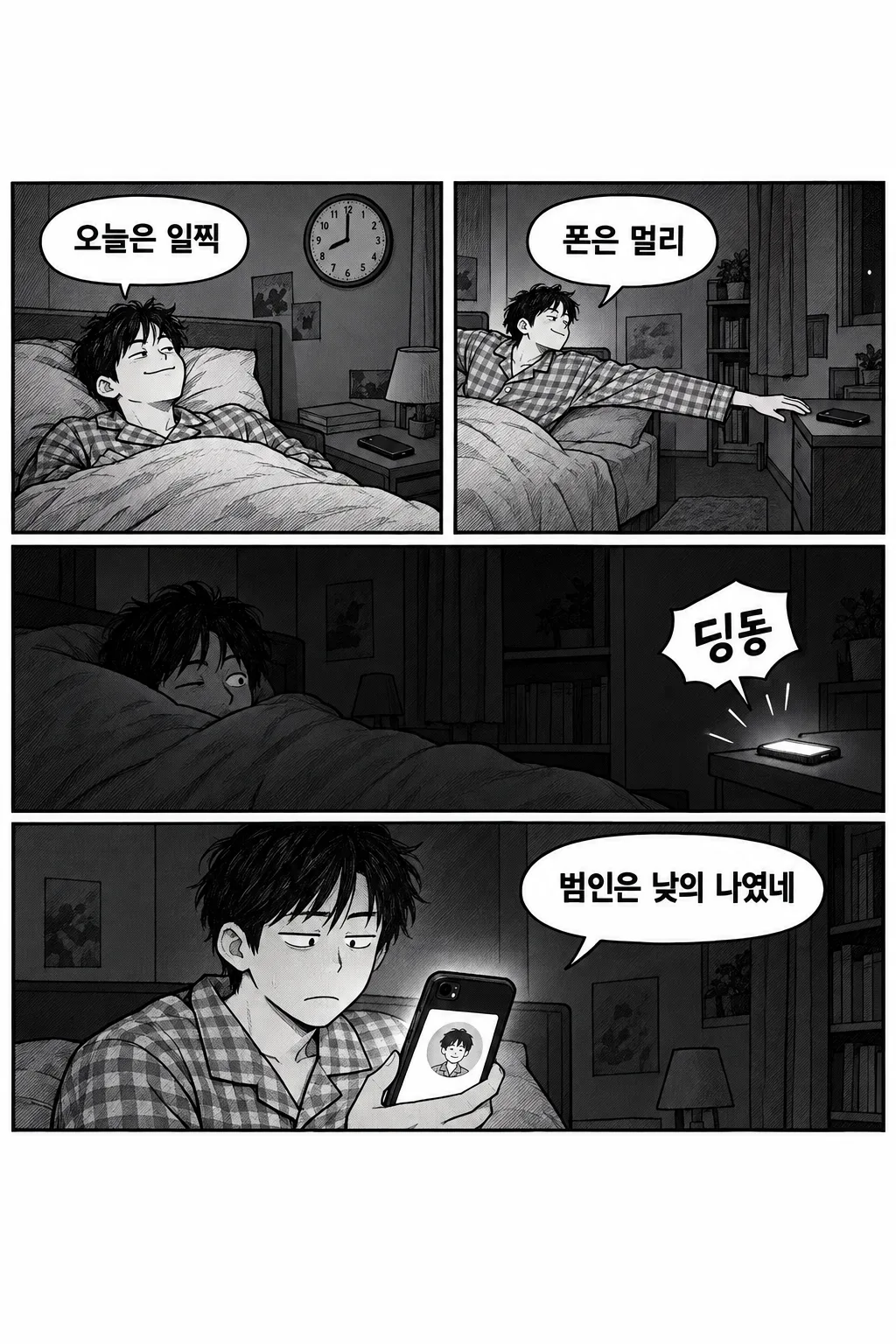
잠들기 전 휴대폰 알림처럼 스스로 만든 방해를 흑백 명암과 화면 빛으로 드러내는 4컷이에요.
파스텔 크레용 인스타툰
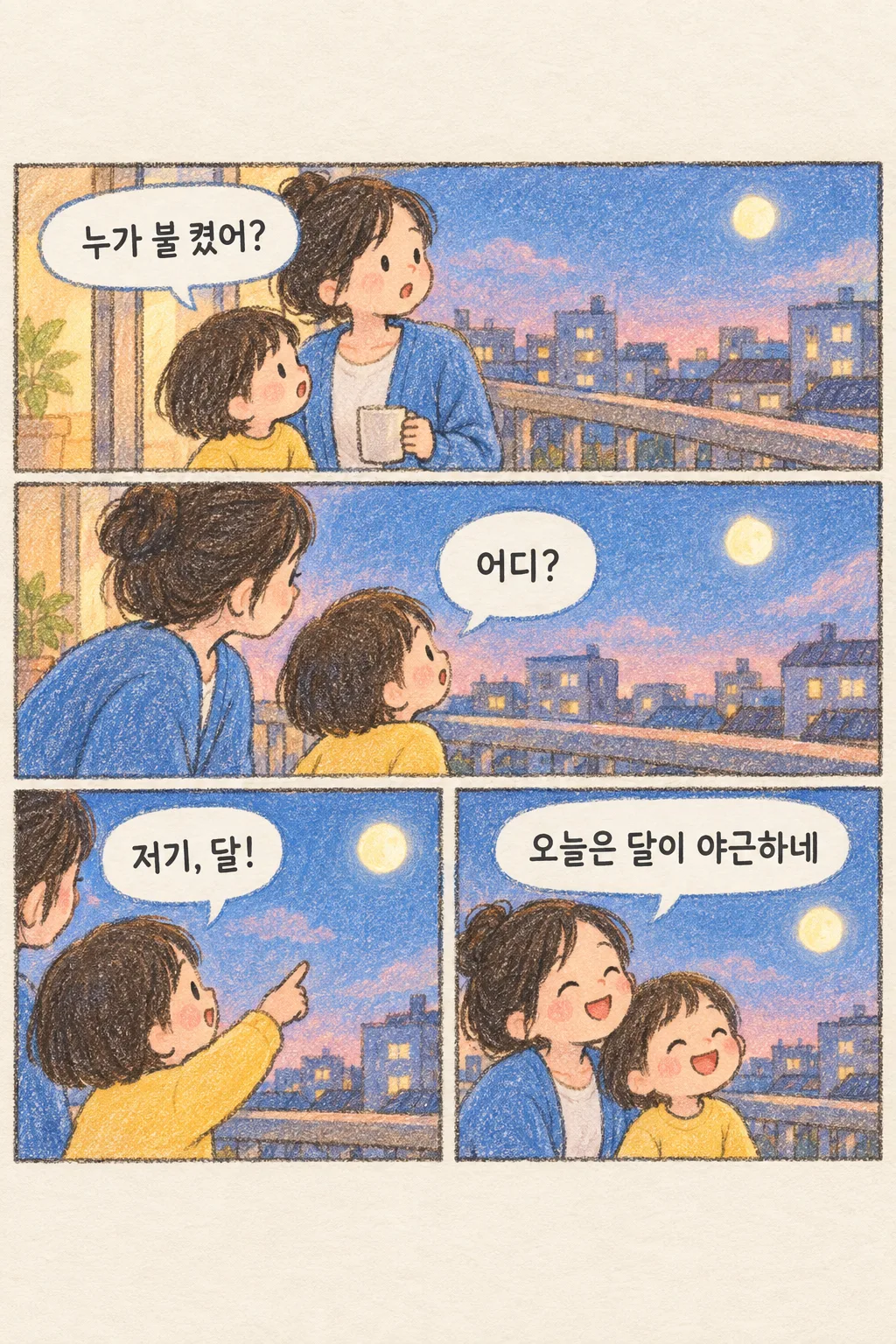
아이가 한 뜻밖의 질문과 몸짓을 창밖 달 같은 단서와 파스텔 크레용으로 남기는 가족 4컷이에요.
90년대 순정만화 인스타툰
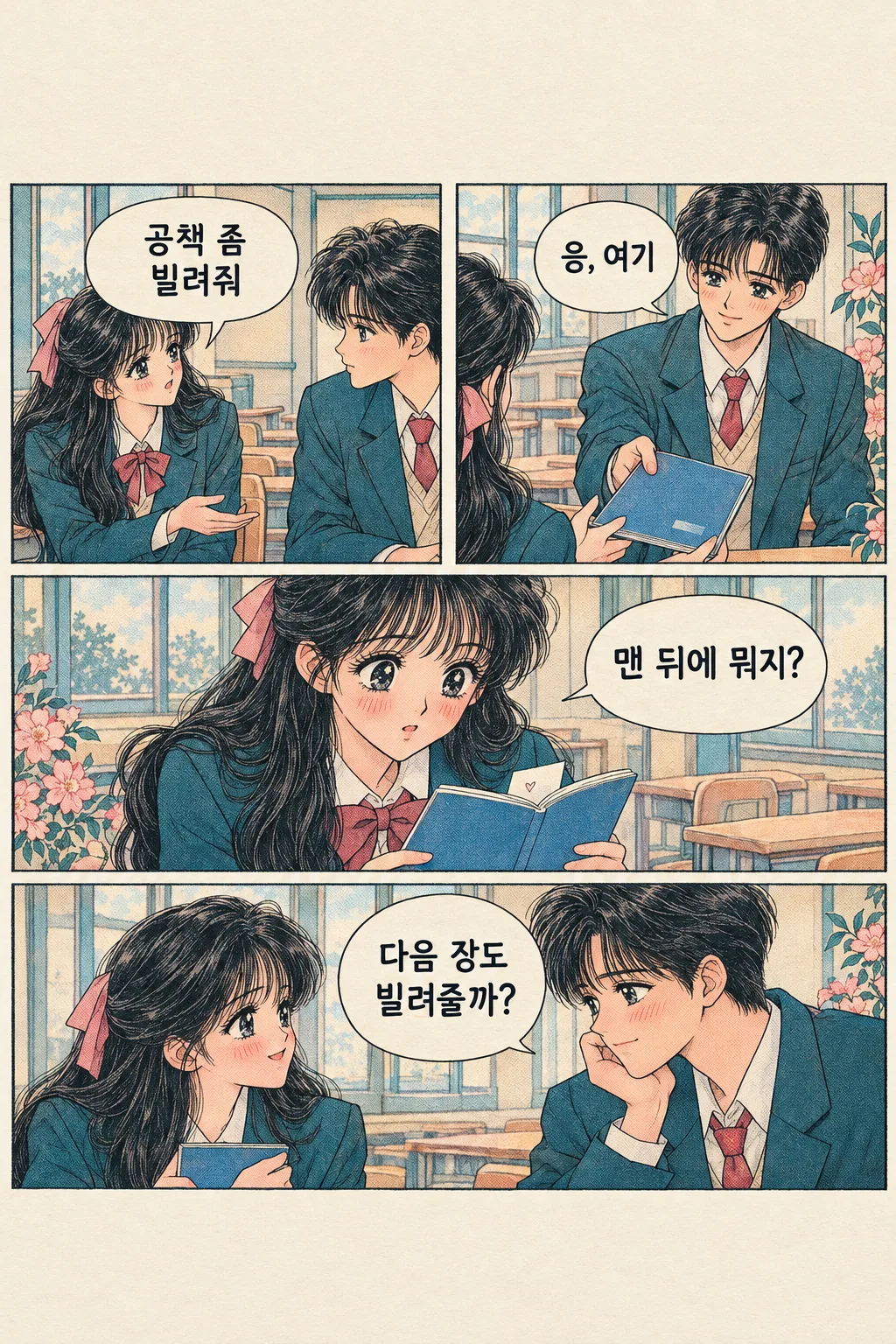
공책 글귀를 고백으로 착각하는 듯한 설렘과 오해를 90년대 순정만화 인쇄 질감으로 담는 4컷이에요.
레트로 신문 4컷 만화
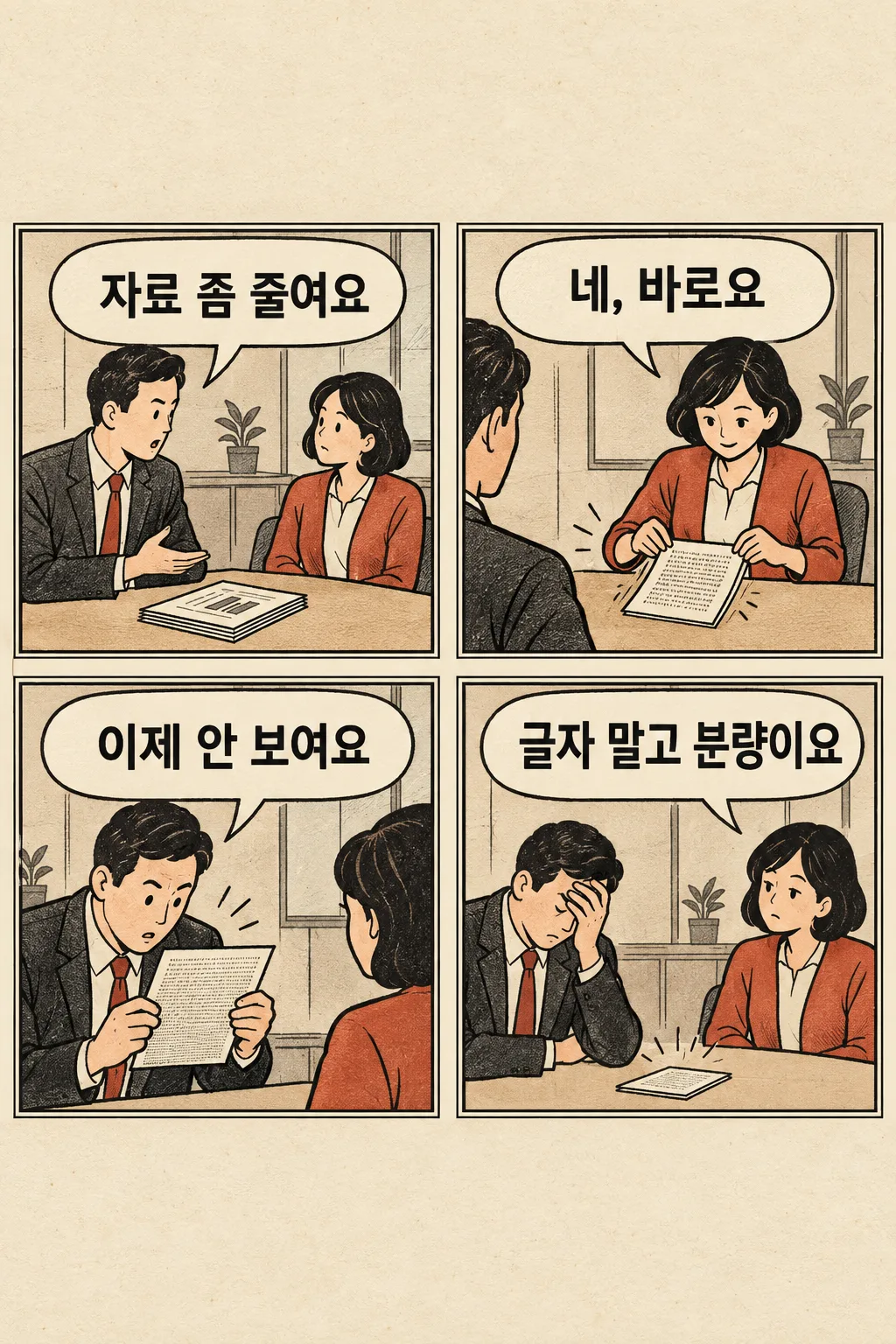
직장 동료의 말을 문자 그대로 알아들어 생긴 작은 오해를 낡은 신문 연재만화처럼 보여주는 4컷이에요.
극화풍 반전 4컷
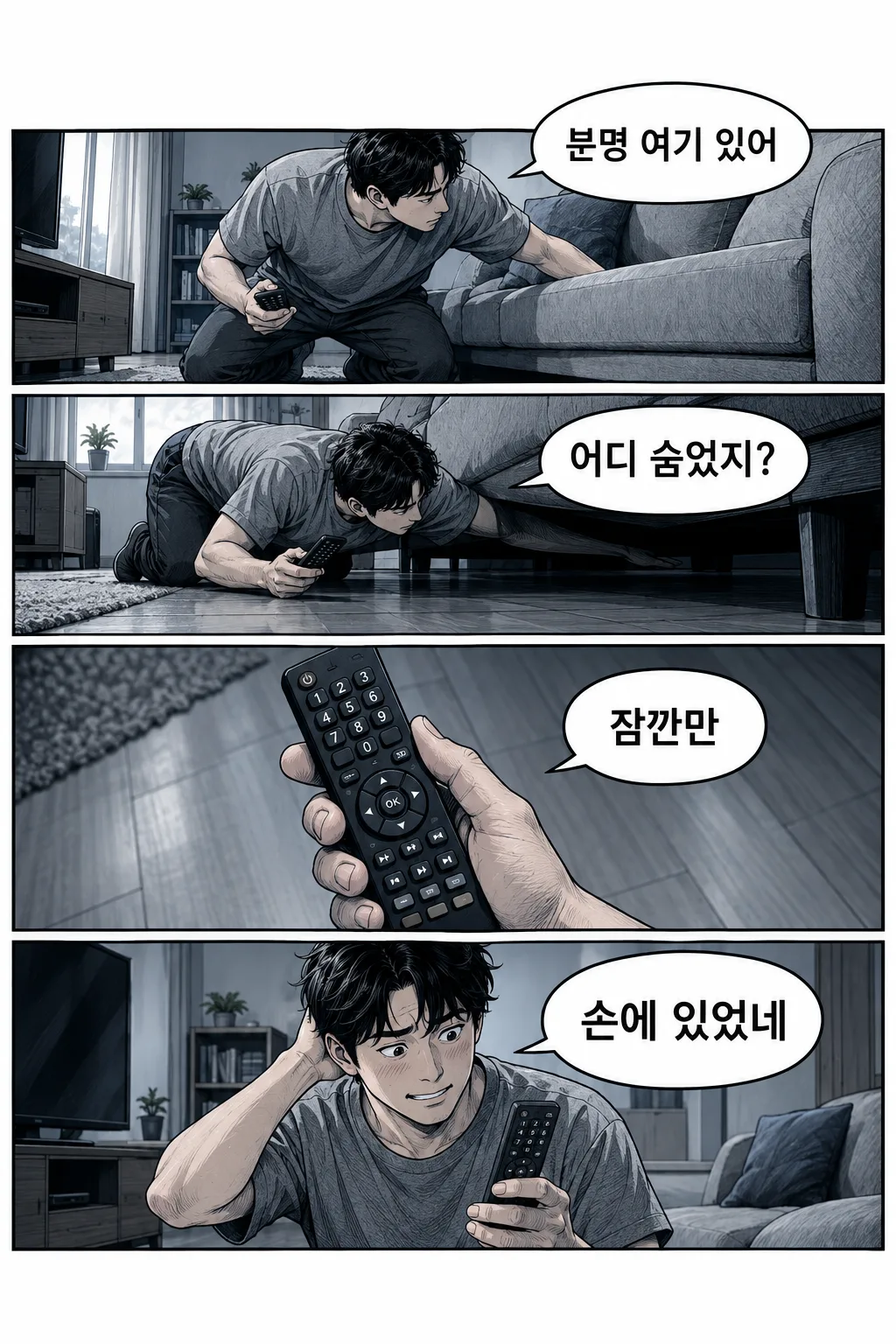
리모컨을 손에 쥐고 찾는 사소한 실수를 진지한 극화 명암으로 과장하는 반전 4컷이에요.
여름 축제 애니 4컷
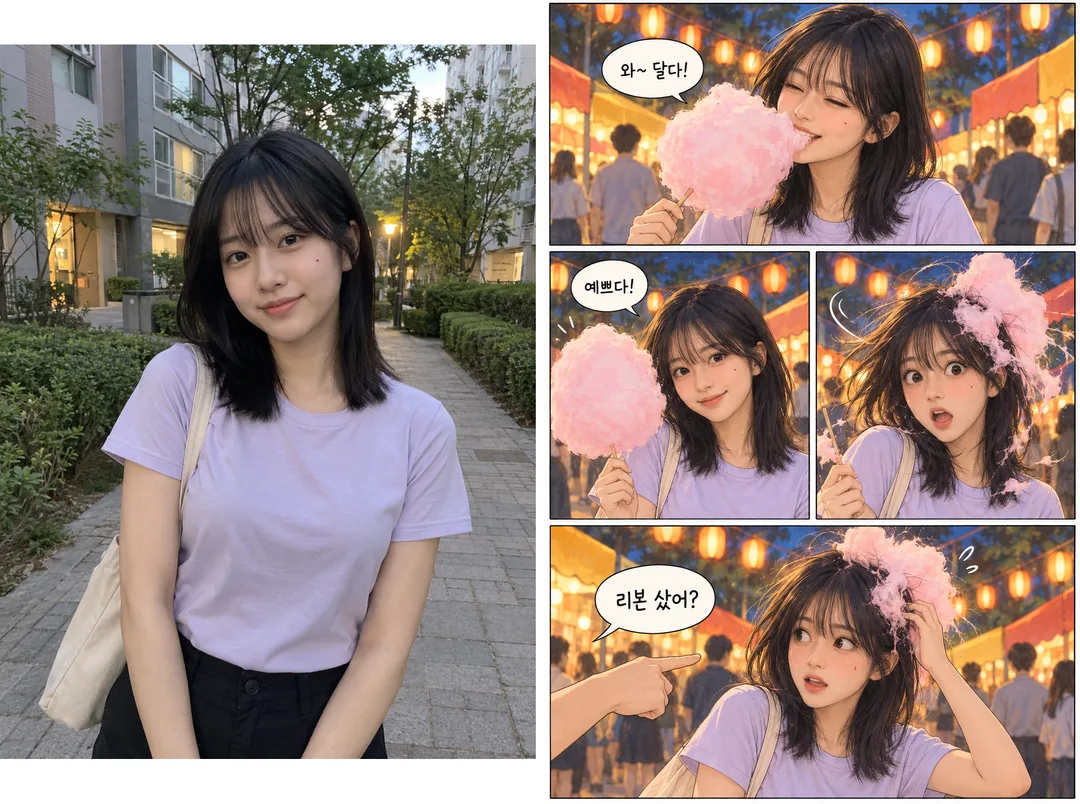
여름 축제에서 사진을 찍다 벌어진 작은 사고를 등불·솜사탕 같은 소품이 이어지는 애니풍 4컷으로 그려요.