
481만들어지는 과정 인포그래픽
재료부터 완성품까지, 작은 공장 라인을 왼쪽에서 오른쪽으로 따라가는 제작 과정 한 장이에요.
칸 채우기
- 1칸을 채워요
- 2복사 버튼을 눌러요
- 3GPT 채팅창에 붙여넣어요
- 4그대로 보내면 썸네일 예시처럼 나와요
- 5카드에 맞는 실제 사진을 같이 넣으면 그 사진이 반영돼요 — 배경 카드는 배경 사진, 인물 · 음식 카드는 그 사진 선택
프롬프트 원문 보기 3,638자
Create exactly ONE finished educational manufacturing-process infographic as an original miniature production line, directly as an image. Output size 1920x1080 pixels, 16:9 landscape thumbnail. Adapt the vertical layout below to a wide canvas: place all text as one column in the left 55% of the canvas, keeping the same order and size relationships (the zone percentages describe the order within that column), and place the main illustration in the right 45%. Keep the text large enough to read at thumbnail size.
Subject: 【주제】. Stage count: 【단계 수】. Mood: 【분위기】.
Use paper from prepared pulp, five stages, and 3D miniature when respective inputs are blank or automatic. Use exactly the selected number of numbered stages, strictly LEFT TO RIGHT in a single connected production row. For another aspect ratio, compress the connected row without reversing or wrapping the reading order. Title and stage labels must remain readable. Fill the canvas with the workshop, machinery, materials and finished objects; no floating sheet, collage, device mockup or promotional cover.
Before drawing, verify the process with reliable manufacturer, industry or museum sources if web access is available. Use only well-established steps. Choose a specific common manufacturing method, not a mixture of incompatible methods. Stage count 4, 5 or 6 means combine adjacent real operations into broader stages or separate a real combined operation; never invent an operation to fill a count. If a requested process cannot be established, do not fabricate an infographic: request the verified process instead. Do not print research notes, uncertainty disclaimers, citations or source logos in the image. Do not invent temperatures, times, ingredient percentages, health claims or historical facts.
Paper from prepared pulp: disperse pulp in water, form and drain a sheet on mesh, press out water, dry on heated cylinders, reel and cut. Glazed ceramics using two firings: knead clay, form, dry fully, bisque fire, apply glaze, glaze fire. Wooden graphite pencils: make graphite-clay cores, groove slats, insert cores and glue another slat on top, cut and shape pencils, paint and dry. Glass bottles: mix established glass raw materials, melt, form in molds, gradually cool in an annealing lehr, inspect. These are alternate subjects, not additional lines to draw.
Render only ONE selected mood across the whole image: 3D miniature means tactile scale-model machinery with studio light; Watercolor means transparent pigment washes and delicate ink on textured paper; Retro means vintage technical gouache, restrained screenprint grain and ochre/teal/vermilion inks. Keep the same readable miniature assembly-line composition in every mood. Add purposeful pipes, bins, catwalks and tools, with enough space behind lettering. Show changes in material state and the finished object on the right. Arrows, if used, must all follow the production flow.
Write one large natural Korean title meaning '[subject] is made', the small editorial name '하루', and exactly 【단계 수】 short Korean stage labels numbered consecutively from 1. No other text. Never print field names, automatic choices or instructions. Proofread each character and count every station. Use original generic fictional designs, plain unbranded objects and no people, real brands, logos, recognizable proprietary products, copyrighted characters, signatures or watermarks. The image must require no later cropping, assembly or retouching. Return only the finished single image.
Mood mapping: 3D 미니어처 = 3D miniature; 수채 = Watercolor; 레트로 = Retro. 알아서 골라줘 means automatic; blank fields use the defaults above.

[Final output format]
Output size 1920x1080 pixels, 16:9 landscape thumbnail. Adapt the vertical layout below to a wide canvas: place all text as one column in the left 55% of the canvas, keeping the same order and size relationships (the zone percentages describe the order within that column), and place the main illustration in the right 45%. Keep the text large enough to read at thumbnail size.
This selected output format takes priority over any fixed canvas size or aspect ratio elsewhere in this template. Adapt the composition, text zones and margins to the selected canvas without stretching or cropping essential content. Device safe areas apply only when a device is selected. Never print these format instructions on the image.
결과 어땠어요?
이 카드도 많이 사용해요
쓰는 법 · 자주 묻는 것
재료가 물건으로 바뀌는 순간을 한 줄로
수업 자료, 공방 소개, 지식 콘텐츠에서 한 물건의 제작 순서를 설명할 때 쓰는 카드예요. 원료와 기계, 중간 재료, 완성품이 왼쪽에서 오른쪽으로 이어져서 단계 이름만 읽어도 흐름을 따라갈 수 있어요. 사진을 넣는 변환 카드가 아니라 주제에 맞는 가상 작업장을 새로 그려요. 기본 결과는 16:9 한 장이며 목록 표지는 별도 제작한 세로 종이 공장입니다.
꼭 채울 칸 3개
주제에는 「펄프에서 종이」처럼 출발 재료나 방식까지 적으면 좋아요. 「도자기」는 두 번 굽는 유약 도자기 공정으로, 「연필」은 나무 몸통에 흑연심을 넣는 방식으로 표현해요. 빈칸이나 알아서 골라줘는 펄프에서 종이로 정합니다. 단계 수는 4·5·6 중 골라요. 비우면 5단계이고, 단계가 적으면 이웃한 실제 작업을 묶으며 많으면 실제 작업을 나눠요. 개수에 맞추려고 없는 공정을 만들지 않아요. 분위기는 3D 미니어처·수채·레트로이며 비우면 3D 미니어처예요. 화면 비율은 공통 크기 선택에서 바꿉니다.
세 가지 완성 모습
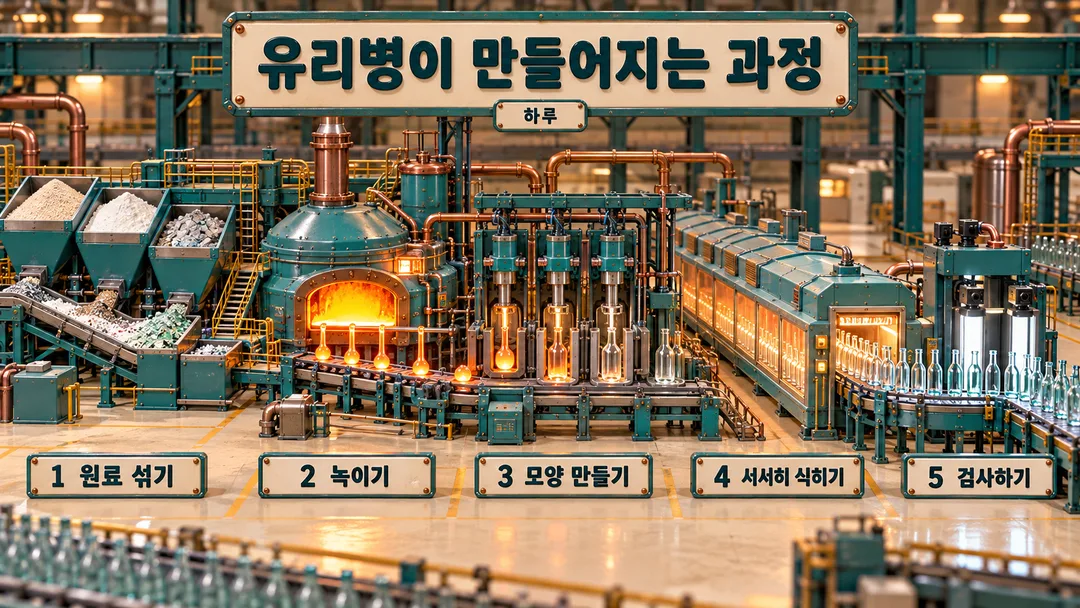
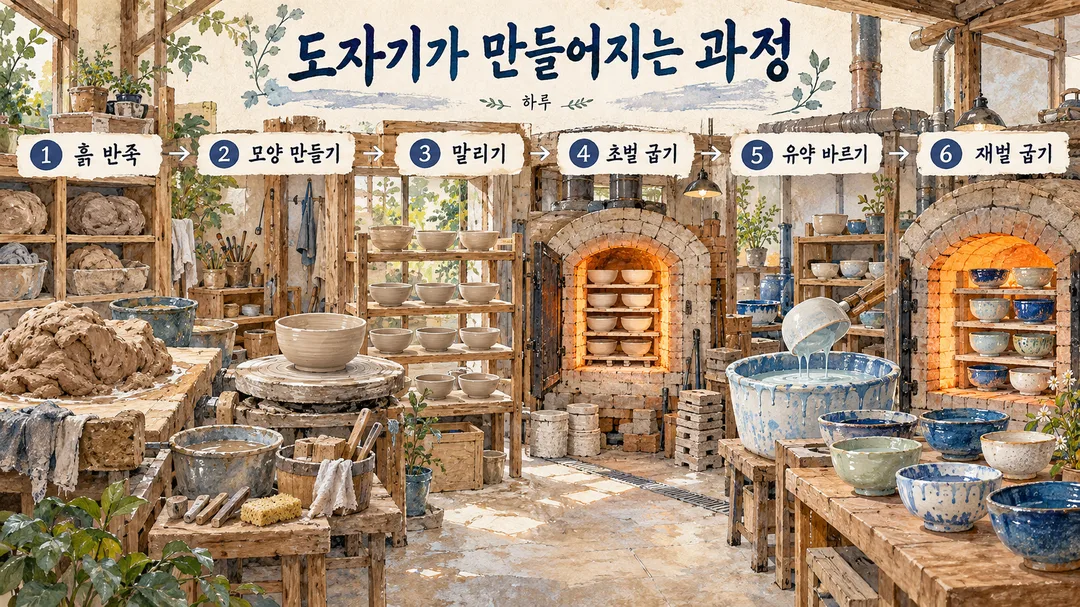
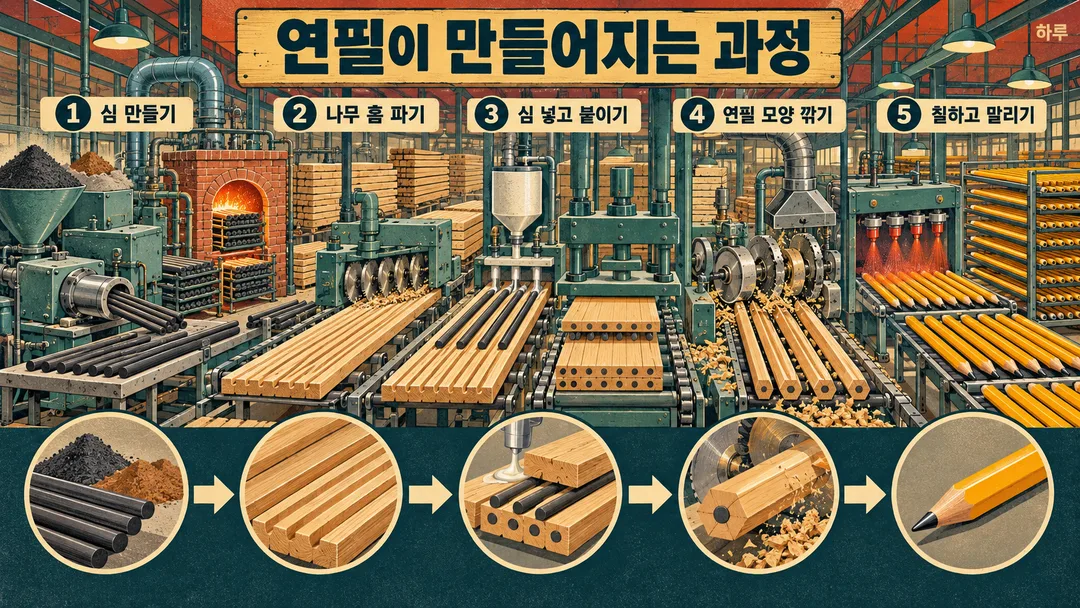
3D 유리병은 원료 혼합부터 녹이기·성형·서서히 식히기·검사의 5단계예요. 수채 도자기는 반죽·성형·건조·초벌·유약·재벌의 6단계로 가마 둘이 구분돼요. 레트로 연필은 심·나무 홈·접합·모양 깎기·칠과 건조를 5단계로 보여 줍니다. 그림의 작은 편집 이름은 하루예요. 이 예시들은 같은 그림을 재사용한 것이 아니라 주제와 분위기가 각각 다른 결과입니다.
붙여넣기와 확인
칸을 고르고 완성된 프롬프트를 그림 AI에 한 번 붙여 넣으세요. 별도 코드 실행이나 합성 없이 한 장으로 나와요. 결과에서는 숫자가 1부터 연속되는지, 고른 단계 수와 실제 작업장이 같은지, 건조와 굽기 순서가 바뀌지 않았는지 확인하세요. 특히 연필심은 금속 납이 아니며, 유리병은 급하게 물에 담가 식히는 그림이면 안 돼요. 제목과 작은 단계 이름은 확대해서 한 글자씩 읽으세요.
자주 묻는 것
공정이 다른 제품도 되나요? 확인할 수 있는 제작 방식으로 범위를 좁혀 적으세요. 자료가 부족하면 모델이 공정을 지어내지 않고 검증된 순서를 요청하도록 했어요. 더 많은 설명이 필요하나요? 이 카드는 긴 본문보다 짧은 단계명으로 흐름을 보여 주는 용도예요. 글자가 틀리면 틀린 단어와 올바른 표기를 지정해 이미지 전체를 다시 생성하세요. 실제 공장의 설비 도면이나 안전 작업 지침을 만드는 용도는 아닙니다.