

All · Comics & illustration · Scenery
589Art Deco transit poster
Turn your city, train, ship or tram into a travel poster with geometric gold lines and rich color planes.
What you get
- One Art Deco transit poster with your city title
- Gold geometric lines and a layered cityscape
- A scene shaped by your transport and colors
ChatGPT Free OK
Fill in the fields
- 1Fill in the fields
- 2Copy the prompt
- 3Paste it into a GPT chat
- 4Send it as is and you get an image like the thumbnail example
- 5Attach a real photo that fits the card and it is used in the result: a background photo for background cards, a person or food photo for those cards Optional
Tested by us
- Test date
- 2026-10-29
- Tool
- ChatGPT image model (run via Codex) — same model as free ChatGPT, only limits differ
- Result
- Pass
- What worked
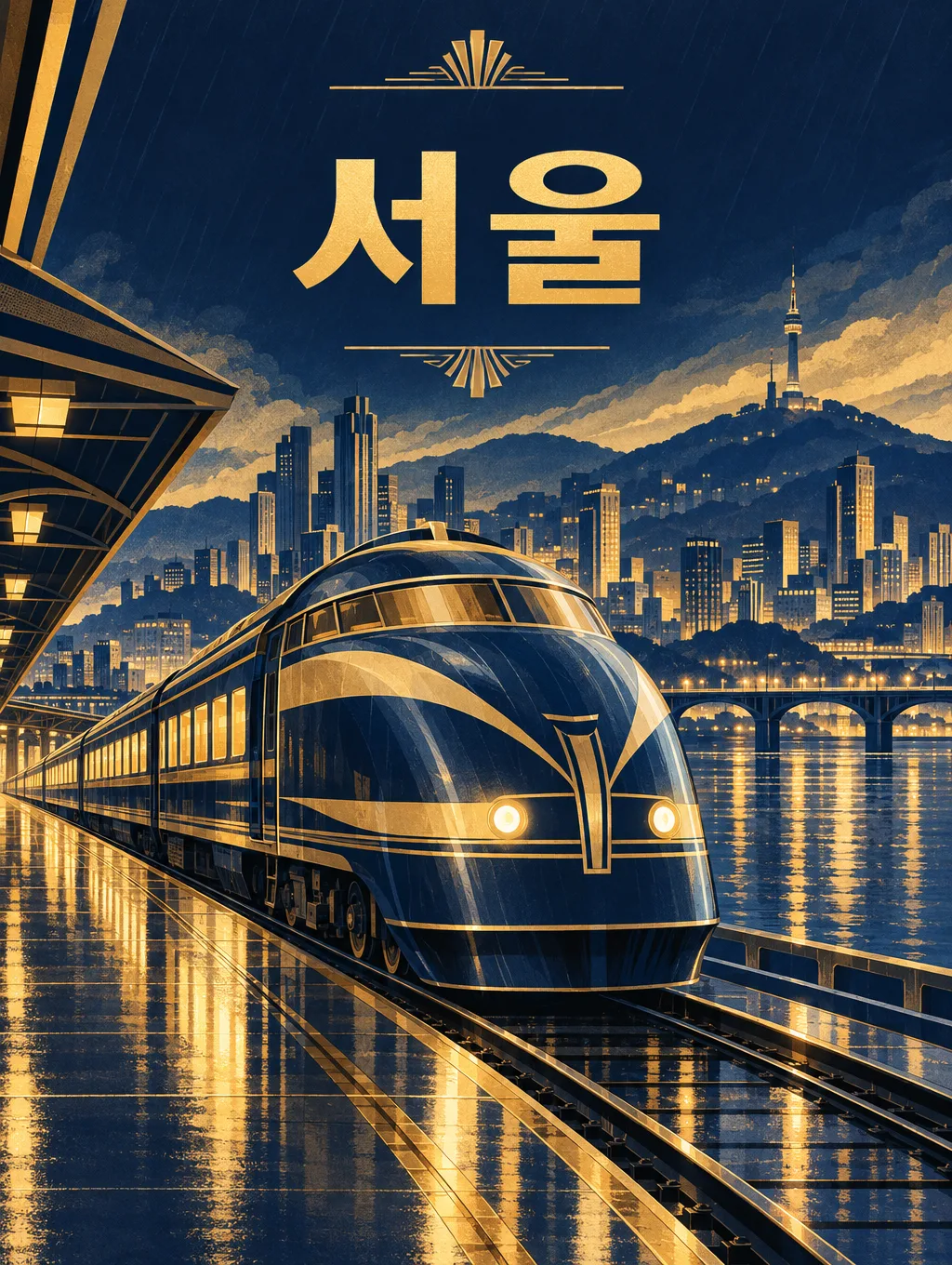
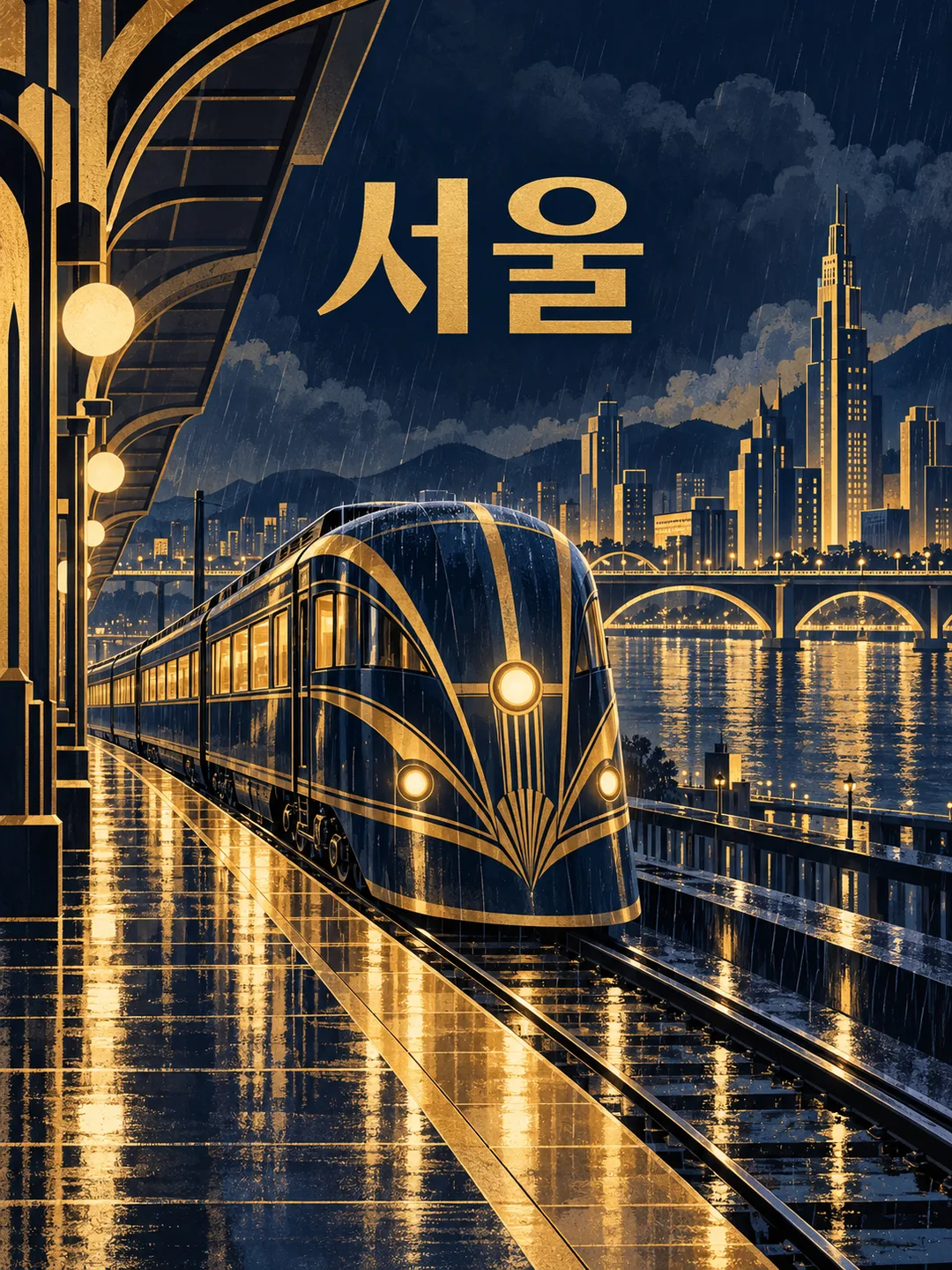
- The two title characters "서울" are displayed accurately once with no other text, numbers, trademarks, or people visible. The title is positioned at about 20% of the screen height and does not overlap with the train. The train is the main subject from a low diagonal viewpoint, and the station platform, river and bridge, mid-ground city, and background mountains and sky are clearly distinguished. Two parallel tracks, ties, and visible wheels follow the train's direction of travel, and reflections on the river and wet ground fit the scene. Navy blue and gold colors, rain streaks, evening lighting, stepped buildings, fan-shaped ornaments, and gold geometric lines are confirmed. The entire image is a poster with no frames, walls, mockups, or split panels. Exact 3:4 aspect ratio at original 1086×1448 pixels.
- What did not work
- None
- How to improve
- Passed on the first try with the above example values without additional changes. Other cities, vehicles, and color combinations were not tested this time.
Full prompt 3,341 characters
Generate one finished image now, not instructions or a description.
Output size 1080x1440 pixels, 3:4 portrait, social media post.
Create one full-bleed Art Deco transit travel poster, default portrait 3:4. The artwork itself fills the canvas, with no wall, frame, paper mockup, collage or inset panels.
CITY title: "【City】"
TRANSPORT scene: "【Transport】"
COLOR and atmosphere: "【Color】"
If CITY is empty, use "Haru". If TRANSPORT is empty, use an original streamlined train approaching a riverside city station. If COLOR is empty, use midnight blue, antique gold and warm ivory under evening light. Treat transit and color as visual instructions, never printed captions. Infer a coherent time of day, weather and season from the color description, rather than adding a style selector.
Print the CITY title exactly once, exactly as entered, preserving its script, spelling, spaces, capitalization and punctuation. Do not translate, romanize or append any words. It is the ONLY visible text. Never print these field labels. No slogans, operator names, route numbers, dates, fares, signatures or watermarks.
Use elegant geometric Art Deco illustration: stepped architectural silhouettes, sweeping parallel speed lines, precise metal-gold keylines, fan motifs, strong flat color masses and restrained lithographic grain. Gold is printed metallic-looking ink, not random glitter or photographic chrome. Keep one consistent Art Deco visual language; change the scene, palette, weather and viewpoint to suit the inputs.
Make the selected transport the large focal subject. Train: dramatic low three-quarter arrival with credible rails and wheels. Ship: broadside or three-quarter hull at a spacious harbor with coherent water reflections. Tram: street-level diagonal rails between terraced city buildings with a coherent overhead wire. If several vehicles are requested, give one clear priority and keep others subordinate. Invent original unbranded vehicle bodies and city architecture. For real cities, evoke their geography without claiming a real operator, service or accurate route. For imaginary cities, build a plausible invented landscape. No real brands, logos, recognizable commercial vehicle designs or copied poster compositions. Omit people entirely.
Build three readable depth layers: foreground transport and leading lines, middle-distance city, distant sky or hills. Balance dense architectural detail with broad calm color areas. Integrate the title in a generous clear area centered around 18 to 30 percent down the canvas, well away from the vehicle silhouette. Keep critical text outside the top 12 percent and bottom 15 percent. Use bold, readable geometric lettering that respects the native letter structure; do not split or ornament away character strokes.
Before finishing, inspect the title enlarged character by character against CITY. Repair missing, extra, merged or misspelled characters. Check rails, wheels, hulls and reflections for coherence. Deliver one complete poster with no explanatory labels.

[Final output format]
Output size 1080x1440 pixels, 3:4 portrait, social media post.
This selected output format takes priority over any fixed canvas size or aspect ratio elsewhere in this template. Adapt the composition, text zones and margins to the selected canvas without stretching or cropping essential content. Device safe areas apply only when a device is selected. Never print these format instructions on the image.
How did it turn out?
You may also like



How to use it · FAQ
Make one Art Deco travel poster for a travel journal opening page or an interior print. Stepped buildings, sweeping rails or water and fine gold lines lead the eye toward a prominent vehicle. No photo is needed.
City is the only required field. Use Seoul, Busan or an imaginary city named Haru. The title appears once, exactly as typed, including its original script and capitalization. It is never translated or expanded into a slogan. A blank city becomes Haru.
In Transport, describe the main train, ship or tram and its action. “Train arriving at a riverside station” establishes a clearer composition than a vehicle name alone. Leave it blank for an invented train arriving at a riverside city station. When several vehicles are entered, one stays dominant and the others become secondary.
In Color, combine a palette with weather or light, such as “Navy, gold, rainy evening.” Leave it blank for navy, antique gold and ivory in evening light. Geometric Art Deco illustration remains consistent while the atmosphere, viewpoint and landscape respond to your inputs. The default ratio is 3:4; use the shared size control to change it.
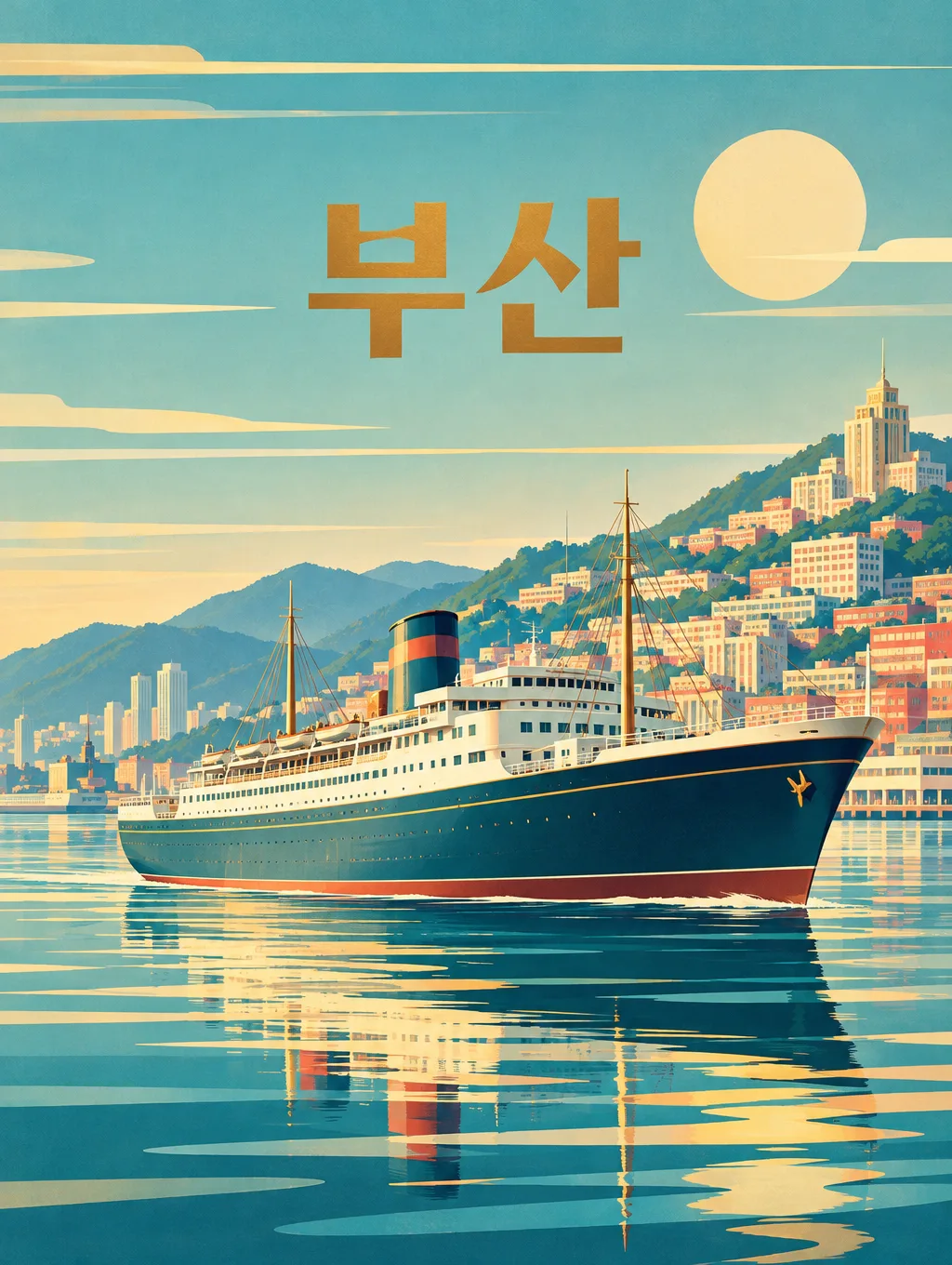
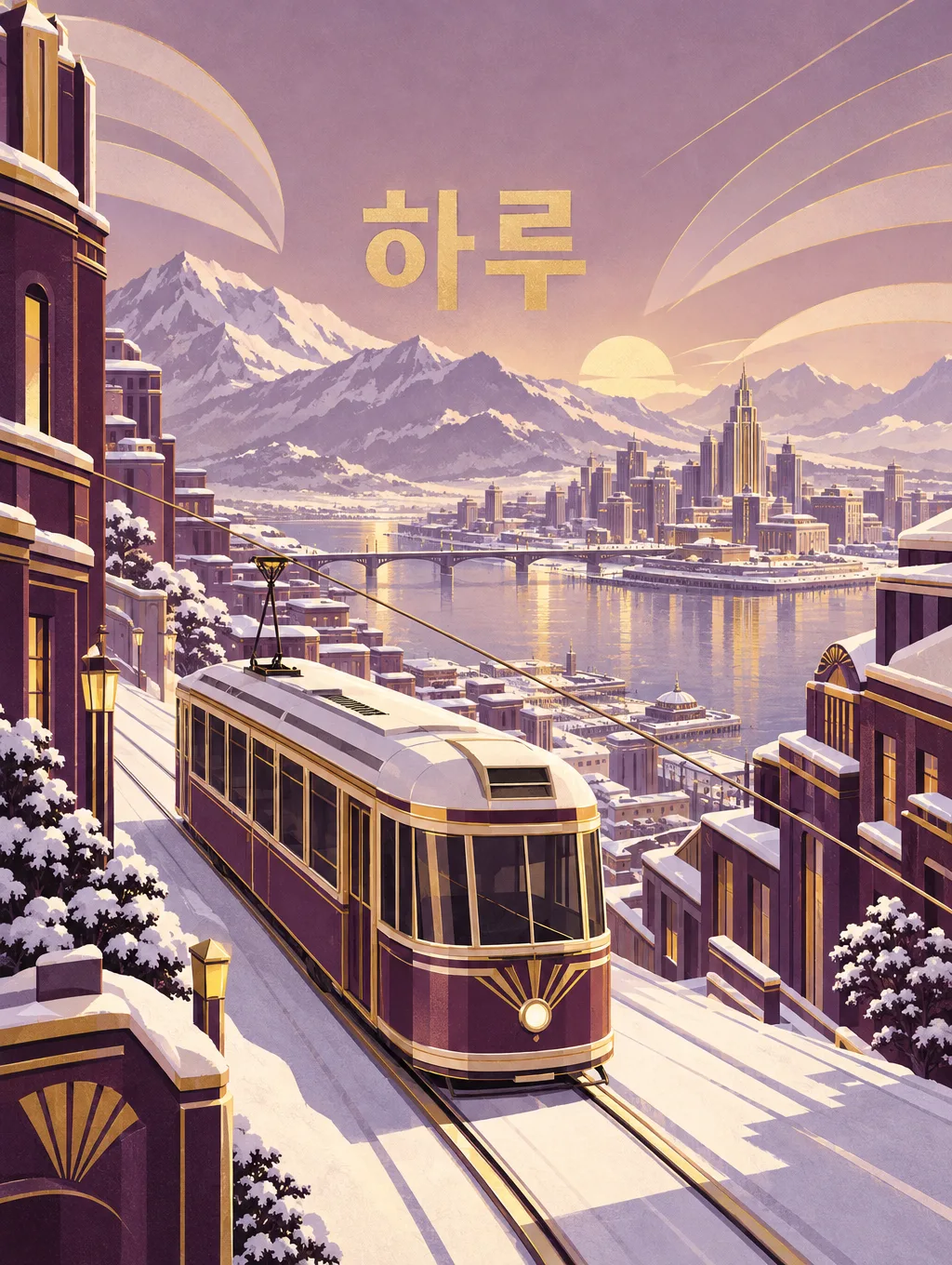
The example scenes are a rainy Seoul train, a Busan ship on a clear morning and a winter tram in imaginary Haru. They use different viewpoints and scenery rather than recoloring one composition. This is an imagined travel artwork, not a map or a statement about an actual transit service.
Paste the copied prompt into an image AI once to request one finished poster. Enlarge the city title and compare every character with your input. Also inspect rails and wheels or the ship’s hull. If lettering fails, shorten and clarify the city input and request the image again. Ask to remove any accidental logos or route numbers. Check the external service for its fees and usage terms.