

All · Ads & posters · New products
543Fine dining plating — the same food with a refined plate and lighting
Keep your meal recognizable and change only the plate and lighting for a premium menu photograph.
What you get
- One fine dining food photograph
- Original food shapes and quantities retained
- Your selected plate and lighting
ChatGPT Free OK
Fill in the fields
- 1Fill in the fields
- 2Copy the prompt
- 3Paste it into a GPT chat
- 4Send it as is and you get an image like the thumbnail example
- 5Attach a real photo that fits the card and it is used in the result: a background photo for background cards, a person or food photo for those cards Optional
Tested by us
- Test date
- 2026-10-29
- Tool
- ChatGPT image model (run via Codex) — same model as free ChatGPT, differing only in limits
- Result
- Pass
- What worked
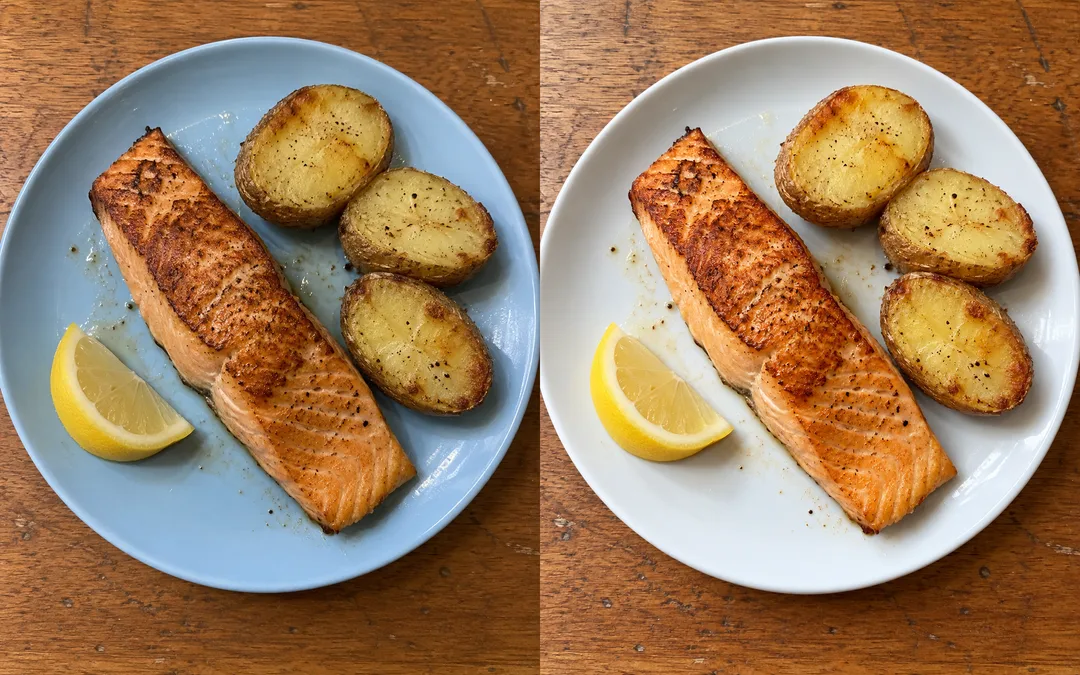
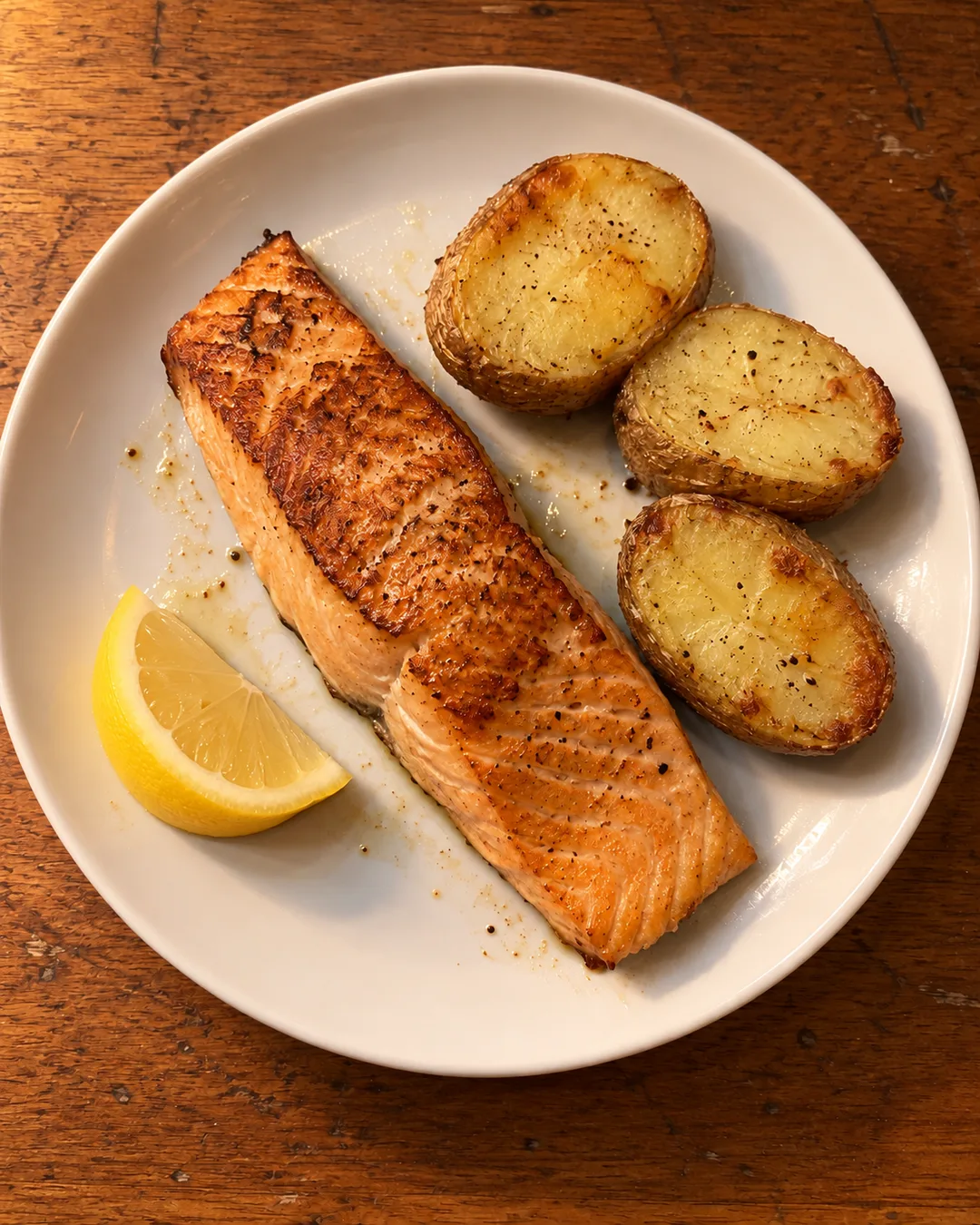
- The attached photo took precedence over the dish name, successfully preserving 1 slice of salmon, 3 potatoes, and 1 slice of lemon. Visual inspection confirmed that the food contour, relative scale, layout, grill marks, pepper placement, wooden table, and camera angle were all maintained. The blue plate was updated to white ceramic, and warm side lighting was applied. The output was a single complete 4:5 photograph with no cropped elements, extra ingredients, text, pricing, borders, or comparison side-by-sides.
- What did not work
- None. Note that text preservation was not evaluated because the original image contained no letters or numbers. This result does not verify pixel-perfect identity or reproducibility across different dishes or options.
- How to improve
- Passed on the first try without modifications. Because the attached photo was prioritized over the dish name, be sure to attach the original file along with your prompt if you want to alter an existing photo. Image-free generation was not tested in this run.
Full prompt 2,669 characters
Generate this image now. Draw it directly; do not describe it, ask questions or require code or post-processing.
Output size 1080x1350 pixels, 4:5 portrait, Instagram standard.
Produce exactly one finished premium fine dining food photograph, default portrait 4:5. Never output a comparison, collage, poster layout or instructions.
Food reference: 【Photo】
Plate: 【Plate】
Mood: 【Mood】

PHOTO RULE: If a food photo is attached, treat it as the edit target and authoritative reference; use the food field only as supporting context. Change ONLY the plate and lighting. Preserve the exact food silhouette, count, size, portion, cooking marks, colors, sauce, topping locations, arrangement, tabletop and camera angle. Do not cut, sculpt, rearrange, multiply, remove or add food, ingredients or garnish. Preserve existing non-brand lettering, numbers and symbols character by character, in the original script without translation; do not invent missing or obscured characters. Do not introduce a real brand, logo, packaging, celebrity, character or artist imitation. Keep the food free of third-party marks.
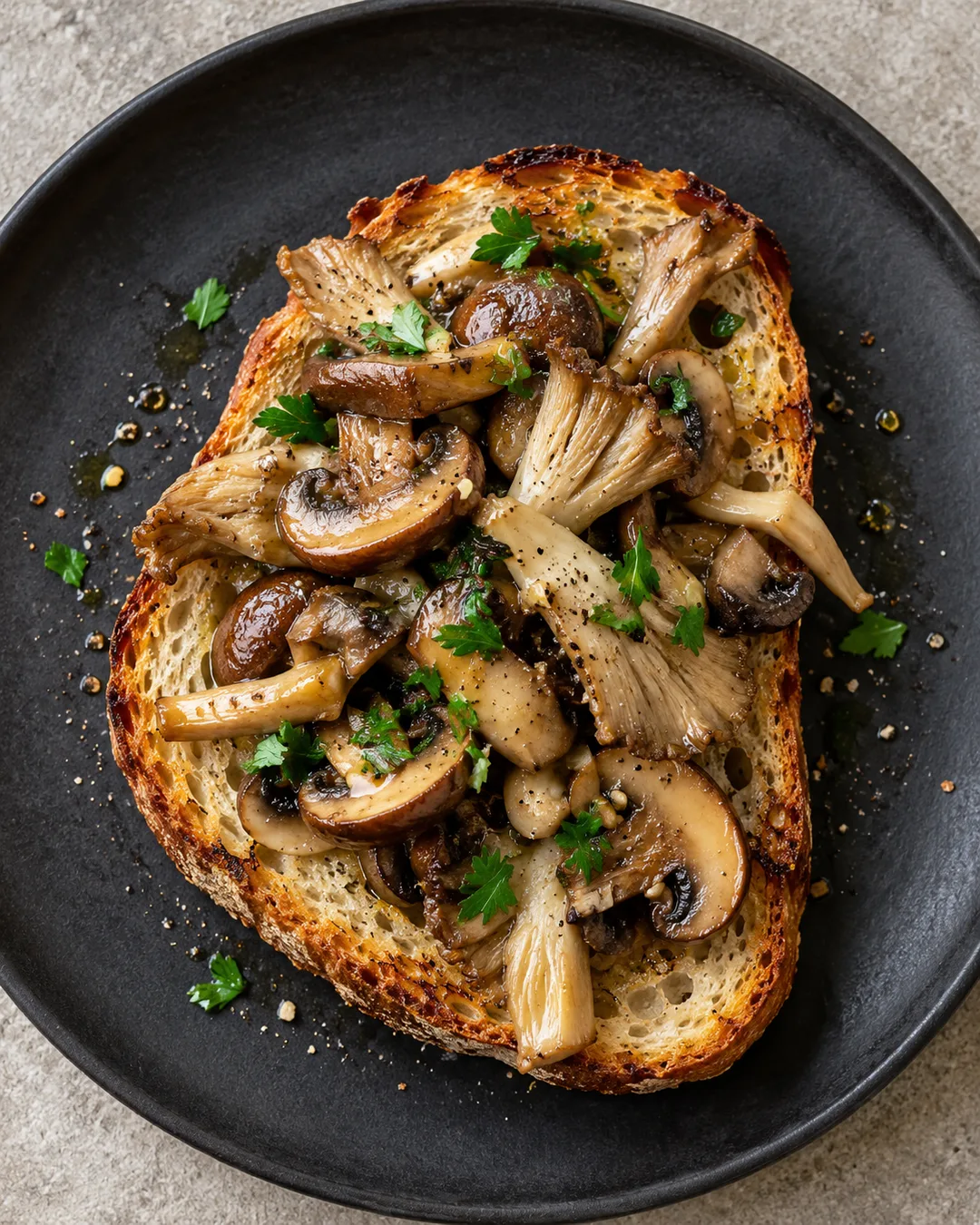
If no photo is attached, invent an original realistic dish matching the food field; if the field is empty use one mushroom sourdough toast with irregular sauteed mushrooms and a few parsley leaves. Finish without asking for a photo. No new lettering, price, captions, signatures or watermarks; when a fictional name is necessary use Haru only.

Interpret only the chosen plate: White = plain refined white porcelain; Black stone = plain refined matte black stone. Empty plate defaults to White.
Interpret only the chosen mood: Warm evening = warm amber evening sidelight; Bright window = bright soft neutral window light; Dramatic sidelight = dramatic directional sidelight with deep but readable shadows. Empty mood defaults to Warm evening.
Use believable photographic food textures, natural irregularities, subtle oil sheen and realistic shadows. No plastic gloss or repeated identical pieces. Frame the food generously within the selected ratio, without stretching or clipping the food or existing letters. Fill the whole image with the photograph. No people, borders or graphic overlays. Before finishing, check food counts, outline, topping positions and every existing character against the input. Never print these instructions or option labels.

[Final output format]
Output size 1080x1350 pixels, 4:5 portrait, Instagram standard.
This selected output format takes priority over any fixed canvas size or aspect ratio elsewhere in this template. Adapt the composition, text zones and margins to the selected canvas without stretching or cropping essential content. Device safe areas apply only when a device is selected. Never print these format instructions on the image.
How did it turn out?
You may also like
How to use it · FAQ
Use this card for a home meal, a café dessert or a new menu announcement. It creates one finished food photograph, with a default portrait ratio of 4:5. The food stays intact while the plate and lighting become more refined. It adds no new headline or price.
All three fields are optional. Write a short food name in Photo. Attach the actual image using the image tool's attachment button, paste the copied prompt into the same message and send once. An attached photo takes priority over the food name. Without an attachment, an empty food field produces fictional mushroom toast. Use photos you have permission to edit and avoid visible third-party branding or packaging.
White selects plain white porcelain; Black stone selects matte black stone. The default is White. Warm evening gives amber side lighting, Bright window gives soft neutral daylight, and Dramatic sidelight gives deeper directional shadows. An empty mood defaults to Warm evening. The camera angle, tabletop, food positions, shapes, cooking marks, portion size and toppings should remain consistent.
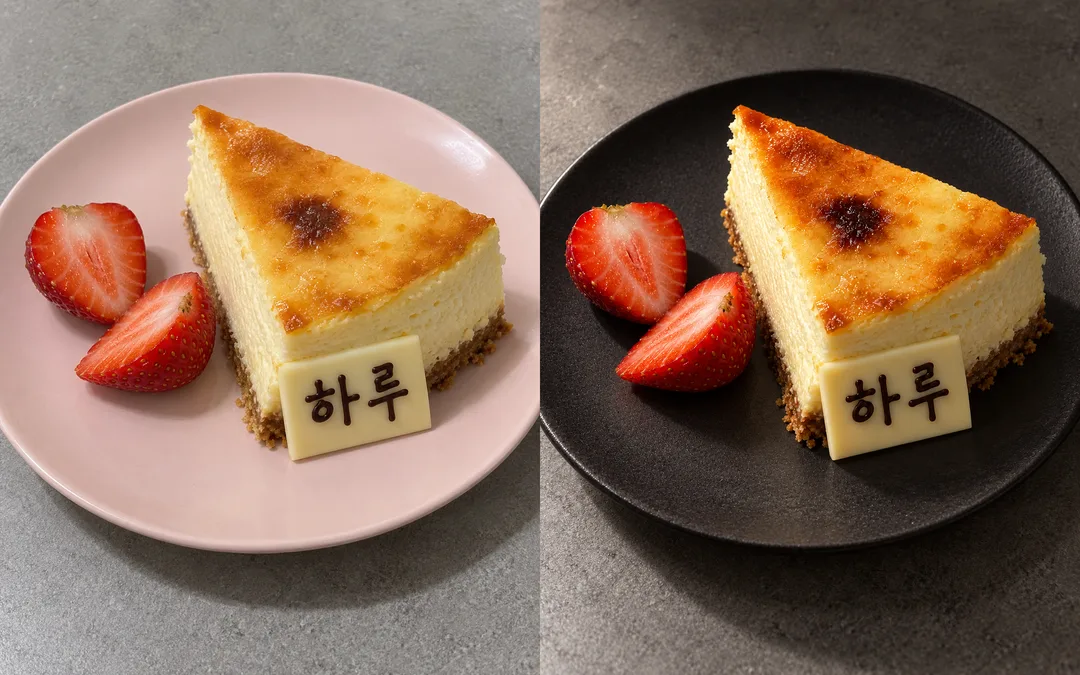
In the comparison images, the left panel is a fictional input and the right is the transformed result. Salmon demonstrates White and Bright window. Cheesecake demonstrates Black stone and Dramatic sidelight. Existing lettering on the chocolate plaque is retained in its original script, without translation. For a new fictional name, use Haru. The third example is a separately generated mushroom toast without an attachment; it is different from the cover.
Before using the result, compare the outline of the main dish, potato and strawberry counts, and garnish positions with the source. Enlarge any existing letters and numbers and check each character. If ingredients appear or lettering changes, attach the source again and specify the discrepancy when regenerating. Clear, unobstructed source photos work best. Fine texture may vary between image tools, so check that the picture still represents the real portion and ingredients you sell.