
All · Social posts · Memes
155My Fantasy Guild Role
Turn your portrait and a habit you describe into one fictional medieval guild result to share.
Fill in the fields
- 1Fill in the fields
- 2Copy the prompt
- 3Upload One portrait photo and paste the prompt into your GPT chat
- 4Check that both the photo and prompt are attached, then send
Full prompt 5,003 characters
Generate this image now. Draw it directly - do not describe it, explain it, or ask questions.
Output one landscape A3 poster, 420 x 297 mm, aspect ratio 1.414:1. Use the largest supported resolution. Final print target: 4961x3508 pixels at 300dpi. Keep all text at least 10 mm inside the edges.

[Purpose]
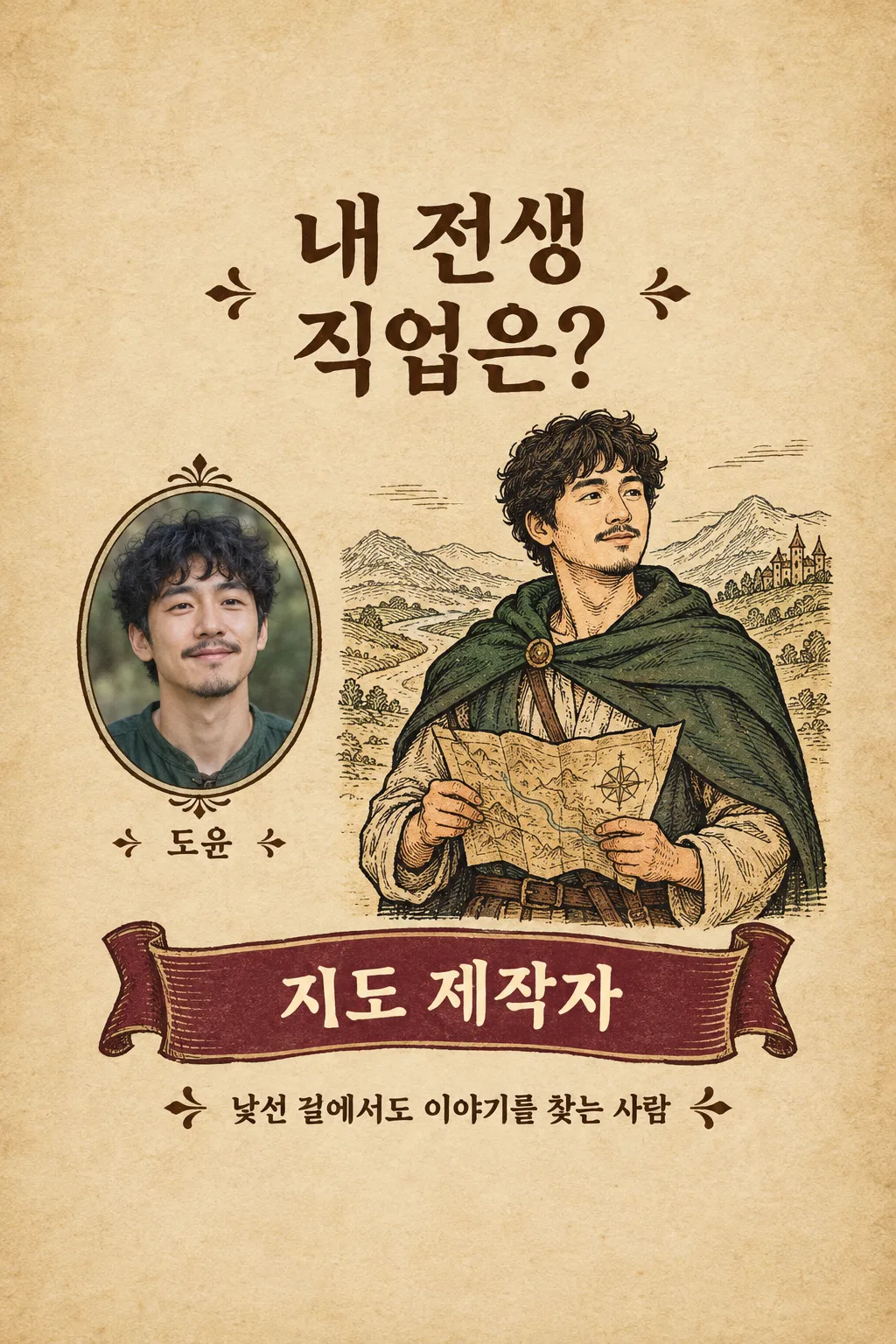
Create ONE finished English social result asking "My past-life job?". The owner posts this complete personal reveal to Instagram or Threads. Reimagine the person as ONE fictional medieval guild member in an original illuminated woodcut style. This is a playful invented story, not evidence of a past life or a personality diagnosis. Use the self-description "【Describe a habit】" to pick the occupation; the attached face supplies visual likeness only. If this description is "Pick for me", invent a gentle adventurous role without claiming to read hidden traits. Never print that control instruction. Select just one original role such as mapmaker, bell keeper, bookbinder or traveling musician. Avoid real people, franchises, historical assertions, psychological scores and predictions.

[Scene]
One warm parchment page, a small real photo cameo at left and a larger woodcut-style illustrated guild member at right, with one simple work tool related to the chosen role. The fictional character is the same person from the photograph, stylized with etched hatching and muted opaque paint. Keep one unchanged open woodcut vignette and one burgundy answer ribbon for every outcome. The content of the job and tool may change, but never the composition, number of characters, drawing style or result type. There is no selection menu, second result, comic sequence or alternate costume sheet.

[Attached photo]
Use ONE portrait supplied together with this prompt. Preserve recognizable facial proportions, age impression, hairstyle, facial hair, glasses if present and skin tone in both the small photographic oval and the large illustrated character. The oval and character are two depictions of the same person, not two different subjects. Do not turn an older person into a teenager or add/remove glasses to fit a stock hero. The cameo is entirely within 35–60% height, at the left. The illustrated figure fits entirely within 30–69% height on the right. Dress them in an ordinary modest fictional linen tunic and practical cloak rather than armor with famous symbols.
Optional owner name, shown once underneath the small cameo: "【Name】".
If the optional name line is removed, invent no replacement name or handle.

[Text layout]
Leave the upper 12% and lower 15% as parchment with no words. At 14–29% draw the exact question "My past-life job?" in large dark brown type, split into two balanced lines when needed. Place the photo and woodcut vignette at 30–69%. At 69–79% set the selected English job title in ONE burgundy ribbon with warm ivory large lettering. The title is short, at most three English words, and appears only once. At 81–84% write one original short sentence connecting the supplied habit to the fictional job. Sentence tone: "【Sentence tone】". If it is "Pick for me", choose a warm lightly witty sentence. The sentence never repeats the title, never prints field labels, and is readable on a small phone display. It does not claim this is the person's true past life.

[Style]
Medieval storybook woodcut, fine etched linework with restrained gouache tint, parchment grain, ocher, burgundy, muted forest green. A tiny illustrated scroll or compass supports the job only; do not scatter a collection of emblems or make a dense trading-card rulebook. No thick decorative outer frame. Soft flat illustration light rather than cinematic 3D, glossy holograms or photorealistic costume photography. The inset photo remains visibly photographic.

[Visual hierarchy]
Question, own likeness and one fictional character, answer ribbon, one explanation. Large meaningful forms rather than tiny ornamental writing. Keep every letter inside 14–84% height and 8–92% width. On a 2:3 canvas this central area is intentionally reserved for legible words; do not fill the top or bottom blank zones with a header or signature.

[Text rules and avoid]
Print exactly the question, optional entered name, one invented job title and one explanation. Spell every character correctly in English. Never print control values, secret biography, claims about health or wealth, a rarity score, a percentage, a guild's real coat of arms, logo, watermark, site URL, publication date or imitation official certificate. Generate this finished single image directly, without code, questions, a second message, a page set or cropping instructions.

[Mandatory final geometry]
Keep the entire top 12 percent and bottom 15 percent completely free of words. On a 1024x1536 image, the entire question must fit between y=210 and y=450. Reduce its font rather than raising it. The portrait and illustration fit between y=460 and y=1060. The complete ribbon lettering fits between y=1100 and y=1190. The whole explanation fits between y=1240 and y=1290. No visible text pixel above y=200 or below y=1290. These limits apply to all text, not just baselines. Do not add any decorative words in the blank paper bands.
You may also like
How to use it · FAQ
When to use it
Share a playful answer to “What would I do in a medieval guild?” Your own portrait appears beside a woodcut character with the same face, one practical work tool and a burgundy answer ribbon. A habit you provide helps choose a fictional role such as mapmaker or bookbinder. The result is one complete social image for Instagram or Threads. It is a fantasy introduction, so friends can compare their roles without treating the result as evidence of a past life.
Fill the fields
Describe something you actually enjoy doing: finding new paths, fixing worn objects or keeping careful notes. A concrete habit gives the story more direction than a list of visual adjectives. Choose “Pick for me” when you want a light fictional surprise. The name is optional and appears only below the photo cameo. The sentence tone changes the final explanation, while the woodcut drawing, parchment, open woodcut vignette and answer ribbon stay fixed.
Attach your portrait
Use one well-lit photo showing your eyes, hairstyle and any glasses clearly. First add the photo to the GPT message without sending it. Next paste the completed prompt into that same message. Check that both the image and prompt are present, then send once. The medieval clothing is invented, but the person should remain recognizable. If you sent the photo earlier, add “Use the photo above” to the prompt. Save the completed image as a whole.
Check the result
The photographic cameo and illustrated guild member must be the same person. Check facial hair, glasses and the impression of age, then check whether the single work tool fits the role. The title, name, answer and one explanation should be the only words. There should be no rarity score, historical date or claim that the image reveals a real former life. All meaningful text belongs in the central page area, clear of the empty parchment at the top and bottom.
Fix a mismatch
If the role misses your intention, make the habit more direct and resend the photo and complete prompt together. A sharper portrait helps when the character loses your likeness. For misspelled words, specify the required spelling at the end and request the entire image again. You do not need a second panel, a set of cards or an assembly step.
Questions
- Does it identify an actual past life? No. It turns a self-described habit into a fictional medieval role.
- Can I reuse a photo? Yes. Change the habit as your interests change and compare a fresh result.
- Does each job use a different style? No. The job and tool change inside the same woodcut composition.