
All · Comics & illustration · People
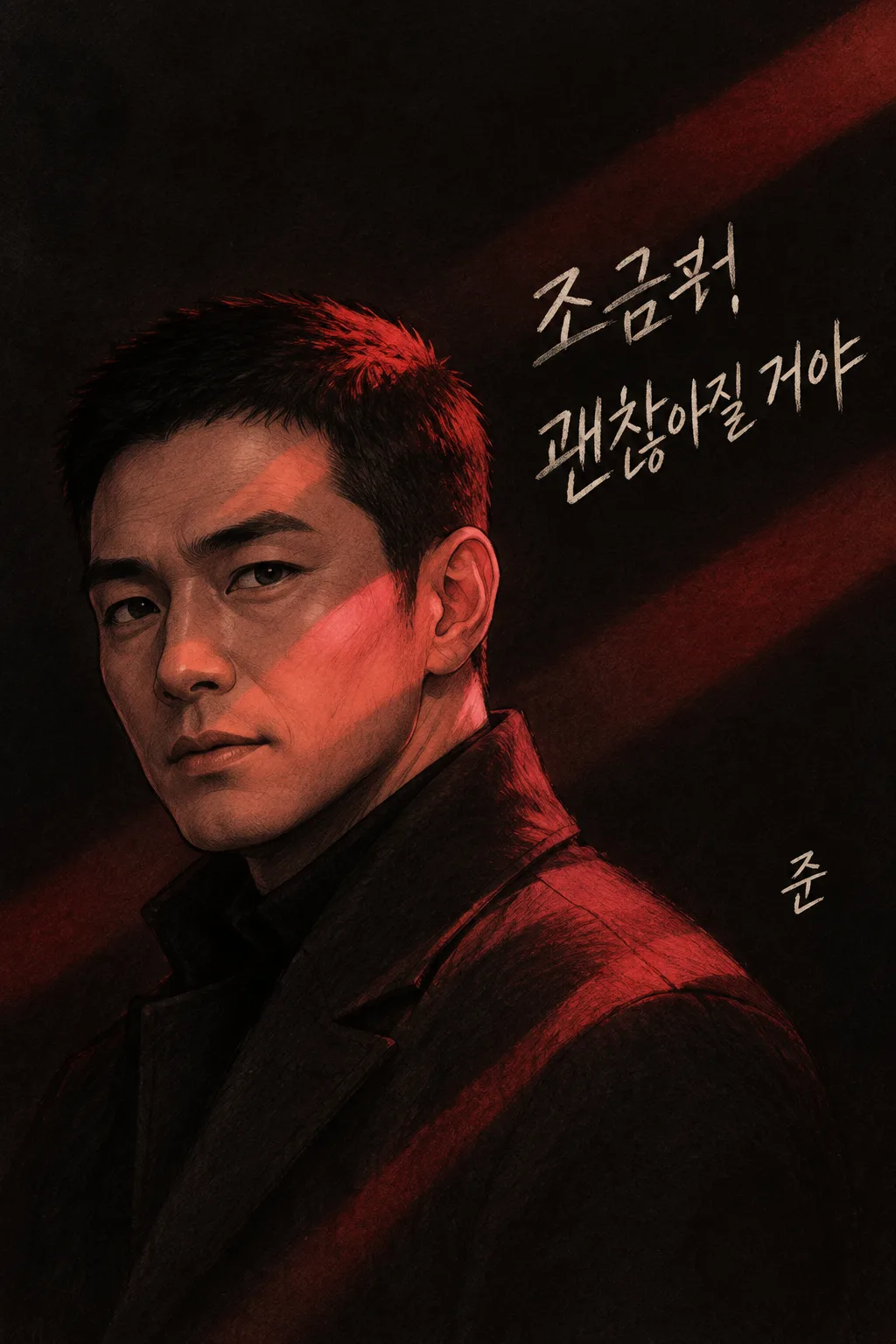
176My Red-Noir Portrait
Turn your face photo into one dramatic digital-charcoal portrait for a feed post or Story.
Fill in the fields
- 1Fill in the fields
- 2Copy the prompt
- 3Upload One clear face photo and paste the prompt into your GPT chat
- 4Check that both the photo and prompt are attached, then send
Full prompt 5,445 characters
Generate this image now. Draw it directly - do not describe it, explain it, or ask questions.
Output one landscape A3 poster, 420 x 297 mm, aspect ratio 1.414:1. Use the largest supported resolution. Final print target: 4961x3508 pixels at 300dpi. Keep all text at least 10 mm inside the edges.

[Purpose]
Create one finished personal red-noir digital-charcoal portrait for a social feed or Story. Transform the user's own photo into a single recognizable head-and-shoulders illustration with dramatic diagonal crimson light and one large pencil-written sentence. This is an original cinematic self-portrait, not a movie advertisement, cosplay photo, character biography or a set of panels.

[Scene]
One person occupies the left and central part of a charcoal-black composition. Show a fixed three-quarter head-and-shoulders view, with the gaze directed slightly toward the viewer. Diagonal crimson light from upper-right crosses the hair, cheek and shoulder as three broad connected bands, leaving readable shadows. Keep the outfit modest and close to the attached photo's visible clothing, with a closed neckline. No weapons, blood, wounds, horror monster or second character. The self-described mood is "【My mood】"; use it only to choose the sentence, not to diagnose the person or change the fixed picture style.

[Attached photo]
Use the single attached portrait photo as the identity reference. Preserve the user's face proportions, skin tone, actual hairstyle, hairline, visible glasses and age cues within the fixed mature digital-charcoal medium. Do not turn every person into the same young model or add a celebrity's features. Keep the eyes aligned and the jaw, neck and shoulders connected. Only one head and two eyes appear. There is no before-and-after photograph inset and no repeated face in the background.

[Text layout]
All visible text is in English. The sentence is "【Pencil line】". If it is "Choose for me", invent a short original sentence of at most twelve Korean/Japanese characters or five English words, based on the user's supplied mood; never print that control. Place the sentence in one or two generous lines of warm-ivory graphite pencil handwriting in the upper-right negative space between17-36% height. It must read clearly on a phone; do not make it a tiny signature or a glowing neon headline. The head begins around23% height, its eyes stay below44%, and the bust extends toward the lower-left. Keep the right text column distinct from the hair silhouette. The top12% and bottom15% contain only background or nonessential artwork, no important words.
If supplied, print "【Name】" once as a modest ivory pencil signature at63-68% height on the right. When absent, invent no name or blank signature box.

[Style]
One fixed mature red-noir digital-charcoal illustration: detailed graphite contours, crosshatched pencil planes, painterly charcoal shadows, red rim light, recognizable realistic facial proportions and restrained drawn highlights. The style is expressive rather than photorealistic, but recognizable identity is the priority. Dark charcoal and deep crimson remain fixed for every user. Preserve the user's skin hue under believable red light instead of painting every skin surface solid red. No artist, franchise, title, famous costume, branding or existing fictional character is referenced.

[Visual hierarchy]
The face and diagonal light are the image's emotional focus; the large pencil line gives a shareable personal statement. At list size both should remain visible. Use at least7% side margins for text, with ample gap between hair and lettering. The diagonal bands may strike the face but must never wash across the sentence. Do not fill the black space with fictitious credits, release dates, rating badges, poster borders or a second profile. The user's chosen mood does not change the angle, number of figures, medium or background.

[Lighting and texture]
Three broad crimson lighting bands create a designed cinematic mood across one coherent bust. Avoid spark showers, laser beams, wet glossy skin, mirrored reflections, floating hair clumps or exaggerated neon eyes. Keep a soft charcoal-paper texture in the black space. The pencil lettering has visible graphite grain while its stroke width remains thick enough to read. The artwork fills one complete canvas with no phone mockup, gallery wall or surrounding printed photograph.

[Text rules]
All quoted visible copy belongs to the artwork, while input labels and instruction headings do not. Resolve any automatic wording control into a short original sentence before drawing; never print that control literally. Preserve provided spelling and numbers, and use the target language consistently. Keep readable letters separate from highlights, folds, shadows and decorative marks. Do not invent a price, discount, date, availability, award, endorsement, biography or purchasing condition. The fixed composition and medium stay the same for every user; personal inputs change its content only.

[Avoid and final delivery]
Deliver exactly ONE finished raster image in this response. Draw it directly with image generation. Do not execute code, give drawing instructions instead of an image, offer multiple versions, create separate pages, ask for a next message, or require cropping and assembly. No phone mockup, browser frame, watermark, publisher logo, branded packaging, existing character or celebrity likeness. Finish all artwork within the selected aspect ratio, preserving the composition and large readable lettering. Leave the upper 12% and lower 15% free of essential lettering and maintain generous side margins.
You may also like
How to use it · FAQ
When to use it
Turn your own selfie into a dramatic illustration for a feed post or Story. A single head-and-shoulders portrait sits in charcoal shadows with diagonal crimson light, while a large pencil sentence occupies the negative space. Your recognizable face remains central. This card makes one original digital-charcoal portrait, not a movie poster, costume photograph, figure or multi-panel story.
Fill in the fields
Describe the mood you want to express, such as quietly regrouping, ready to begin again or letting actions speak. This description informs the sentence only; GPT does not infer your personality or emotions from your face. Write a short line or choose “Choose for me.” The optional name is a small signature and disappears when cleared. None of these inputs change the fixed red-noir medium, bust composition or black background.
Send one photo with the prompt
Use a clear photo of your own face with visible hairline, hairstyle and actual glasses. A single person works better than overlapping faces. Attach the image to GPT without sending yet, paste the copied prompt into the same message, check both, and send once. If you sent the photo earlier, append “Use the photo above.” You do not need code execution, a series of scenes, cutting or assembly.
Inspect the portrait
Check likeness first. Your hairstyle, glasses and age cues should not be replaced by a generic youthful face. Eyes need to align and the neck must connect naturally to the shoulders. Crimson light creates atmosphere, but it should not erase skin hue or produce a glossy plastic surface. The handwritten line must read clearly as large pencil lettering rather than tiny calligraphy. Essential text stays outside the upper and lower overlay areas.
How it matches the thumbnail
The demonstration person is fictional. Your attached photo supplies the real face, hair and clothing. The output still uses one bust, three diagonal crimson bands, charcoal negative space and a pencil statement. Changing wording cannot turn it into cosplay or a figurine. There is no field for a named artist, franchise or character.
Correct a detail
Compare the result with your photo and identify one or two important features, such as retaining your actual glasses or matching the jawline. For a spelling mistake, supply the exact sentence. Shorten a long line to keep large text and breathing room. Optional corrections follow the first complete result; repeated next-page requests are not part of generation.
Questions
- Does it analyze my personality? No. The photo is an appearance reference, and the line comes from your own mood description.
- Do I also get a comic or costume image? No. This card produces one digital-charcoal portrait. Other output types have their own cards.
- Was the free GPT interface tested? The preview was generated through the image API and visually inspected. No direct free-GPT interface test was performed. Availability depends on your image feature and remaining allowance.