
All · Comics & illustration · Animals
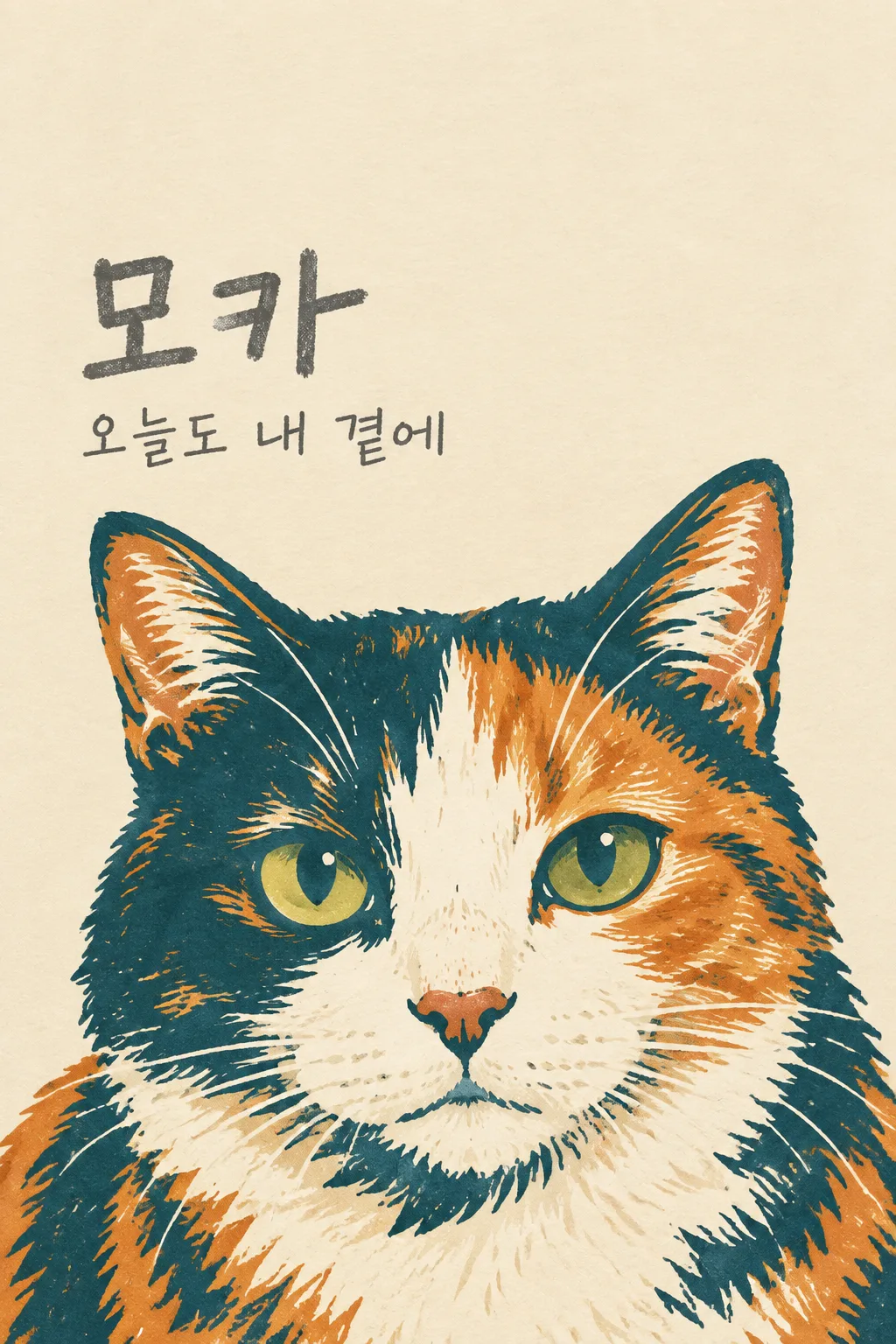
183My pet as a color woodcut portrait
Turn your own pet photo into one color woodcut portrait with its name, ready to share on Instagram or Threads.
Fill in the fields
- 1Fill in the fields
- 2Copy the prompt
- 3Upload One clear photo showing your own pet's face and ears and paste the prompt into your GPT chat
- 4Check that both the photo and prompt are attached, then send
Full prompt 6,272 characters
Generate this image now. Draw it directly - do not describe it, explain it, or ask questions.
Output one landscape A3 poster, 420 x 297 mm, aspect ratio 1.414:1. Use the largest supported resolution. Final print target: 4961x3508 pixels at 300dpi. Keep all text at least 10 mm inside the edges.

[Purpose]
Create one finished personalized color woodcut portrait of the user's own pet, suitable for sharing as a complete image on Instagram or Threads. The pet's actual face and name make the artwork theirs. The final output is the flat printed artwork itself, edge to edge, with one animal portrait and two large text lines. Keep this one print medium and this one composition throughout. Do not make a personality-test result, sticker sheet, framed-room mockup, illustration collection or photo comparison.

[Scene]
A very large close-up pet head and upper chest occupies x9-91%, y34-100%. The face is the dominant shape, with both visible ears inside the canvas and an expressive calm gaze close to the original photo. Use warm ivory paper as the ground, deep petrol teal shadows and restrained rusty orange ink fields around the portrait. Keep the head modeled by a few broad carved color masses with irregular hand-cut edges. The ENTIRE upper 17% is clean ivory paper, with NO text and NO animal ears. Start the lettering below this large blank paper area. The lower 15% continues the portrait and ink-and-paper ground without lettering. No full body, scenic window, owner, second animal, circular photo inset or result strip.

[Attached photo]
Use the one attached pet photo as the identity reference. Preserve its actual species, ear silhouette, muzzle proportions, visible eye color and recognizable placement of fur patches. Make a portrait of that animal rather than replacing it with a stock cute kitten. Convert the actual coat into carved light and dark shapes while keeping the location of markings readable. Do not invent pedigree, age, medical status, temperament, name history or a memorial date. Use the supplied personal memory only as caption context: "【A moment to remember】". Do not turn this into a new narrative background or add unphotographed costumes and accessories.

[Text layout]
Render visible text in English. Place the exact pet name "【Pet name】" once left-aligned at x9-80%, y18-28%, in very large dark graphite pencil handwriting. The complete name lies between y280 and y430 on a 1536px-high canvas. Reserve the top 250 pixels as clean paper. Keep the name on one horizontal baseline, not tilted, arched or raised at the right side. This blank header takes priority over enlarging any letters. Read "【Caption】" as an input control that must be resolved BEFORE lettering is drawn. If it equals "Choose for me", compose one warm original line drawn from the supplied memory, at most five English words. Do not print that control and do not infer an event that the user did not supply. Place ONLY the resolved caption once left-aligned at x9-80%, y30-35%, in generous pencil handwriting, clearly smaller than the pet name but still readable on a phone. A supplied exact short line takes precedence over an automatic line. Use one line when it fits and at most two balanced short lines otherwise. The name is a name, not a heading such as 'pet name'. There are no additional labels, dates, badges, quotation marks, hashtags, explanatory paragraphs or footer signatures.

[Style]
Fixed original multicolor relief-print style: large carved shapes, visible chisel-like notches within fur shadows, slight uneven ink density and subtle registration imperfection at a few boundaries. The result should look like an expressive color woodblock print on smooth off-white paper. Separate the handwritten pencil lettering from the carved ink portrait. Keep fur as readable grouped cuts instead of photographic hairs, wool fibers or delicate watercolor wash. Do not imitate a named artist, famous print, existing animation character or copyrighted pet mascot. The photo guides the animal's identity, while the print's medium stays consistent.

[Visual hierarchy]
The pet face is one strong uninterrupted focal shape. The short name and affectionate caption sit in quiet space above it. Leave the eyes, nose and distinctive patches unobstructed by writing. No panel borders, questionnaire, rating scale, character attributes, speech balloons or before-and-after layout. Preserve an appealing face rather than filling it with excessive decorative hatching. Keep one pair of ears, one visible muzzle and coherent paired eyes; respect natural occlusion in the reference.

[Lighting and texture]
Suggest soft form through flat teal ink and reserved ivory paper, with restrained rusty orange areas balancing the image. These are ink colors, not a demand to recolor the animal's actual markings arbitrarily. Paper grain is subtle enough that pencil copy remains clear. Show no real picture frame, desk, paper curled over another image, packaging, stamp, print number or claim that the artwork was physically manufactured. Keep a generous graphic silhouette and a quiet paper area for text. Both text blocks must end before y550 on a 1024x1536 preview, with the complete animal face below them and no essential copy in the lower quarter.

[Text rules]
Render only the intended visible copy, never field labels or instruction headings. When a wording field equals "Choose for me", choose one short original line appropriate to the user's supplied context and do not print that control. Preserve exact provided spelling and numbers. Keep letters away from textures that reduce legibility. Personal inputs change the content, while the single medium and composition specified above stay fixed. Invent no dates, prices, benefits, availability, awards, endorsements or participation requirements.

[Avoid and delivery]
Generate exactly ONE completed image directly in this response. Use image generation, without executing code, outputting a script, producing separate pages, asking for another message or requiring cutting and assembly. No existing character, artist imitation, celebrity, branded packaging, publisher logo, watermark, browser frame or phone mockup. Keep essential lettering within 13-84% of height and at least 7% inside the side edges. Leave the upper 12% and lower 15% free of essential text. Finish the actual artwork edge to edge at the selected ratio. The image must be useful as delivered, rather than a presentation of several designs.
You may also like
How to use it · FAQ
When to use it
Make a personal pet portrait to share rather than a generic animal illustration. Your photo becomes one bold color woodcut image, with a large name and a short pencil caption above the face. Grouped carved shapes express the coat, while the actual ear silhouette and patch positions keep the portrait connected to your pet. The finished image is flat artwork ready for a post, without a room mockup or a set of stickers.
Fill in the fields
Enter the name you normally use for your pet. A moment to remember should describe something you actually remember, such as a quiet afternoon by the window or returning from a walk. It gives the automatic caption context; it does not change the composition into a scenic illustration. Enter a short Caption, or use “Choose for me” to let GPT write a warm line based on your memory. The automatic control itself should never appear as lettering.
Send the photo and prompt together
Choose one clear photo showing the face, both visible ears and distinctive coat markings. Attach it to a GPT message without sending yet. Paste the copied prompt into the same message, confirm that both are present, and send once. If the photo was already sent, append “Use the photo above.” No preliminary crop, separate portrait files or assembly step is required.
Check the finished print
Woodcut ink changes the palette, but the locations of coat patches should remain recognizable. Compare the ears, muzzle width, eye area and nose with your photo. Your pet should not turn into a stock animal mascot. Read the name and caption, and check that neither covers the face. One head and upper chest should dominate the image, without another animal, an original-photo inset or a result label.
Correct a problem
Describe the specific patch or ear that differs from the reference and ask to preserve its position in the same color woodcut portrait. If the medium changes, request broad carved ink masses and subtle printed texture. Provide the exact name for a lettering correction. Refinement is optional after one completed image, rather than a required sequence of messages.
Questions
- Is it only for dogs? The attached pet photo determines the animal; the prompt does not invent a different species or pedigree.
- Will my remembered scene become the background? It informs the caption only. The fixed result is a close-up woodcut portrait.
- Will a physical print be delivered? This card creates one image to share, not a manufacturing or shipping order.