
All · Comics & illustration · Animals
192Pet embroidery portrait
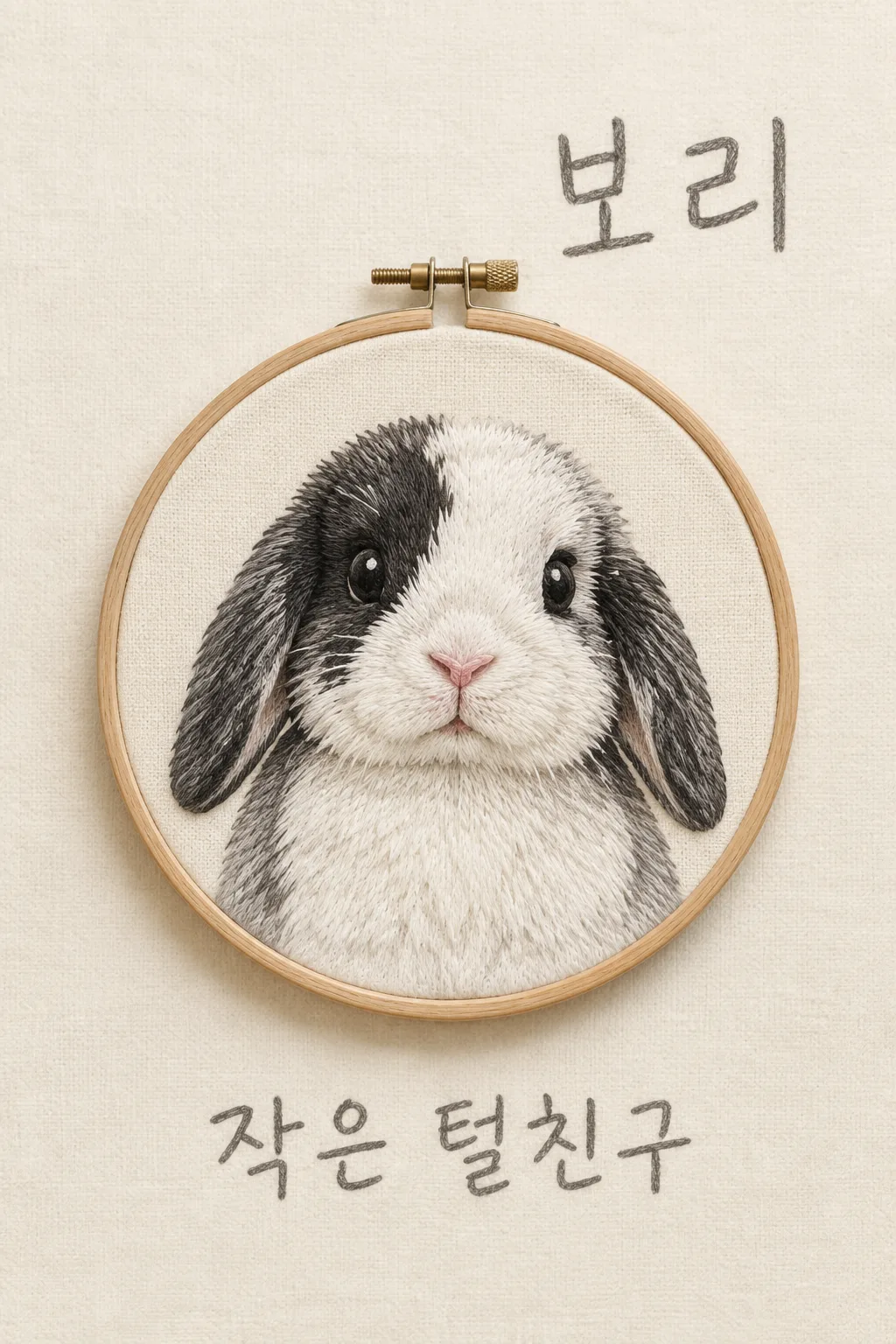
Share your pet as one stitched head-and-chest portrait in a round wooden hoop.
Fill in the fields
- 1Fill in the fields
- 2Copy the prompt
- 3Upload one clear photo of your pet and paste the prompt into your GPT chat
- 4Check that both the photo and prompt are attached, then send
Full prompt 5,537 characters
Generate this image now. Draw it directly - do not describe it, explain it, or ask questions.
Output exactly one finished 2:3 portrait image, 1024x1536 pixels. Leave the top 12% and bottom 15% free of essential text.

[Purpose]
Make one personal pet portrait to keep or share on social media: one head-and-chest pet illustration made of visible embroidery thread in one round wooden hoop, with the supplied pet name and a short affectionate line. This is one finished virtual artwork, not a sewing pattern, craft tutorial, shop mockup or physical product offer.
[Scene]
ONE round light-oak hoop holds warm ivory linen stretched smoothly. The pet portrait is centered on the fabric and fits completely inside the ring. Entire hoop and one small metal tightening screw are visible. Pet identity is expressed through the arrangement of colored stitches, not a photo pasted onto cloth. No scissors, needle, spool, hands, label tag, merchandise packaging or room background.
[Attached photo]
Use one attached photo of the user's pet. Preserve its actual species, ear shape, muzzle, coat colors, visible markings, eye color and apparent expression. Head and chest only, even if the original photo shows the whole body. Convert every animal surface into directional sewn thread: fine short stitches for fur, longer packed threads for larger color areas, tiny dense knots for eyes. No live-animal photographic fur inside the finished portrait, no human face or invented costume.
Optional marking reminder only: "【Marking reminder】"; preserve it only if it can be seen in the attached photo, and never invent a hidden marking or extra body part.
[Text layout]
Exact name "【Pet name】" in big readable graphite-pencil handwriting at x15-85%,y20-26%. The complete hoop is at x15-85%,y31-73%. The short line "【Short line】" is below the hoop at y77-82%. If this is "Choose for me", write one warm original line in English,at most12 characters in Korean or Japanese,or five words in English. Do not print the instruction itself. No invented age, breed certification, milestone, award, medical condition or memorial claim. Name appears once outside the hoop; no name embroidered on the animal.
[Style]
One fixed tactile hand-embroidery portrait on linen, photographed in gentle diffuse light. Visible separate colored strands follow the ears, muzzle and chest without turning into a woven grid over the face. A shallow relief of thread catches a little light. The wooden ring is a single physically connected object. All pet photos retain this medium, round composition and two text locations. No printed pillow, figurine, watercolor, sticker sheet, cross-stitch pixel chart or style selector.
[Visual hierarchy]
The large round thread portrait is the main result; the name is the upper identity line and the short affectionate copy is below. Keep the upper17% and lower17% free of essential text, with generous space between the ring and lettering. At small list size the hoop, animal silhouette and name remain distinct. No external promo heading explaining the card.
[Lighting and texture]
Warm natural linen, light wooden grain, modest thread sheen and a soft shadow beneath the hoop. Neither polished plastic nor flat screen print. Preserve plausible animal anatomy and two natural eyes; no duplicated ears, missing muzzle or mechanically mirrored coat markings. Return the full finished canvas, not a cutout asset requiring manufacture or assembly.

[Text rules]
Use only the requested visible copy in the target language. Resolve an automatic-copy instruction into an original short line; never print the instruction itself. Preserve user-supplied names, spelling, numbers and punctuation. Input labels, section headings and placeholders are not visible copy. Every optional field stays on its own instruction line so that leaving it empty removes only that item. Never add a date, price, discount, quantity, prize, origin, business condition, scientific statistic or claim about a real person that the user did not provide. Personal inputs affect content only; keep this one art medium, one layout and one finished result type.

[Avoid and delivery]
Return exactly ONE complete raster image directly. All requested elements belong on the same canvas. Do not run code, provide an explanation instead of an image, create separate panels as separate files, require another message, offer variants, or ask the user to cut and assemble anything. No device mockup, promotional wrapper, brand logo, packaging imitation, existing fictional character, artist signature, celebrity or watermark. Finish the selected canvas edge to edge. Maintain the fixed composition when the selected aspect ratio changes by adapting spacing, without cutting important parts or adding a second result.

[Legibility]
Keep essential lettering inside x7-93% and y14-84% of the image. The upper12% and lower15% contain no important text. At a1024x1536 cover, all essential ink is below y215 and above y1290. Use clearly connected natural letters, comfortable spacing and strong contrast. Do not let faces, decorative marks, food highlights or shadows obscure the words. Large lettering must still identify this result in a three-column list. Handwritten copy is legible pencil handwriting, never tiny ornamental cursive.

[Final output format]
Output exactly one finished 2:3 portrait image, 1024x1536 pixels. Leave the top 12% and bottom 15% free of essential text.
This selected output format takes priority over any fixed canvas size or aspect ratio elsewhere in this template. Adapt the composition, text zones and margins to the selected canvas without stretching or cropping essential content. Device safe areas apply only when a device is selected. Never print these format instructions on the image.
How did it turn out?
You may also like
How to use it · FAQ
Fur becomes the direction of thread
Turn your pet's face and chest into one personal portrait inside a round wooden embroidery hoop. Short and long colored stitches replace photographic fur, while the ears, nose and coat markings keep the animal recognizable. Share it in a Story or keep it as a visual memory. This tactile result differs from a figurine, paper-folded animal or woodcut portrait.
Choose one clear pet photograph
A picture with both eyes, ears and nose visible makes the identity easier to preserve. One animal should be clearly separated from the background. A little chest is helpful. Even a full-body photograph produces this fixed head-and-chest portrait, not a toy or full-body character. There are no clothing, job or background selectors.
Remind the model of a visible marking
Marking reminder is optional. Use it to point out something actually visible in your photo, such as a dark ear tip or a small spot beside the nose. It is not a way to invent unseen markings. Leaving it empty removes just that reminder; the instruction to preserve the pet's natural ears, face and coat stays. Check the position from the animal's point of view if left and right could be confused.
Add a name and a brief affectionate line
Use the real name or a short nickname. Choose for me becomes a warm original line rather than being printed literally. A very short sentence keeps it readable. The prompt must not invent an age, certified breed, medical condition, memorial claim or milestone. Name appears above the hoop and the short line below, each once. These inputs change words, not the craft medium or composition.
Send the picture and prompt together
Upload the pet photograph without sending it yet. Paste the completed prompt into the same GPT message, confirm that both are included, then send once. If the image went first, add a request to use the photo above. The requested result is one complete image with the hoop and text, not a set of cutouts, code or a second-page workflow. The preview rabbit is fictional.
Inspect the stitches and identity
The portrait should look sewn, not printed on cloth. Threads should follow the muzzle and ears instead of forming a grid across the face. Look for one complete ring and one tightening screw. Compare the eye color and markings with the original photo. For a missed patch, specify its location and color in the optional reminder. Quote the exact name when repairing spelling. A repair is recovery from an error, not a required second step.
Questions
- Is this a sewing pattern? No. It is a virtual finished artwork without stitch instructions or thread numbers.
- Are only cats and dogs supported? Other clearly photographed pets, such as rabbits, use the same portrait format.
- Will it make a full-body doll? No. The fixed result is one head-and-chest portrait inside a hoop.