
All · Comics & illustration · Scenery
365Your Photo, One Storybook Scene
Keep the faces, pet markings and neighborhood layout in a rich, warm gouache storybook illustration.
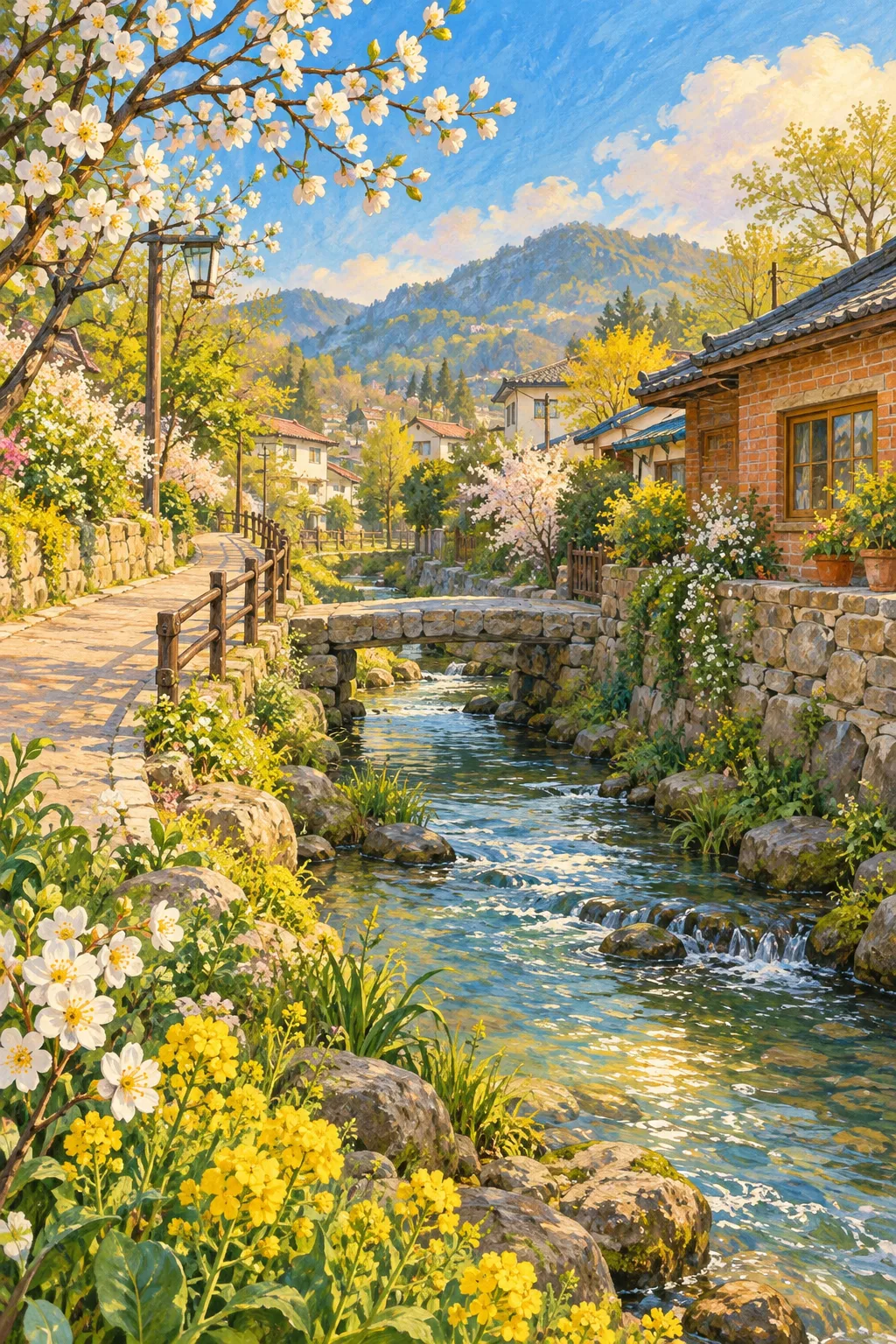
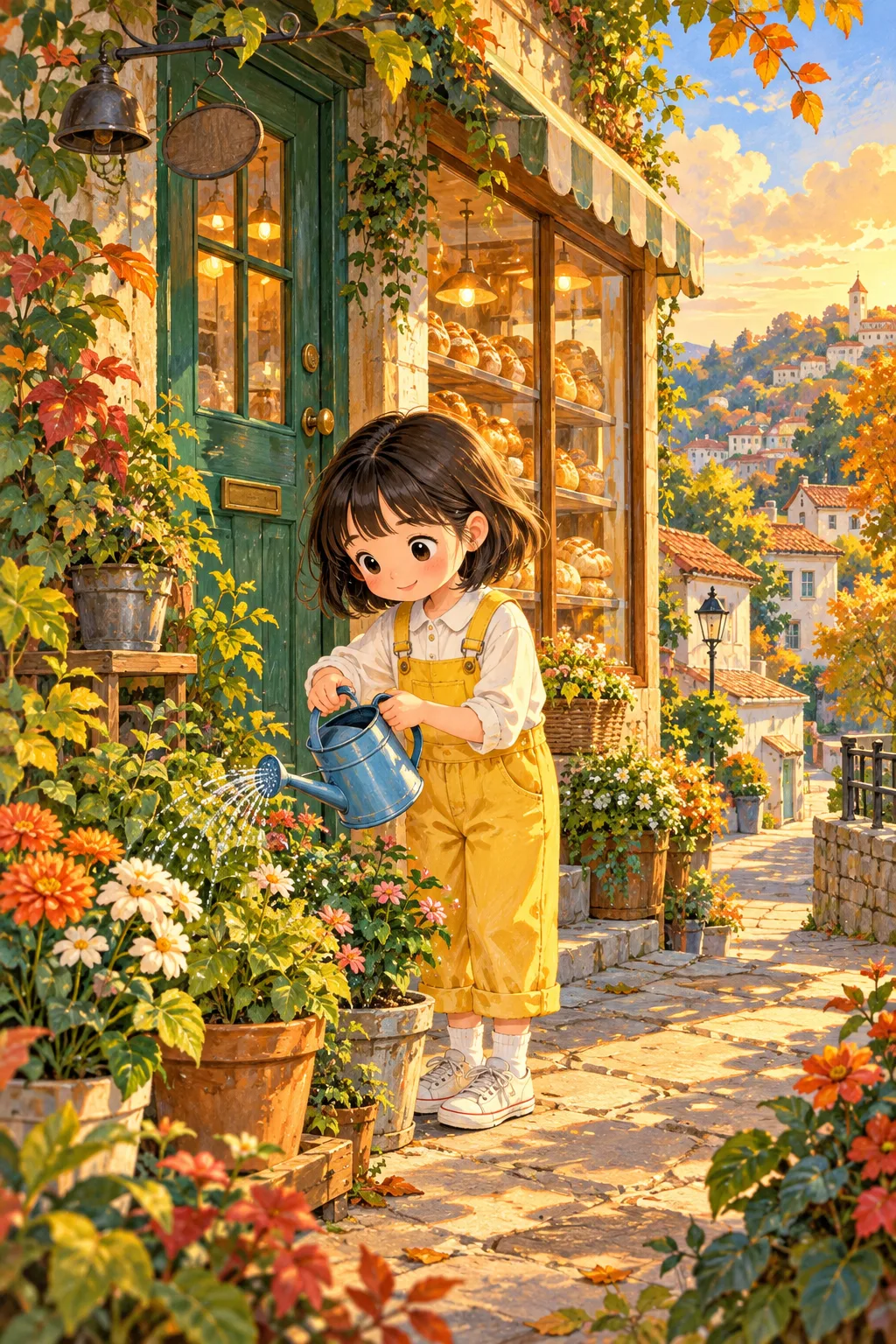
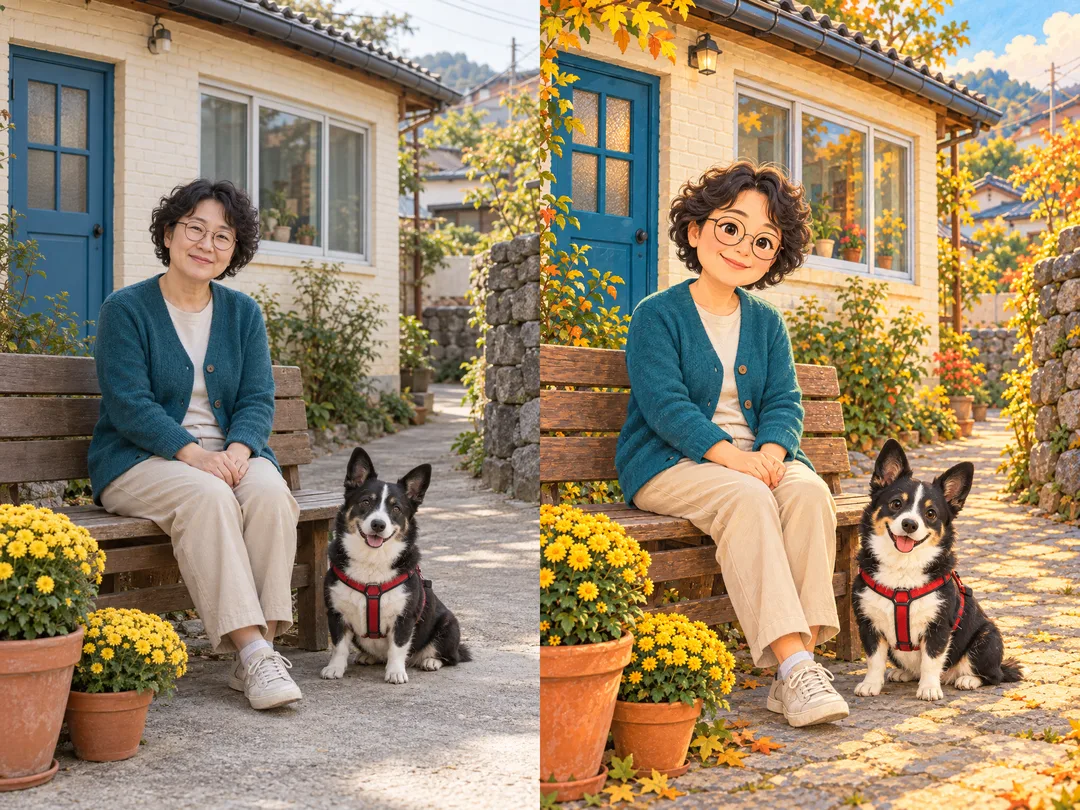
Fill in the fields
- 1Fill in the fields
- 2Copy the prompt
- 3Paste it into a GPT chat
- 4Send it as is and you get an image like the thumbnail example
- 5Attach One family, child, pet or neighborhood photo; optional with the prompt and your photo is used in the result Optional
Full prompt 5,790 characters
Generate exactly ONE finished storybook illustration now, not an explanation. Use the requested aspect ratio: Output exactly one finished 2:3 portrait image, 1024x1536 pixels. Leave the top 12% and bottom 15% free of essential text..
PICTURE-BOOK CHARACTER DESIGN IS MANDATORY. This is a fully drawn 2D illustration, not a photograph with a painting filter. Design people and pets as charming illustrated characters: a rounded oversized head, big simple oval eyes, a tiny dot-like nose, a small curved mouth, and clean soft contour lines. Adult age is conveyed with a few gentle drawn smile lines, never realistic facial anatomy or skin shading. Clothing is flat matte gouache color blocks with just a few simple folds, NO knitted or woven fiber detail. Dog fur is flat graphic black, white and tan patches with a few soft pencil strokes, NO realistic individual hairs. Match the attached photo's recognizable attributes and layout, but rebuild the entire image from drawn shapes. Keep scenery richly painted while characters remain unmistakably simplified.
One fixed visual style: warm luminous opaque gouache with fine colored-pencil contours, clearly stylized hand-painted storybook subjects with softly enlarged heads, simplified rounded faces and expressive eyes while preserving identity, visible brush marks and pencil hatching, no photorealistic skin or photographic rendering, richly layered foreground flowers and tactile leaves, coherent middle-ground architecture, distant landscape and soft clouds, clear depth and saturated moss green, honey gold, terracotta and turquoise accents. Detailed premium children's picture-book finish, lively small details without cluttering the focal subject. Fill the canvas to every edge. Coherent illustrated anatomy and believable building perspective. No blank paper border, book mockup, panels, text, signatures, logos or famous characters.
INPUTS: subject = "【Subject】"; place = "【Place】"; small action = "【Small action】"; season = "【Season】"; light = "【Light】"; important features = "【Features to keep】".
STYLE PRIORITY FOR EVERY SUBJECT: Redraw the whole scene as an unmistakable children's picture-book illustration, including every face, hand, garment and animal. Use softly rounded silhouettes, slightly enlarged heads, large expressive drawn eyes, a small simplified nose and mouth, and gently indicated adult age. Render hair as grouped painted curls, clothes as broad opaque color shapes with a few drawn folds, and fur as simple painted patches. No realistic skin pores, individual photographic hairs, knit microtexture, camera lighting, lens blur or oil-filtered photographs. Identity means recognizable drawn cues, NOT exact photographic facial rendering: retain glasses shape, hairstyle silhouette, clothing colors, animal markings and ears. Keep adults adult; never turn the adult into a child. Preserve pose and landmark relationships while simplifying all surfaces into warm gouache and fine pencil marks. If photo realism conflicts with these drawn cues, the picture-book style takes priority.
PHOTO RULE: If a photo is attached, use it as the primary identity AND spatial-layout reference. Preserve subject count and recognizable illustrated age, face silhouette, grouped hairstyle, glasses shape, clothing colors, animal species, coat patches, ear silhouettes and relative sizes. Reinterpret all of them as drawn shapes, never retain photographic textures. Preserve the original positions and relationships of doors, windows, buildings, paths, trees and water. Paint the existing location into this fixed storybook medium; do not replace it with an unrelated fantasy village. Input features reinforce visible details; never invent a hidden face or make everyone the same child or white dog. A scene without people stays without people unless the subject explicitly asks for them. Keep photographed poses unless the requested action is compatible with identity and layout; when incompatible, keep the photo pose. Season and light change atmosphere without erasing identifying colors or structures. Add floral detail only in available ground space, never across faces or paths.
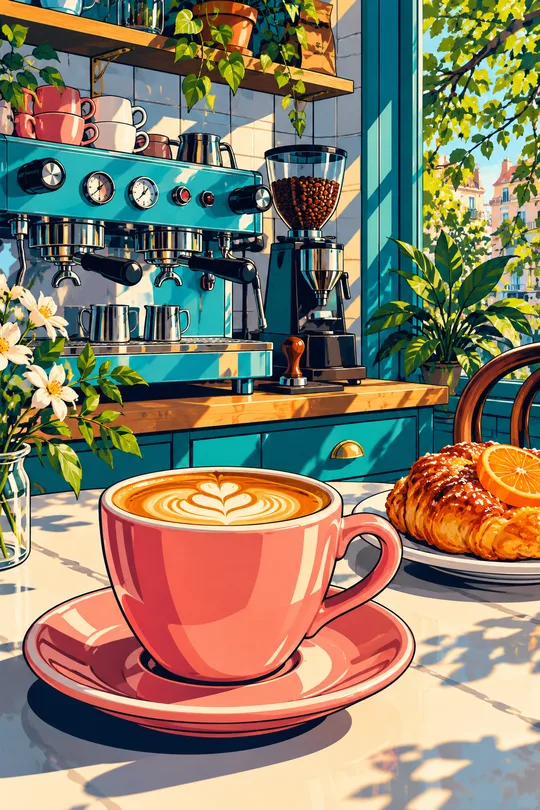
If no photo is attached, create a fictional scene using the filled inputs at the same finish level. Never ask for a photo. Blank subject defaults to an adult Haru and a ginger cat with a white chest; blank place to a small neighborhood cafe courtyard with a blue door at left, rectangular window and a low stone wall beside a curving path on right; blank action to sitting with a cup while the cat naps; blank season to early autumn; blank light to late-afternoon sun; blank features adds no extra constraints. “Choose for me” season or light choices use these same defaults. Do not draw input control words.
Composition: one cohesive near-to-far scene, foreground botanical frame, clearly legible main subject in the middle foreground, setting behind it and distant depth. Do not relocate source landmarks to enforce this framing; adapt the framing to the photo. Keep the subject recognizable at phone size. Preserve head and limb counts, sensible hand and paw contact, and connected accessories. Never add extra subjects for decoration.
All supplied names are context only, never visible writing. Existing signs become blank painted signboards; no personal names, addresses, school names, plate numbers, subtitles or captions. Do not copy any reference artwork or named artist style. Deliver one complete raster image; no code, crop, assembly, follow-up question or multiple alternatives.

[Final output format]
Output exactly one finished 2:3 portrait image, 1024x1536 pixels. Leave the top 12% and bottom 15% free of essential text.
This selected output format takes priority over any fixed canvas size or aspect ratio elsewhere in this template. Adapt the composition, text zones and margins to the selected canvas without stretching or cropping essential content. Device safe areas apply only when a device is selected. Never print these format instructions on the image.
How did it turn out?
You may also like

How to use it · FAQ
Make a familiar family moment, pet or neighborhood into one detailed storybook painting. Opaque gouache, delicate pencil contours and layered plants give the scene warmth and depth. A café owner can share the courtyard on social media; a family can keep a walk as an illustration. The output is one full canvas without lettering, rather than a book mockup.
The two required fields are Subject and Place. Describe people and pets with visible details, or use “Neighborhood without people” for scenery alone. Place should describe doors, windows, paths and their relative positions. Small action captures a single moment; if it conflicts with an attached photograph, the original pose wins. Season and Light affect foliage and atmosphere. Features to keep reinforces glasses, markings or window counts. Blank optional fields use resting with a cup, early autumn and late-afternoon sun, with no additional feature constraint. An attached photo takes priority over fictional defaults.
Attach one clear photograph to an image AI, paste the completed prompt into the same message and send once. Without a photo, the fields create a fictional scene in the same medium. Confirm permission from the people pictured. For child photos, confirm guardian permission for use and public sharing, including any disclosure of the child’s name. Choose a source without exposed addresses, school information or plate numbers. Writing is excluded from the artwork, but inspect the output before publishing.
Compare faces, hair, glasses, pet ears and coat patterns with the source. Check the relationship between doors, windows and paths, plus hands and paws. If a feature changes, specify it more precisely and resend with the same source. Hidden or unclear details cannot be reliably reconstructed. Is a photo required? No. Does it replace your neighborhood? The spatial layout should remain. Can it include a title? This card always creates an illustration without writing. The comparison uses a generated fictional source photograph. Check the external service’s fees and terms there.
Photo conversion redraws faces, hands, clothes and fur as simplified picture-book shapes. Keep glasses, hairstyle, clothing colors and pet markings recognizable. Regenerate from the same source if photographic textures remain. Example 2 is a fictional child at a neighborhood shop, created without a photo; example 3 pairs a generated fictional source photo with its illustrated result.