
All · Comics & illustration · People
416Retro graduation yearbook photo
Keep your face and turn a selfie into a nostalgic yearbook portrait with period hair, clothes and background.
What you get
- One nostalgic yearbook portrait, no text or logos
ChatGPT Free OK
Fill in the fields
- 1Fill in the fields
- 2Copy the prompt
- 3Paste it into a GPT chat
- 4Send it as is and you get an image like the thumbnail example
- 5Attach a real photo that fits the card and it is used in the result: a background photo for background cards, a person or food photo for those cards Optional
Full prompt 2,887 characters
Generate this image now. Output the image directly, without explanations or questions.
Output size 1080x1440 pixels, 3:4 portrait, social media post.
Create ONE retro graduation yearbook head-and-shoulders photograph, default portrait 3:4, filling the canvas edge to edge. No album page, collage, comparison panels or border.
Selfie reference label: "【Selfie】". This label is never printed and does not supply identity; only an attached photo supplies identity.
PHOTO RULE: With an attached selfie, preserve the same recognizable face, facial proportions, eyes, nose, lips, age, skin tone, all moles in their positions, and original glasses shape and color. Keep natural skin texture; no beautification, slimming, youth filter or celebrity substitution. If multiple people appear, use only the most prominent foreground person. Without an attached photo, finish with an original fictional adult who does not resemble any recognizable real person; do not ask for a photo. An empty selfie label has no effect.
Era: "【Era】". 1990s means fuller softly waved or center-parted period hair, subtly faded analog film colors and fine grain. Early 2000s means lightly layered, flipped or spiky side-swept period hair and gently faded early digital print colors. Never change facial anatomy or age. Empty era defaults to 1990s.
Outfit: "【Outfit】". School uniform means a generic dark school blazer, white shirt and plain tie with no badge. Formal blazer means a plain formal blazer over a simple shirt. Casual shirt means a plain casual collared shirt, no tie. All clothes are fictional generic designs, no insignia or brands. Empty outfit defaults to School uniform.
Background: "【Background】". Blue mottled fabric means blue mottled fabric studio backdrop. Gray studio means softly graded gray studio background. School courtyard means softly blurred trees and a school courtyard, with no readable signs. Empty background defaults to Blue mottled fabric.
Change only hairstyle, outfit, background, lighting and photographic texture. Use a straight frontal head-and-shoulders pose, eyes toward camera and a gently awkward closed-mouth smile. Keep the face unobstructed, ears plausible and both shoulders natural. Gentle studio portrait lighting even with an outdoor background. Restrained period texture, no exaggerated damage.
No text of any kind: no name, school name, year, numbers, captions, labels, logos, watermark or signature. Do not depict existing characters or imitate a public figure. Choice labels are internal instructions only. Output exactly one finished photograph.

[Final output format]
Output size 1080x1440 pixels, 3:4 portrait, social media post.
This selected output format takes priority over any fixed canvas size or aspect ratio elsewhere in this template. Adapt the composition, text zones and margins to the selected canvas without stretching or cropping essential content. Device safe areas apply only when a device is selected. Never print these format instructions on the image.
How did it turn out?
You may also like


How to use it · FAQ
A single nostalgic yearbook portrait
Turn a selfie into one head-and-shoulders graduation portrait from the 1990s or early 2000s. Keep the face, age, eyes, nose, lips, glasses and moles while changing hair, clothing, background and photographic texture. Use the result for a playful nostalgic share rather than an official identity photograph or graduation record.
Fill the four fields
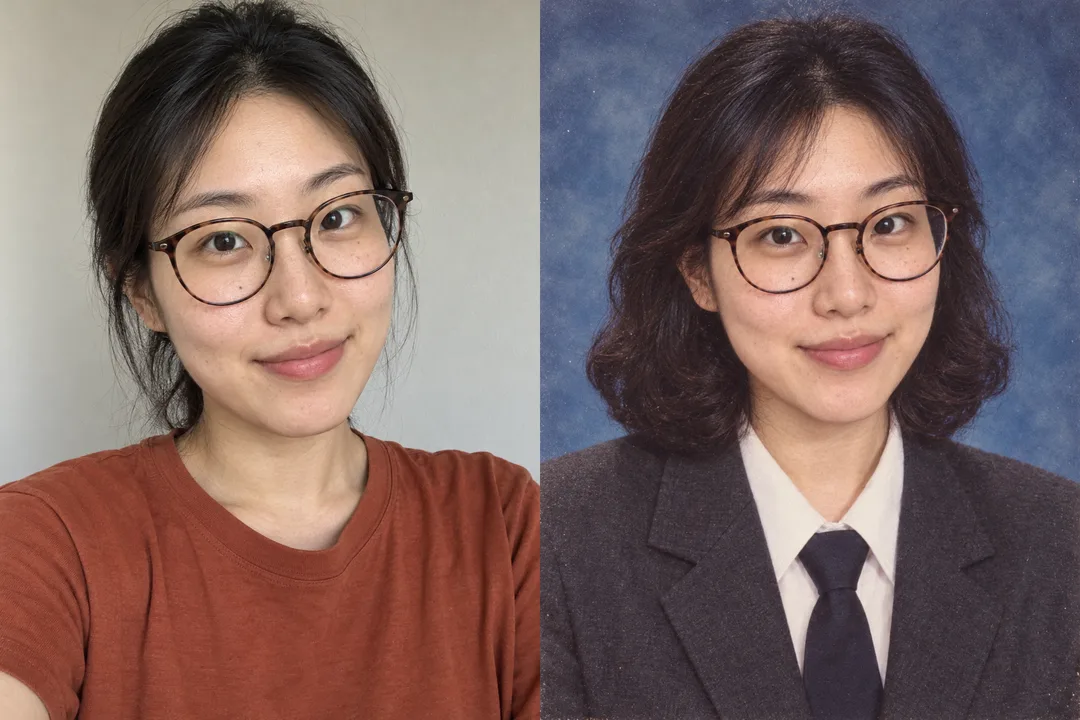
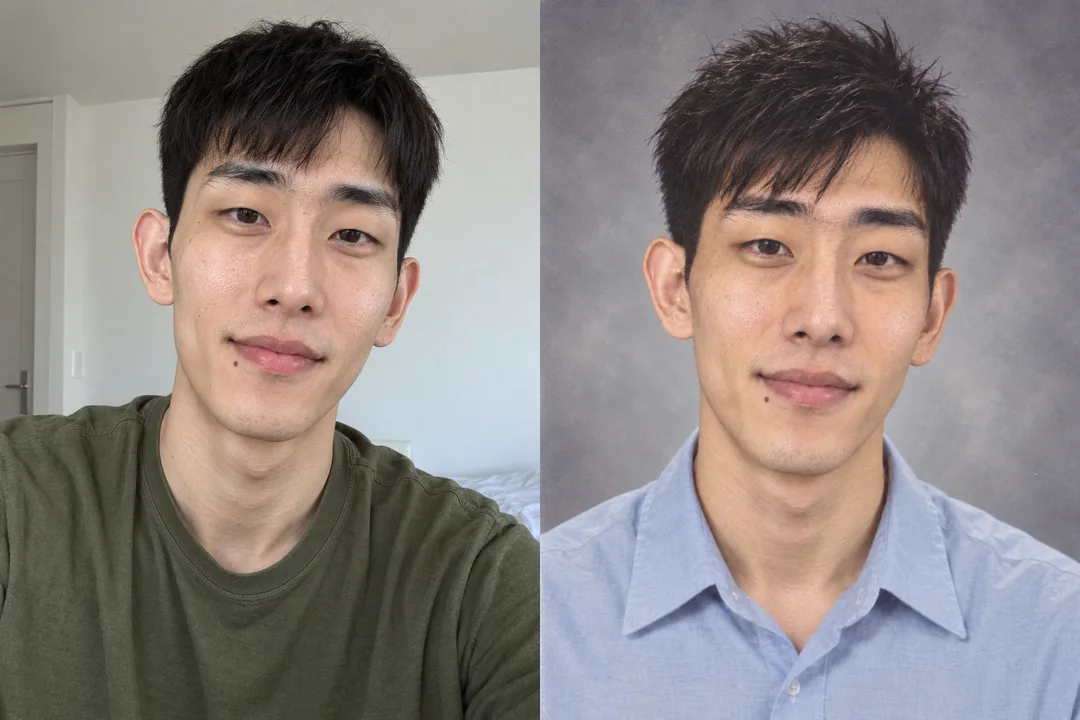
Haru in the Selfie field identifies the example and is never printed. Attach one clear, unobstructed photo of one person in the image AI input, paste the copied prompt into the same message and send once. Without an attachment, the prompt creates an original fictional adult; an empty Selfie field has the same behavior. Era selects fuller 1990s hair and faded film or layered early-2000s hair and slightly clearer print colors. Outfit chooses a generic school uniform, formal blazer or casual shirt. Background chooses blue mottled fabric, a gray studio or a blurred school courtyard without signs. Empty selections default to 1990s, school uniform and blue mottled fabric. The default ratio is 3:4.
Read the examples and check likeness
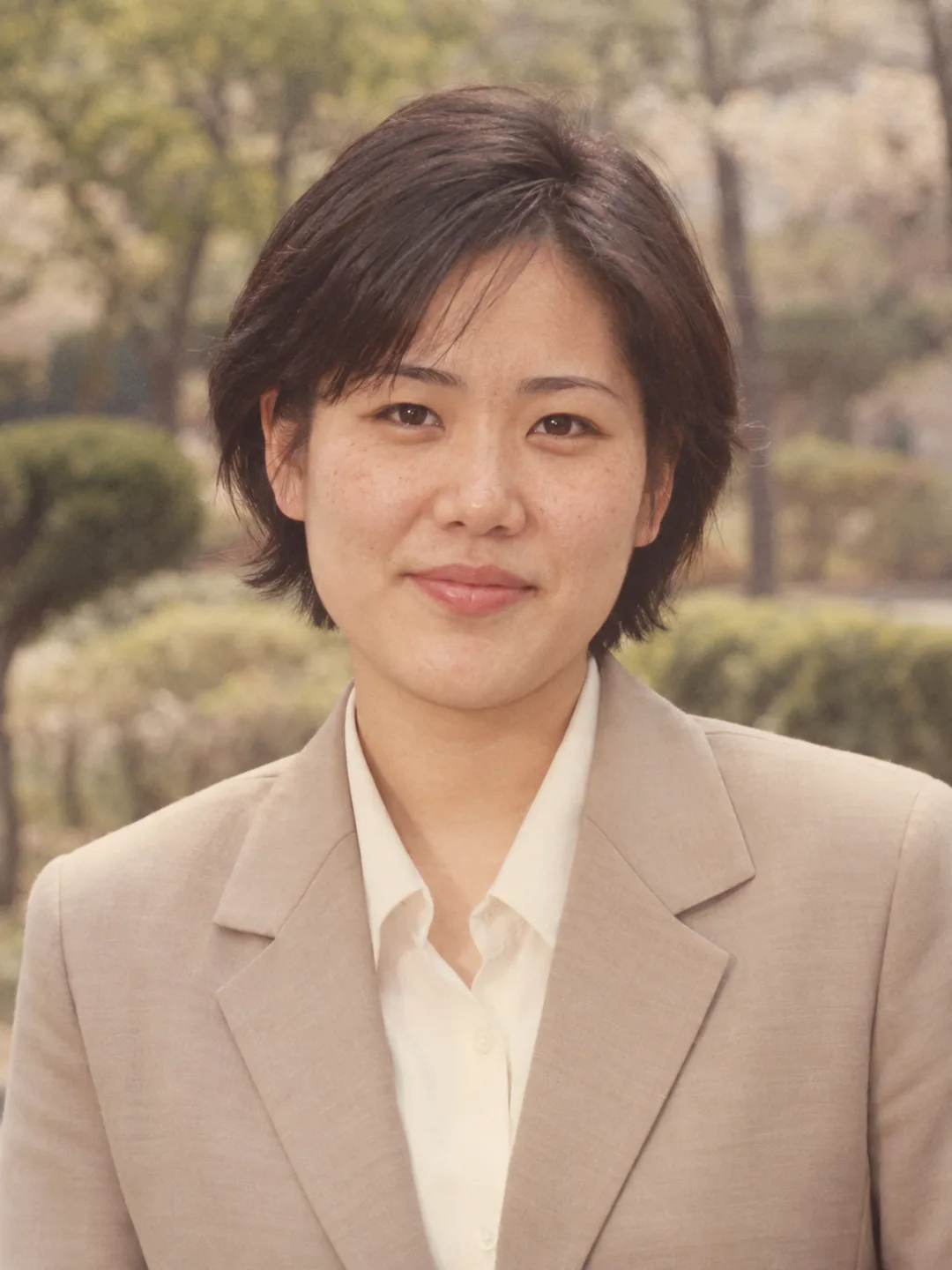
The first pair shows Haru with glasses in a 1990s uniform against blue fabric. The second uses a different fictional Haru, an early-2000s casual shirt and gray studio. Left is the fictional input and right is the output. The separate finished portrait uses a blazer and courtyard; the cover is another person. Compare eye spacing, nose tip, lip shape, frame shape and mole positions. If identity drifts, request: “Keep the original face, glasses and mole positions; change only hair, outfit and background.” Ask again if hair hides the eyes or lettering appears.
Questions
Names, school names, years, logos and watermarks are never printed. The prompt retains age and skin characteristics instead of making the subject younger. Use photos with permission for use and sharing, and avoid visible private information. There is no celebrity-likeness option.