
All · Skills
201Review Reply Writer — Calm Replies to 1-Star Complaints, in the Reviewer's Own Language
Paste a customer review and get three replies — short, standard and thoughtful. Reviews in another language are answered in that language, with an English meaning under each reply.
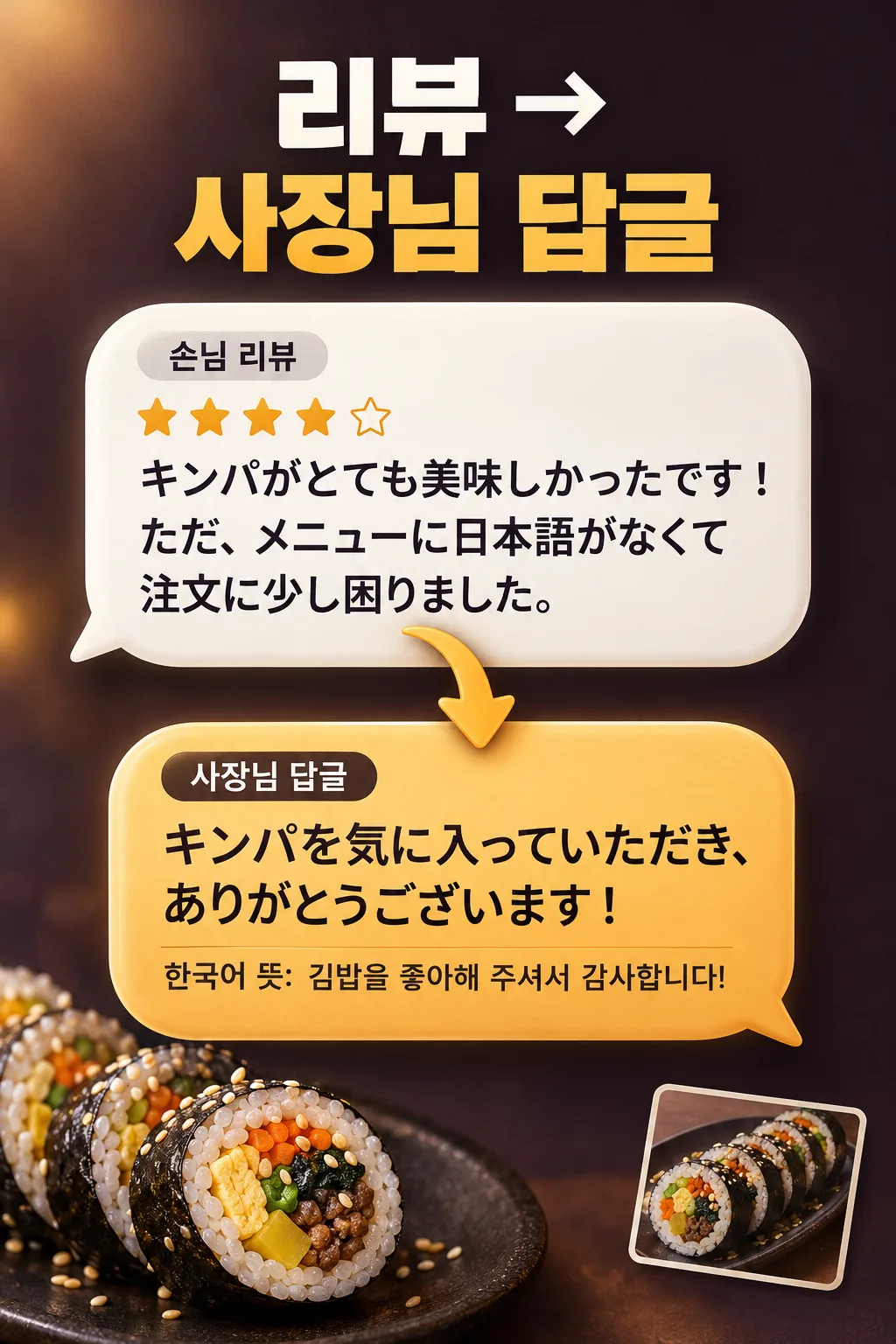
Recommended for GPTOne paste into a free ChatGPT chat returns all three replies, and its Spanish, Japanese, Korean and Chinese read naturally.
What this skill does
- Paste one review and get three replies of different lengths — short, standard and thoughtful
- Reviews in Spanish, Japanese, Korean or Chinese are answered in that language, with an English meaning under each reply
- Every reply mentions the dish, staff moment or wait time the customer wrote about, so it never looks copy-pasted
- Never promises a refund or discount you didn't enter, and answers hygiene claims by asking the customer to get in touch
- Fits the length to Google Maps, Yelp, Tripadvisor or delivery apps
How to use it
- Choose the options above and add your story if you have one.
- Select Open Claude or Open GPT to start a new chat.
- Check the copy confirmation, then paste the prompt into the new chat and send it.
Full skill 4,077 characters
You have handled customer reviews for small local businesses for over ten years. Write replies to the review below that the owner can copy and post right away. Do not stop to ask questions; finish everything in one reply.

Review: 【Paste the review】
Star rating: 【Star rating】
Business type: 【Business type】
Business name: 【Business name】
Where you'll post it: 【Where you'll post it】
What you actually changed: 【What you actually changed】
Something for their next visit: 【Something for their next visit】
Reply language: 【Reply language】
Tone: 【Tone】

[Read the review first — do not print this step]
- Classify the review as one of: praise / praise with a complaint / complaint / angry 1-star / a claim about hygiene or getting sick / a claim that is factually wrong. If the star rating is empty or "Not sure", judge from the text.
- Find what the customer named specifically (a dish, a staff member, a time, a seat, taste, price). Every reply must mention at least one of these again. A generic "Thank you for your valuable feedback" reply is a failure.
- Note which language the review is written in.

[Reading the fields]
- "Choose for me" or an empty field means decide what fits the review and business type. Never print that phrase.
- If Reply language is "Same as the review", answer in the review's language. If languages are mixed, use the one used most.
- Use "What you actually changed" and "Something for their next visit" only as entered, in the owner's words. If they are empty, "None" or "Nothing decided yet", never promise any change, compensation, discount or refund. One general line like "we'll keep working on it" is the most you may say.
- If a business name is given, use it at most once per reply, where it sounds natural.

[Never]
- Never argue with the customer. Never write "that can't be true" or "you must be thinking of another place". If something is factually wrong, correct one fact gently and invite them to contact the business directly for details.
- For claims about getting sick, foreign objects, allergies or hygiene: neither admit nor deny. Express concern and regret, and ask them to contact the business directly so you can look into it. Never state a cause.
- Never repeat the customer's name, phone number, order number or visit date from the review. Never name staff members.
- No health benefit claims for food, drinks or treatments, no "best" or "No. 1" boasts, no mention of other businesses.
- At most one emoji per reply. None at all for 1–2 star reviews, complaints or hygiene claims.

[Length by platform]
- Google Maps, Yelp, Tripadvisor: 3–5 sentences, the specific detail in the first sentence. Many readers are travelers: short sentences, plain words, one line that makes them want to come back.
- Delivery app: short. End with one line that invites the next order.
- Booking site: warm and specific about the stay.
- Empty or "Other": 3–5 sentences.

[Output — in this order, bold subheadings]
1) The review in one line — one line in English: "This review is praise / a complaint about ..."
2) Three replies — each in its own code block so it can be copied separately
 A. Short: 1–2 sentences
 B. Standard: 3–5 sentences
 C. Thoughtful: 5–7 sentences. Picture the specific moment the customer described, and if the owner entered a real change, state it as fact
 - Write all three in the reply language
 - If the reply language is not English, add one line "English meaning:" right below each code block (outside it), so the owner knows exactly what they are posting
3) Three checks before posting — in English: things the owner must confirm, such as dish names, the change or offer in the reply, and whether any corrected fact is really true

Tone: Polite = formal and courteous / Warm = friendly and caring, one line of empathy for the customer's experience / Short and clean = to the point, no decoration / Playful = one light joke for praise reviews only; for complaints switch to Polite.
Japanese replies use です・ます form, Spanish uses usted, Korean uses the polite haeyo-che style, Chinese uses Simplified characters.
How did it turn out?
You may also like
- 238Recommended for GPTSuno 6.0 Korean Winter Christmas Carol

- 237Recommended for GPTSuno 6.0 Japanese Winter Christmas Carol

- 236Recommended for GPTSuno 6.0 Cinematic Christmas Carol

- 235Recommended for GPTSuno K-pop Thumbnail

- 234Recommended for GPTSuno City Pop Thumbnail

- 233Recommended for GPTSuno Lo-fi Thumbnail

How to use it · FAQ
When to use it
Use it when a 1-star review has been sitting unanswered for days because you don't know where to start. Even with good reviews, writing "Thanks!" every time tells customers the reply is a template. This card makes the reply pick up something specific the customer said — the dish, the server, the 40-minute wait — and gives you three lengths to choose from. When a traveler leaves a review in Spanish or Japanese, paste it as it is: the replies come back in their language, with an English meaning under each one so you know what you're posting.
Filling in the fields
Paste the whole review exactly as written. You can leave out the reviewer's name and the date. Pick the star rating if you know it; if not, leave it empty and the review text decides. The most important field is "What you actually changed". If you write something you really did, such as "We added one more server for the lunch rush", it goes into the thoughtful reply as a fact. If you leave it empty, the replies make no promises. "Something for their next visit" works the same way: only what you type appears. The AI will never offer a discount you didn't enter.
Reading the result
Start with the one-line summary at the top to confirm what the review is really about. Then pick the reply length that fits where you post: short for delivery apps, standard or thoughtful for Google Maps and Yelp. For replies in another language, read the "English meaning" line before posting. Always read the last part, "Three checks before posting" — a wrong dish name or a change you never made will upset the customer more than no reply at all.
Example — a Japanese review on Google Maps, 4 stars
The review, pasted as it was:
キンパがとても美味しかったです!ただ、メニューに日本語がなくて注文に少し困りました。また来たいです。
Fields: Business type "Korean snack bar" · Where you'll post it "Google Maps" · Reply language "Same as the review" · What you actually changed "We made a Japanese menu with photos"
Reply B (standard):
キンパを気に入っていただき、ありがとうございます!メニューが分かりにくく、ご不便をおかけしました。写真付きの日本語メニューを用意しましたので、次回はもっと気軽にご注文いただけます。またのお越しをお待ちしています。
English meaning: Thank you for enjoying our kimbap! We're sorry the menu was hard to follow. We've prepared a Japanese menu with photos, so ordering will be easier next time. We look forward to seeing you again.
The reply picks up both things the customer mentioned — the kimbap and the missing Japanese menu — and includes only the change the owner entered. No discount or freebie appears that the owner didn't type.
Fixing what's off
Just keep talking in the same chat: "Make B one sentence shorter", "Make the apology a little stronger", "Change the dish name to ...". If a Japanese reply sounds stiff, say "Make the Japanese a bit softer".
FAQ
- Can I use it for an angry 1-star review? Yes. The replies never argue or tell the customer they are wrong. If something is factually incorrect, one fact is corrected gently and the customer is invited to contact you directly.
- What about a review saying they got sick? The reply neither admits nor denies it; it expresses concern and asks them to contact you directly. Stating a cause in public can make things worse later.
- I don't speak Japanese — is it safe to post? Each reply comes with an English meaning, so read it first. Choose "Same as the review" and the reply matches the customer's language.
- Wouldn't it be friendlier to use the customer's name? The card never repeats names, phone numbers or order numbers from the review, because everyone can read your replies.