
All · Comics & illustration · People · Characters
256Tiny Me in Your Palm — A Finger Poking the Miniature's Cheek
Your photo becomes a tiny doll standing in a palm, and when a finger pokes its cheek it winks or pouts. Works with photos of babies, kids and adults.
ChatGPT Free OK
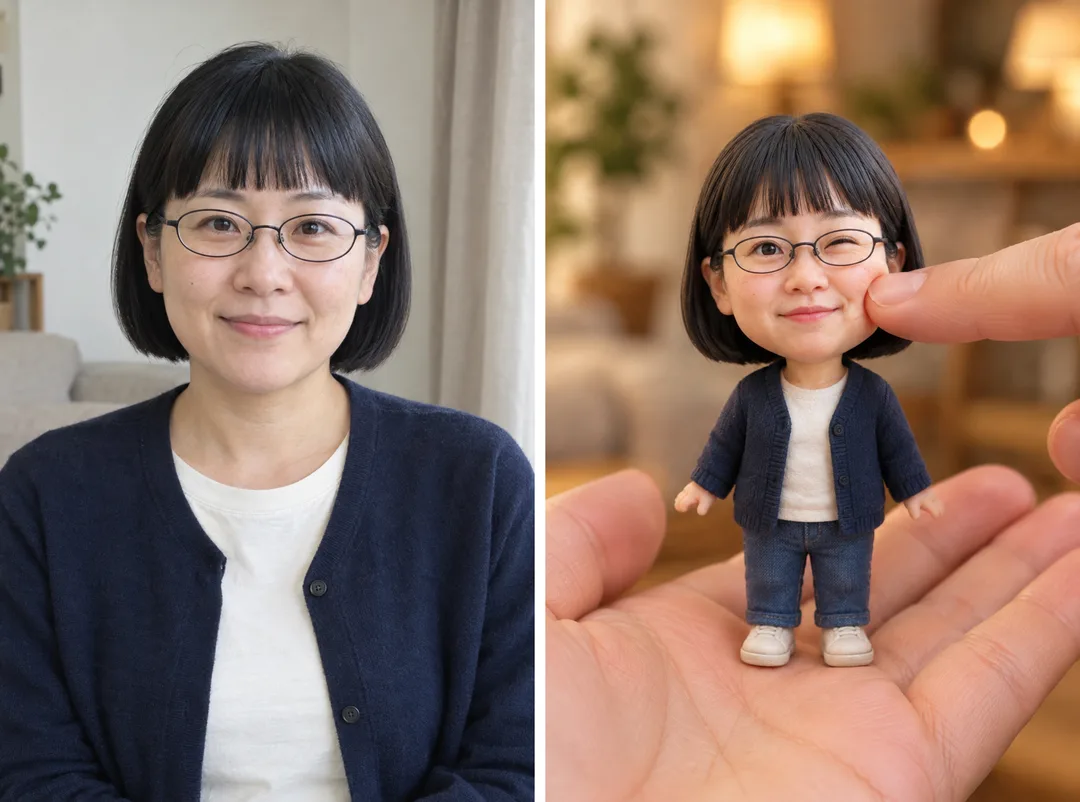
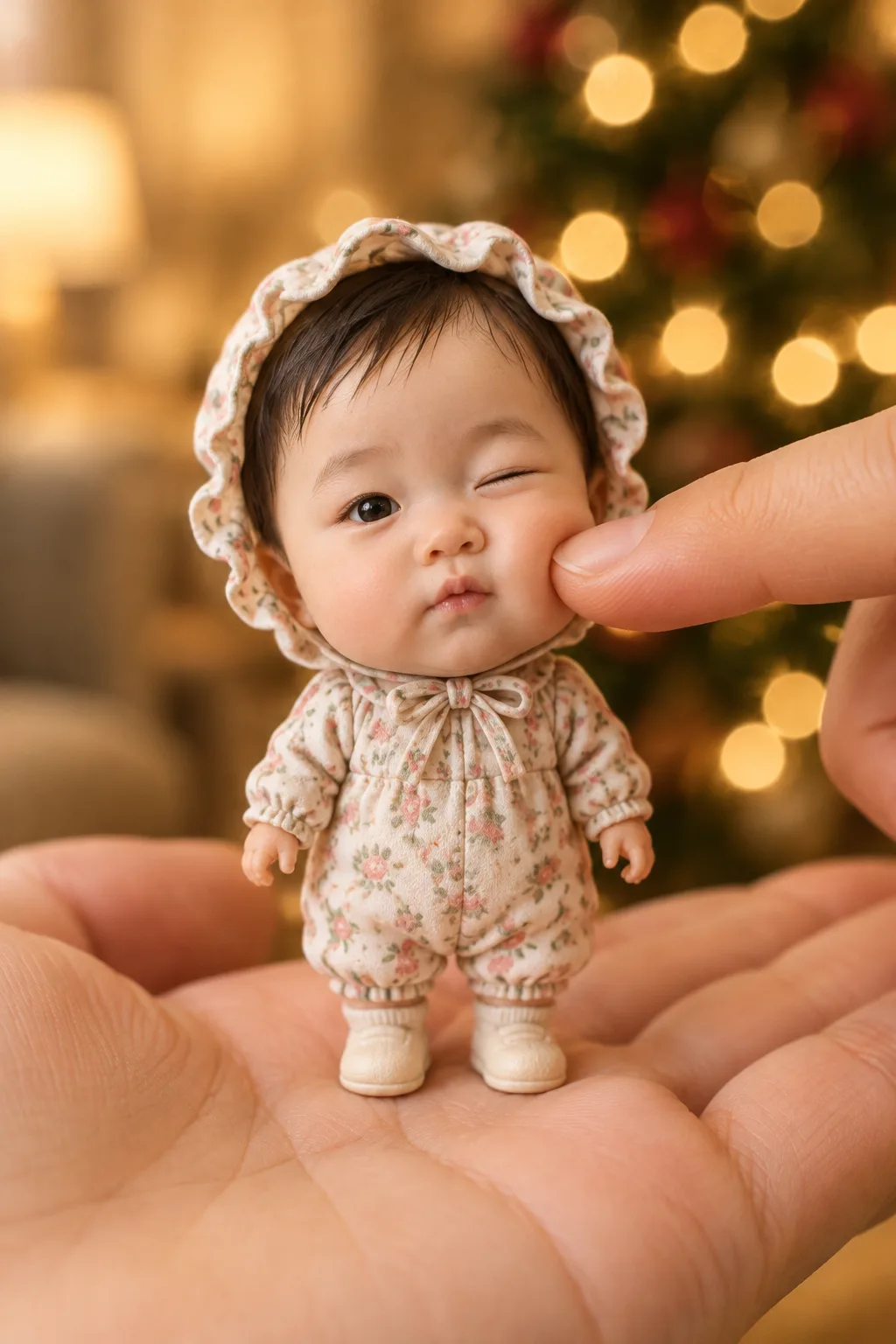
Fill in the fields
- 1Fill in the fields
- 2Copy the prompt
- 3Paste it into a GPT chat
- 4Send it as is and you get an image like the thumbnail example
- 5Attach one photo of the person with the prompt and your photo is used in the result Optional
Full prompt 9,306 characters
Generate this image now. Draw it directly - do not describe it, explain it, or ask questions.
PHOTO RULE (this overrides any other line in this prompt, before or after it, that calls the photo required or mandatory or says to ask for it): if a photo is attached, use it exactly as the instructions below describe. If no photo is attached, never ask for one and never stop — invent a fitting fictional subject (person, pet, food, product or place, whatever this card is about) in the spirit of the card's example image, and finish the image.
Output exactly one finished 2:3 portrait image, 1024x1536 pixels. Leave the top 12% and bottom 15% free of essential text.

[One photographic miniature scene]
Create ONE full-bleed vertical 2:3 macro photograph unless another aspect ratio is specified. A tiny recognizable three-heads-tall person figurine stands directly on an adult's open palm, while the INDEX FINGER of a different adult hand gently presses one cheek. The fingertip is visibly in contact, the cheek is visibly indented, and the figure reacts with the resolved expression. This tactile cheek-poke interaction is the central event. Return the completed photograph itself, without a comparison, product box, multiple views, code or explanatory text.

[Defaults and controls]
With a source photo, the default figurine keeps that person's face, hair and clothes, reacts with a one-eye wink, wears no added accessory and stands against warm living-room bokeh. Without a source photo, invent one distinctive fictional adult with a simple unbranded outfit and the same cheek-poke scene; never ask for a photo. Resolve each optional line below once before drawing, and carry its value throughout. Blank values and "None selected" keep the defaults. "Same as photo" preserves the photo's relevant feature; without a photo choose a fitting fictional version. "Choose for me" mean choose a suitable result yourself. "None" removes the requested accessory. Never print control words or field labels.

[Recognizable miniature, not a shrunk live person]
Use the largest, most prominent person in an attached group photo, breaking a tie by closeness to the center. Retain their facial contour, characteristic eye shapes and spacing, nose, smile, skin tone, hairline, hairstyle, hair color, glasses, facial hair and visible identifying marks. Keep the apparent age, including for a child or baby reference, while simplifying features into an original collectible figurine. With no reference, the subject is an original adult and has no real person's or celebrity's likeness.

The oversized head is approximately one third of total figure height; the small torso and legs complete a coherent three-heads-tall body with two arms, two hands and two feet. Make it finger-length, roughly 5-7 cm high compared with the adult hand, unmistakably a tabletop miniature. Use expensive hand-finished clay and resin figure texture: smooth matte painted surfaces, subtly sculpted hair strands, miniature cloth seams, small eye highlights and restrained resin sheen. The gently yielding cheek has a soft clay-like response at the contact point, while the rest remains a finely crafted solid figurine. This is a photograph of an expressive tiny figure, not human skin pasted onto a toy, a flat anime drawing, a giant doll or a live adult standing on a hand.

[The cheek press must be physically visible]
Bring the second hand's index finger from the upper right toward the figure's left cheek, with the fingertip touching the fleshy area beside the mouth below the outer eye. Show one continuous index finger from its knuckle direction to the pad, a credible nail on the opposite surface and a natural bend. The contact pad makes a clear shallow dimple in the cheek with a small displaced cheek bulge beside it and a soft occlusion shadow. The finger must not pass through the face, merely hover beside it, press the eye, cover the nose or obscure the mouth. Keep most of the face readable.

The default reaction is a playful wink on the pressed side, with the other eye open, the cheeks asymmetrical and the mouth forming a tiny skewed pout. The selected expression changes the reaction while retaining the visible indentation. A pout has gently puckered lips; surprise has alert eyes and a small rounded mouth; a broad smile has a readable smiling mouth and lifted cheek; a baby yawn has a small naturally open yawning mouth. Use a light playful squeeze with no injury, bruising, pain or frightened distress. Do not let a symmetric neutral smile replace the cheek deformation. The expression and fingertip contact should be readable even at small display size.

[Palm support, scale and hands]
The supporting adult hand enters from the lower left, palm facing upward with natural palm creases, plausible skin texture, a coherent wrist, five anatomically correct fingers and a realistic thumb. The figure stands with both feet touching the central palm and tiny contact shadows under the shoes; no transparent display disc, pedestal or hidden desk supports it. The figure's small arms may balance gently outward without grabbing the pressing fingertip.

There are exactly TWO adult hands in the scene: one supporting palm and one poking hand. The poking hand has five fingers in total, but only its index extends toward the face; the others remain loosely curled or naturally outside the frame. A cropped hand need not display all five fingers. Never add extra visible fingertips to satisfy a count, duplicate nails, fuse fingers, disconnect a thumb or add an extra wrist. The adult hands are much larger than the figure, with a fingertip broad enough to visibly compress the miniature cheek. The tiny figure's own hands are separate and correctly scaled.

[Clothes and accessory handling]
Keep the source clothing's visible color, pattern, silhouette and recognizable details in miniature unless an optional outfit overrides it. Fabric is represented by fine sculpted knit, woven seams and controlled painted detail appropriate to this premium figure. A selected knit cardigan has readable ribbing, buttons, cuffs and a simple covered inner shirt. All outfits remain unbranded and appropriate to the reference age.

A supplied face accessory remains recognizable unless the chosen prop deliberately replaces it. Added sunglasses can rest above the eyes on the hairline so the wink and cheek contact remain visible. Wireless earbuds sit coherently in the ears. Wired earphones have exactly one coherent cable arrangement with no tangle around the poking finger. A no-prop choice adds nothing. Never enlarge an accessory until it hides the face or makes the figure lose balance.

[Macro camera and warm room]
Compose the figure centrally with the supporting palm across the lower third and the poking finger entering from one side. Keep the complete figure and feet visible. Put the face and contact point near the middle of the frame and make them the sharpest details. Use a modestly low view across the palm, a convincing macro lens, shallow depth of field and a focus plane containing the face, fingertip pad and cheek indentation. Show enough sharp palm texture beside the feet to establish scale; let distant fingers and room objects soften naturally rather than blurring the whole hand.

The default background is an ordinary warm living room rendered as soft amber lamps, indistinct upholstery and a few gentle round light points. Soft warm key light and restrained fill reveal the miniature material and real-hand skin differently, with coherent shadows at the poke and feet. Christmas lighting replaces the background with an out-of-focus tree and irregular warm fairy lights; window afternoon light gives creamy natural light and pale home bokeh. Keep the room subordinate, the face crisp and the cheek-poke unmistakable. No lettering, watermark, headline, real-person companion, second figurine or packaging.

[OPTIONAL OWNER INPUT - each line exists only when supplied]
REACTION = "【Expression】". Replace the default one-eye wink with the supplied reaction: one-eye wink, pout, surprise, broad smile or baby yawn. Adapt the expression to the source person's age, retain likeness, and keep the fingertip visibly indenting the cheek in every option.
OUTFIT = "【Outfit】". "Same as photo" preserves the source outfit; no photo means choose a simple fitting outfit. Other selections replace it with a knitted cardigan, workwear jumpsuit, corduroy jacket, or floral baby outfit and bonnet, using credible tiny fabric detail and appropriate fit. A bonnet leaves the face and contact cheek clear.
PROP = "【Prop】". Add only the selected unbranded sunglasses, wireless earbuds or wired earphones. Sunglasses sit above the eyes if needed to show the wink. Blank, "None selected" or "None" adds no accessory.
BACKGROUND_LIGHT = "【Background light】". Choose the supplied warm living-room light, Christmas fairy lights or afternoon window light. Apply its lighting coherently to both adult hands and the miniature, while retaining shallow home bokeh and sharp cheek contact.

[Final output format]
Output exactly one finished 2:3 portrait image, 1024x1536 pixels. Leave the top 12% and bottom 15% free of essential text.
This selected output format takes priority over any fixed canvas size or aspect ratio elsewhere in this template. Adapt the composition, text zones and margins to the selected canvas without stretching or cropping essential content. Device safe areas apply only when a device is selected. Never print these format instructions on the image.
How did it turn out?
You may also like
- 258Pink-Sunglasses City-Pop Anime Profile — Your Photo as a '90s Anime Illustration

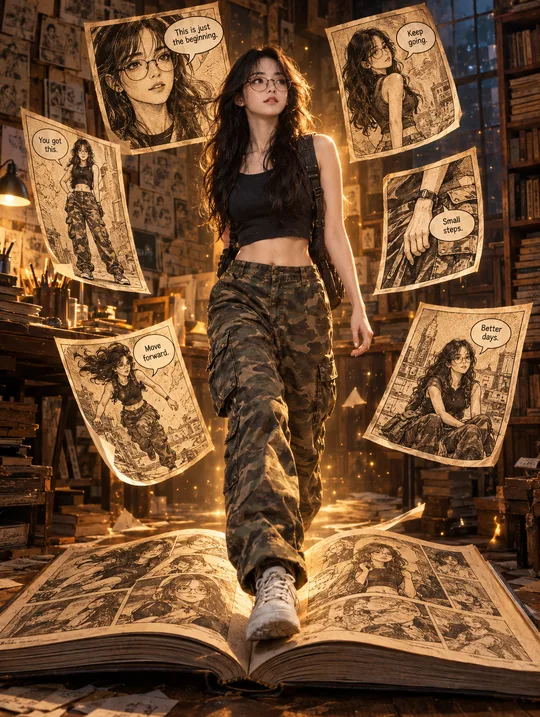
- 255Walking Out of a Comic Book — A Photoreal Hero Among Pen-and-Ink Panels
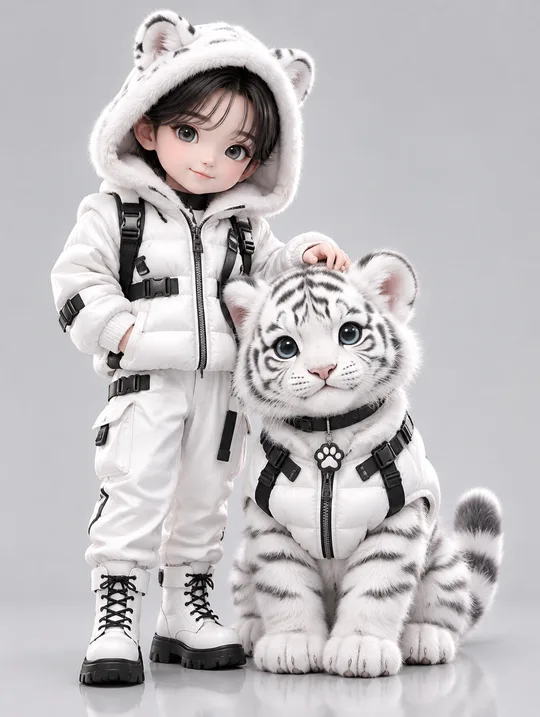
- 253Me and My Animal Buddy Twin-Look Figure — Matching Outfits in 3D, From Your Photo
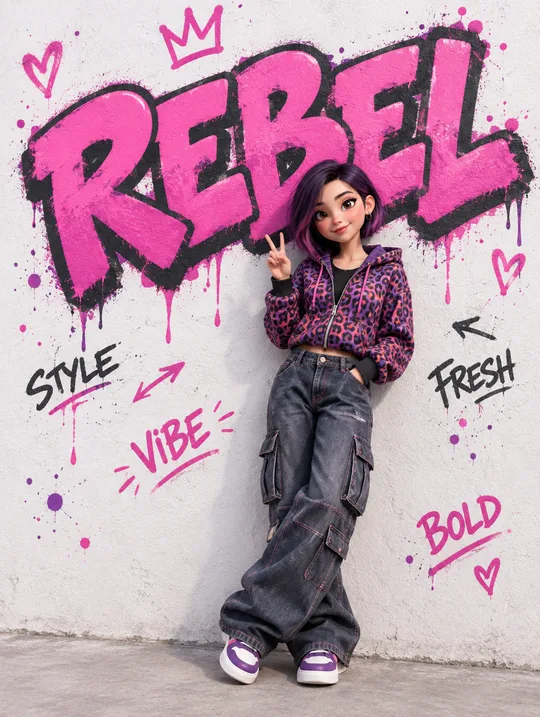
- 2523D Character at a Graffiti Wall — Your Word in Giant Spray Paint
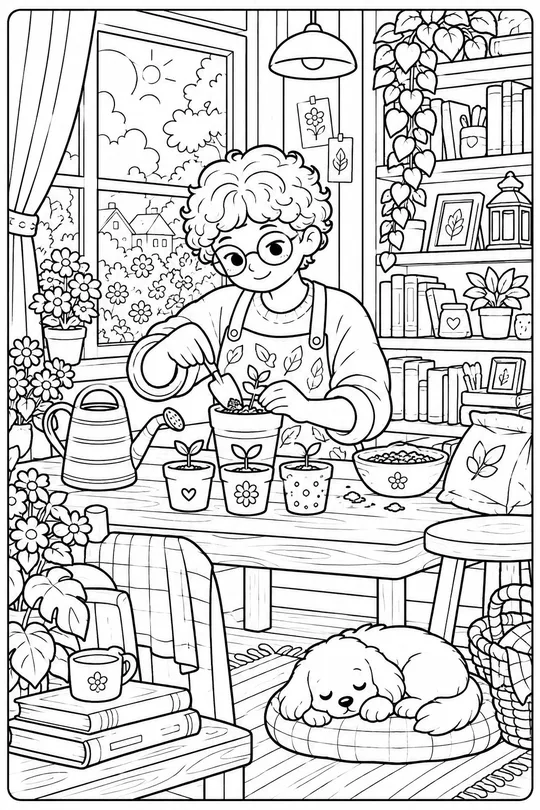
- 251Cozy Coloring Page
- 250Word Architecture

How to use it · FAQ
When to use it
The person in your photo becomes a doll small enough to stand in a palm, while another finger gently squishes its cheek. The squished-cheek reaction — a wink or a pout — is the whole charm. A plain palm figure just stands there; this one *interacts* with the finger, so it feels alive. A baby photo gives a yawning baby, a dad photo gives a cool dad in sunglasses, and family group chats love it.
Filling in the fields
Upload a photo and you can leave every field empty: you'll get a wink, the outfit from the photo and warm living-room light. Changing the expression changes how the doll reacts when its cheek is poked; choosing an outfit dresses the doll in it instead of the photo's clothes. For baby photos, "Floral baby outfit with bonnet" and "Baby yawn" go well together.
Adding the photo
- Upload a photo where the face is clear — don't send yet
- Paste the copied prompt into the same message box
- Check that both are there, then send
If you already sent the photo alone, add "Draw it from the photo above" to the end of the prompt.
What to check
- Does the face resemble the person in the photo? Hairstyle, glasses and moles should carry over
- Is the finger pressing the cheek, with a natural hand and the right number of fingers?
- Is the doll small enough to stand in a palm?
Fixing what's off
Ask in the same chat, one thing at a time: "Make the face look more like the photo", "Press the cheek harder", "Make the doll smaller".
FAQ
- Can I use a baby photo? Yes, but we recommend sharing children's pictures in family chats rather than public social media.
- What about a photo with two people? The most prominent person is drawn. To draw someone else, use a photo of just that person.