
All · Comics & illustration · Scenery
250Word Architecture
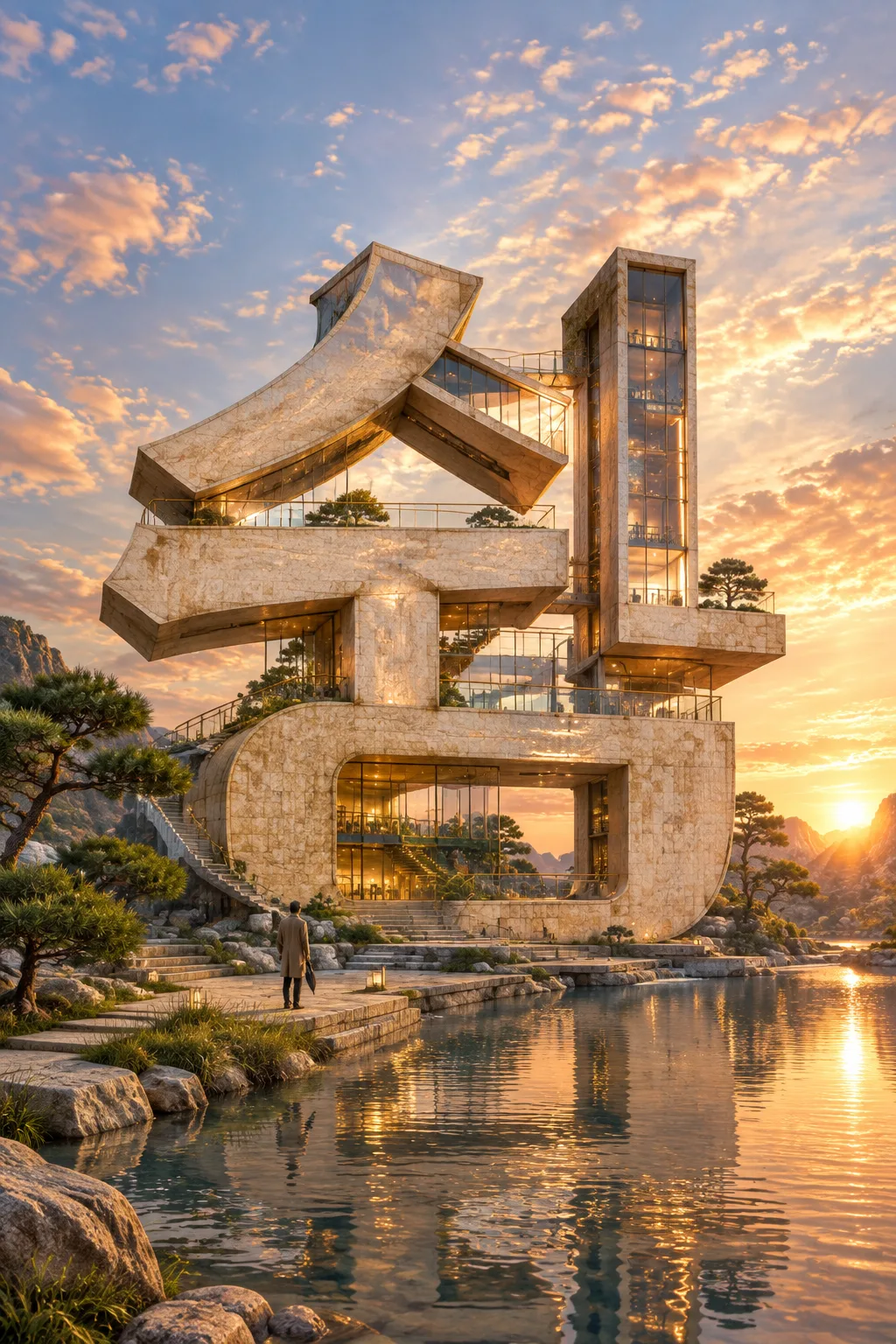
An architectural fantasy where a short word itself is built as a huge building, complete with windows, stairs, gardens, and tiny people.
What you get
- A huge building shaped like the entered word
- Details of windows, stairs, water, and stone
- An architectural fantasy connected into a single place
ChatGPT Free OK
Fill in the fields
- 1Fill in the fields
- 2Copy the prompt
- 3Paste it into a GPT chat
- 4Send it as is and you get an image like the thumbnail example
- 5Attach a real photo that fits the card and it is used in the result: a background photo for background cards, a person or food photo for those cards Optional
Full prompt 3,530 characters
Please directly generate one finished architectural fantasy image now. End with the image itself without questions, explanations, or code.
Output exactly one finished 2:3 portrait image, 1024x1536 pixels. Leave the top 12% and bottom 15% free of essential text.
Huge word: 【Huge word】
Surrounding place: 【Surrounding place】
Stone color: 【Stone color】
Window light: 【Window light】
Time: 【Time】
Weather: 【Weather】
Plants: 【Plants】
Tiny person: 【Tiny person】

This is an original surreal architectural photograph where the letter strokes of a massive word become tens-of-meters-tall stone architecture. It is not a sign attached in front of a building nor a photo with text overlaid. The entered word is realized exactly once with correct spelling, spacing, and capitalization. Korean characters maintain initial consonants, vowels, and final consonants so that readers can instantly recognize the letters. If 'Choose for me' is selected, use 'Rest'. Designed with bold strokes tailored to 1 to 4 Korean characters or a short English word, multiple letters connect into a single architectural complex. Do not repeat the phrase separately as a title.

The thick letter outline, occupying most of the scene, is made of stone in the selected stone color. While clearly retaining the front silhouette and the structure of main strokes, dense windows, floors, stairs, narrow terraces, and horizontal connecting passages are carved inside the strokes. Glass windows reflect the sky and surrounding water, and deep window frames, mortar joints between stones, small bolts on brass railings, and worn stone corners are visible even upon magnification. The word does not end as a blocked single mass; it feels like it has internal depth and floors where people can move around. Do not erase final consonants with windows or fill empty spaces to change it into another letter. Create an awe-inspiring scale with a low three-quarter perspective while prioritizing the legibility of the front strokes.

Connect the surrounding place as a real space from below the building to the edge of the screen. If water is included in the input, small ripples, mist, and clear but not-quite-perfect mirror reflections appear. Create a three-layer sense of distance with foreground stone gaps, stairs, and railings; middle-ground small plants and people; and background distant terrain. The selected time and weather cast consistent light on the stone, sky, glass, and ground. Window light enters only inside the windows softly and does not dye the whole thing in fluorescent colors. The tiny person is an adult doing the entered action, about one-thirtieth of the building height. If 'No people' or 'No plants' is selected, omit those elements.

Do not leave just a large empty sky; densely fill it with architectural passages, gardens, and reflections. The main strokes of the word are all visible within the central seventy-three percent height, and the end strokes are not cut off outside the frame. The surrounding ground and sky continue to the edges. Do not replicate real buildings, and do not use names of architects, artists, brands, or existing characters. Return only a single independent picture without logos, signatures, watermarks, additional text, poster mockups, or comparison boards.

[Final output format]
Output exactly one finished 2:3 portrait image, 1024x1536 pixels. Leave the top 12% and bottom 15% free of essential text.
This selected output format takes priority over any fixed canvas size or aspect ratio elsewhere in this template. Adapt the composition, text zones and margins to the selected canvas without stretching or cropping essential content. Device safe areas apply only when a device is selected. Never print these format instructions on the image.
How did it turn out?
You may also like


How to use it · FAQ
The letter itself becomes the building
Unlike cards that write words on top of photos, the thick strokes of the letters become a massive stone building. Windows, passages, and stairs go inside it. A tiny person below shows the scale, and reflections in water and stone create the depth of the place. Use this when you want a creative poster or an striking background image.
Start with a single Korean letter
The 'Rest' on the cover makes even the initial consonant, vowel, and final consonant part of the architecture. Start with a single letter like 'Light' or 'Rest' at first. Korean is easy to read in 1 to 4 letters, and English in a short single word. Long sentences have too many windows and strokes, which may lead to spelling errors. For the surrounding place, write what is beneath the building, such as 'A stone garden beside a pond'.
Buttons that change light and surroundings
Stone color changes the exterior wall, and window light goes only indoors. Choosing a cleared sky and evening can make golden light reflect on the wet ground. Writing small types of plants like pine trees or ivy prevents them from covering the building strokes. For the tiny person, write both the action and count, like 'One adult holding a folded umbrella'. 'No people' is also possible.
Check if final consonants have disappeared
Even if the letters look cool, you cannot use them if they read as different letters. Look at the word's strokes first, then check the size of the windows, stairs, and people. If a final consonant is wrong, point it out like, 'Keep the windows and material, but clearly fix the final consonant ㅁ of Rest.' This drawing is virtual architectural art and not a blueprint that can actually be built. You can create a new scene without putting specific buildings or architect names in the fields.