

All · Comics & illustration · Characters
474Torn cotton-paper stickers
Create nine separate illustrated stickers with soft torn edges, visible paper fibers and a coordinated theme and palette.
What you get
- Nine separate torn cotton-paper stickers
- One finished sheet with generous gaps
ChatGPT Free OK
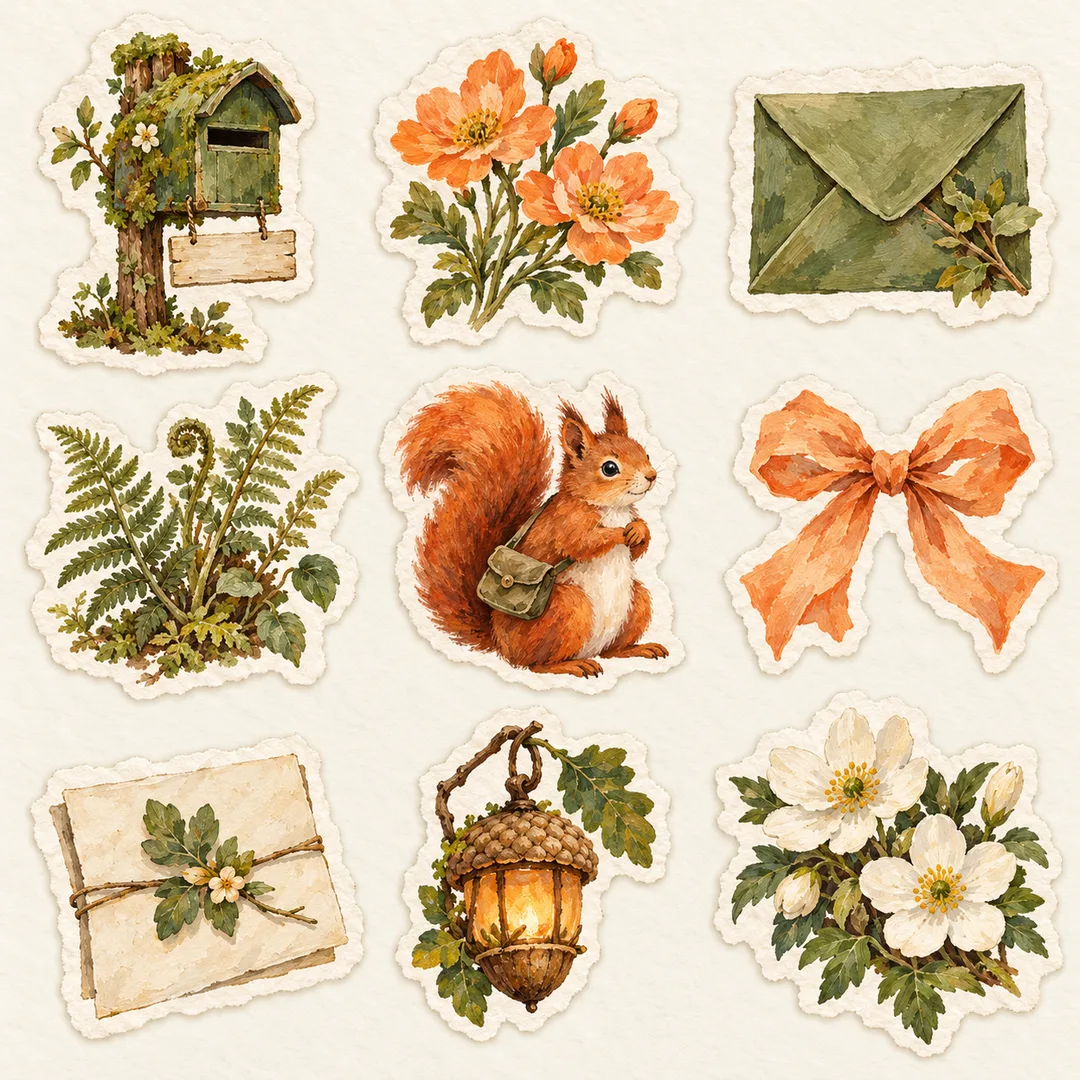
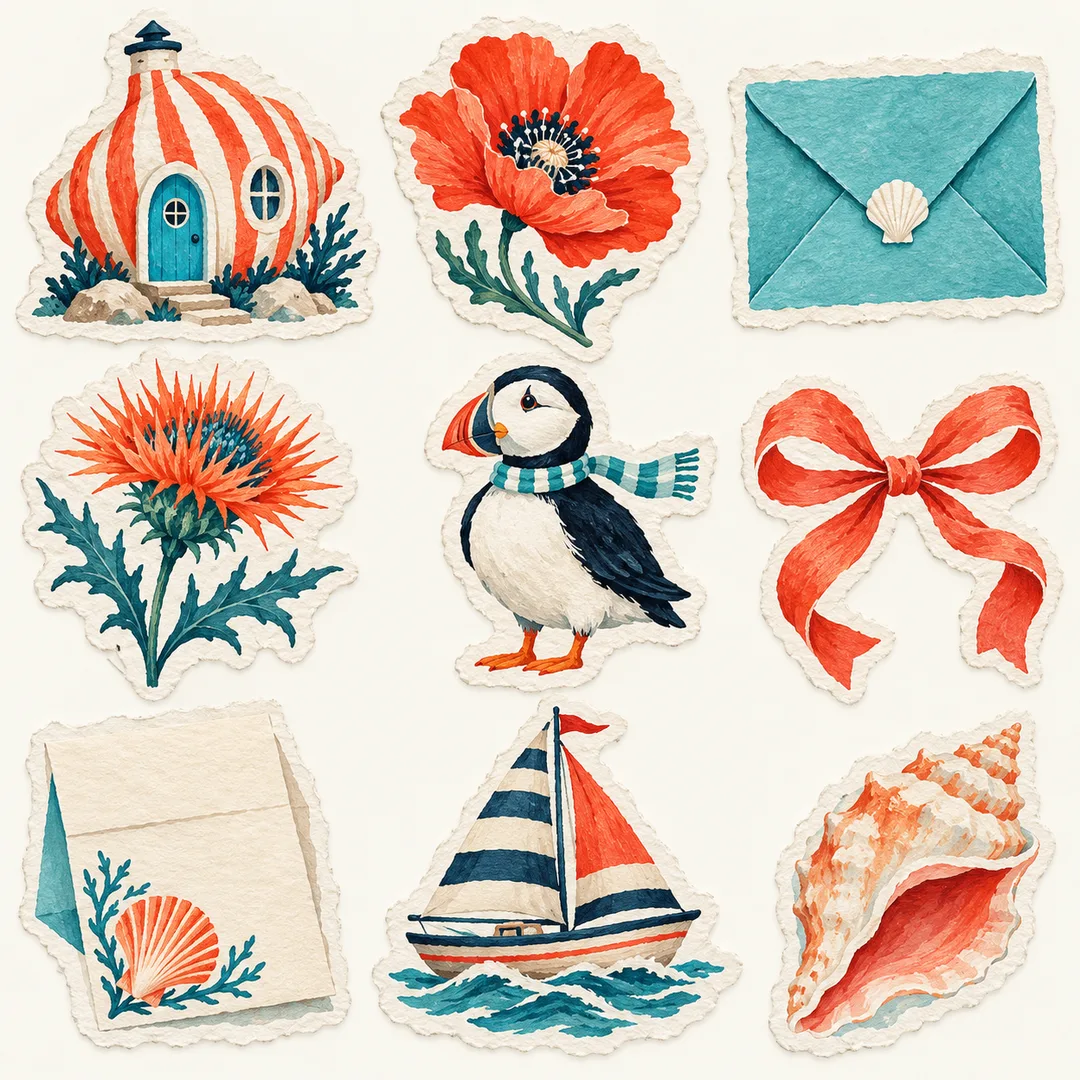
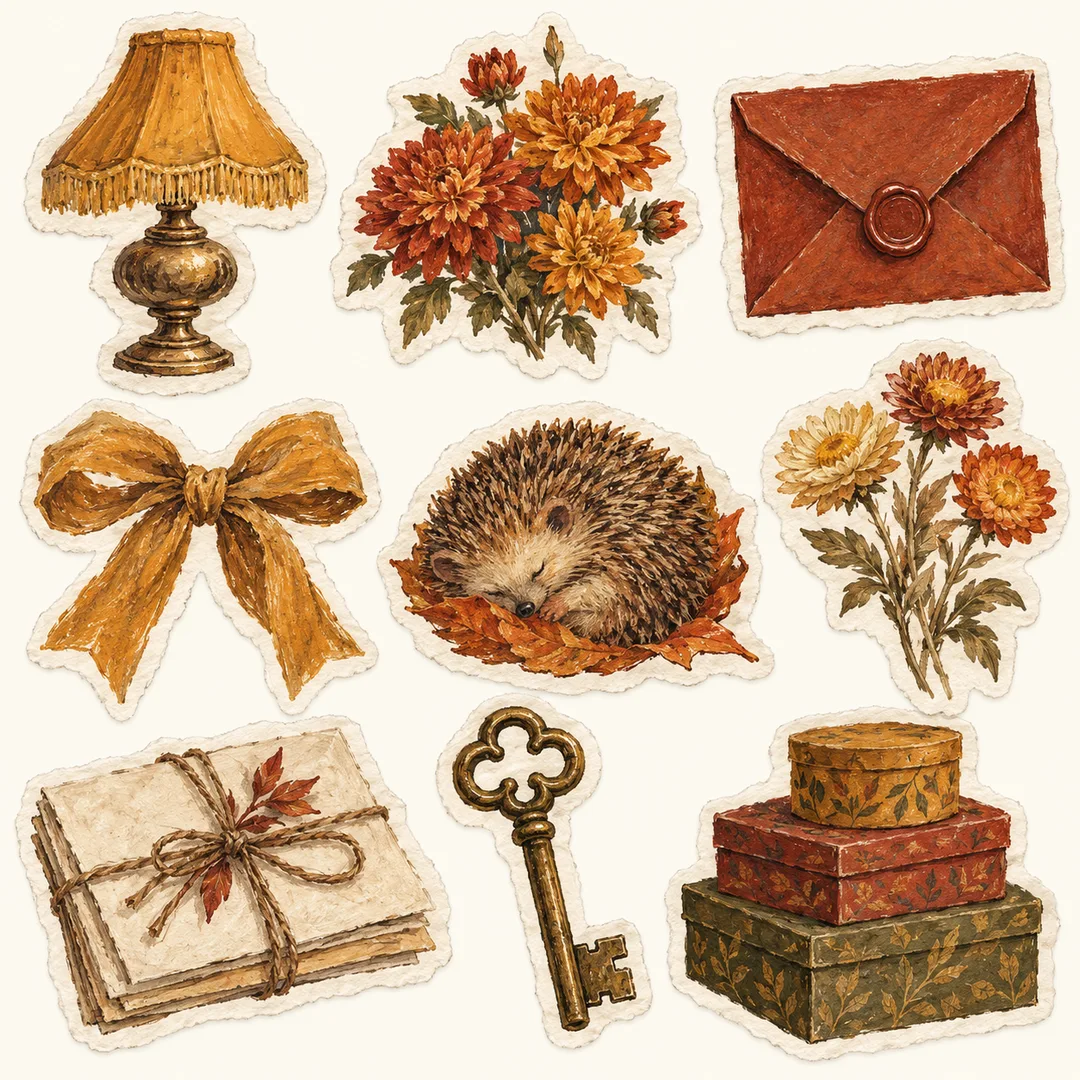
Fill in the fields
- 1Fill in the fields
- 2Copy the prompt
- 3Paste it into a GPT chat
- 4Send it as is and you get an image like the thumbnail example
- 5Attach a real photo that fits the card and it is used in the result: a background photo for background cards, a person or food photo for those cards Optional
Tested by us
- Test date
- 2026-10-29
- Tool
- ChatGPT image model (run on Codex) — same model as free ChatGPT, only limit differs
- Result
- Pass
- What worked
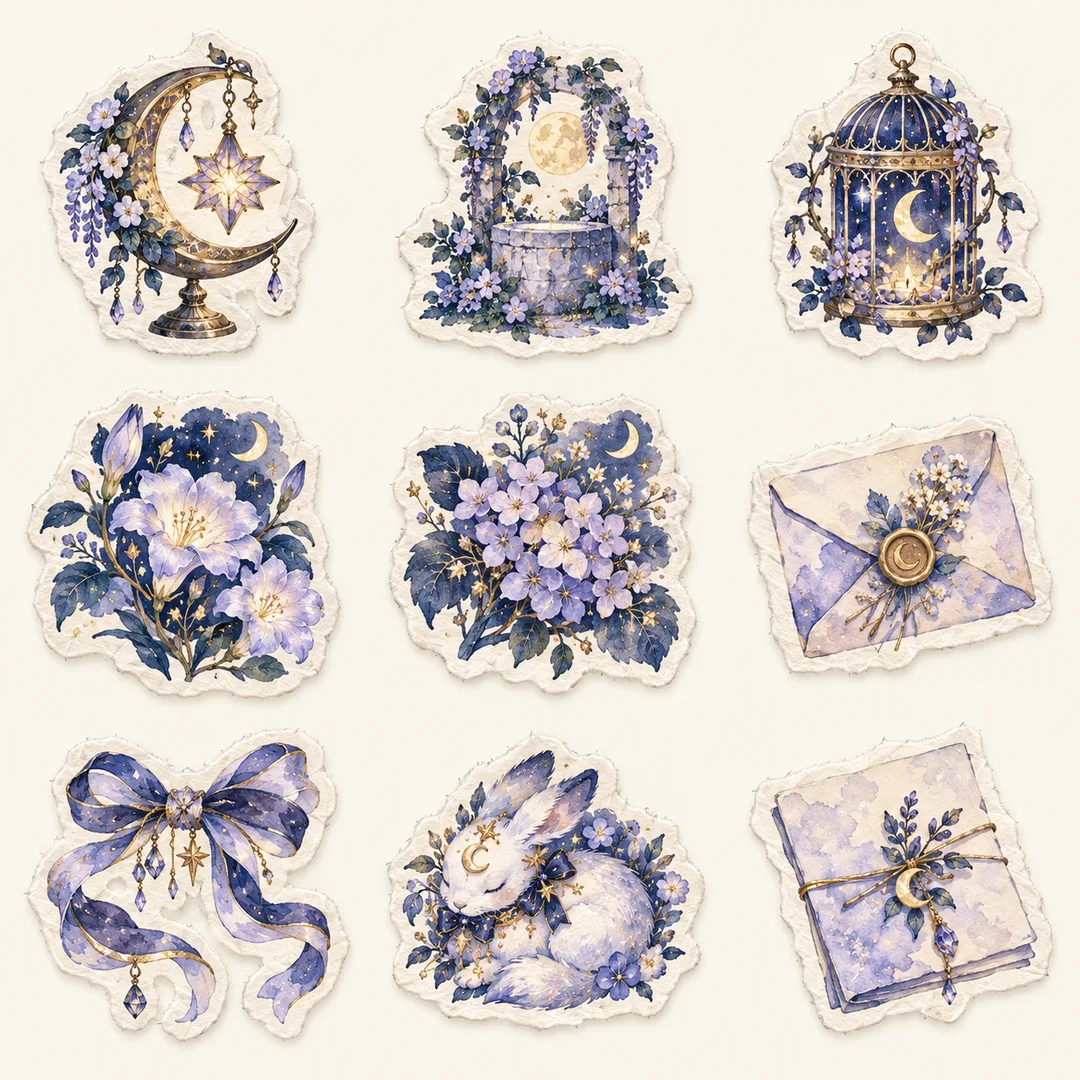
- Both results showed 9 pieces. Top: 3 subject props; middle: 2 different flowers and 1 closed envelope; bottom: 1 ribbon, 1 rabbit, 1 folded letter each. Navy blue, light purple, and soft gold colors, irregular handmade paper fiber borders, no text, uncut square composition, and separation between pieces.
- What did not work
- None
- How to improve
- Changing to a 3x3 layout with designated materials per cell eliminated the errors of 3 flowers and 2 subject props from the second pre-revision result in both re-tests. Size and minimum spacing were not guaranteed by this sentence alone.
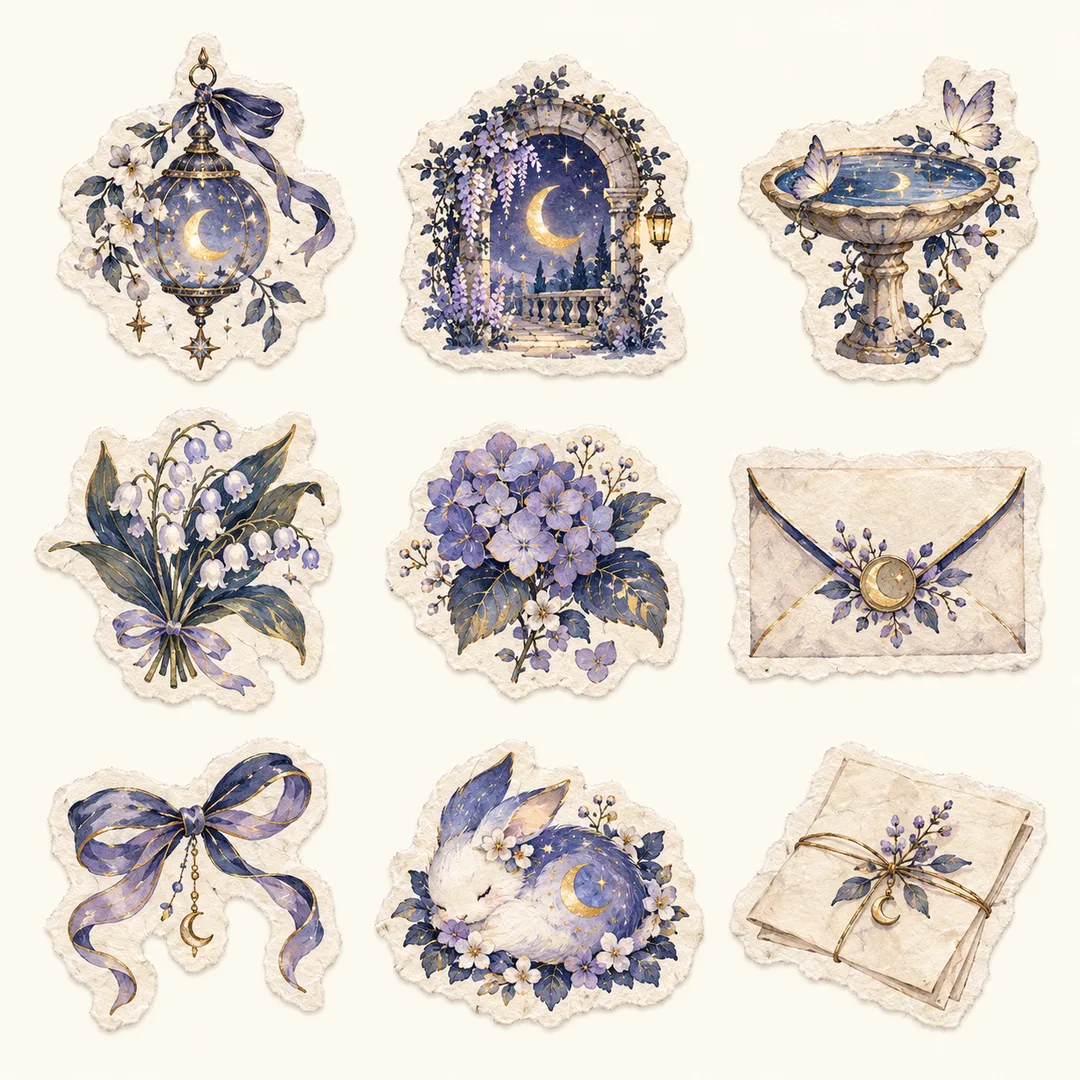
Full prompt 3,238 characters
Generate exactly ONE finished illustration image now, without questions or commentary.
Output size 1080x1080 pixels, 1:1 square post. Keep all text fully readable.
Create a single hand-torn cotton-paper sticker sheet. Theme: 【Theme】. Color palette: 【Colors】.
If theme is empty or asks you to choose, use moonlit garden correspondence. If color is empty or asks you to choose, use indigo, periwinkle and pale gold.
Exactly 9 distinct stickers: three theme-specific objects, two different flowers, one closed blank envelope, one loose ribbon bow, one original small animal and one folded blank letter. Invent each motif independently, with no duplicate silhouettes. Interpret the theme through motifs, expressions, ornament and pigment treatment: dreamy themes are translucent and delicate; woodland themes use lively storybook brush marks; seaside themes use crisp flat pigment shapes; autumn themes use earthy dry-brush grain. These remain one coherent cotton-paper illustration technique, never selectable output styles.
Every sticker has an irregular hand-torn ivory cotton-paper edge, visible soft fibers and slight natural relief. Painted art stays inside the torn contour. Avoid smooth vector cutlines, glossy vinyl, fabric, rectangular cards and uniform scalloped borders.
Show exactly 9 separate stickers in an invisible 3-column by 3-row grid over a plain ivory background that fills the entire canvas. Top row: three theme-specific objects, none of them a flower, envelope, ribbon, animal or letter. Middle row: two different flower stickers followed by one closed blank envelope. Bottom row: one loose ribbon bow, one original small animal and one folded blank letter. Each cell contains exactly one sticker. Center each sticker in its cell; its entire silhouette, including all fibers, ornaments and shadows, must fit within 22% of canvas width and 22% of canvas height. Leave the rest of each cell empty ivory, with clear background gaps at least 4% of canvas width between every neighboring pair. Do not draw the grid or cell borders. Keep ALL sticker edges fully visible. No desk, packaging, extra frame or inset sheet. If cramped, shrink motifs rather than add pieces or join contours. Keep shadows subtle and detached.
No text anywhere: no letters, numbers, captions, printed theme names, handwriting, stamps with text, logos, signatures or watermarks. Letters and envelopes are blank decorative motifs. Do not print input values. All animals and objects are original fictional designs; no recognizable brands, products, existing characters or human likenesses. Reference only the tactile material and composition, never copy an existing illustration.
Before returning, count exactly 9 separate stickers; check every gap and torn edge, and remove all accidental text. Return the pure finished sheet in the selected aspect ratio. This is an illustration concept, not a vector cutline or a guaranteed print-production file.

[Final output format]
Output size 1080x1080 pixels, 1:1 square post. Keep all text fully readable.
This selected output format takes priority over any fixed canvas size or aspect ratio elsewhere in this template. Adapt the composition, text zones and margins to the selected canvas without stretching or cropping essential content. Device safe areas apply only when a device is selected. Never print these format instructions on the image.
How did it turn out?
You may also like
How to use it · FAQ
Use these tactile cotton-paper sticker concepts for journals, letters and digital scrapbooks. Each motif has an irregular hand-torn edge with soft visible fibers and painted pigment rather than a smooth vinyl outline. Paste the completed prompt once into an image tool without uploading a photo to receive one sheet.
Neither field is required. Theme controls the objects and atmosphere; try Woodland post, Seaside letters or Autumn attic. Colors controls the shared palette; use moss green and apricot, coral and teal, or brick red and mustard. Empty fields or Choose for me use moonlit garden correspondence with indigo, periwinkle and pale gold. The input values guide the illustration and never appear as printed words.
The cover shows a moonlit garden. The three gallery examples show woodland post, seaside letters and an autumn attic. Pigment treatment follows the subject while retaining the same torn cotton-paper technique. Each sheet contains three themed objects, two flowers, one envelope, one bow, one animal and one folded letter. The default ratio is 1:1; the shared ratio selector rearranges the same nine motifs with clear gaps. The catalog cover uses a portrait 2:3 composition.
Count nine pieces and inspect their outermost fibers and shadows. Every neighboring pair must have visible background between them. If crowded, ask to keep nine stickers but reduce each motif and widen all gaps. Envelopes and letters are deliberately blank; remove accidental handwriting or numbers. Use original animals and fictional objects rather than recognizable characters, brands, products or people.
Can I print this directly? It is an illustration concept, without production cutlines, bleed or transparent background. Prepare the file to your printer’s specifications before manufacturing. Does another aspect ratio work? Yes, the shared selector changes the canvas; tall ratios stack the motifs vertically. Check the external image service’s own terms and pricing before use.