

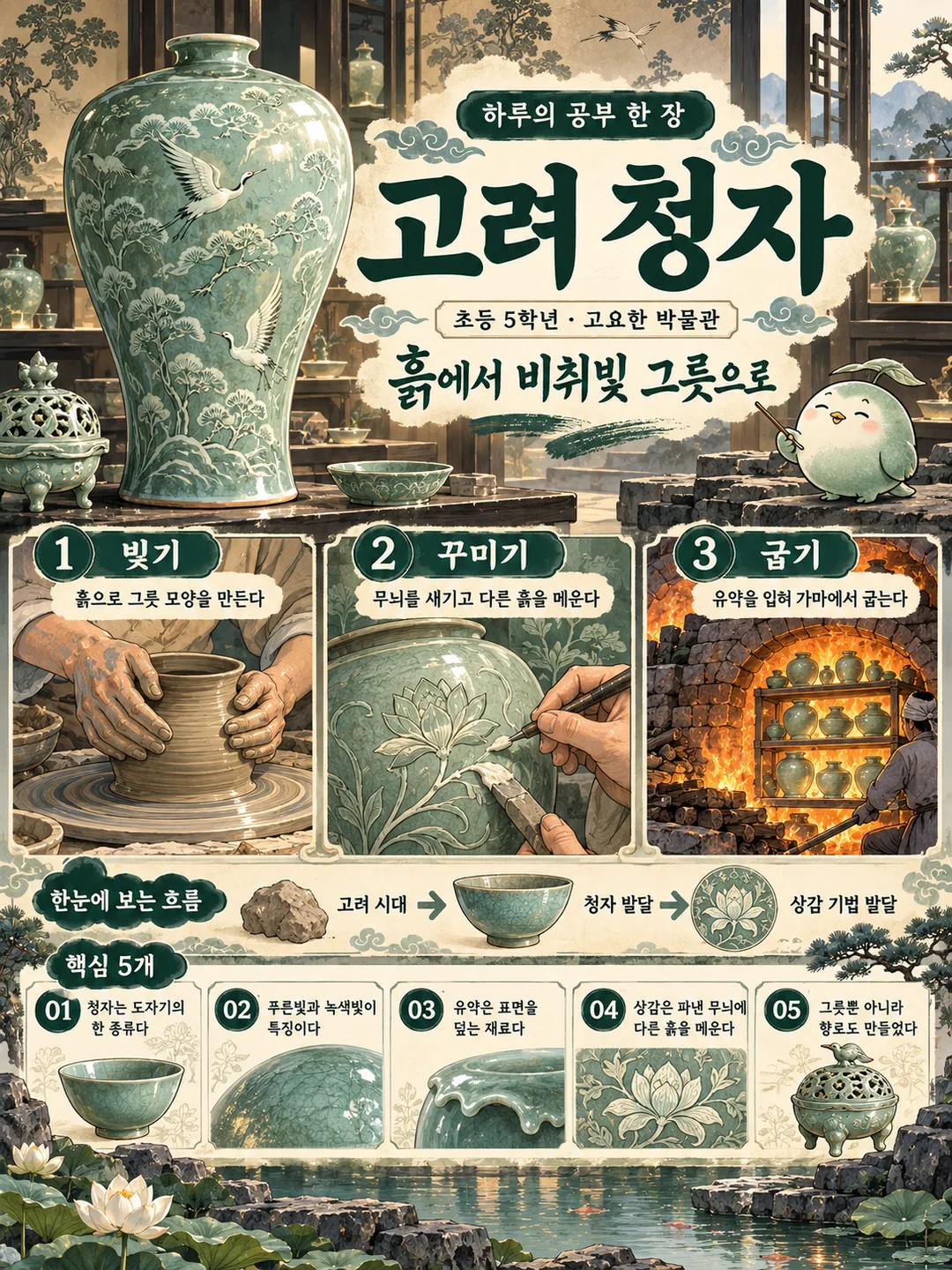
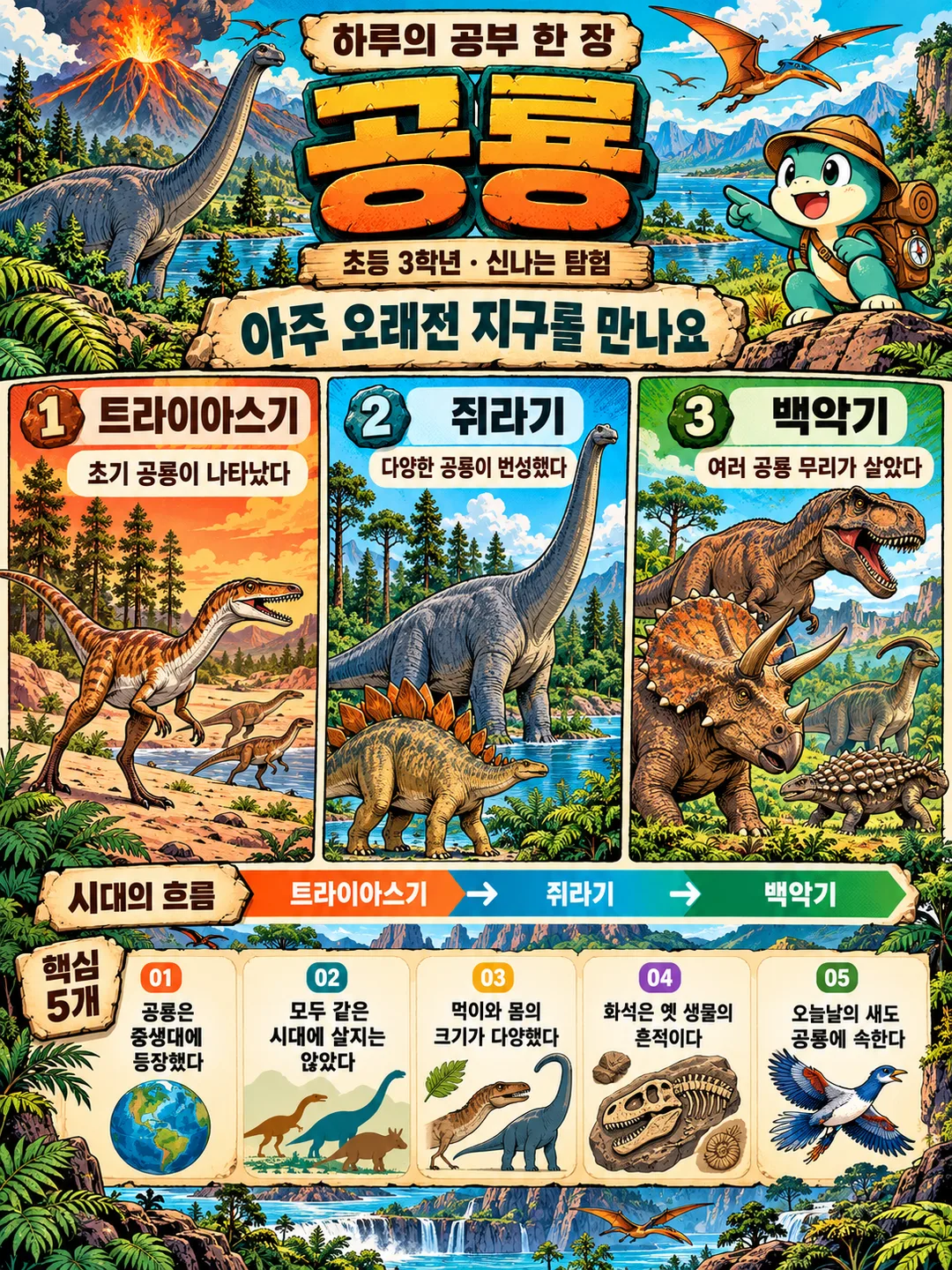
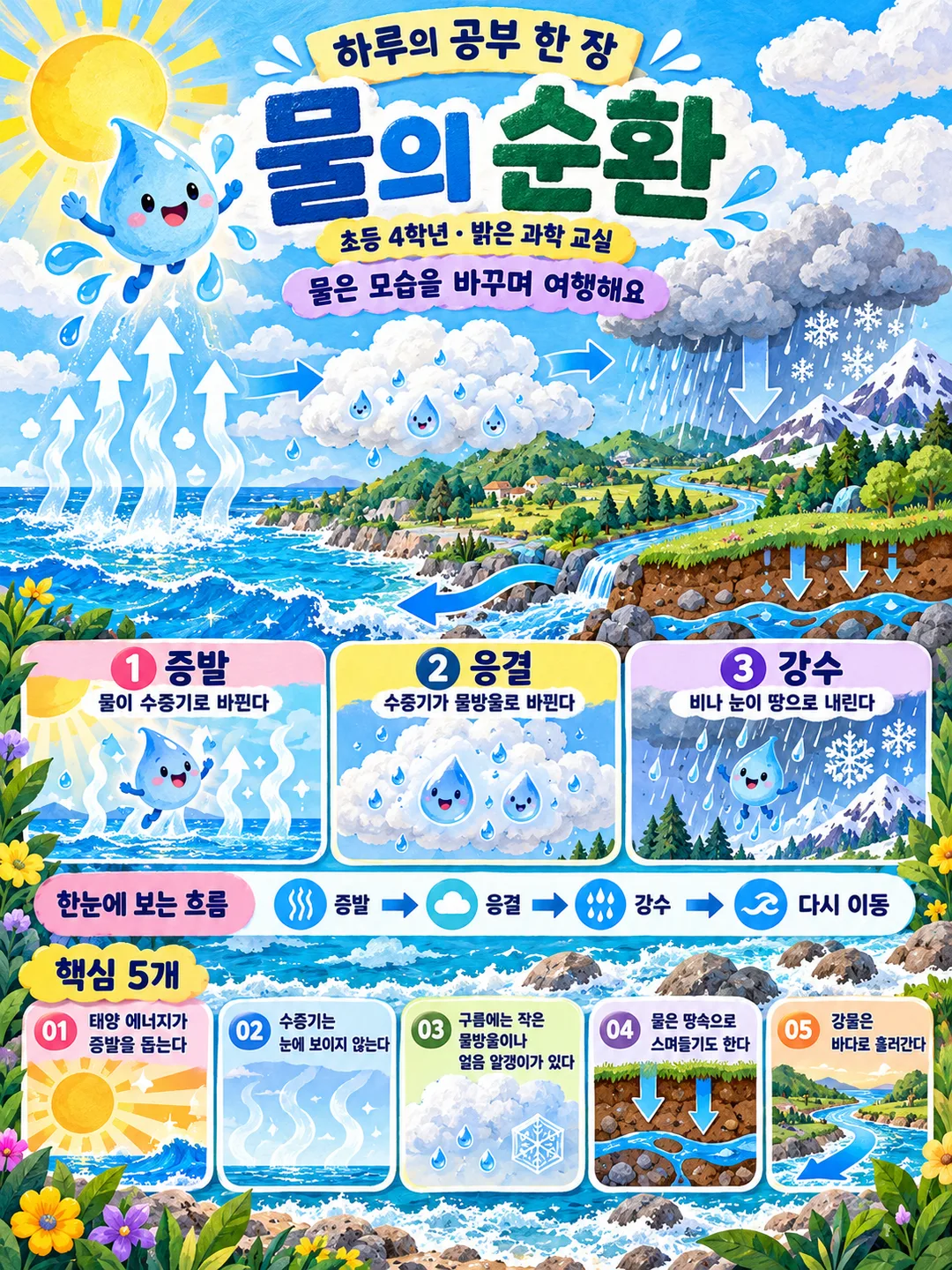
項目を入力
- 1項目を入力します
- 2コピーを押します
- 3GPTのチャットに貼り付けます
- 4そのまま送ると、サムネイルの例のような画像になります
- 5カードに合う実際の写真を一緒に入れると反映されます。背景カードなら背景の写真、人物・料理カードならその写真 任意
実際に試しました
- 試験日
- 2026-10-29
- ツール
- ChatGPT画像モデル(Codexで実行) — 無料版ChatGPTと同一モデル、制限のみ異なる
- 結果
- 合格
- できたこと
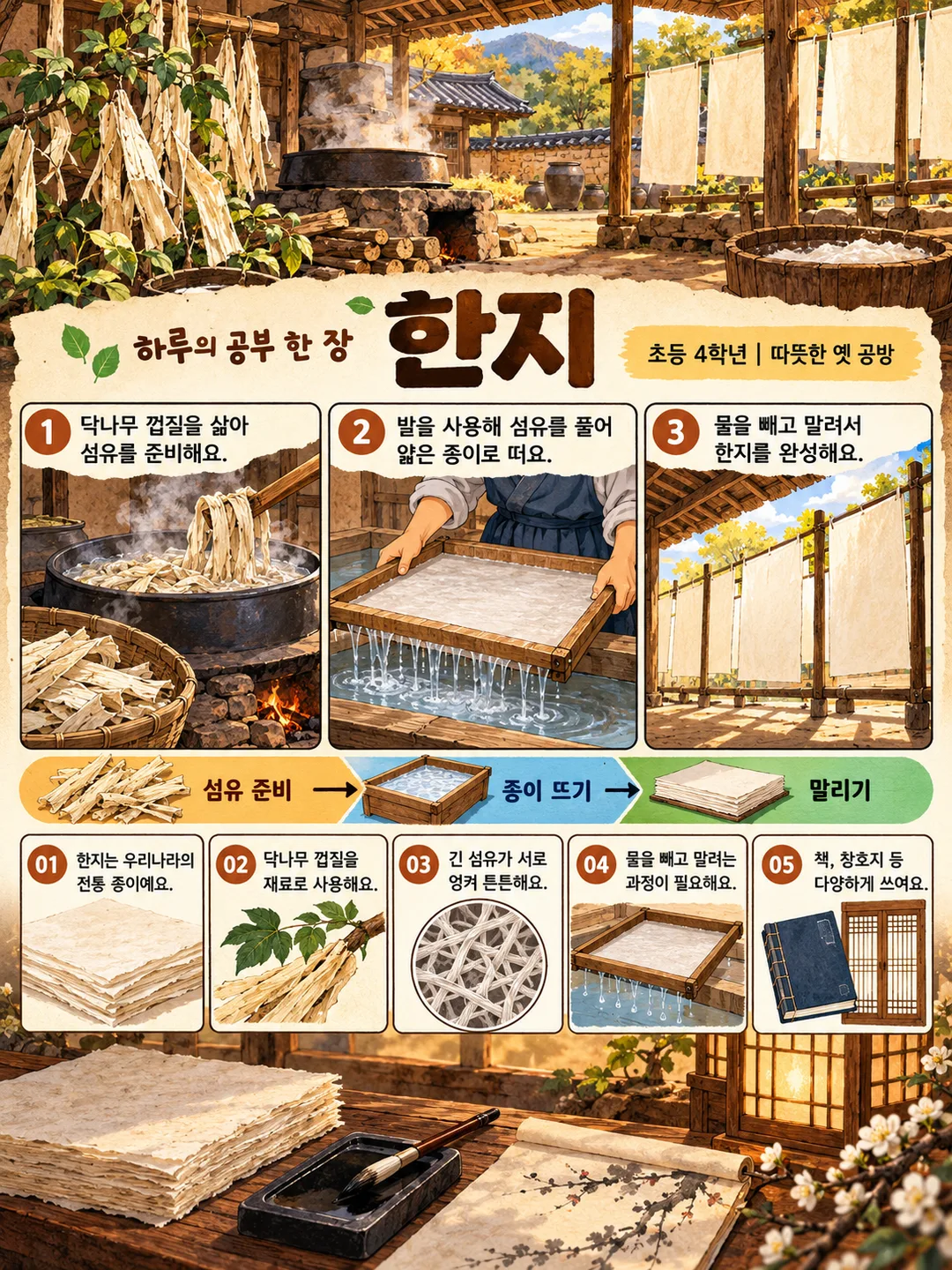
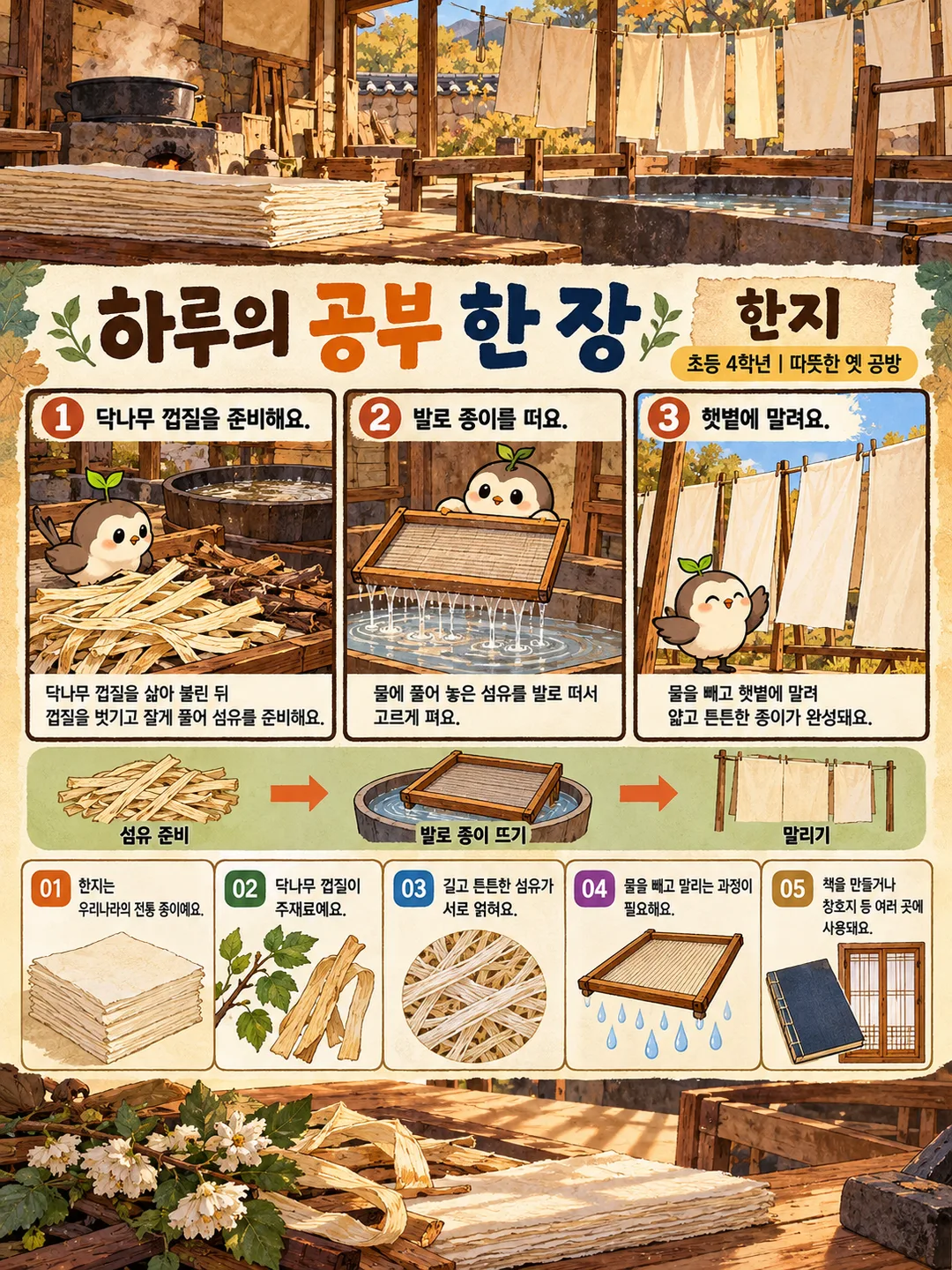
- 現在の本文の結果1および2はどちらも、1枚の縦長ポスター、大きな韓紙のイラストとタイトル「하루의 공부 한 장」、学年・雰囲気のサブタイトル、番号付き3コマ漫画、繊維準備→紙漉き→乾燥のプロセス帯、イラスト付きのコア事実01〜05を備えています。5つの事実は、韓国の伝統紙、楮の樹皮、長い繊維の絡み合い、脱水と乾燥、本や障子紙(窓戸紙)としての用途であることが確認されました。ハングルが拡大して読み取られ、年号の捏造や文字の切れはありません。文字は画面の高さの約23〜74%の範囲に収まっており、要求された18〜78%のエリアと上部12%・下部15%の文字なし余白を満たしています。1086×1448pxの正確な3:4です。
- できなかったこと
- 現在の本文の結果にはなし。修正前の2枚は上下の文字なし余白を満たしていませんでした。配置修正1の1枚目は素材を「クワの樹皮」と誤って使用し、2枚目はタイトルと最後の説明文が当時の要求余白の内側に侵入しました。以前の結果も各サブフォルダに残してあります。
- 改善のヒント
- 今回検証した値「한지 / 초등 4학년 / 따뜻한 옛 공방 / 3:4」を使用してください。素材文の「paper mulberry (Broussonetia)」、「닥나무 껍질, never 뽕나무 껍질」および文字の配置文(y=18%〜78%)を維持してください。これら2つの補強が反映された現在の入力では、両方の画像が合格しました。他の主題と雰囲気の組み合わせは今回の試験に含まれていません。
プロンプト全文を見る 4,229文字
Generate exactly ONE finished Japanese educational comic infographic poster now, not an explanation. Canvas: 出力サイズは1080×1440ピクセル、3:4の縦型SNS投稿にしてください。; default 3:4. Flat full-bleed artwork, no mockup, no contact sheet, no code, no follow-up task.

Topic: 【テーマ】. School level: 【学年】. Mood: 【雰囲気】. If blank or automatic, use 韓国の伝統紙 / 小学4年生 / 温かい昔の工房. Explain one topic only. If the topic concerns a real person, focus on verified objects, events and places without drawing their portrait. Any named fictional guide is Haru, an original small nonhuman character with no resemblance to an existing character.

Fixed result structure: one large subject illustration and title, exactly three numbered narrative comic panels, one chronological band, exactly five numbered illustrated key facts (01–05). Adapt vocabulary and sentence length to the school level. Put the school level and mood in a compact subtitle. The heading is Haruと学ぶ一枚. Keep panels varied in scale and viewpoint. Use short complete factual captions on solid light text areas. Integrate tiny diagrams and object details rather than decorative filler. Maintain one consistent visual treatment within each poster.

Mood treatments within this fixed educational comic format: warm traditional workshop = amber/russet/indigo textured ink and woodcut; quiet museum = jade/ivory delicate watercolor and ink; exciting expedition = vivid orange/teal bold adventure comic and fine halftone; bright science classroom = sky blue/lemon/lilac gouache cut-paper comic. Mood changes the visual treatment, never the result type or section counts. For other supplied moods, derive an equally coherent original treatment. No artist or studio imitation.

Before drawing, verify facts using museum, public education or scientific institution web sources. Verify chronology and each of the five facts. Do not fabricate dates, quotes, firsts or records. If web verification is unavailable, use only well-established facts with no numeric dates. Historical subjects get a chronological timeline with verified dates only; craft and science subjects get an ordered process band instead of invented years. Cyclic topics show a return connection; do not imply that every water molecule follows the same path. Show different prehistoric periods in separate panels, not a falsely simultaneous scene. No verification notes or source disclaimers printed in the artwork.

For the default topic, the three panels are fiber preparation, sheet forming with a papermaking screen, and drying. The process is fiber preparation → sheet forming → drying. The five facts are that this is traditional Korean paper; paper mulberry (Broussonetia) bark is a material; long fibers interlock; drainage and drying are required; it has uses including books and window coverings. Translate naturally into Japanese. Do not mechanically reuse these facts for another topic.

Typography: natural Japanese only, large sharp high-contrast lettering, Reserve the upper 12% and lower 15% of the canvas for illustrations only, with absolutely no lettering or numerals in either band. Place the heading, title, subtitle, all three panels with captions, the process band and all five facts entirely within the middle 60% of the canvas (y=18% to y=78%). Use concise one-sentence captions so every text block fits in this region. Keep every letter and numeral below y=18% and above y=78%, leaving a buffer beyond the required safe margins. No tiny paragraphs, cropped words, empty balloons or extra labels. Proofread every character, numeral and arrow before rendering. Count three panels and five facts. Avoid real people, celebrity likeness, real brands, logos, trademark products, existing characters, watermarks, signatures and copied artifact patterns. Invent original decoration and fictional object designs while preserving the factual teaching structure. Return only the complete image.

[Final output format]
出力サイズは1080×1440ピクセル、3:4の縦型SNS投稿にしてください。
This selected output format takes priority over any fixed canvas size or aspect ratio elsewhere in this template. Adapt the composition, text zones and margins to the selected canvas without stretching or cropping essential content. Device safe areas apply only when a device is selected. Never print these format instructions on the image.
結果はどうでしたか?
こちらのカードも人気です
使い方・よくある質問
授業の準備、自宅学習、家族での学びに使える、一つのテーマを一枚にまとめるポスターです。大きな主題の絵、3コマのまんが、時代や工程を示す帯、5つの要点を組み合わせます。必須の欄はテーマ、学年、雰囲気の3つです。テーマには高麗青磁や恐竜など対象を一つだけ選び、学年で言葉の難しさと文の長さを調整します。
空欄と「おまかせ」は、韓国の伝統紙・小学4年生・温かい昔の工房になります。温かい昔の工房は質感のあるインク、静かな博物館は落ち着いた水彩、わくわくする探検は鮮やかな冒険まんが、明るい理科教室は紙のコラージュ風です。一枚の中では画風を統一します。共通のサイズ選択は3:4が基本です。完成した指示文を画像AIに一度貼り付け、一枚の画像を依頼します。写真や組み立て作業は不要です。架空の案内役の名前はHaruです。
使用前に博物館や公的な教育機関の資料と5つの要点を照合してください。歴史は年表、制作や自然現象は工程の順番で表します。確かめられない年は書きません。小さな文字、数字、矢印を拡大して確認し、誤字があれば正しい文を指定して再生成してください。循環する現象は最初へ戻る矢印で示します。実在人物は肖像を描かず、物や出来事や場所を使って説明します。広すぎるテーマは一つの出来事や概念に絞りましょう。外部サービスの料金や利用条件は各サービスで確認してください。