

053今日、何を着る?
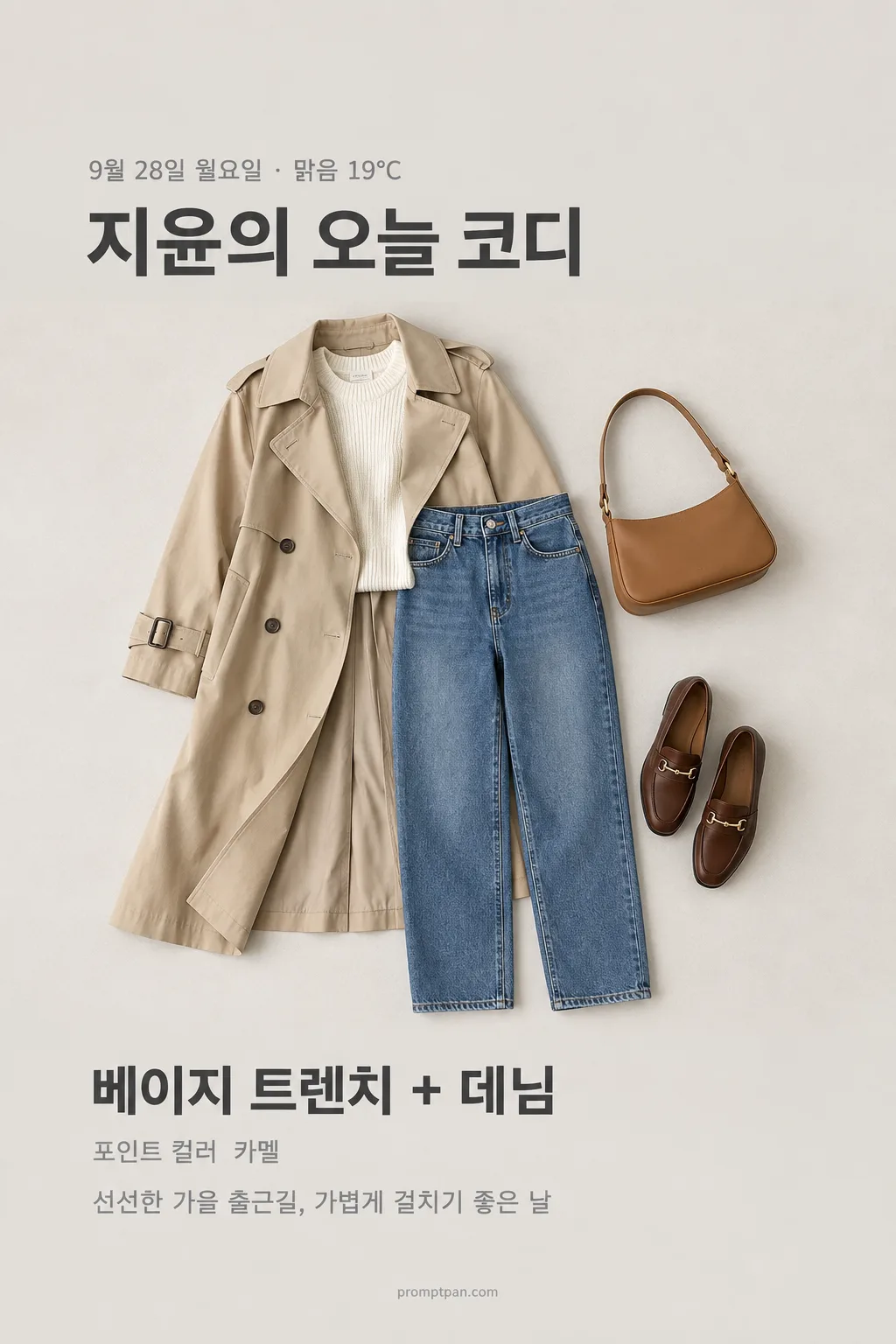
室内の基本服と移動用の上着を分けたり、一組に重ねたりできる、写真風のコーデカードです。
受け取れるもの
- 衣類の質感を写真風に描いた今日のコーデカード一枚
- 室内と移動の二つの欄、または一組に重ねた配置
- 服のラベル、重ね着のメモ、差し色
ChatGPT 無料 OK
項目を入力
- 1項目を入力します
- 2コピーを押します
- 3GPTのチャットに貼り付けます
- 4そのまま送ると、サムネイルの例のような画像になります
- 5カードに合う実際の写真を一緒に入れると反映されます。背景カードなら背景の写真、人物・料理カードならその写真 任意
プロンプト全文を見る 4,200文字
Generate one finished photographic daily outfit story card. Return the image itself. 出力サイズは1080×1920ピクセル、9:16の縦型にしてください。文字は中央の安全な範囲に収めてください。
The central device is a REMOVABLE-LAYER MAP: distinguish clothes kept on indoors from the outer layer worn during travel. This is one wearable outfit, never two competing recommendations. Preserve a realistic overhead flat-lay clothing photograph, warm ivory surface, charcoal editorial type, fine rules and a small burgundy accent. Cotton weave, denim twill, leather grain and soft contact shadows should look tactile rather than illustrated or rendered.

PERSON: 【名前】
OUTFIT DATE: 【日付】
BIRTHDAY: 【誕生日】
OPTIONAL TYPE: 【MBTI】
PLAN: 【今日の予定】
PRESENTATION: 【服の好み】
INDOOR BASE: 【室内の基本服】
TRAVEL LAYER: 【移動用の上着】
FOOTWEAR AND ACCESSORY: 【靴と小物】
UNFOLDING: 【服の並べ方】
SUPPLIED WEATHER: 【天気】
SUPPLIED TEMPERATURE: 【気温】
AVOID: 【避けたいもの】
AREA: 【地域】

Treat the three wardrobe fields as a garment ledger. Depict each named garment once, shoes as one matching pair. Keep their supplied colors and materials. Do not invent extra clothes or claim to own anything not supplied. Choose neutral missing essentials only when an outfit cannot be completed, marking additions with 提案. An absent optional field removes its line. A supplied avoided item takes priority over a conflicting garment: omit it and mark that category 要確認 rather than silently replacing it. Use presentation as clothing preference, never a body or gender diagnosis. No people, hands, mannequins, prices, logos or shopping links.

The UNFOLDING selector changes spatial construction:
室内と移動を分ける: divide the photographic middle into TWO UNEQUAL VERTICAL BAYS with a fine divider. The left bay occupies about two thirds: title 室内の基本, the top above the trousers, shoes beneath. The right bay is a separate full-length narrow coat station: title 移動するとき +, the outer coat fully opened and isolated with the bag below. There is clear empty surface between coat and indoor garments; the coat must not overlap the shirt. Direct short leader labels identify each garment in its own bay. Beneath the bays, one practical sentence explains removing the coat indoors and adding it during travel. No second copy of the shirt, trousers or shoes in the coat bay.
一組に重ねる: remove the vertical divider and both bay titles completely. Build ONE CENTRAL DRESSED-SHAPED FLAT LAY without a body: the opened outer coat lies behind and partially overlaps the shirt at shoulder height, trousers descend from the shirt, matching shoes below, bag at the side. All garments share one continuous photographic field. Put a single short garment ledger along the bottom, not two side stations. No isolated coat bay. Preserve the same outfit, materials, surface, type and accent; changing only a color is insufficient.

At top print 【名前】の今日のコーデ as largest title, then exact OUTFIT DATE. Under it print 指定条件 followed by supplied weather, temperature and area only. No live lookup or invented forecast. If weather is missing print 天気の指定なし. Under the photograph show 服の厚さ with a short practical layering note based only on supplied conditions; if supplied clothes conflict with the conditions, say 天気に合う服の追加を確認 rather than declaring them suitable. Use PLAN to phrase the practical note. Keep all text in comfortable story-safe margins and garment labels readable on a phone.
One small お楽しみの一言 sentence may play on the supplied birth month and optional type, without a zodiac calculation, personality claim or prediction; omit missing cues. The birthday is never today's date. At bottom print 今日の差し色 with one swatch matching a visible garment, then tiny promptpan.com. Visible wording is Japanese except supplied type letters and footer. Internal keys, braces and selector values are not captions. Finish a flat vertical social card, no phone mockup, no decorative props, no watermark, no illustration or synthetic plastic fabric.

[Final output format]
出力サイズは1080×1920ピクセル、9:16の縦型にしてください。文字は中央の安全な範囲に収めてください。
This selected output format takes priority over any fixed canvas size or aspect ratio elsewhere in this template. Adapt the composition, text zones and margins to the selected canvas without stretching or cropping essential content. Device safe areas apply only when a device is selected. Never print these format instructions on the image.
結果はどうでしたか?
同じ分類のほかのカード
使い方・よくある質問
ベージュのトレンチコートとアイボリーのTシャツで2回生成すると、どちらもTシャツ・デニム・ローファーが左、コートとバーガンディのバッグが右に並びました。上着を脱いだあとに残る服が見渡せて、ラベルの線もそれぞれの服を指していました。布のしわやデニムの縫い目は写真のように表現されました。
コートがTシャツの後ろへ移りました
「服の並べ方」だけを「一組に重ねる」に変えると、中央の縦線と二つの見出しが消えました。コートがTシャツの肩の後ろに重なり、下にパンツが続き、別の欄にあったバッグもパンツの横へ移りました。通勤時の全体像には重ねる形、室内で脱ぐ服の確認には分ける形が向いています。複数の候補ではなく、一組の服の見せ方を切り替えるカードです。
脱いだあとに残る服で分けます
室内の基本服には上着を脱いでも着ているトップスとボトムス、移動用の上着にはその上に羽織る服だけを書きます。靴と小物は別にまとめます。同じコートを両方に書くと、画像でも重複することがあります。綿Tシャツ、ウールコートのように素材を書くと、薄い室内着と厚い上着の違いが伝わります。試験の朝9度・昼18度は指定値で、実際の天気や着心地を確かめたものではありません。誕生日やタイプの一言はお楽しみで、性格や保温性の判定ではありません。
欄の幅と小さな文字には揺れがありました
1枚目は左を広くする指定よりも左右が近い幅になりました。2枚目には生年月日と不要な服の好みの行が加わりました。重ねる形では服の名前が写真の横と下の一覧に重複しました。構造は変わりましたが、文字配置まで一定ではありません。生年月日を公開したくない場合は保存前に確認し、「服と配置を保ち、生年月日と服の好みの行だけ消して」と続けて頼めます。英語・日本語の画像、雨や寒さの条件、避けたい服との矛盾は今回の3枚では試していません。
最終確認日 · 公開