
전체 · SNS/카드뉴스 · 계절·명절
075수능 끝 감사 카드
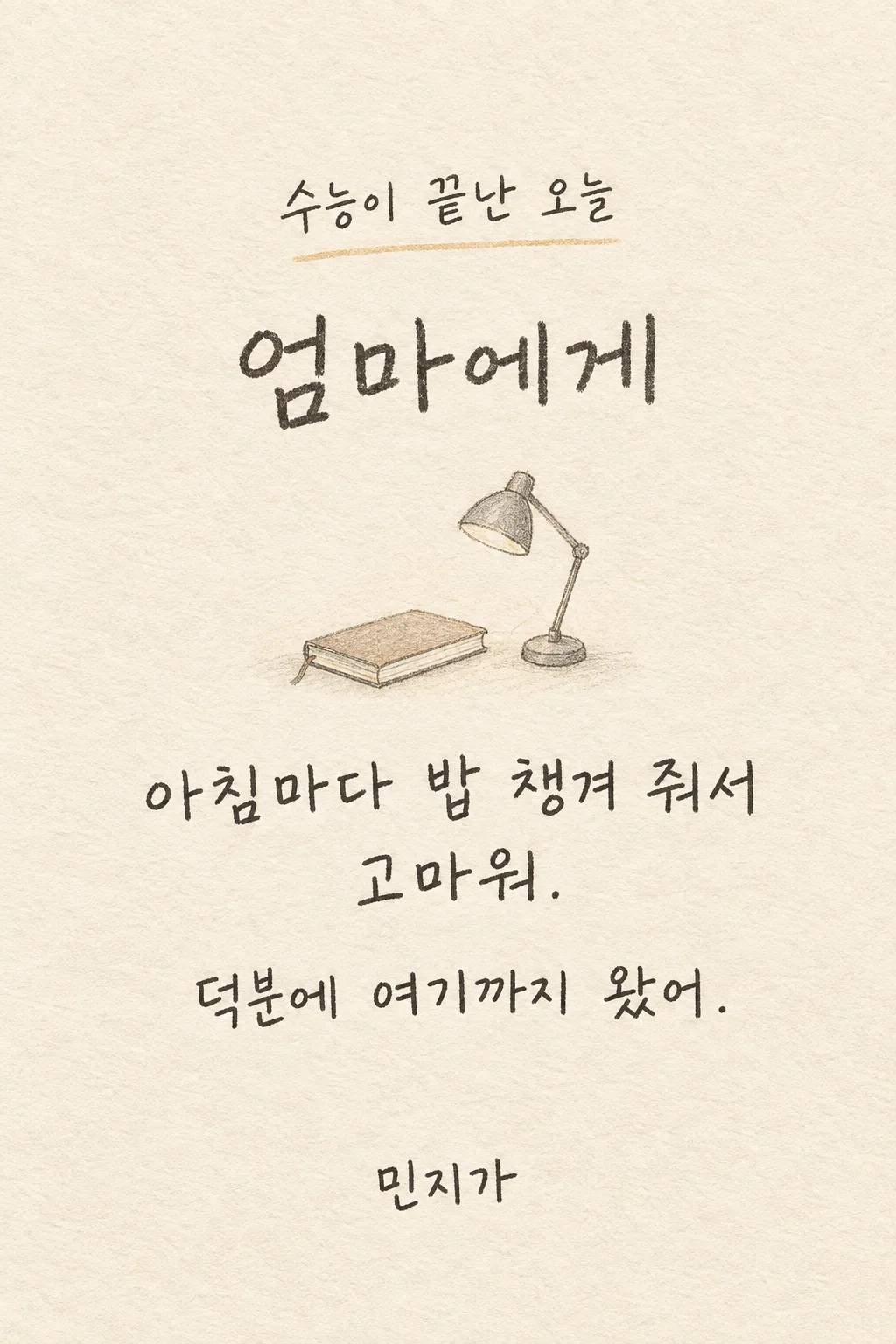
수능을 마친 학생이 부모님·선생님·친구에게 고마웠던 일을 적은 이미지 한 장을 카톡으로 보내요.
칸 채우기
- 1칸을 채워요
- 2복사 버튼을 눌러요
- 3GPT 채팅창에 붙여넣어요
- 4제품·인물 사진을 쓰려면 사진과 프롬프트를 둘 다 넣은 뒤에 보내요 선택
프롬프트 원문 보기 5,744자
Generate this image now. Draw it directly - do not describe it, explain it, or ask questions.
Output size 2480x3508 pixels, A4 portrait, 300dpi, print-ready poster.
Create exactly ONE complete vertical 2:3 Korean thank-you image card, suitable to save and send directly in a KakaoTalk message. No code, separate pages, crop plan, blank template to edit later, or request for another turn.

[Purpose]
A student has just finished the Korean college entrance exam and wants to thank one real person who helped them through the preparation period. Recipient as entered: "【받는 사람】". The one specific thing the student appreciates: "【고마웠던 일】". The short final message input: "【전하고 싶은 말】". Sender name: "【보내는 이름】". The image should read as a completed personal note from this sender to this recipient, rather than a generic exam-cheering poster, an exam result announcement, a discount advertisement, or a school notice. It can be used once for each recipient by changing the four fields.

[Scene]
Create an intimate hand-lettered thank-you card on softly textured warm ivory paper that fills the 2:3 canvas. Use one simple, original pencil illustration near the middle: a desk lamp switched off at the end of the study day, a closed notebook and a small folded blanket or cup of warm water. These ordinary objects gently imply rest and gratitude without introducing food, medicine, branded pens, identifiable exam papers, school logos, score reports or other invented facts. The illustration occupies no more than a quarter of the page. The message is the protagonist. Let margins and line spacing be generous, with a quiet muted indigo and warm graphite palette. If the recipient is a teacher, favor respectful and steady styling; if a parent, slightly warmer; if a friend, a little lighter. These are art directions only and may not change the facts or fabricate a relationship beyond the user's entered recipient.

[Attached photo]
No photo is required. If the user happens to attach a photo, treat it only as private visual reference for paper or objects and never print someone else's face, a school name, score, trademark, or personal document. The card must work fully from the four text fields alone in one generation.

[Text layout]
Keep the top 12% and bottom 15% free of essential lettering for website overlay safety. Put the greeting in large, phone-readable Korean around 17-28%: "【받는 사람】에게" or a grammatically natural vocative for the exact supplied name. Around 30-65%, place two or three naturally broken lines that include the precise appreciated act "【고마웠던 일】" as the concrete center of the note. You may add a short connecting expression such as "고마웠어" or "감사했어요" chosen to fit the recipient, but do not claim a grade, admission result, sacrifice, promise, gift, date or future plan that the user did not supply. Around 66-78%, render the final message. If "【전하고 싶은 말】" says "알아서 골라줘", do not print the instruction words: compose one short warm Korean sentence consistent with the recipient and the stated helpful act. Otherwise render the selected message exactly, without repeating the same appreciation twice. Put a quiet closing "【보내는 이름】 드림" or "【보내는 이름】가" according to the relationship and grammar, above the bottom overlay zone. All important text must fit on this one image.

[Style]
The visual language is an authentic handwritten Korean card, with a pencil-feel display headline and readable neat handwriting for the body. It is not a calligraphy contest: every Hangul syllable, particle and spacing must be understandable on a phone. Use warm ivory, graphite and one soft seasonal accent such as muted ochre. No confetti, grade stamps, medal, red check mark, school mascot, university gate, fireworks or celebratory claim. This is a quiet thank-you after a long preparation, not a boast about the outcome. Keep the colors and objects gender-neutral and appropriate for both teacher and family recipients.

[Visual hierarchy]
At small website-list size, the viewer should read that it is a note after the exam through the concise heading "수능이 끝난 오늘" placed around the upper-middle without crowding the recipient. At phone size, recipient, concrete reason, one concluding sentence and sender should read in order. Use a clear typographic distinction between a small seasonal heading, the large personal greeting, a few lines of reason, and the signature. If space is tight, remove decorative objects first, never shrink essential writing to tiny print. The short recipient name should not be repeated in every sentence.

[Lighting and texture]
Soft diffuse daylight across paper with a light natural shadow around the illustrated notebook. Paper fibers and pencil grain should be subtle and real, not a noisy digital filter. Handwriting should have dark, consistent strokes and sufficient contrast. No torn edges hiding words, metallic shine, neon, plastic illustration, fake handwritten nonsense, difficult cursive or skewed perspective. The card fills the entire output frame rather than lying on a table.

[Text rules]
Render "【받는 사람】", "【고마웠던 일】" and "【보내는 이름】" exactly as entered. Keep their relationship grammatically natural without changing names. The selected final message is exact unless it asks you to choose. Never print "알아서 골라줘" or the form-field labels. Do not assume examination date, result, grade, admission, score or the recipient's private actions beyond the entered appreciated act. Check every Korean character before rendering. One respectful thank-you note, one image.

[Avoid]
No invented admission or score, false claim of exam success, fake recipient name, repeated gratitude line, event date, score sheet, school logo, exam trademark, character IP, code, carousel, follow-up prompt, message split across images, phone mockup, tiny illegible text or watermark.
이 카드도 많이 사용해요

쓰는 법 · 자주 묻는 것
이런 때 쓰세요
수능을 마친 뒤 곁에서 도와준 사람에게 사진처럼 저장해 보낼 감사 카드입니다. 부모님, 선생님, 같이 공부한 친구 중 한 사람을 떠올리고 고마웠던 일을 적으세요. 이 카드는 시험 전 응원 포스터와 달리 학생이 받은 도움을 되돌아보며 보내는 한 장입니다. 점수나 합격 여부를 알려 줄 필요가 없어 결과가 나오기 전에도 쓸 수 있습니다. 완성한 이미지를 카카오톡 채팅에 바로 보내면 됩니다.
칸 채우는 법
- 받는 사람에는 실제로 보낼 한 사람을 적으세요. 여러 사람에게 다른 말을 보내고 싶다면 이름과 고마웠던 일을 바꿔 새 카드를 만들면 됩니다.
- 고마웠던 일은 추상적인 ‘다 고마워’보다 구체적인 한 일을 적는 칸입니다. 예시가 내 경험과 다르면 실제로 도움받은 일을 직접 적으세요. GPT가 없는 기억을 지어내지 않게 하는 가장 중요한 칸입니다.
- 전하고 싶은 말은 마무리 문장입니다. 말을 고르기 어렵다면 「알아서 골라줘」를 누르세요. 이 글자가 그림에 찍히는 것이 아니라 앞서 적은 일을 바탕으로 자연스러운 한 문장을 쓰도록 했습니다.
- 보내는 이름은 실제 내 이름이나 평소 쓰는 별명으로 적으세요. 받는 사람이 누구에게서 온 카드인지 바로 알 수 있게 끝에 표시됩니다.
그림이 나오면 꼭 볼 것
완성 그림에서 받는 사람의 이름이 정확한지, 내가 정말 도움받은 일이 사실대로 들어갔는지 먼저 보세요. 선생님에게 보내는 카드라면 높임말이 자연스러운지도 확인하세요. 부모님이나 친구에게 보내는 경우에는 말투가 지나치게 딱딱하지 않아야 합니다. 점수, 합격, 대학 이름처럼 아직 모르는 내용이 들어가면 카드의 의도와 어긋납니다. 작은 화면에서 읽히는 글자 크기와 마지막 서명까지 보고 저장하세요. 한 장 그대로 카톡에 첨부하면 됩니다.
틀린 곳 고치는 법
이름 철자가 틀렸다면 복사 전에 칸부터 바로잡으세요. 그림이 나온 뒤 문장을 고쳐야 한다면, 고마웠던 일 칸을 한 문장으로 더 구체화해 새 이미지 한 장을 받는 편이 좋습니다. 예를 들어 ‘응원’보다 ‘매일 저녁 내 얘기를 들어준 것’처럼 적으면 모델이 지어낼 여지가 줄어듭니다. 이 카드는 두 번째 장이나 ‘다음’ 명령으로 이어지는 형식이 아닙니다.
자주 묻는 것
- 수능 결과가 나와야 쓸 수 있나요? 아니요. 결과와 관계없이 시험 준비를 도와준 사람에게 보내는 감사 카드입니다.
- 사진을 꼭 넣어야 하나요? 아니요. 이름과 한 가지 기억만 적으면 손글씨 느낌의 카드가 나옵니다.
- 여러 사람을 한 장에 넣을 수 있나요? 이 카드는 받는 사람 한 명에게 고마웠던 일 하나를 전하도록 설계했습니다.
- 출력해서 줘도 되나요? 네. 글자를 확인한 뒤 한 장으로 인쇄하거나 카톡으로 보낼 수 있습니다.