
전체 · SNS/카드뉴스 · 밈·공감
079플래시 사진 일기
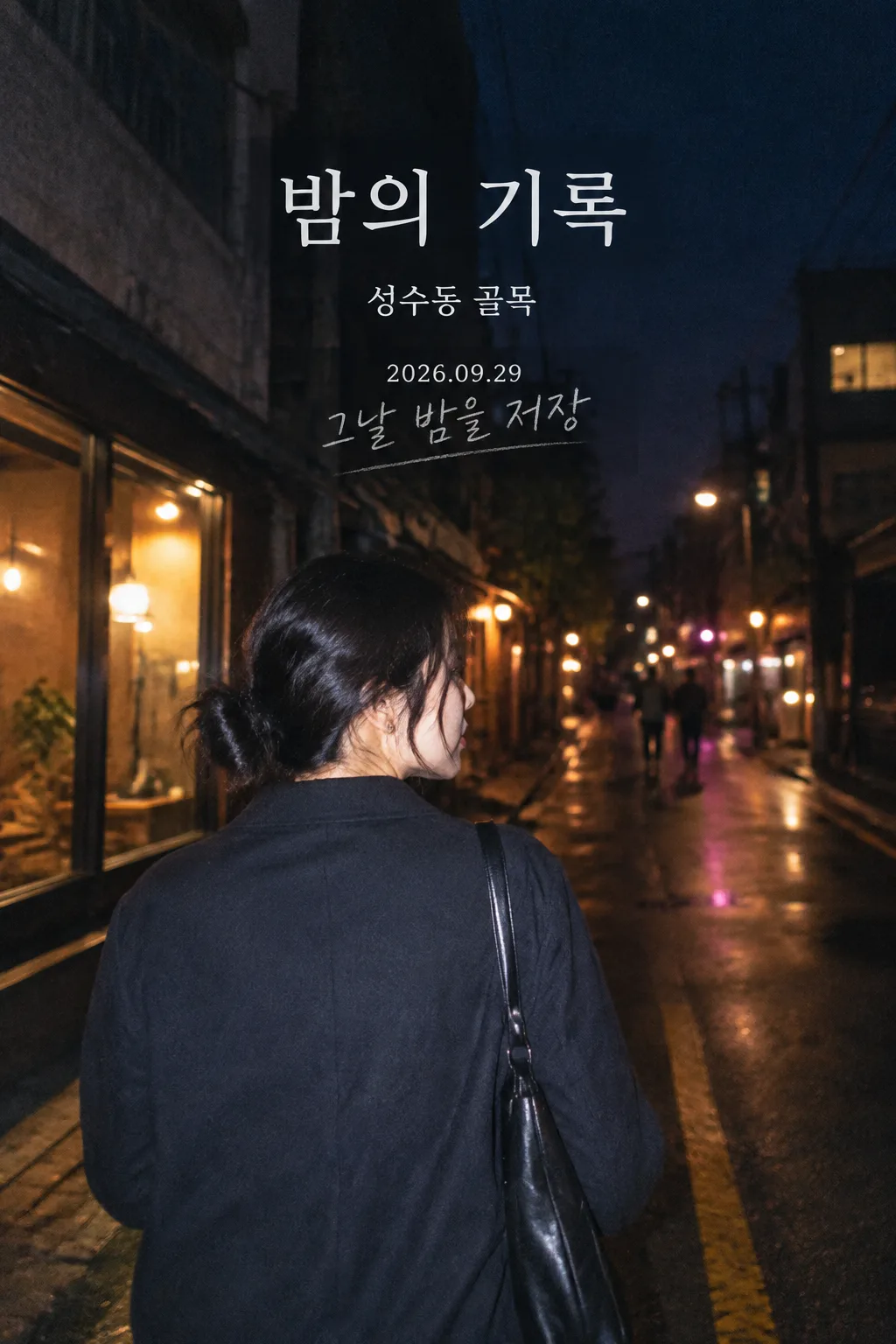
밤 사진을 직접 찍은 사람이 사진·장소·날짜·한 줄을 한 장에 담아 인스타 피드나 스레드에 올려요.
칸 채우기
- 1칸을 채워요
- 2복사 버튼을 눌러요
- 3GPT 채팅창에 직접 찍은 밤 사진을 올리고, 프롬프트를 같이 붙여넣어요
- 4직접 찍은 밤 사진과 프롬프트가 둘 다 들어간 걸 보고 보내요
프롬프트 원문 보기 6,210자
Generate this image now. Draw it directly - do not describe it, explain it, or ask questions.
Output size 2480x3508 pixels, A4 portrait, 300dpi, print-ready poster.
Create exactly ONE complete vertical 2:3 Korean personal flash-photo diary image from the real NIGHTTIME photo attached in this SAME message. Render the finished image itself in this response. Do not output a set of options, multiple pages, a carousel, code, an editing plan, an explanatory answer, or a request for another turn.

[Purpose]
The photographer wants to post one memory of a night they actually photographed on an Instagram feed or Threads. The place they typed is "【사진 찍은 곳】". The actual date they typed is "【찍은 날짜】". Their one-line text choice is "【사진의 한 줄】". Those are the only personal facts the image may claim. Build a diary page that visibly belongs to this one particular photograph, rather than a generic Y2K portrait or a pretend advertisement. The owner should be able to save the generated image and post it immediately without cropping, arranging images, adding text, or running code.

[Scene]
Use the attached photo as the one large documentary visual occupying about 80% of the canvas. Retain its recognizable people, number of people, faces, clothes, activity, objects, setting, storefront shapes, and viewpoint. Give the existing scene the direct-flash, high-contrast, slightly grainy energy of an early-2000s personal snapshot, but keep exposure believable. If the original already has a flash, respect its actual shadow direction and reflections. If it was taken in low light without flash, suggest the aesthetic through contrast, a little halation and tactile grain without pretending that different people, signs, buildings or activities were there. Design a narrow, integrated diary-type zone over a visually quiet area of the photo; it can have a soft translucent ink backing, but it is not a separate Polaroid frame, album sleeve, phone interface or sticker sheet.

[Attached photo]
The user's attached night photograph is mandatory and is the source of truth. Preserve facial identity, apparent age, natural skin tone, glasses, hair and expression when a person is visible. A scene with no visible person stays a scene without a person. Do not add a friend, companion, celebrity, performer, moon, landmark, shop sign, party, event, fireworks or street furniture absent from the real image. Do not infer the city from blurry signs. The typed place may be printed as text but must not become a fabricated landmark in the scene. Keep real background details legible enough to recognize the memory. If there is no photograph, or it is clearly a daytime photograph, request an actual night photo instead of fabricating a documentary night memory.

[Text layout]
Make the photographed scene fill the portrait canvas edge to edge. Keep the top 12% and bottom 15% free of essential words, allowing for website card overlays. In the calm area around 23-42% height print the short Korean heading "밤의 기록" in confident large letters. Below or beside it, print the user-provided place "【사진 찍은 곳】" once, also large enough for a website-list thumbnail. Group the date "【찍은 날짜】" and one-line text "【사진의 한 줄】" together in the 57-73% height band, with both entire lines above 78%; make the latter larger, with warm Korean handwriting. If the one-line input equals "알아서 골라줘", do not print those instruction words; write one original, short, image-specific Korean sentence of at most 16 Hangul characters that does not invent a person, event or feeling. If the user provided their own line, render it exactly. Keep the typed date exactly, including punctuation, and do not add a weekday, hour or year that the user did not enter. Never turn field labels into image text.

[Style]
Take broad inspiration from personal Y2K flash snapshots while making a new, original Korean photo diary. Ink-blue night shadows, restrained warm street-light amber and at most one electric accent may respond to the actual photograph. Use visible flash falloff, gentle optical bloom and honest film grain. This is a memory, so avoid turning every scene into a neon nightclub. The heading may use strong clean Korean sans lettering; the personal line can have a careful pencil-like handwritten texture but must be readable on a phone. Let the attached photo determine the palette when its light differs. No brand-specific camera, social app, diary template, logo or copied visual motif.

[Visual hierarchy]
At card-list size, a viewer immediately sees the real night scene and reads "밤의 기록" and the place. On a phone, the typed date and one-line memory remain readable without zooming. Keep all typography in naturally quiet image zones or on a modest opaque backing that does not hide a face. Protect the eyes, hands and distinctive background from text. The photo must remain the hero, with only one clear text system. The user should recognize their own place and moment, which is the reason this image is worth sharing rather than a stock Y2K photo.

[Lighting and texture]
Maintain a single coherent light direction and true contact shadows. Any bloom stays around real light sources or highlights and never washes out the words. Grain is fine and irregular, not a repeated digital dot pattern. Skin retains natural texture; dark streets retain detail without becoming a new location. Text edges stay crisp even where photographic highlights are bright. Do not render hard geometric lens stars or repeated flash halos.

[Text rules]
Render "밤의 기록" once. Render "【사진 찍은 곳】" and "【찍은 날짜】" exactly once each. Render the supplied one-line text exactly once unless asked to choose one. Check every Hangul character and number before finalizing. Do not print "알아서 골라줘", "사진 찍은 곳", "찍은 날짜", "사진의 한 줄", braces, camera metadata, invented time, fake song title, hashtag, watermark, English filler or a guessed shop name. Never repeat the same phrase in a smaller caption.

[Avoid]
No second output image, before/after split, multiple-photo grid, fake photo booth strip, Polaroid frame, album cover, code, crop instruction, invented night event, retouched different person, celebrity, trademarked camera, copied poster, exaggerated neon, plastic skin, illegible handwriting, hidden face, duplicate person or extra limbs.
이 카드도 많이 사용해요

쓰는 법 · 자주 묻는 것
이런 때 쓰세요
밤에 직접 찍은 사진을 그대로 올리기에는 그날의 장소와 말 한마디가 빠져 아쉬울 때 쓰세요. 친구를 만난 날, 퇴근길에 걷던 골목, 공연이 끝난 뒤의 거리처럼 사진 한 장에 기억을 얹어 인스타 피드나 스레드에 올리는 용도입니다. 실제 밤 사진을 바탕으로 초창기 디지털카메라의 플래시 느낌을 살립니다. 80년대 앨범 표지처럼 가상의 음악 작품을 만드는 카드와 달리, 이 카드는 내가 실제로 찍은 장면의 사진 일기입니다. 매번 다른 밤 사진으로 다시 만들 수 있습니다.
칸 채우는 법
- 사진 찍은 곳은 사진에 어울리는, 내가 실제로 있었던 장소를 적으세요. 상세 주소를 공개하기 싫다면 ‘동네 골목’처럼 넓게 써도 됩니다. 사진 속에 없는 유명 장소를 적으면 기록으로서의 의미가 흐려집니다.
- 찍은 날짜는 사진을 찍은 날을 직접 확인해 적으세요. GPT가 사진에서 날짜를 추측하거나 오늘 날짜를 대신 넣게 하지 않습니다. 날짜의 숫자와 점을 그대로 그림에 쓰도록 했습니다.
- 사진의 한 줄은 내가 남기고 싶은 짧은 말입니다. 문장이 떠오르지 않으면 「알아서 골라줘」를 누르세요. GPT는 사진에 보이는 장면을 바탕으로 짧은 문장을 고르되, 친구를 만났다거나 행사에 갔다는 식의 보이지 않는 이야기는 만들지 않게 했습니다.
사진을 넣는 순서
- GPT 채팅창에 직접 찍은 밤 사진 한 장을 올리세요. 아직 보내지 마세요. 사람 사진도 좋고 장소 사진도 좋지만, 밤이라는 것이 실제로 보이는 사진이어야 합니다.
- 같은 입력 칸에 이 카드에서 복사한 프롬프트를 붙여넣으세요.
- 사진과 프롬프트가 둘 다 입력 칸에 들어간 것을 보고 한 번만 보내세요. 결과는 글씨까지 들어간 완성 이미지 한 장입니다.
사진만 먼저 보냈다면 프롬프트 끝에 「위 사진으로 그려줘」를 덧붙여 보내세요. 친구의 얼굴이 뚜렷하게 나오는 사진을 공개한다면 그 친구에게 게시 의사를 먼저 확인하세요. 새 사진을 생성하는 카드가 아니라 내가 찍은 장면을 바꾸어 꾸미는 카드라 원본 사진의 선명도가 중요합니다.
그림이 나오면 꼭 볼 것
사진 속 사람이 원래 인물인지, 장소의 건물과 물건이 새로 지어지지 않았는지 먼저 보세요. 플래시 질감을 주더라도 낮 사진이 밤 사진으로 바뀌거나 없던 간판이 생겨서는 안 됩니다. ‘밤의 기록’과 장소가 목록 크기에서 읽히는지, 날짜와 내가 쓴 문구가 정확한지 확인하세요. 얼굴 위에 글자가 얹히거나 한 줄이 작아 안 읽히면 같은 입력에서 위치만 다시 지정해 새 한 장을 받는 편이 낫습니다. 결과를 별도 앱에서 잘라 붙일 필요는 없습니다.
자주 묻는 것
- 낮 사진으로 밤 분위기를 만들 수 있나요? 이 카드는 실제 밤의 기록입니다. 낮 사진을 밤에 찍은 것처럼 꾸미는 용도로는 맞지 않습니다.
- 사람이 꼭 나와야 하나요? 아니요. 골목이나 거리 풍경만 있는 사진도 됩니다. GPT가 없던 사람을 추가하지 않도록 했습니다.
- 날짜를 자동으로 알 수 있나요? 아니요. 직접 확인한 날짜를 칸에 적어 주세요.
- 사진을 몇 장 올리나요? 밤 사진 한 장과 프롬프트를 같은 메시지로 보내면 완성 이미지 한 장을 받습니다.