
전체 · SNS/카드뉴스 · 계절·명절
076첫눈 기록 카드
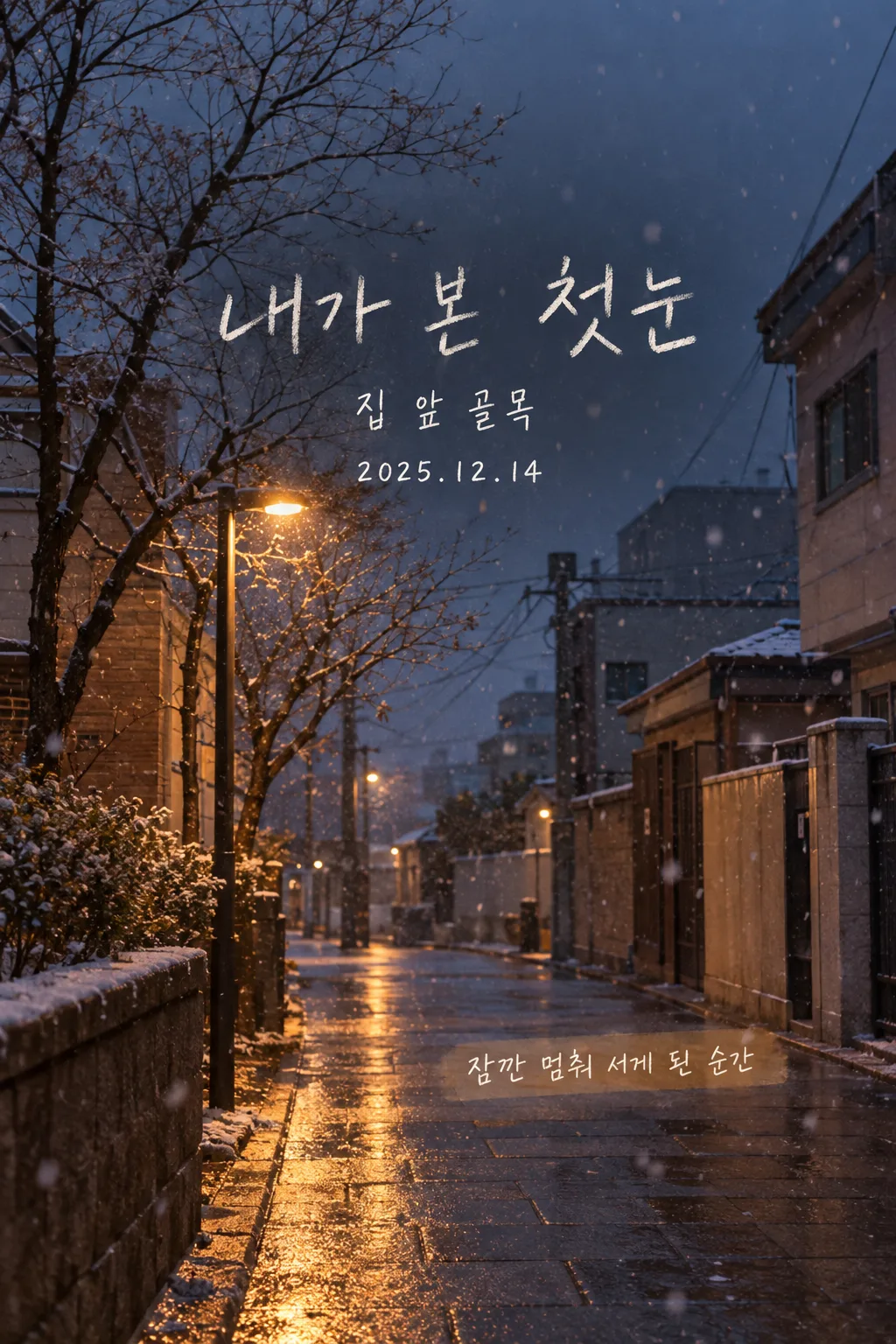
첫눈을 직접 본 사람이 눈 오는 사진과 장소·날짜를 한 장에 담아 인스타 스토리나 스레드에 올려요.
칸 채우기
- 1칸을 채워요
- 2복사 버튼을 눌러요
- 3GPT 채팅창에 직접 찍은 첫눈 사진을 올리고, 프롬프트를 같이 붙여넣어요
- 4직접 찍은 첫눈 사진과 프롬프트가 둘 다 들어간 걸 보고 보내요
프롬프트 원문 보기 6,009자
Generate this image now. Draw it directly - do not describe it, explain it, or ask questions.
Output size 2480x3508 pixels, A4 portrait, 300dpi, print-ready poster.
Create exactly ONE finished vertical 2:3 Korean first-snow memory image, using the genuine first-snow photograph attached in this same message. Return the completed image itself, not a second page, multiple versions, code, a caption outside the image, cropping instructions or a request for another turn.

[Purpose]
The photographer personally noticed what they call their first snow of the season and wants to post a small visual memory to Instagram Stories or Threads. The user-entered place is "【눈을 본 곳】". The exact date they entered is "【본 날짜】". The one-line copy input is "【내 한 줄】". This image records their own observation, not an official meteorological first-snow report for a city. Do not assert that a weather office, whole country or whole neighborhood saw snow on that date. The attached image is the source of truth for how much snow was visible and what the surroundings looked like.

[Scene]
Use the owner's snow photograph as the main full-bleed visual, occupying the entire portrait image, with careful layout for large handwritten Korean words. The result may be a street, window, park, roof, field or close-up, depending on what is actually photographed. Preserve the actual geometry of buildings, trees, pavement, lights and human silhouettes. Snowflake density and accumulation must stay consistent with the photo: a few flakes should remain a few flakes, and bare ground should not become a heavy snowfield. You may gently increase contrast and clarity so the visible flakes can be perceived, but do not invent a blizzard, thick snowbank, frozen lake, holiday lights, people or landmark. If the photograph has no visible falling snow or snow on surfaces, do not fabricate a documentary-looking snow scene; ask for an actual snow photo instead. Use only one photograph, not a before/after comparison or collage.

[Attached photo]
The real uploaded image is mandatory. Preserve its viewpoint, season, recognizable architecture, visible people and general light. If a face is visible, keep that person's identity and natural appearance rather than repainting them. If signs or license plates are in the photo, leave them understated, and do not turn blurry fragments into invented readable businesses or addresses. If the place text and visible image do not match, do not solve that by inventing landmarks. Prioritize visible truth and use the user's typed place only as text. Do not download and substitute a prettier stock winter scene. The card should remain believable as a memory of that exact photograph.

[Text layout]
Reserve the top 12% and bottom 15% without essential lettering so the site card overlay cannot cover it. Place a large, confident but personal pencil-feel Korean title "내가 본 첫눈" in a calm area around 18-31%, legible at site thumbnail size. Place "【눈을 본 곳】" nearby once, at a secondary but clearly readable size. Put the date "【본 날짜】" once in a separate small line; copy the user-entered punctuation exactly and do not add a weekday. In a quiet section around 65-80%, print "【내 한 줄】" once. If it is "알아서 골라줘", never print those input words: choose one original short line of at most 18 Hangul characters about pausing to notice the visible scene, without inventing a companion, emotion, weather record, temperature or event. If the user selected a specific line, print it exactly even if it is not the model's preferred phrasing. Do not repeat "첫눈" again in a second generated sentence or add a date stamp in another corner.

[Style]
Match the real photographed moment. A quiet grey morning should stay cool and airy; a lamp-lit evening can carry soft amber and deep slate; a sunny snow scene may have pale blue and warm paper white. Do not force red-and-green Christmas colors on a November photograph. Add only subtle pencil strokes, gentle off-white backing behind words where needed, and tiny hand-drawn snowfall marks if they do not masquerade as photographed weather. The title and personal line should feel handwritten with a soft graphite texture, yet remain highly legible on a phone. The attached photo supplies the emotional value; decoration supports it without replacing it. No wallpaper clock gap or giant blank background.

[Visual hierarchy]
At listing size, viewers should read "내가 본 첫눈" and see a real snow moment. At phone size, location, date and one line remain readable. Put type where the source image is quiet. Never lay pale pencil letters on a bright white snowbank or dark letters on a black window reflection without a backing. Leave important photographed detail uncovered. Keep the image one finished story card, not a template with empty photo hole. Its place and date are the personal values that make it worth sharing again in another winter.

[Lighting and texture]
Respect the source photo's natural perspective, exposure and depth of field. Keep actual snowflake shapes irregular, small and sparse where appropriate, rather than perfect repeated white asterisks. Fine pencil lettering may sit on a subtle translucent strip or local paper texture, with no heavy fake frost filter. Preserve realistic shadows, wet pavement, tree branch structure and human anatomy when present. Keep overall detail crisp enough for a phone screen.

[Text rules]
Spell "【눈을 본 곳】" and "【본 날짜】" exactly as entered. Never silently turn a place like "회사 창밖" into a guessed city name. Render the chosen line exactly unless asked to choose. Do not print "알아서 골라줘", form labels, placeholder braces, temperature, weather-office claim, fabricated time, holiday greeting, brand, hashtag or English filler. Read the date's digits one by one before finalizing. Keep every Korean word legible.

[Avoid]
No invented snowstorm, false official first-snow claim, changed city, fabricated weather data, extra person, cloned snowflake pattern, unrelated holiday theme, multiple output images, crop instruction, code, phone frame, app UI, watermark or illegible writing.
이 카드도 많이 사용해요

쓰는 법 · 자주 묻는 것
이런 때 쓰세요
올겨울 내가 처음 본 눈을 사진 한 장으로 기록하고 싶을 때 쓰세요. 직접 찍은 사진 위에 본 곳, 날짜, 짧은 말을 얹어 인스타그램 스토리나 스레드에 올리는 카드입니다. 눈 내린 거리를 아름다운 배경화면으로 바꾸는 용도가 아니라, 그날 내가 실제로 본 장면을 공유하는 이미지입니다. 공식 첫눈 날짜를 발표하는 카드도 아닙니다. 겨울마다 다른 사진과 장소를 넣어 다시 만들 수 있습니다.
칸 채우는 법
- 눈을 본 곳에는 내가 있었던 곳을 적으세요. 정확한 주소를 공개하기 싫다면 ‘집 앞 골목’이나 ‘학교 가는 길’처럼 써도 됩니다. 장소 이름이 사진과 다르면 보는 사람이 헷갈립니다.
- 본 날짜는 사진을 찍은 실제 날짜를 적으세요. 모델이 오늘 날짜를 추측하거나 사진의 촬영 정보를 읽을 것으로 기대하지 않는 편이 정확합니다. 연도와 월·일을 직접 확인해 넣으세요.
- 내 한 줄에는 그때 떠오른 말을 짧게 적으세요. 생각나는 말이 없다면 「알아서 골라줘」를 선택하면 됩니다. 모델은 사진에 보이지 않는 동행인이나 감정을 지어내지 않고 장면에 맞는 짧은 문장을 고릅니다.
사진을 넣는 순서
- GPT 채팅창에 직접 찍은 첫눈 사진 한 장을 올리세요. 아직 보내지 마세요. 눈발이나 쌓인 눈이 실제로 보이는 사진을 고르세요.
- 같은 입력 칸에 이 카드에서 복사한 프롬프트를 붙여넣으세요.
- 사진과 프롬프트가 둘 다 들어간 것을 본 뒤 한 번만 보내세요. 글씨가 들어간 완성 이미지 한 장을 받습니다.
사진만 먼저 보냈다면 프롬프트 끝에 「위 사진으로 그려줘」를 붙여 보내세요. 주변 사람이 선명하게 나온 사진을 공개할 때는 그 사람의 의사도 확인하세요. 눈이 없는 사진을 겨울 풍경으로 꾸며 실제 첫눈 인증처럼 올리는 용도로 만든 카드는 아닙니다.
그림이 나오면 꼭 볼 것
사진 속에 원래 있던 것보다 눈이 지나치게 많아지지 않았는지 먼저 살펴보세요. 얇게 날리던 눈이 폭설처럼 바뀌었다면 내 기록과 다릅니다. 적은 장소와 날짜가 정확한지, ‘내가 본 첫눈’이 목록 크기에서도 읽히는지 확인하세요. 손글씨는 연필 느낌이어도 휴대폰 화면에서 한눈에 읽혀야 합니다. 잘 맞으면 완성된 이미지 한 장을 그대로 저장해 올리면 됩니다.
자주 묻는 것
- 공식 첫눈 날짜와 다르면 안 되나요? 이 카드는 개인이 처음 본 눈을 기록합니다. 기상 관측 공식 기록을 주장하지 않습니다.
- 사진 없이도 만들 수 있나요? 실제 본 장면을 남기는 카드라 눈이 보이는 직접 찍은 사진이 필요합니다.
- 장소를 자세히 적어야 하나요? 아니요. 공개 가능한 범위에서 ‘동네 공원’처럼 적어도 됩니다.
- 한 장만 나오나요? 네. 사진과 프롬프트를 함께 보내면 글씨가 들어간 완성 이미지 한 장입니다.