

All · Infographics & guides · Steps & processes
494History Comic Study Poster
Explore one topic through three comic panels, a chronological strip and five illustrated facts.
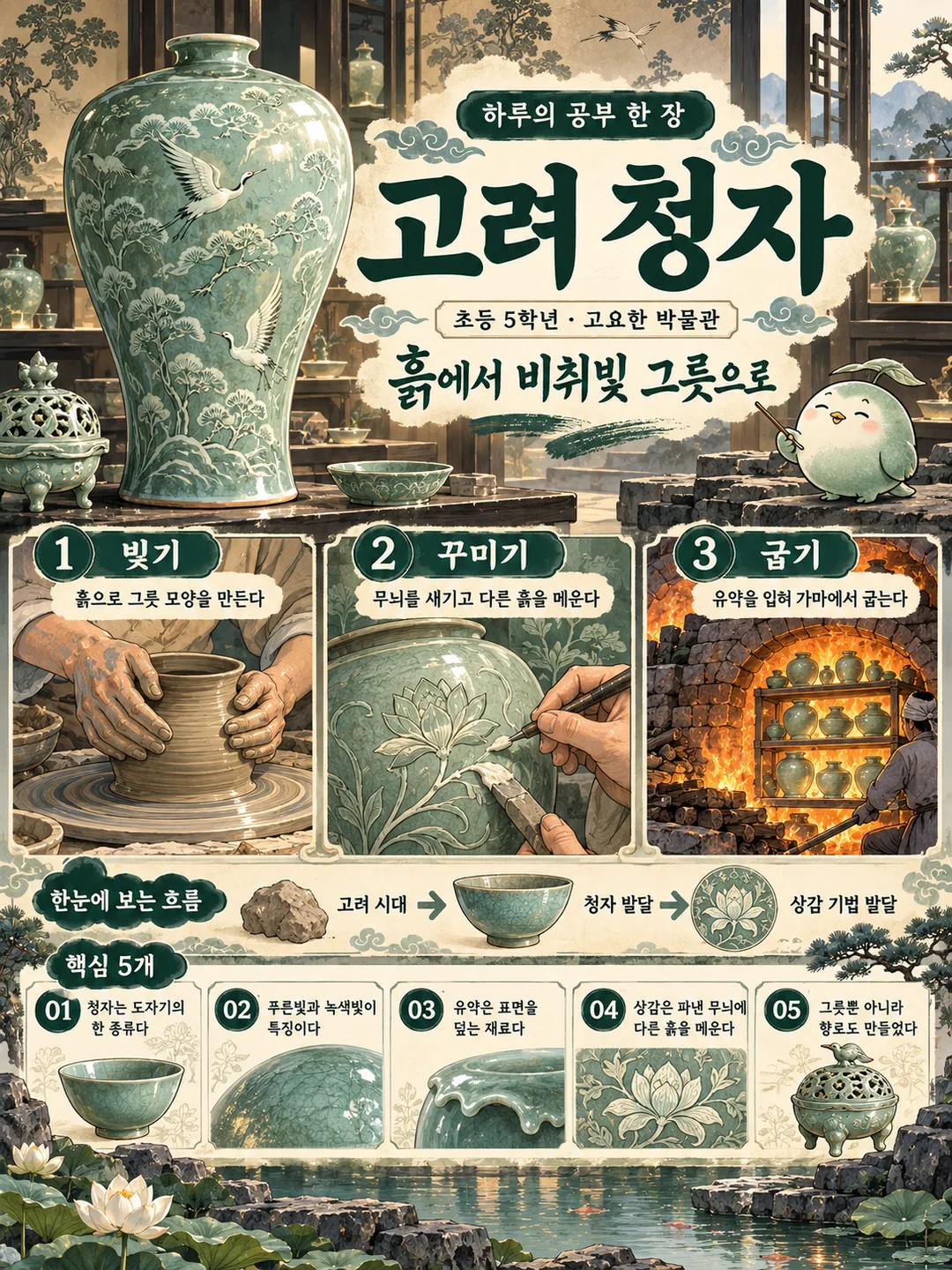
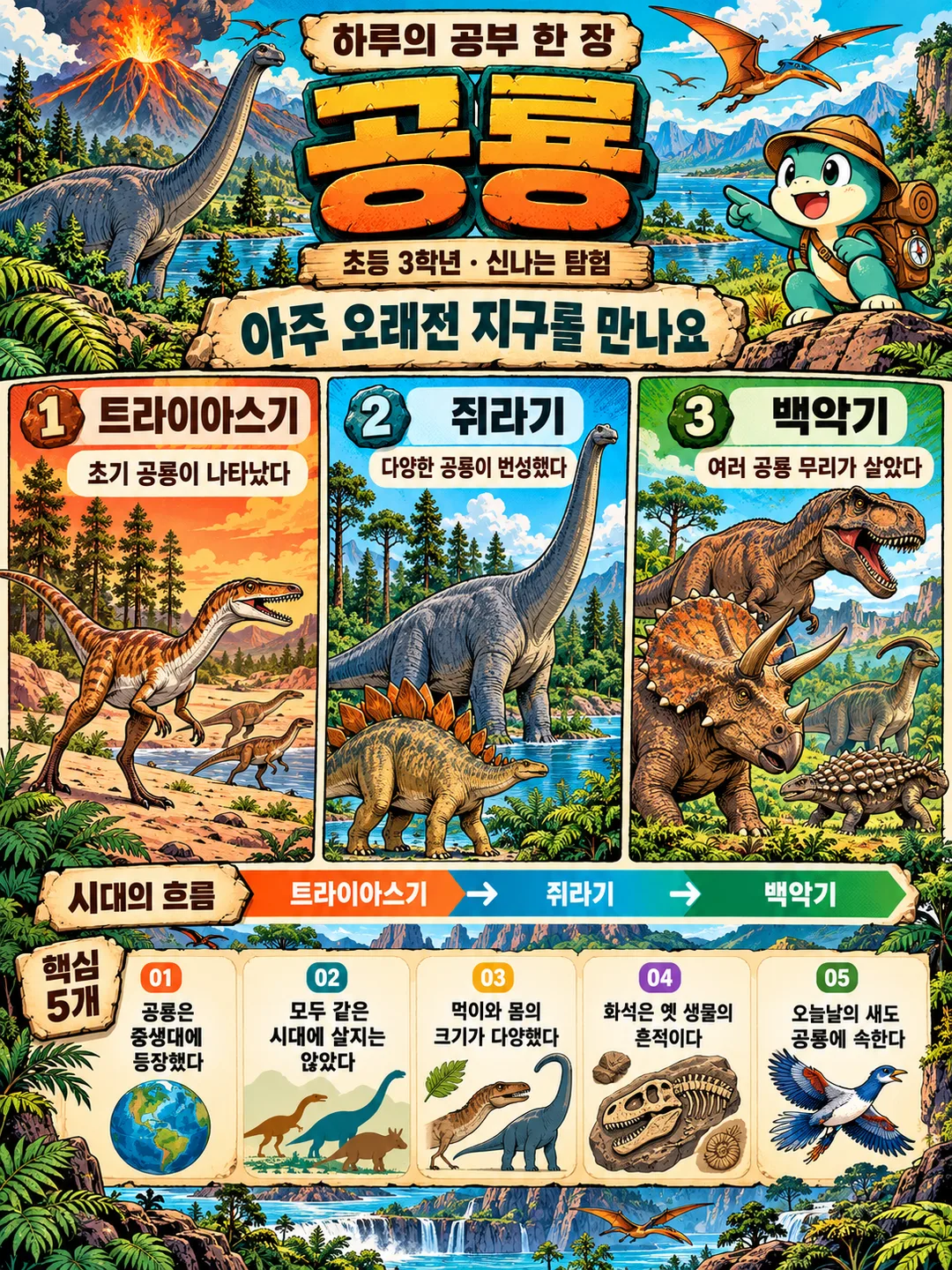
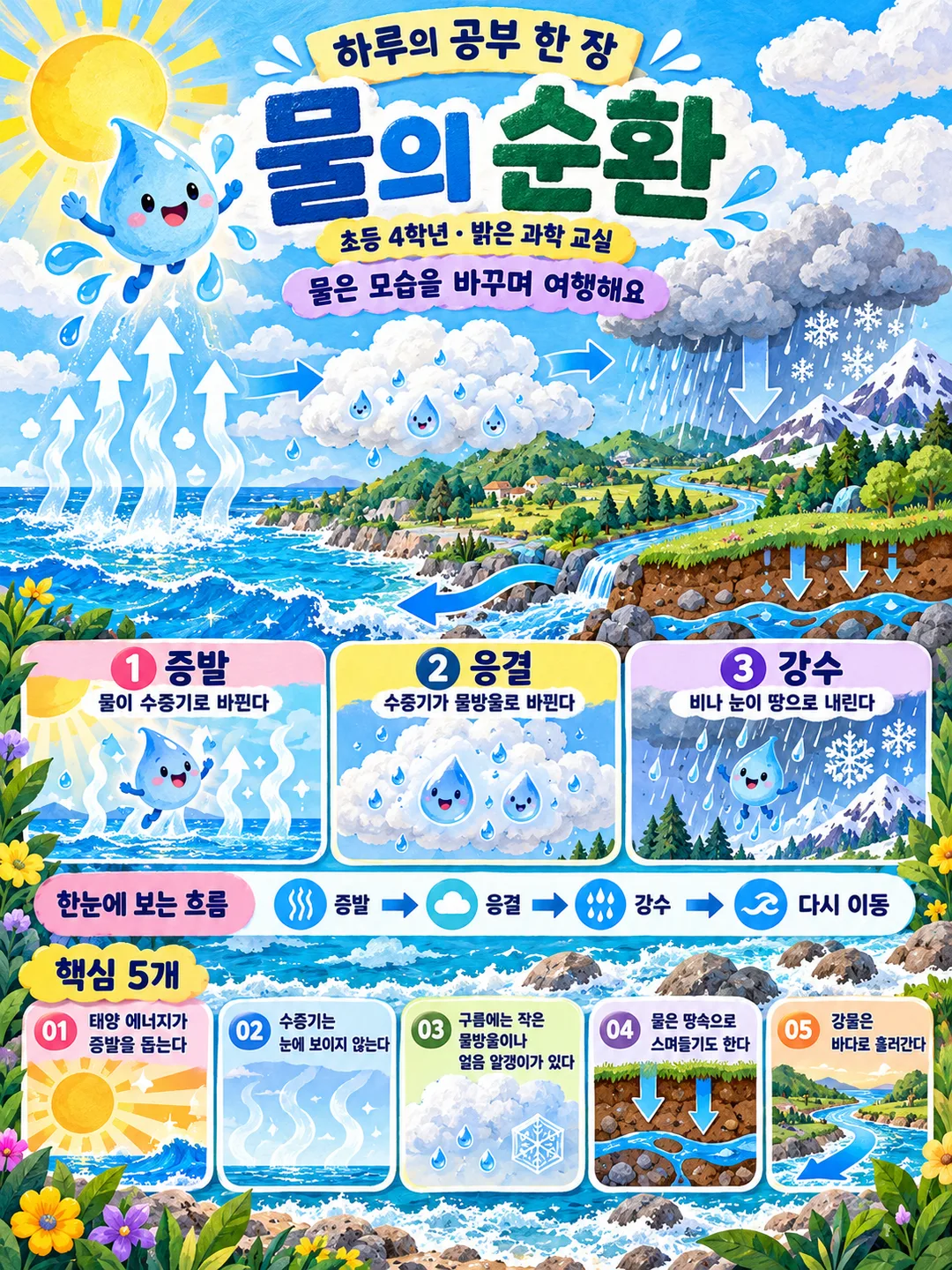
Fill in the fields
- 1Fill in the fields
- 2Copy the prompt
- 3Paste it into a GPT chat
- 4Send it as is and you get an image like the thumbnail example
- 5Attach a real photo that fits the card and it is used in the result: a background photo for background cards, a person or food photo for those cards Optional
Tested by us
- Test date
- 2026-10-29
- Tool
- ChatGPT image model (run via Codex) — same model as free ChatGPT, only limits differ
- Result
- Pass
- What worked
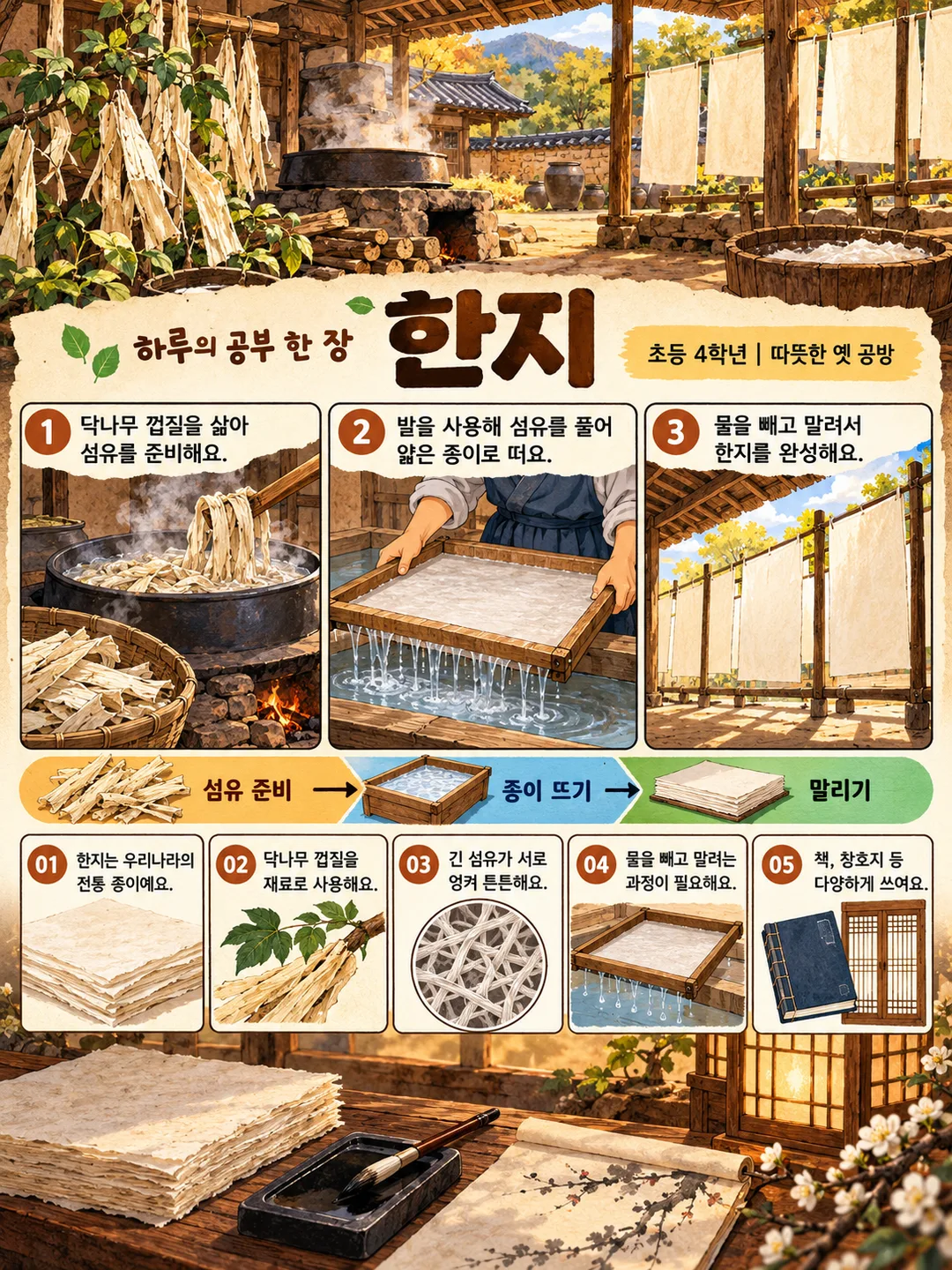
- Both current main text results 1 and 2 feature a single vertical poster, a large Hanji illustration and title "하루의 공부 한 장", grade and vibe subtitles, a 3-panel numbered comic, a process banner showing fiber prep → paper making → drying, and illustrated core facts 01 to 05. The five facts were verified as traditional Korean paper, paper mulberry bark, interweaving of long fibers, water removal and drying, and uses for books and traditional doors (changhoji). Hangul was read enlarged without year fabrication or text clipping. Text sits within approx. 23–74% of screen height, satisfying the requested 18–78% zone and the top 12% / bottom 15% text-free margins. Exactly 3:4 at 1086×1448px.
- What did not work
- None for current main text results. The two pre-revision images failed the top and bottom text-free margins. Layout revision 1's first image incorrectly used "mulberry tree bark" for the material, and the second image had the title and final explanation invade inside the margin requested at the time. Previous results are also kept in their respective subfolders.
- How to improve
- Use the verified values: "Hanji / 4th grade elementary / Warm old workshop / 3:4". Keep the material sentences "paper mulberry (Broussonetia)", "닥나무 껍질, never 뽕나무 껍질" and the text placement sentence for y=18%–78%. Both images passed in the current input with these two reinforcements reflected. Other topic and vibe combinations were not included in this test.
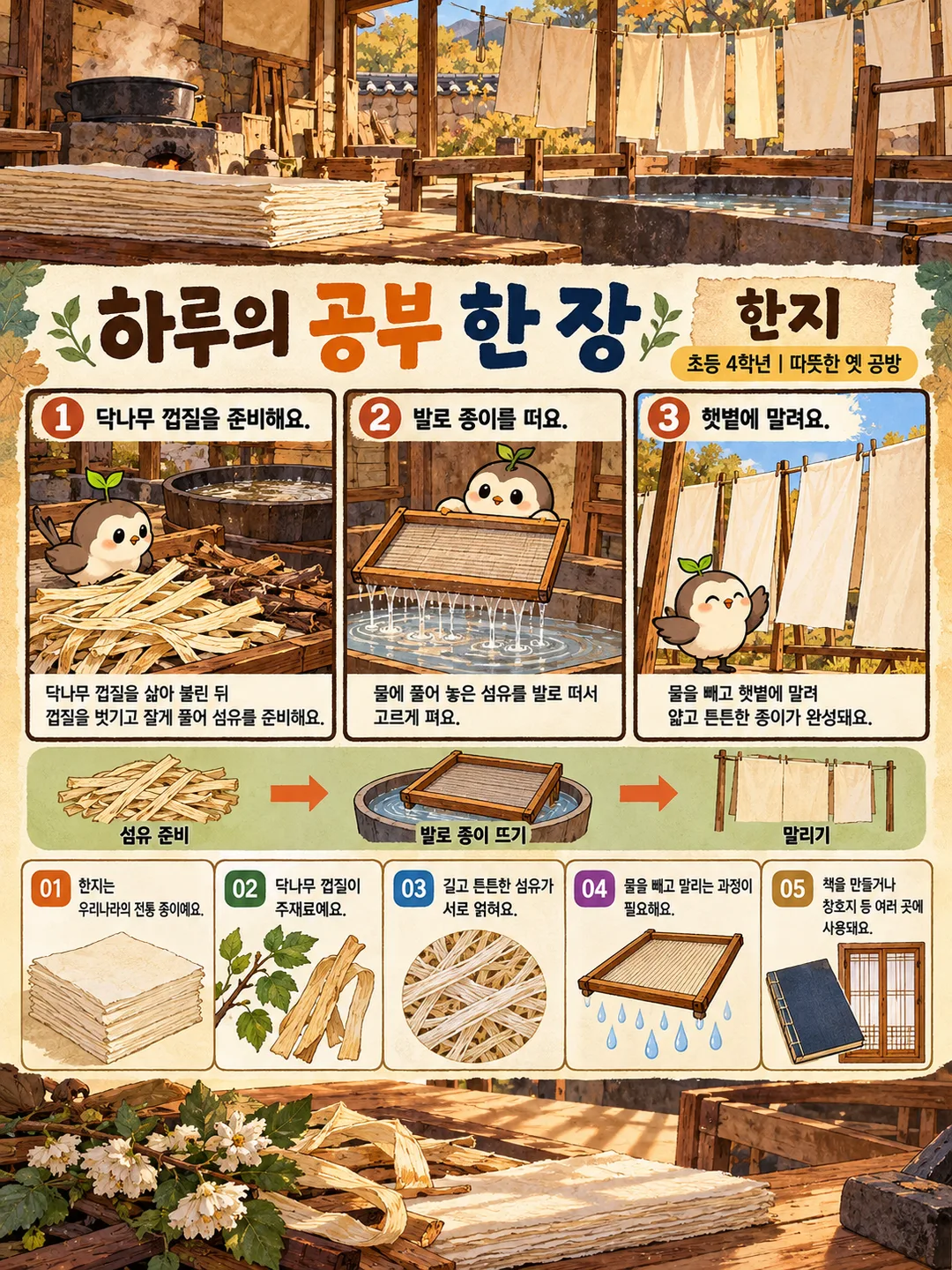
Full prompt 4,298 characters
Generate exactly ONE finished English educational comic infographic poster now, not an explanation. Canvas: Output size 1080x1440 pixels, 3:4 portrait, social media post.; default 3:4. Flat full-bleed artwork, no mockup, no contact sheet, no code, no follow-up task.

Topic: 【Topic】. School level: 【School level】. Mood: 【Mood】. If blank or automatic, use Traditional Korean paper / Grade 4 / Warm traditional workshop. Explain one topic only. If the topic concerns a real person, focus on verified objects, events and places without drawing their portrait. Any named fictional guide is Haru, an original small nonhuman character with no resemblance to an existing character.

Fixed result structure: one large subject illustration and title, exactly three numbered narrative comic panels, one chronological band, exactly five numbered illustrated key facts (01–05). Adapt vocabulary and sentence length to the school level. Put the school level and mood in a compact subtitle. The heading is One Page of Learning with Haru. Keep panels varied in scale and viewpoint. Use short complete factual captions on solid light text areas. Integrate tiny diagrams and object details rather than decorative filler. Maintain one consistent visual treatment within each poster.

Mood treatments within this fixed educational comic format: warm traditional workshop = amber/russet/indigo textured ink and woodcut; quiet museum = jade/ivory delicate watercolor and ink; exciting expedition = vivid orange/teal bold adventure comic and fine halftone; bright science classroom = sky blue/lemon/lilac gouache cut-paper comic. Mood changes the visual treatment, never the result type or section counts. For other supplied moods, derive an equally coherent original treatment. No artist or studio imitation.

Before drawing, verify facts using museum, public education or scientific institution web sources. Verify chronology and each of the five facts. Do not fabricate dates, quotes, firsts or records. If web verification is unavailable, use only well-established facts with no numeric dates. Historical subjects get a chronological timeline with verified dates only; craft and science subjects get an ordered process band instead of invented years. Cyclic topics show a return connection; do not imply that every water molecule follows the same path. Show different prehistoric periods in separate panels, not a falsely simultaneous scene. No verification notes or source disclaimers printed in the artwork.

For the default topic, the three panels are fiber preparation, sheet forming with a papermaking screen, and drying. The process is fiber preparation → sheet forming → drying. The five facts are that this is traditional Korean paper; paper mulberry (Broussonetia) bark is a material; long fibers interlock; drainage and drying are required; it has uses including books and window coverings. Translate naturally into English. Do not mechanically reuse these facts for another topic.

Typography: natural English only, large sharp high-contrast lettering, Reserve the upper 12% and lower 15% of the canvas for illustrations only, with absolutely no lettering or numerals in either band. Place the heading, title, subtitle, all three panels with captions, the process band and all five facts entirely within the middle 60% of the canvas (y=18% to y=78%). Use concise one-sentence captions so every text block fits in this region. Keep every letter and numeral below y=18% and above y=78%, leaving a buffer beyond the required safe margins. No tiny paragraphs, cropped words, empty balloons or extra labels. Proofread every character, numeral and arrow before rendering. Count three panels and five facts. Avoid real people, celebrity likeness, real brands, logos, trademark products, existing characters, watermarks, signatures and copied artifact patterns. Invent original decoration and fictional object designs while preserving the factual teaching structure. Return only the complete image.

[Final output format]
Output size 1080x1440 pixels, 3:4 portrait, social media post.
This selected output format takes priority over any fixed canvas size or aspect ratio elsewhere in this template. Adapt the composition, text zones and margins to the selected canvas without stretching or cropping essential content. Device safe areas apply only when a device is selected. Never print these format instructions on the image.
How did it turn out?
You may also like
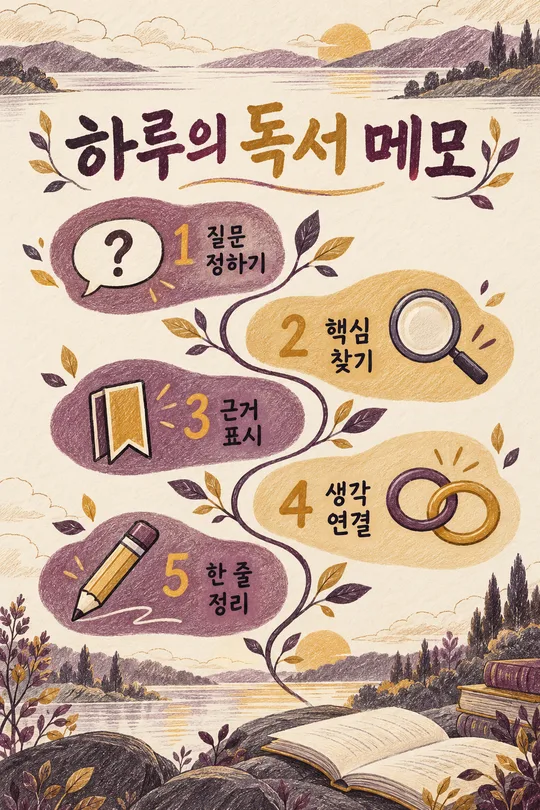
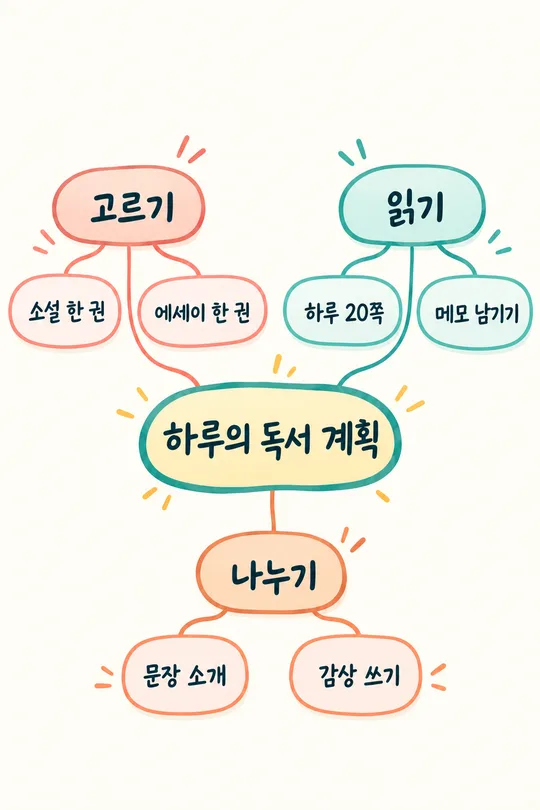
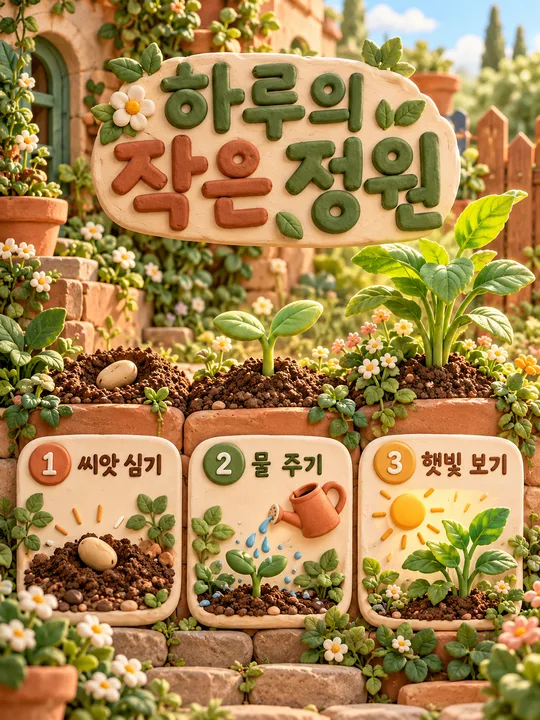
How to use it · FAQ
Create a complete learning poster for a lesson, a home study corner or a family learning session. It combines a large topic illustration, three narrative comic panels, one chronological or process strip, and five concise illustrated facts. The required fields are Topic, School level and Mood. Pick one focused subject rather than an entire course. School level controls vocabulary and caption length. Mood changes the palette, line texture and energy within the same comic infographic format.
The default topic is traditional Korean paper, the default level is Grade 4 and the default mood is Warm traditional workshop. Blank fields and Choose for me use those defaults. Quiet museum uses restrained watercolor; Exciting expedition uses vivid adventure-comic ink; Bright science classroom uses cheerful cut-paper gouache. The common size control defaults to 3:4. Paste the completed prompt into an image AI once to request one finished poster. No photo or assembly is required. Haru is the name of any fictional guide.
Before using the poster, compare its five facts with museum or public educational sources. Read every small word and numeral at enlarged size. Historical topics use a timeline; crafts and natural processes use an ordered process strip. Uncertain years must be omitted. Ask for regeneration with the exact corrected wording if a caption is wrong. Cycles need a return arrow, and prehistoric species from different periods should appear in separate scenes. Real people are explained through objects, events and places without portraits. Narrow difficult subjects to one event or concept. Check the external service's own terms and pricing before use.