
All · Infographics & guides · Steps & processes
621Workout on One Page
Turn 4–6 supplied movements and their doses into one illustrated routine.
Fill in the fields
- 1Fill in the fields
- 2Copy the prompt
- 3Paste it into a GPT chat
- 4Send it as is and you get an image like the thumbnail example
- 5Attach a real photo that fits the card and it is used in the result: a background photo for background cards, a person or food photo for those cards Optional
Tested by us
- Test date
- 2026-10-29
- Tool
- ChatGPT image model (run via Codex) — same model as free ChatGPT, only limits differ
- Result
- Pass
- What worked
- The title, existing name "Haru", four exercise names, and counts of 30 seconds, 8 reps, 8 reps, and 10 reps match the input. Numbers 1 to 4 appear once each and are arranged sequentially in two columns. The starting and ending figures of each panel and the arrows are inside the panels. For wall push-ups, the hands touch the wall; for chair squats, the chair is behind the hips; and for calf raises, the back of the chair is held with heels raised. The full body is not cut off, and the navy, coral, and ivory color palette along with the bottom text "Go at your own pace without overdoing it" were maintained. No extra exercises, dates, or efficacy claims.
- What did not work
- None
- How to improve
- Passed on the first try using the card example values without any additional changes. Other exercises, rep counts, and color changes were not tested.
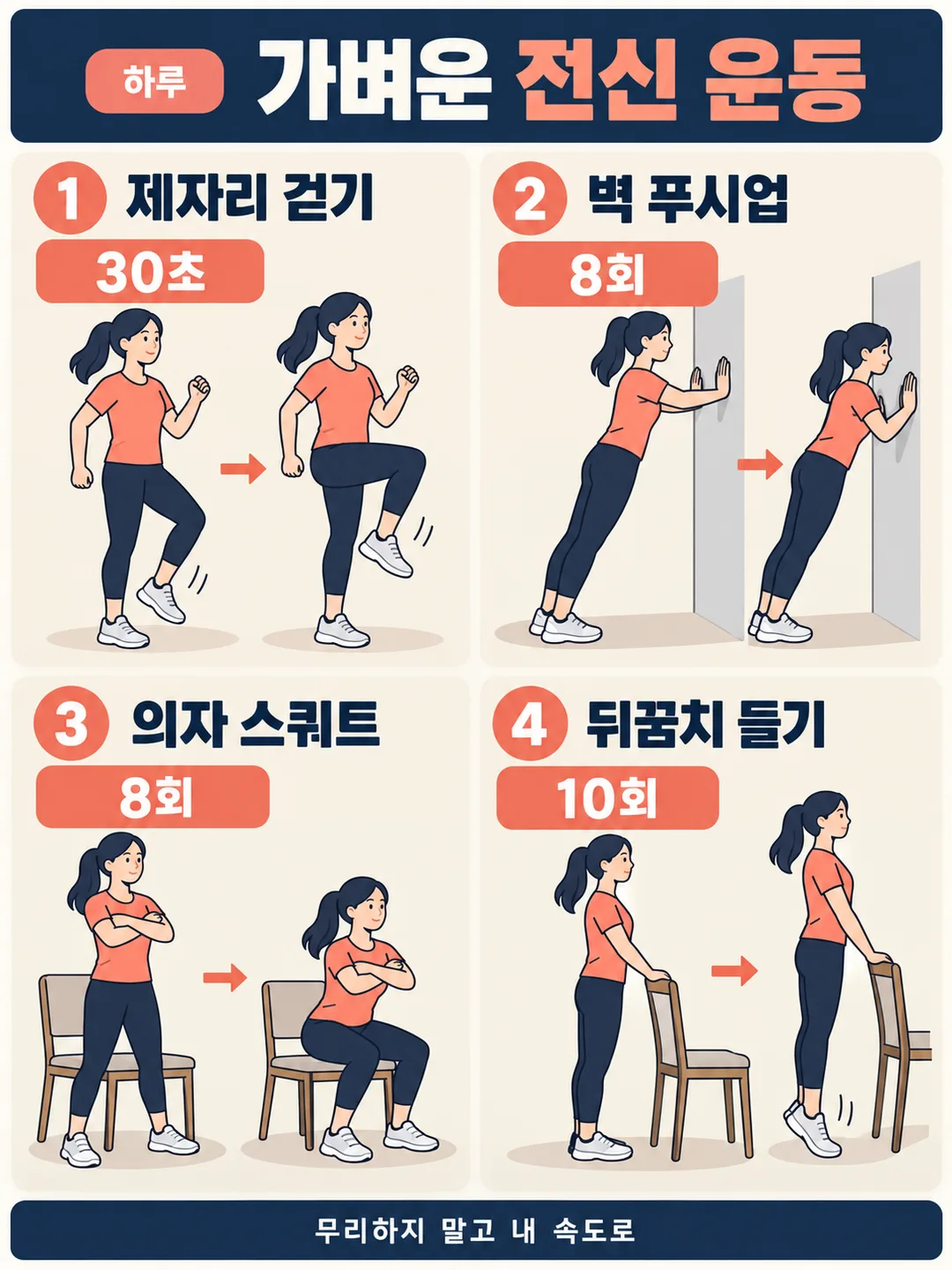
Full prompt 3,691 characters
Generate this image now. Draw it directly; do not merely describe it.
Output size 1080x1440 pixels, 3:4 portrait, social media post.
Create ONE full-bleed illustrated exercise instruction infographic in English. Default portrait 3:4. Its only purpose is to organize the supplied movements and doses, not to prescribe exercise.
Exercise type: 【Exercise type】
Movements in order: 【Movements】
Doses in the same order: 【Repetitions】
All three fields are required. Split lists at commas. Accept 4–6 movements with exactly as many doses. If a required value is blank, a list length differs, or a dose is ambiguous, ask only for that missing information before drawing. Never invent movements, loads, timings, sets, totals or benefits. Keep the supplied sequence and doses verbatim. For uncertain exercise anatomy or health facts, verify using authoritative public-health sources on the web before drawing; if you cannot verify a pose, ask for a simpler movement rather than guessing.
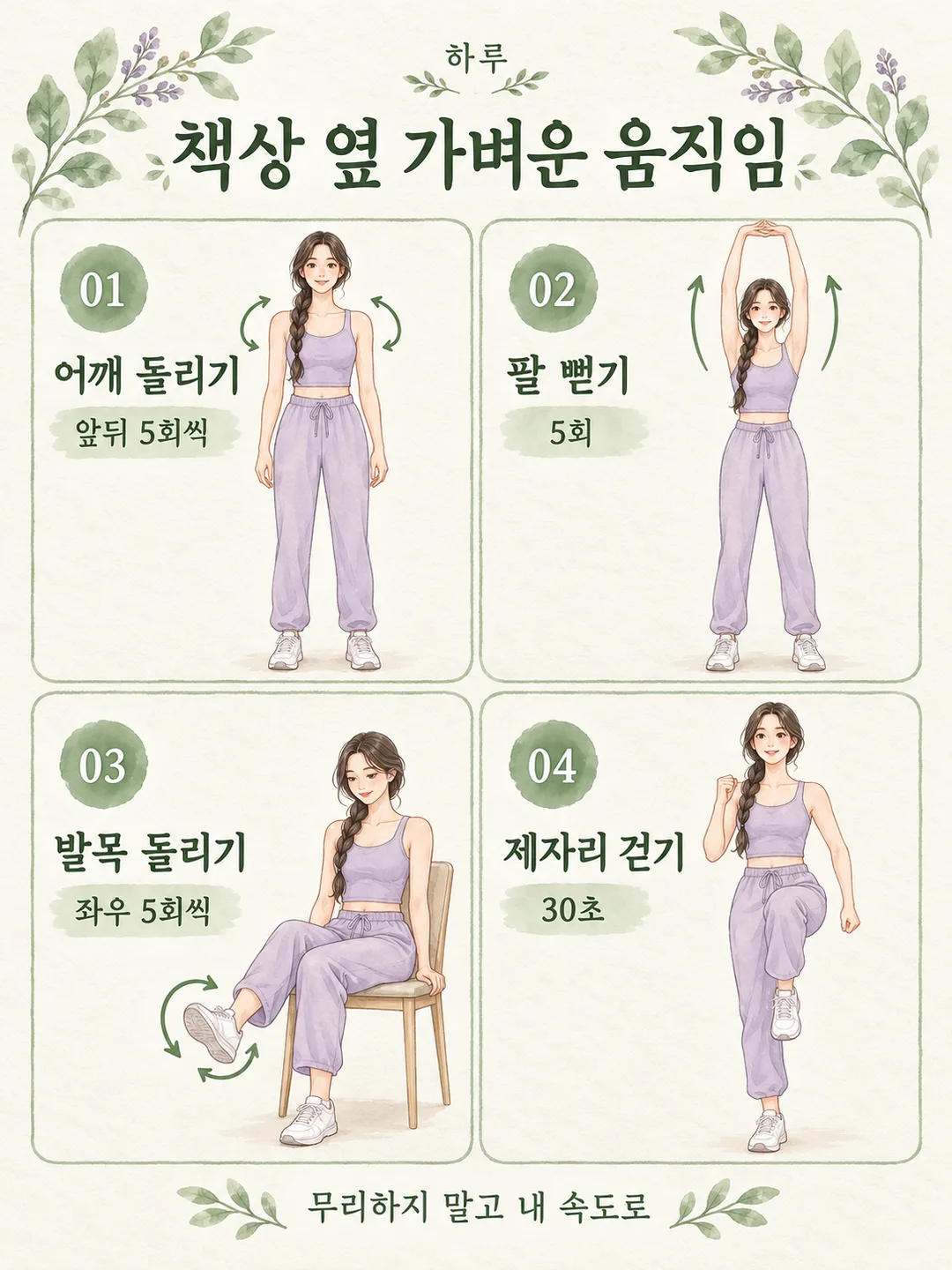
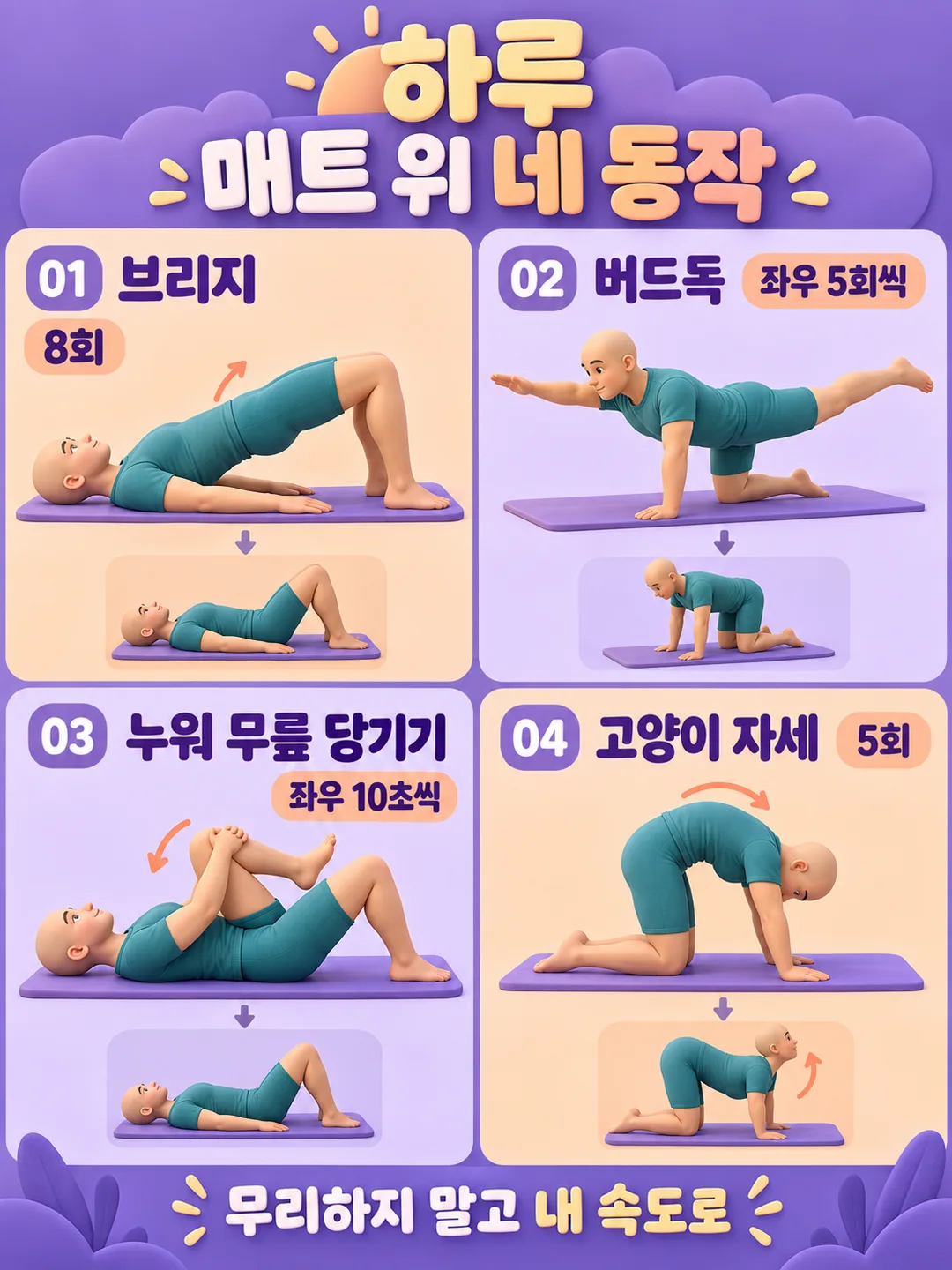
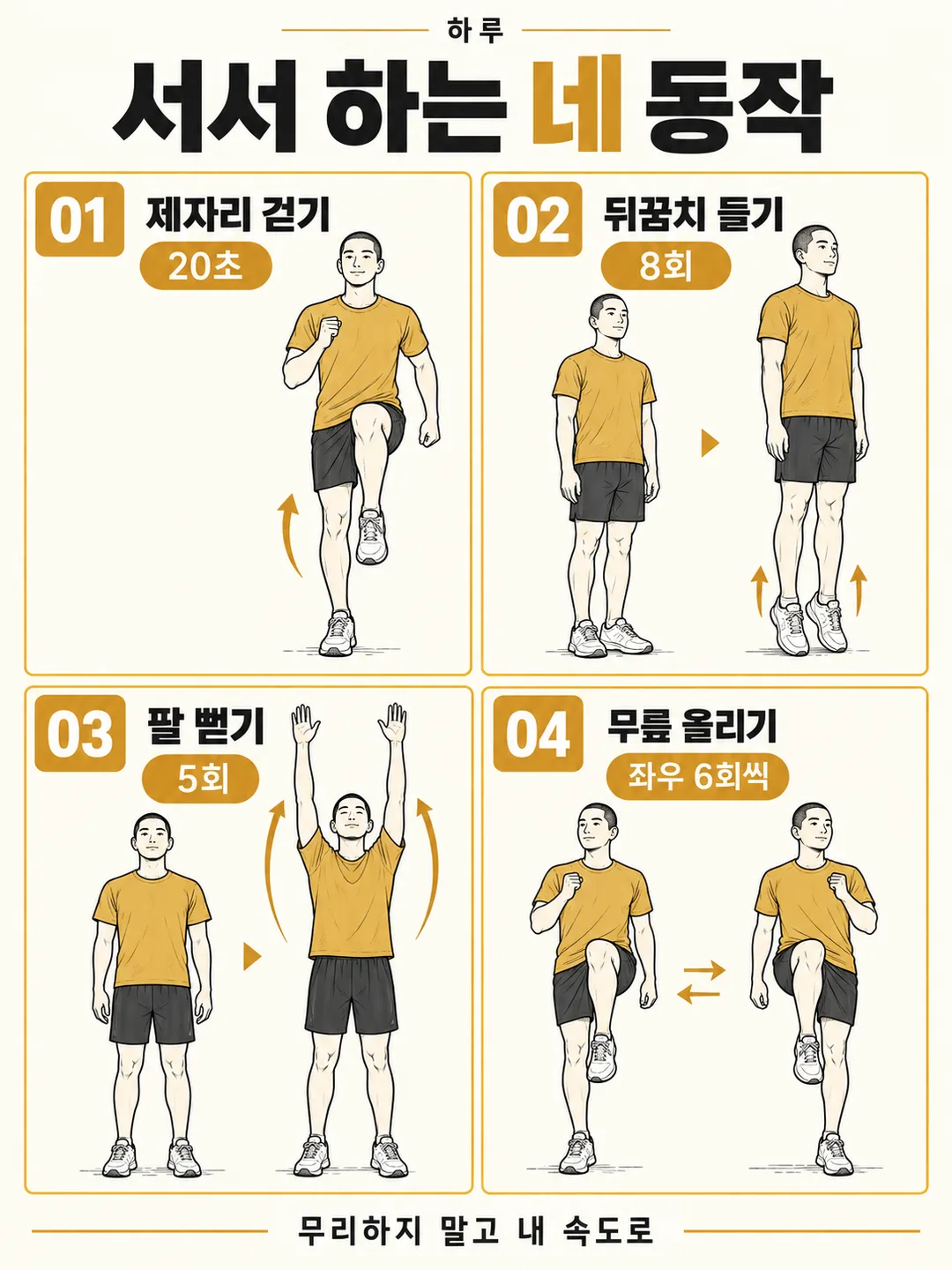
Use one coherent visual system per result. Choose automatically from exercise context: standing full-body exercises use bold geometric editorial illustration in navy, coral and ivory; desk-side mobility uses sage and lavender ink-and-watercolor; floor/mat exercises use matte clay 3D figures in lilac, apricot and teal. Other exercise types use technical pen line-art with restrained ochre accents on warm white, like an adult sports manual. These are automatic context adaptations of the same instruction-sheet result, not selectable output formats.
Print the small name "Haru" and the exercise type as the title, then 4–6 numbered movement panels in reading order. Four or six movements use a two-column grid; five use five horizontal bands. Each panel contains one clear full-body demonstration, its exact movement name and its exact dose. When motion needs two phases, draw a start/end pair WITHIN that panel and one small directional arrow; this still counts as one movement. Correct joint mechanics, complete fingers and limbs, stable equipment and visible contact points matter. Keep the whole body inside its panel. Draw original fictional adult instructional figures with neutral unbranded clothing, never modeled on a real person or celebrity. Render a chair or mat only if a supplied movement needs it; equipment designs must be generic fictional designs.
Fill the entire canvas with the actual infographic, not paper on a desk, a phone frame or a promotional collage. Give movement drawings most of the area. Make the movement names and doses large, aligned and legible on a phone. Use visible gutters and one restrained consistent palette per result. Do not add extra exercises, body transformations, calorie estimates or outcome claims. Footer exactly "Move at your own comfortable pace". All image text is in English except the supplied name. Do not add dates, weekdays, signatures, watermarks, logos, real brands, famous characters, recognizable product designs or imitations of a named artist. No diagnostic, treatment, rehabilitation or weight-loss claims.
Before finishing, compare every character, number and unit against the supplied values. Check the sequence numbers occur once each; check every pose matches its caption; check start/end figures stay in one panel. Return one finished image in a single response without requiring code, cropping, compositing or further steps.

[Final output format]
Output size 1080x1440 pixels, 3:4 portrait, social media post.
This selected output format takes priority over any fixed canvas size or aspect ratio elsewhere in this template. Adapt the composition, text zones and margins to the selected canvas without stretching or cropping essential content. Device safe areas apply only when a device is selected. Never print these format instructions on the image.
How did it turn out?
You may also like
How to use it · FAQ
Save a visual sequence on your phone or keep it beside your exercise space. This card organizes movements and doses you have already chosen; it does not prescribe a personal workout. The three required fields are exercise type, movements, and repetitions. Use a short exercise type as the title. Supply 4–6 movement names separated by commas, then exactly the same number of doses in matching order. Specify whether a dose means each side, seconds, or repetitions.
Full-body movement uses bold editorial illustration, desk-side movement uses calm ink and watercolor, and mat movement uses matte clay figures. Other exercise types use ochre-accented technical pen line-art. Each result remains one numbered instruction sheet. Paste the completed prompt into an image AI once. No photo or editing is required. Missing values or unequal list lengths trigger a clarification instead of invented exercises or doses. Health-related facts and uncertain poses require verification against public-health sources on the web.
Zoom in and compare each label, digit, unit, and pose with your entries. Check that hands touch the wall in a wall push-up and that the chair is behind the hips in a chair squat. If a caption is wrong, identify its number and exact replacement and regenerate the complete sheet. Can you add more exercises? Keep the page to 4–6. Are rest times and sets estimated? No; include them in a dose if needed. Do you need a real person's photograph? No, the instructional people are fictional. Do not use this sheet as a treatment or rehabilitation plan or continue a movement that causes pain.