

All · Social posts · Memes
073My Pet as a Person
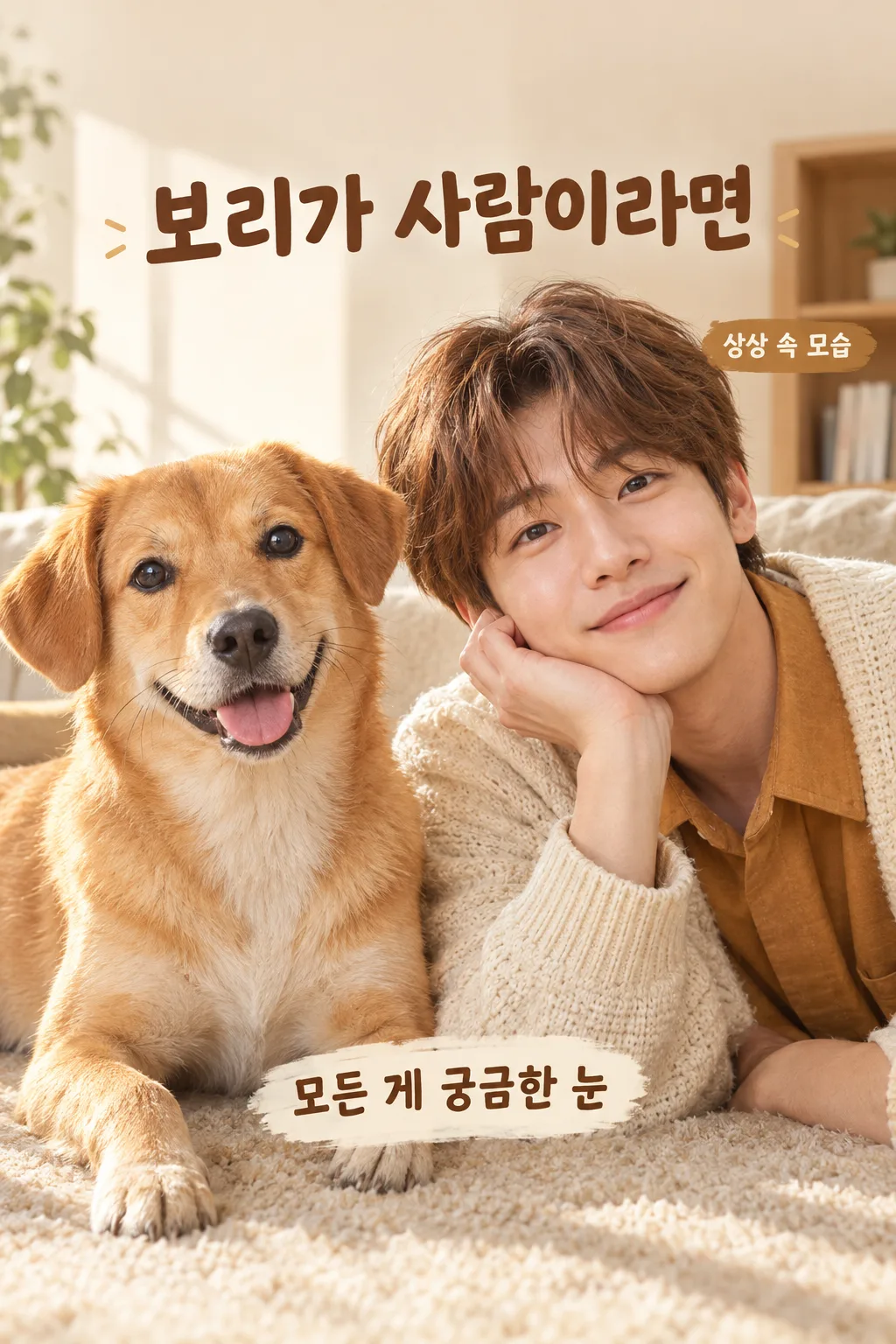
Translate your pet's markings and collar into an imaginary adult's clothes in a photographic paired portrait.
What you get
- A photographic portrait of a pet and an imagined adult
- A caption pairing visible animal clues with clothing
- A shared bench scene or two facing framed portraits
Fill in the fields
- 1Fill in the fields
- 2Copy the prompt
- 3Paste it into a GPT chat
- 4Send it as is and you get an image like the thumbnail example
- 5Attach One pet photo, optional with the prompt and your photo is used in the result Optional
Full prompt 3,848 characters
Generate one finished photographic pet-as-a-person social portrait now. Output exactly one finished 2:3 portrait image, 1024x1536 pixels. Leave the top 12% and bottom 15% free of essential text.. Default 2:3 vertical. The defining device is a VISIBLE CLUE PAIR: translate the pet's visible markings and collar into a fictional adult's wardrobe, then show the correspondence in one short caption. Both the animal and the imaginary adult remain recognizable protagonists.

NAME: "【Pet name】"
ANIMAL APPEARANCE: "【Animal appearance】"
CLUE PAIR: "【Clues to translate】"
ADULT WARDROBE: "【Adult wardrobe】"
MEETING FORMAT: "【Meeting format】"

If a pet photo is attached, preserve that animal's species, face, ears, coat and markings. The photo overrides conflicting appearance notes. Translate only visible clues: if a requested clue is absent from the photo, omit that correspondence instead of repainting the animal. With no photo, directly invent the animal described in ANIMAL APPEARANCE; never request an attachment. A blank appearance defaults to a black cat with a white chest and a green collar. This is playful visual imagination, never a diagnosis of personality, sex, age or health.

Make the human entirely fictional and adult, with natural human anatomy, skin and hair, wearing ADULT WARDROBE. Use coat color as clothing color and a distinct pet marking as a fabric panel; use collar color as a scarf or bag accent. For the example, a black cat's white chest becomes a white shirt beneath a black jacket, and its green collar becomes a green scarf. No animal ears, tail, muzzle, cosplay, celebrity likeness or branded clothes. Keep the animal itself uncostumed.

MEETING FORMAT changes the composition itself:
Shared bench portrait: one continuous photographic room with a broad bench. The actual animal sits on the left of the bench and the imagined adult sits on the right, sharing the same floor, light and contact shadows. Full unbroken scene, no frames or dividing lines. Both faces visible; the pet is large, not a thumbnail inset. Place the clue caption on a narrow editorial line below the shared bench.
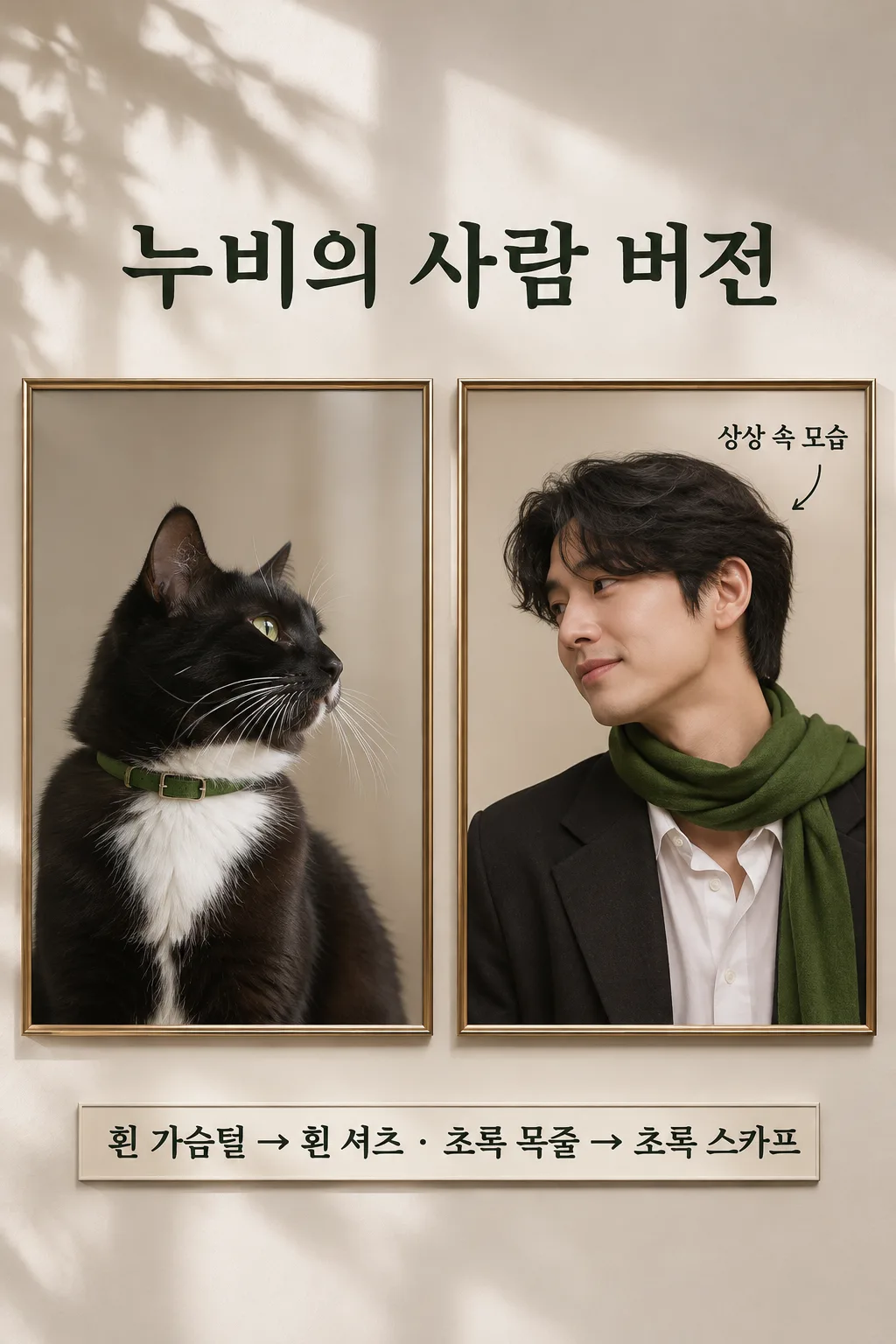
Facing framed portraits: remove the bench and continuous room entirely. A neutral gallery wall holds two separate tall rectangular photographic frames side by side. The left frame contains only the animal portrait; the right frame contains only the fictional adult portrait. Turn the subjects inward toward each other. Each frame has its own visible border and portrait background, separated by wall space. Place the clue caption between the bottoms of the frames as a shared gallery label. This is one finished flat image of the paired portraits, not two output files. Keep both frames large.
An absent format defaults to the shared bench. Keep the same wardrobe, animal markings, soft daylight and restrained cream, black and green palette in both formats; do not substitute a color change for the requested architecture.

Set a large English heading "【Pet name】 as a person" near the upper-middle. Print "Imagined person" once beside the adult. Below the portraits, print a concise English correspondence derived only from CLUE PAIR; for the example use "White chest → white shirt · Green collar → green scarf". Never print internal field names. Keep all words within the central 18–82% of image height and away from faces. Render fur, whiskers, fabric and human skin with photographic detail, honest texture and coherent light. No illustration, transformation half-face, extra subjects, watermark, invented biography or personality score. Deliver the finished image only.

[Final output format]
Output exactly one finished 2:3 portrait image, 1024x1536 pixels. Leave the top 12% and bottom 15% free of essential text.
This selected output format takes priority over any fixed canvas size or aspect ratio elsewhere in this template. Adapt the composition, text zones and margins to the selected canvas without stretching or cropping essential content. Device safe areas apply only when a device is selected. Never print these format instructions on the image.
How did it turn out?
More cards in this category

How to use it · FAQ
The white chest became a white shirt
We entered a black cat with a white chest and green collar. Both runs gave the adult a black jacket, white shirt and green scarf, with an arrow caption showing the correspondence. The animal stays an animal; its visible clues become clothes.
Removing the bench made them face each other
Changing only Meeting format removed the shared bench and placed each subject inside a separate bordered portrait, facing inward. The shirt and scarf stayed. Choose the bench for a shared keepsake scene, or the frames to compare the two portraits.
Clothes matched; white paws varied
The two bench runs differed in the extent of white fur on the paws and the adult's pose. These tests used a fictional cat without an attached photo, so they do not establish preservation of a real pet's markings. With a photo, visible markings take priority over appearance notes; a requested collar absent from the photo should be omitted from the correspondence.
The name and imagination label were readable in all three images. The clue caption sat below the requested central safe area. Keep the full vertical image and check the caption before making a square crop. If needed, ask: “Move the clue caption directly beneath the portraits.”
Last checked · Published