
전체 · SNS/카드뉴스 · 밈·공감
073우리 반려동물이 사람이라면
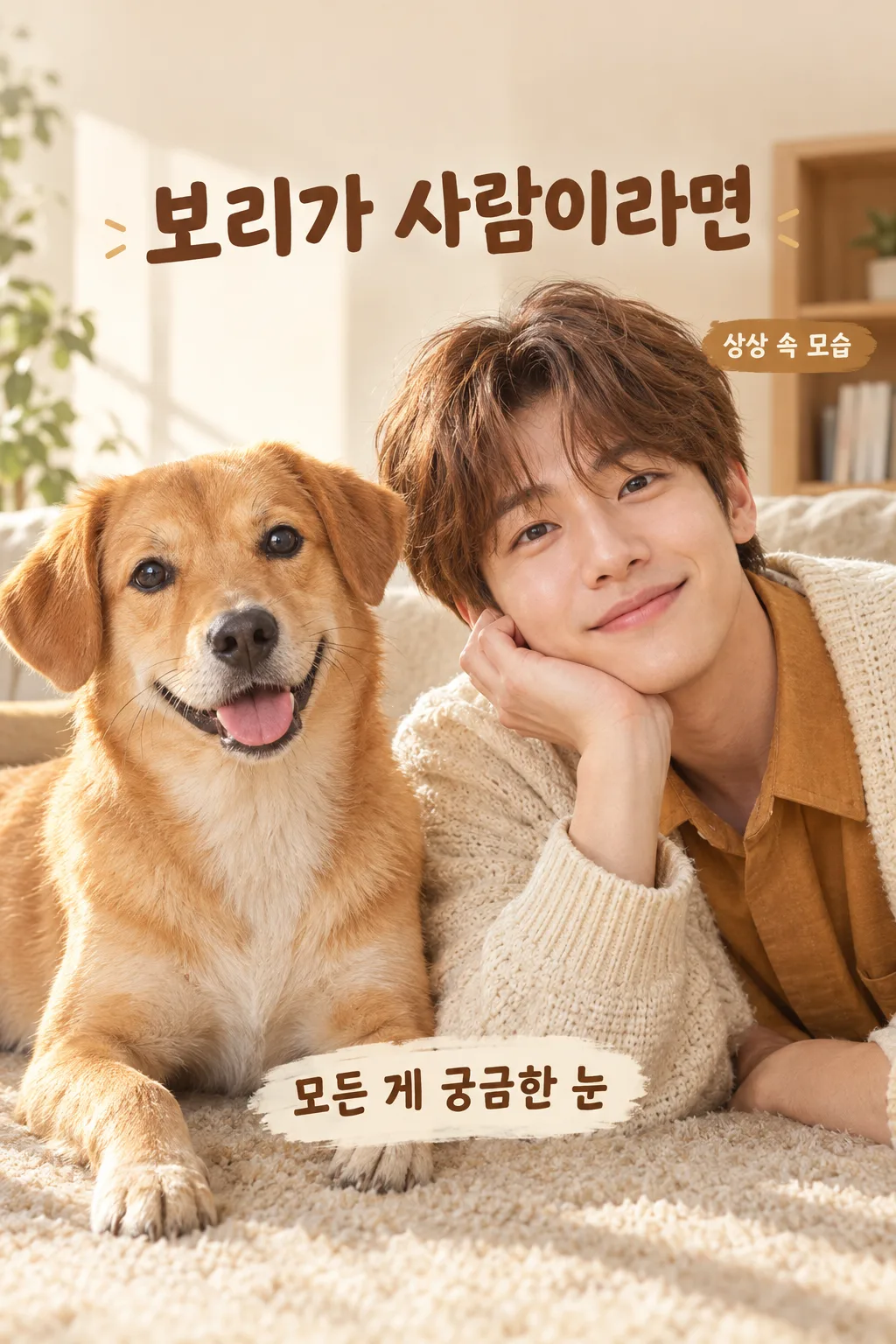
반려동물 보호자가 실제 사진과 상상 속 사람 모습을 한 장에 담아 인스타나 스레드에 올려요.
칸 채우기
- 1칸을 채워요
- 2복사 버튼을 눌러요
- 3GPT 채팅창에 반려동물 사진을 올리고, 프롬프트를 같이 붙여넣어요
- 4반려동물 사진과 프롬프트가 둘 다 들어간 걸 보고 보내요
프롬프트 원문 보기 6,672자
Generate this image now. Draw it directly - do not describe it, explain it, or ask questions.
Output size 2480x3508 pixels, A4 portrait, 300dpi, print-ready poster.
Create exactly ONE finished 2:3 vertical Korean social image. The user attached ONE genuine photo of their own dog, cat, or other companion animal in this same message. Show the actual pet and an imaginative human interpretation together inside one coherent finished page. Do not produce separate images, a carousel, code, a crop guide, or a second-turn request.

[Purpose]
The owner wants a playful shareable answer to "what if my pet were a person?" for Instagram or Threads. The pet's real name is "【반려동물 이름】". The desired imaginative character feeling is "【사람 모습의 느낌】". The requested one-line copy is "【한 줄 소개】". This image is openly fictional. It does not assess the animal's real psychology, breed, health, age, sex, ability or behavior. The person shown is a fictional translation of the pet's visible color, markings, expression and posture, not a portrait of any real person. Use the uploaded photo as the source for the pet itself and as a visual clue for the imagined person.

[Scene]
Make one beautiful vertical portrait page with a clear visual conversation between two subjects. On the left or lower-left, show the real species and physical appearance of the attached pet in a convincing photographic portrait, occupying at least 30% of the visual area. On the right or center, show ONE original imagined human adult, occupying around 45-55%, with an outfit color and small stylistic details drawn from the pet's visible fur, feathers, pattern or collar colors. Give the person a relaxed posture and expression consistent with the selected feeling, without literal animal ears, tail, fur on human skin, or a costume. The human should not be made from a celebrity or the pet owner's face. The two subjects share a consistent light and setting, such as a quiet room, a park bench or a simple studio backdrop, chosen to fit the actual photo's mood without inventing a biographical event. Arrange the two as a single magazine-like feature photograph with a little editorial type, not a comic split screen, action figure box, character sheet, before/after graphic, or two independent pages.

[Attached photo]
The animal photo is required and is the factual anchor. Copy the animal's species, coat or feather pattern, distinctive markings, body shape, ear shape, eye color when visible, nose color and collar if present. Preserve those facts instead of turning every subject into a golden dog or grey cat. Do not change the actual pet's markings to match the person. If the photo is blurry, work with only what is visible; do not assert a specific breed or medical state. The human is deliberately fictional and should feel like a visual analogy: for a black-and-white cat, a restrained black-and-cream wardrobe; for a ginger dog, warm russet fabric; for a small bright-eyed pet, alert posture. These are examples, not rules that override the photo. Do not infer the animal's gender, exact age or personality as facts. If no animal photo is attached, ask for one instead of faking a named pet.

[Text layout]
Leave the top 12% and bottom 15% of canvas height without essential words for website overlay safety. In the upper-middle area, print a large two-line title: "【반려동물 이름】가 사람이라면" or adjust the Korean subject particle naturally if the name ends in a consonant. Make the name especially visible at list thumbnail scale. A small but still phone-readable label near the human portrait says "상상 속 모습" so no one mistakes the fictional person for a real individual. In a quiet text zone around 72-82%, show one concise introductory line. If "【한 줄 소개】" is "알아서 골라줘", do not print those words: write one original Korean phrase of at most 15 characters describing only the visual idea and "【사람 모습의 느낌】", not a factual trait of the real pet. Otherwise print the provided phrase exactly. Do not print the input field names or the feeling phrase itself as a label. Do not include fake breed, age, relationship, job, school, ranking, personality test or health fact.

[Style]
Make a polished, friendly Korean social portrait with photographic detail and a lightly editorial title. Let the actual animal determine the palette and physical analogy. Use real fur direction, natural whiskers, paws and anatomy; realistic human skin, hands and fabric. The human styling should be contemporary and plausible, with one or two subtle visual echoes of the pet rather than theatrical cosplay. For a playful feeling choose brighter natural light and an open pose; for a calm feeling choose softer light and quieter posture. Avoid a permanent pastel pink template, broad neon wash or a toy-package look. The image should make viewers say "that's exactly my pet's vibe" because the original animal remains recognizable.

[Visual hierarchy]
At site-card thumbnail size, the viewer must read the pet's name and see pet plus person as one intentional pairing. At phone size, "상상 속 모습" and the short one-line copy are readable. The pet should never become a tiny decorative inset: both pet and fictional human are protagonists, though the human may be somewhat larger. Separate faces enough that they do not blend into a chimera. Keep the text off the animal's eyes, muzzle and the person's face. Use subtle solid-tone text backing if needed. One canvas only, with no empty placeholder for another picture.

[Lighting and texture]
Photographic light direction must agree across pet and person. Skin and fur should have honest texture, not plastic smoothing. Feet, paws, ears, whiskers and human fingers should be anatomically coherent. Reflections and shadows should sit naturally in the scene. Retain the animal's authentic expression; do not force a grin or anthropomorphic teeth. Make the image feel like a personal keepsake, not a fabricated identity card or a transformation video still.

[Text rules]
Spell "【반려동물 이름】" exactly. If grammar requires "이" before "가", add it as a grammatical particle while preserving the name. Render "상상 속 모습" exactly and once. Render the entered one-line copy exactly unless it asks you to choose. Never print "알아서 골라줘", the selected feeling as a form label, placeholder braces, English filler or extra captions. Do not state an invented real animal fact. Keep the image clearly identified as imagination through the label.

[Avoid]
No celebrity, real person's face, copied animation character, branded outfit, pet figurine package, separate output, pet-to-human morph half-face, animal ears on person, fake breed or age, invented personality claim, too-small pet portrait, anatomically wrong pet, extra animal, extra human, watermark, mockup or code.
이 카드도 많이 사용해요



쓰는 법 · 자주 묻는 것
이런 때 쓰세요
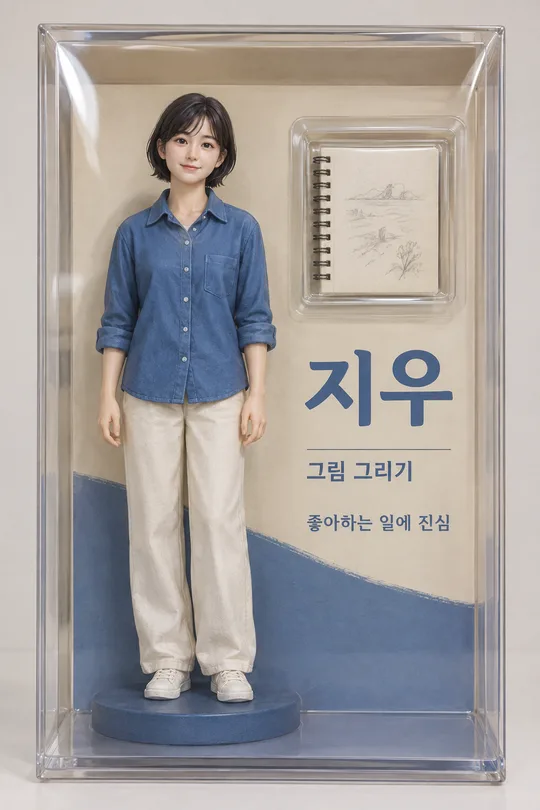
반려동물 사진을 보며 ‘얘가 사람이라면 어떤 느낌일까?’ 하고 상상한 적이 있다면 써 보세요. 실제 사진 속 반려동물과 상상 속 사람을 같은 세로 이미지에 담습니다. 피규어 박스처럼 장난감으로 만드는 카드와 달리, 진짜 털색과 표정에서 옷과 분위기를 가져와 두 인물을 나란히 보여 줍니다. 결과는 인스타그램 피드나 스레드에 한 장 그대로 올릴 수 있는 개인적인 이야기입니다.
칸 채우는 법
- 반려동물 이름은 사진 속 아이의 실제 이름이나 부르는 별명을 쓰세요. 제목에 크게 들어가므로 철자를 확인하세요. 공개가 부담스럽다면 평소 부르는 짧은 별명도 좋습니다.
- 사람 모습의 느낌은 상상하는 인물의 표정과 자세를 정합니다. 동물의 실제 성격을 판정하는 칸이 아닙니다. 사진에서 느껴지는 인상과 다르게 상상해도 괜찮습니다.
- 한 줄 소개는 그림 아래쪽에 들어가는 짧은 문장입니다. 직접 쓸 수 있고, 떠오르지 않으면 「알아서 골라줘」를 누르세요. 모델이 고르는 말은 그림의 느낌을 소개하는 상상 문구여야 하며, 반려동물의 실제 성격이나 건강을 단정하지 않습니다.
사진을 넣는 순서
- GPT 채팅창에 반려동물 사진 한 장을 올리세요. 아직 보내지 마세요. 얼굴과 털색·무늬가 또렷한 사진이면 닮은 요소를 잡기 쉽습니다.
- 같은 입력 칸에 이 카드에서 복사한 프롬프트를 붙여넣으세요.
- 사진과 프롬프트가 둘 다 들어간 것을 확인한 뒤 한 번만 보내세요. 완성된 세로 이미지 한 장을 받는 구성입니다.
사진만 먼저 보냈다면 프롬프트 끝에 「위 사진으로 그려줘」를 덧붙여 보내세요. 여러 동물이 함께 나온 사진이라면 어느 아이가 주인공인지 헷갈릴 수 있습니다. 한 마리가 분명하게 보이는 사진을 고르는 편이 좋습니다.
그림이 나오면 꼭 볼 것
사진 속 반려동물의 종, 귀, 털색, 무늬, 눈 주변 특징이 유지됐는지 먼저 보세요. 옆의 사람은 실제 존재하는 사람이 아니라는 의미의 「상상 속 모습」이 읽혀야 합니다. 상상 속 사람이 유명인 얼굴이나 동물 귀를 단 코스튬처럼 보이면 이 카드의 재미가 약해집니다. 반려동물이 너무 작게 밀리지 않았는지, 이름과 한 줄 문구가 정확한지 확인하고 저장하세요. 한 장 안에 두 주인공이 모두 보여야 잘린 사진을 다시 이어 붙일 일이 없습니다.
자주 묻는 것
- 우리 아이 사진이 꼭 필요한가요? 네. 털색·표정·무늬가 실제 사진에서 나와야 ‘우리 아이’의 상상화가 됩니다.
- 고양이만 되나요? 아니요. 개, 고양이 또는 다른 반려동물도 사진의 실제 종과 특징을 기준으로 그립니다.
- AI가 진짜 성격을 분석하나요? 아니요. 그림은 사진을 바탕으로 한 시각적 상상이며, 성격·건강·나이를 판정하지 않습니다.
- 두 장으로 나뉘나요? 아니요. 실제 반려동물과 상상 속 사람이 완성 이미지 한 장 안에 같이 들어갑니다.