All · Social posts · Memes
453Three-meal diary story — today’s table in one image
Record three meals, their menus, a date and a reflection in one portrait diary.
What you get
- One three-meal diary story; fictional food for meals without photos
ChatGPT Free OK
Fill in the fields
- 1Fill in the fields
- 2Copy the prompt
- 3Paste it into a GPT chat
- 4Send it as is and you get an image like the thumbnail example
- 5Attach a real photo that fits the card and it is used in the result: a background photo for background cards, a person or food photo for those cards Optional
Full prompt 4,053 characters
Generate this image now. Draw it directly; do not describe it, explain it, or ask questions.
Output size 1080x1920 pixels, 9:16 portrait story. Keep all text inside the central 80% of the height.
Create exactly ONE finished full-bleed three-meal diary story. Default 9:16; obey the shared selected size. One image, no mockup, no comparison panel, no surrounding tabletop. Title exact: "Haru’s three meals". Date exact: "【Date】". Breakfast menu exact: "【Breakfast menu】". Lunch menu exact: "【Lunch menu】". Dinner menu exact: "【Dinner menu】". Reflection exact: "【One line】". Meal labels exact: "Breakfast", "Lunch", "Dinner". Render each menu once on one line next to its matching meal. Do not translate supplied strings. Output lettering is English, except literal user strings and the fixed name above.
PHOTO RULE: Breakfast attachment identifier "【Breakfast photo】"; lunch "【Lunch photo】"; dinner "【Dinner photo】". These are filenames or attachment positions, NEVER printed text. Match each identifier to the actual attachments. If all identifiers are blank, map one attachment to breakfast; map multiple attachments in breakfast/lunch/dinner order. A single source image containing three meals in top-to-bottom order maps to all three. Preserve attached food as photographed: identical vessel, food shape, topping placement, piece count, texture and colors. Fit without cutting the vessel or stretching. Do not redraw supplied food as illustration, even in hand-drawn mood. Only its surrounding diary design changes. If a meal has no usable photo, create fictional food matching that menu; do not claim invented food came from an attachment. Do not request follow-up or produce a blank photo placeholder.
MOOD: "【Mood】"; default "Diary stickers". Use the selected mood only:
- Diary stickers: buttery paper-colored full-bleed background, orange and navy lettering, tiny separate tape and sun stickers in gaps, natural photographic fictional food.
- Clean log: white background, charcoal type, clear grid and fine gray dividers, natural photographic fictional food, no stickers.
- Hand-drawn: pale mint paper-colored background, readable pencil lettering, lightly painted watercolor fictional food with accurate real-food shapes, subtle pencil utensil accents in gaps. Attached meals remain photographs.
Arrange a strong title and date above three generously sized meal areas in reading order; reflection placed in an open header or footer text area. Keep critical text within 12–85% canvas height with side clearance. Fill the canvas with the actual story design, no paper-on-table scene. Stickers have visible background between all neighbors and never touch lettering or food. Avoid tiny crowded labels.
If date or reflection is blank omit its complete line and divider, close the gap. If a required menu is unexpectedly blank, omit its text and generated dish rather than inventing a meal; preserve any explicitly mapped photo. Never infer dates or weekdays. Never invent calories, nutrition, portion numbers, health effects, prices, brands or slogans. Use no people, real brands, logos, recognizable packaging or branded product shapes; vessels and objects have original fictional designs. No app UI, watermark, signature or verification notes.
For generated food, use real-photo observations: asymmetrical toast browning and irregular egg white edges, tangled pasta with uneven sauce and distinct basil leaves, flaky salmon with uneven cuts and scattered toppings; adapt equally specific natural details to other menus. Avoid identical repeated pieces, coiled artificial noodles and plastic gloss. Preserve literal date digits, punctuation, spacing and each text character. Before finishing compare every rendered line character by character against the supplied strings.

[Final output format]
Output size 1080x1920 pixels, 9:16 portrait story. Keep all text inside the central 80% of the height.
This selected output format takes priority over any fixed canvas size or aspect ratio elsewhere in this template. Adapt the composition, text zones and margins to the selected canvas without stretching or cropping essential content. Device safe areas apply only when a device is selected. Never print these format instructions on the image.
How did it turn out?
You may also like
How to use it · FAQ
Keep breakfast, lunch and dinner together in one finished story. The default format is 9:16; use the shared size selector to change it. This card makes one image, without a separate editing or assembly step. Without photos, it creates fictional food matching the supplied menus. Such images are diary illustrations rather than evidence of a real meal.
Breakfast menu, Lunch menu and Dinner menu are required. Keep each menu to one short line. Date is literal text: leaving it empty removes the date, and no weekday is inferred. One line is your reflection; leaving it empty removes its line and divider. The fixed diary name is Haru.
In each optional photo field, identify an attached filename or attachment order. For example, use breakfast.jpg and lunch.jpg, and attach these files together with the copied prompt in the same image AI message. The photo field identifiers are never printed. Only meals without a usable photo are generated. With blank photo fields, a single attachment maps to breakfast; multiple attachments map to breakfast, lunch and dinner in order. An unidentifiable filename does not prove that a photograph was supplied.
Diary stickers uses a buttery background and small separated tape accents. Clean log uses a white background and clear compartments. Hand-drawn uses pencil lines and light watercolor textures. All three create the same three-meal diary format. Attached meals stay photographic even in Hand-drawn mode; only the surroundings change. Stickers occupy gaps and never touch food or lettering.
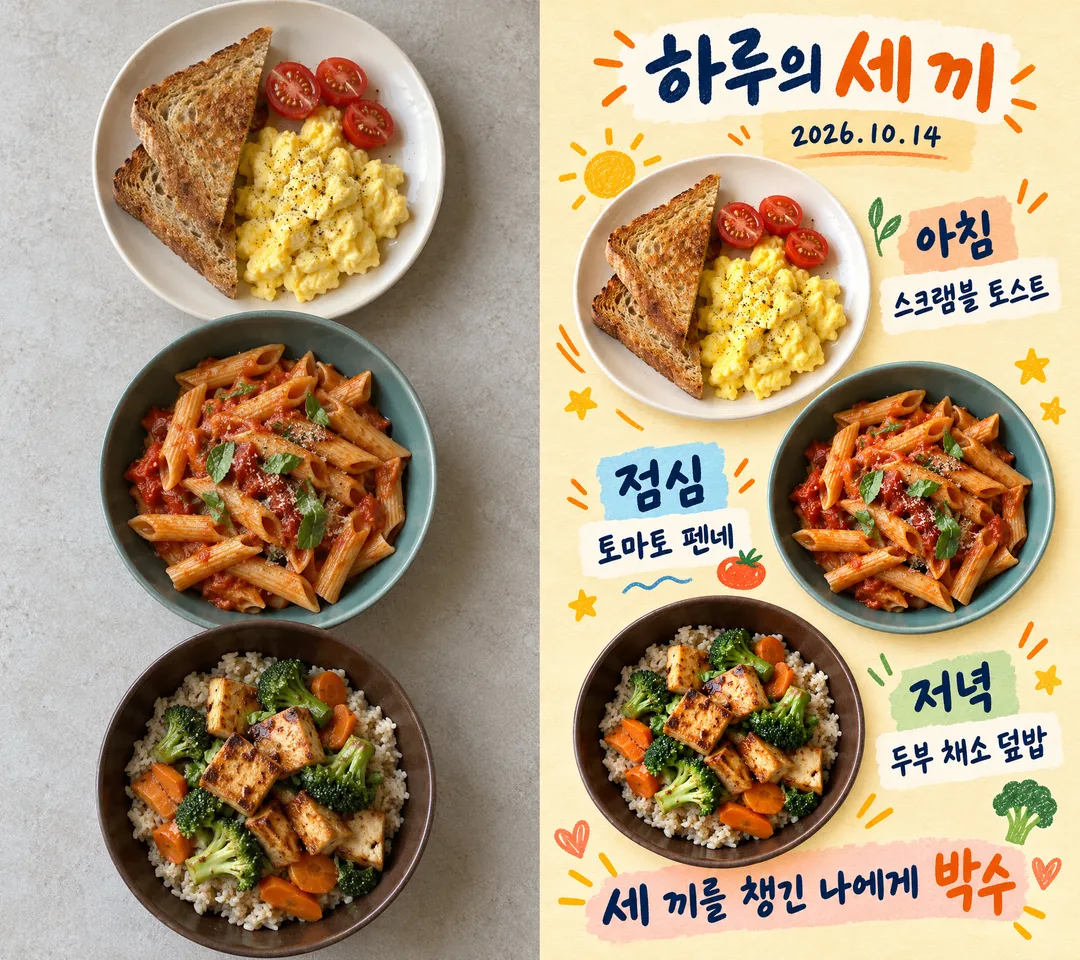
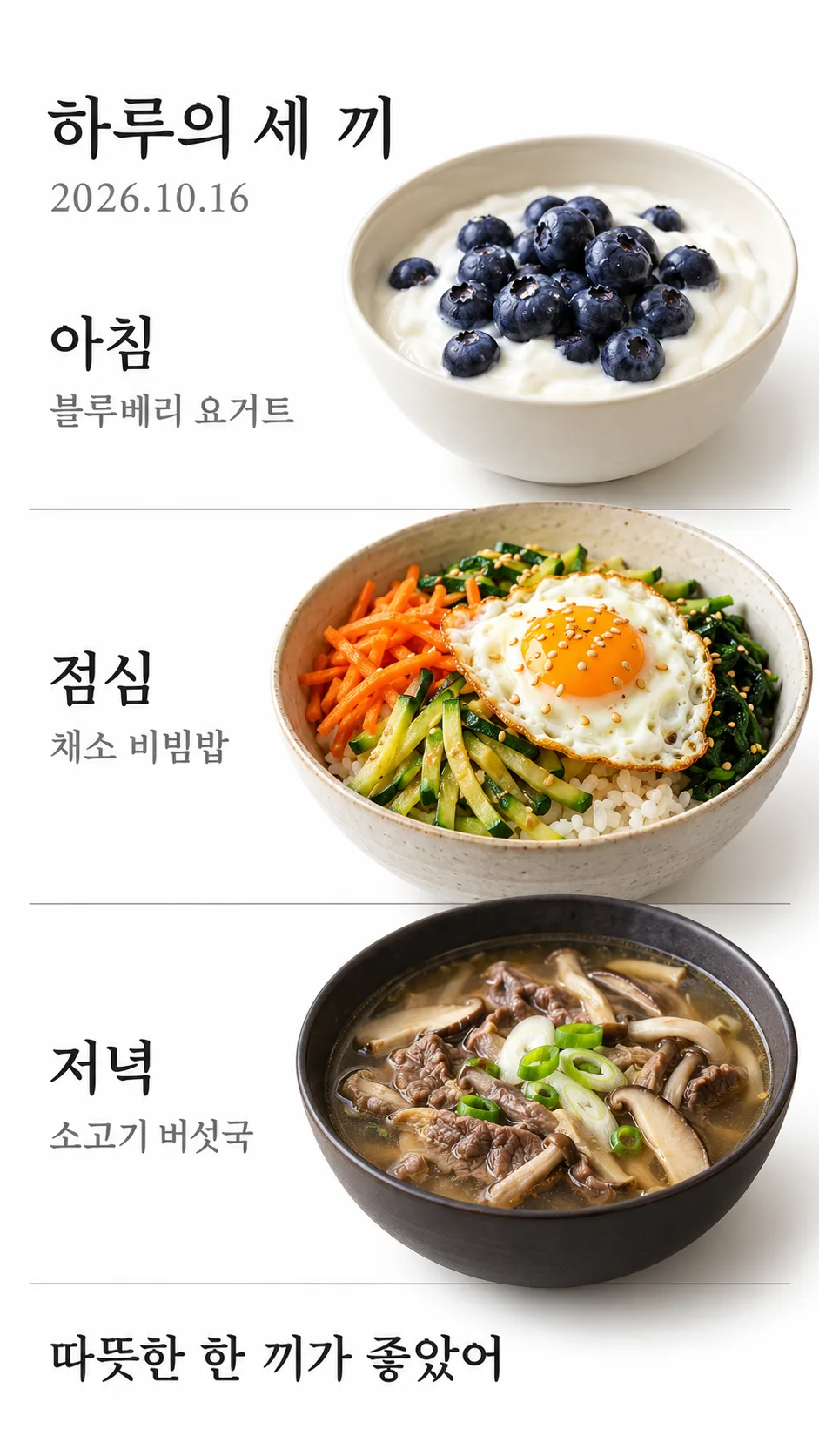
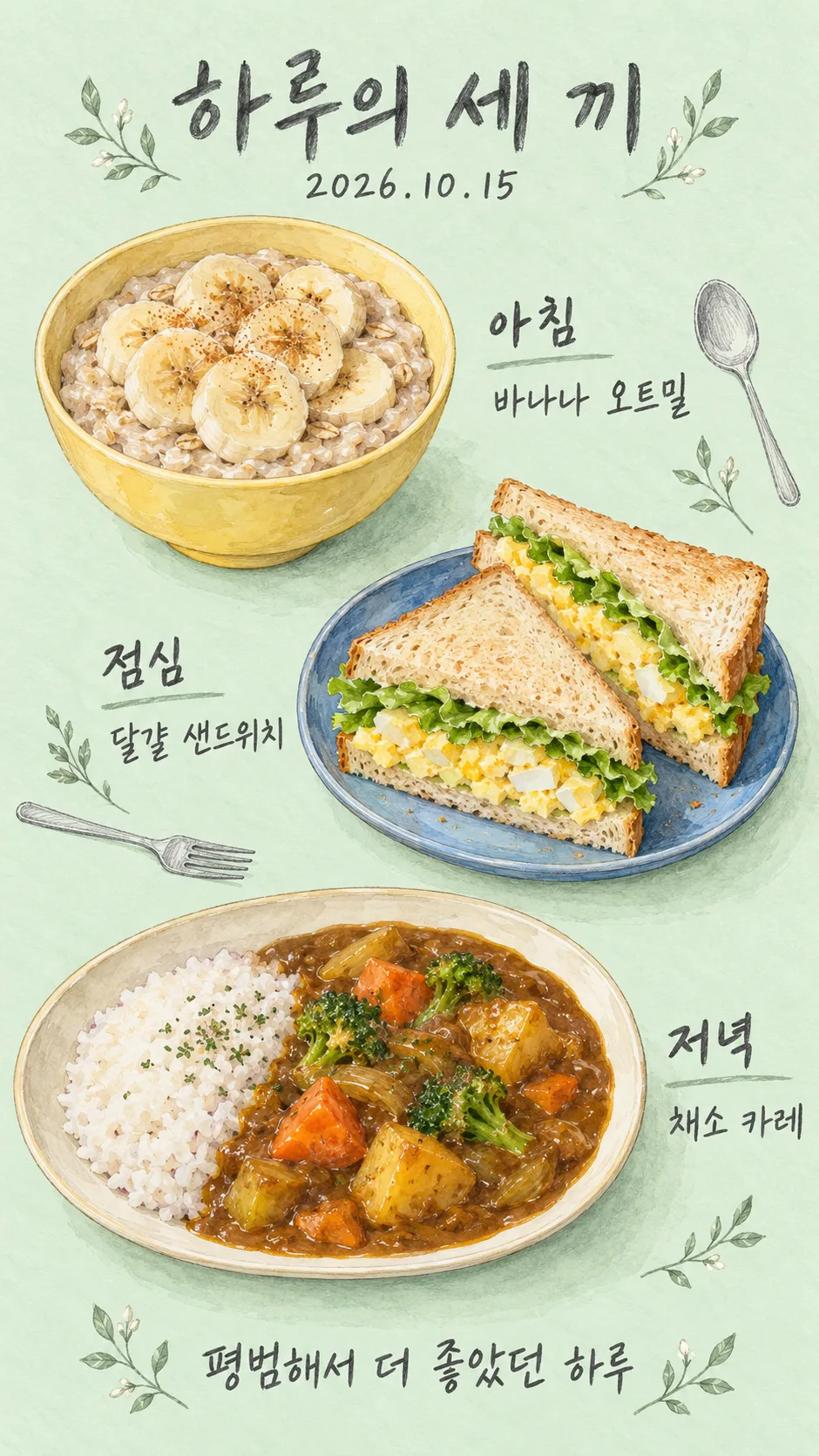
The cover is independently generated. Example one compares a fictional food source made with the built-in generator against its photo-based result. Examples two and three are photo-free Clean log and Hand-drawn results with different menus. Real food search photographs were used only for internal visual reference.
Zoom in to compare every date digit, menu character, meal order and reflection. Compare the plate color, toppings and food shape with the attachments. If they change, attach the source again and request a new image with the exact quoted text. Never estimate calories, health effects or portion numbers. Use your own photographs or images you have permission to use. Check external service pricing and terms with that service.