

All · Social posts · Tips & facts
069Personal Style Lookbook from Your Photo
Turn a personal photo and chosen season into a one-page style lookbook with five outfit elements.
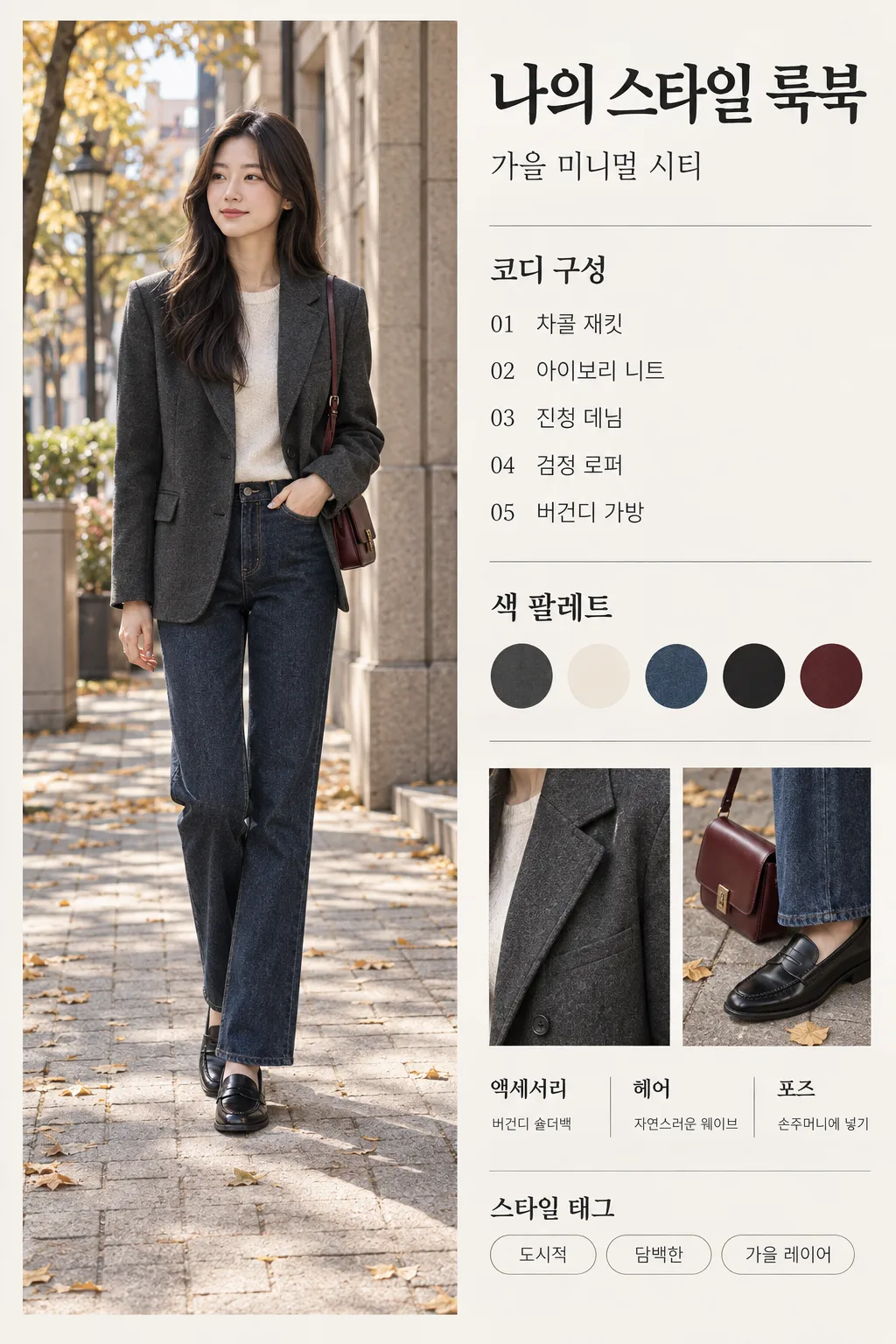
Fill in the fields
- 1Fill in the fields
- 2Copy the prompt
- 3Paste it into a GPT chat
- 4Send it as is and you get an image like the thumbnail example
- 5Attach Your own photo with the prompt and your photo is used in the result Optional
Full prompt 7,680 characters
Generate this image now. Draw it directly - do not describe it, explain it, or ask questions.
PHOTO RULE (this overrides any other line in this prompt, before or after it, that calls the photo required or mandatory or says to ask for it): if a photo is attached, use it exactly as the instructions below describe. If no photo is attached, never ask for one and never stop — invent a fitting fictional subject (person, pet, food, product or place, whatever this card is about) in the spirit of the card's example image, and finish the image.
Create exactly ONE finished English 2:3 portrait fashion lookbook image. The user has attached their own photo in this same message. Use that attachment as the required identity reference. Do not make multiple images, sequential pages, a separate outfit recommendation, code, or a request for "next". Everything below belongs on one canvas.

[Purpose]
Make a personalized style-analysis lookbook that its owner can save and post on Instagram. Selected style: "【Desired style】". Selected season: "【Season】". This is a creative styling proposal from a supplied identity photo, not a color-season diagnosis, body assessment, attractiveness score, shopping list, or one-outfit answer for today's weather. Build one coherent signature look with five named clothing components, a visual color palette, two close-up photographs, accessories, hair direction, pose, and style tags. If style is "Minimal city", do not print those words: choose one coherent style based on the user's stated season and the photo's visible clothing or overall vibe only; do not infer personality, job, gender, ethnicity, income, exact body size, or a scientific color type.

[Attached photo]
The uploaded photograph is mandatory. Keep the same recognizable face, facial structure, natural skin texture, hairstyle identity, and distinguishing features. Do not turn the person into a celebrity, generic model, anime figure, or a different face. The styling can change garments, accessories, hair arrangement, and pose, but must preserve identity. If the photo only shows a face or upper body, design a plausible full-length editorial fashion photograph without claiming to know the person's exact body measurements; avoid slimming, enlarging, or judging their body. If no image is attached, do not invent a person's identity or claim a match. The final image should clearly center the photographed person as one continuous full-body figure. For a real photo texture, consult web examples of editorial full-length fashion photography and garment details if web access is available. Use those only to understand pose, drape, seams, fabric weave, lens perspective, and natural light; never copy a specific photo, brand, logo, or another person's face.

[Scene]
One polished magazine-like vertical lookbook page. A large photorealistic full-body hero photograph occupies roughly the left 58% from below the headline to about 72% of page height. Show head and shoes fully within frame, with realistic fabric folds, believable scale, and a natural environmental setting suited to the chosen style and season. Beneath it, two photo-real close-up crops made within the same generated page: one garment or fabric detail and one accessory or shoe detail. These are content panels in the SINGLE image, not separate outputs. A narrow right editorial column holds readable modular details. At the bottom, a shallow strip has pose and style tags. Avoid an oversized blank fashion image that squeezes the five outfit components into illegible captions.

[Text layout]
Top 0-12%: large English display title derived from the selected style, followed by "My style lookbook" in readable text and a short season line "【Season】 Look". If "Minimal city" was selected, replace it with the chosen real style name; never print the instruction itself.
12-72%: hero full-body photo at left. At right, heading "Outfit components" and exactly five numbered component lines: 01 Top, 02 Bottoms, 03 Outerwear or layer, 04 Shoes, 05 Bag. Give each a concrete garment name and one practical fit, fabric, or layering note appropriate to "【Season】". For a hot summer, 03 can be a light shirt layer rather than a heavy coat. Beneath or alongside, heading "Color palette" with four or five named swatches actually visible in the outfit; swatch names must match the garments. Use simple English color words and a believable, coherent combination.
72-88%: two close-up real-photo panels at left. At right, three compact labeled notes: "Accessories", "Hair", "Pose". Accessories must appear in the hero photo, hair guidance must be a styling suggestion rather than a claim that a face or hair type needs correction, and the pose note must describe the pictured pose.
88-100%: a small "Style tags" band containing three or four concise English tags with good contrast. A single short editorial line may tie the look together. Render no brand, price, store, size, or purchase link.

[Style]
Let the style and season drive the entire art direction. For Minimal city, favor architectural lines, charcoal, stone, and one restrained accent; for Vintage casual, tactile denim and softened warm neutrals; for Classic preppy, tailored layers and scholarly contrast; for Street casual, strong street geometry and relaxed texture; for Romantic mood, softer fabric and a season-appropriate palette. These are starting points, not rigid gender rules. If the photo suggests another cohesive styling direction and the user chose "Minimal city", name it naturally. Use the supplied example only for density and magazine page structure; do not copy its pink palette, cafe setting, text, or model.

[Visual hierarchy]
The full-length person and lookbook title must register at list thumbnail size. Five numbered components should read at normal phone size, with a more compact palette and notes. Keep every module connected to the same single outfit and the same subject, rather than showing several incompatible outfits. Show exactly one hero full-body photograph and two supporting detail photographs. Align baselines, preserve margins, and leave sufficient contrast behind unrequested foreign-language text.

[Lighting and texture]
Use realistic editorial fashion photography with natural skin detail, correct hands and feet, authentic garment construction, knit, cotton, denim or wool texture as seasonally appropriate, and consistent light across the hero and detail crops. A restrained matte magazine print surface may frame the photos. No illustration, doll skin, obvious AI collage seams, glossy neon, floating items, fake fabric, or cut-off shoes.

[Text rules]
Render all labels in exact English, especially "My style lookbook", "Outfit components", "Color palette", "Accessories", "Hair", "Pose", and "Style tags". Keep small writing short enough to read. Do not print input labels, a body-type judgment, a personal-color season, placeholder braces, prompt instructions, or an extra page. The selected style and season must agree with the clothes, weather weight, setting, and palette.

[Avoid]
No copied model face, face morphing, celebrity likeness, branded products, invented measurement, shopping link, outfit for a specific event or today's forecast, beauty ranking, objectification, mockup device, cropping plan, or multiple output images.

[Final output format]
Output exactly one finished 2:3 portrait image, 1024x1536 pixels. Leave the top 12% and bottom 15% free of essential text.
This selected output format takes priority over any fixed canvas size or aspect ratio elsewhere in this template. Adapt the composition, text zones and margins to the selected canvas without stretching or cropping essential content. Device safe areas apply only when a device is selected. Never print these format instructions on the image.
How did it turn out?
More cards in this category
How to use it · FAQ
Use this card when you want to publish a stylized personal lookbook image on your Instagram feed. Attach a clear, full-body photo of yourself to preserve your natural facial features, skin tone, and body shape in the final generated magazine page. Select your preferred fashion direction or choose the automatic option to let the system determine a cohesive seasonal aesthetic based on your reference photo.
Upload your reference photo into the chat input area alongside this copied prompt, making sure both attachments are fully loaded before submitting your request. Check that the resulting layout contains one prominent full-body view, two corresponding clothing detail crops, five accurate outfit elements, and a coordinated color palette. Verify that the depicted clothes match your selected season and that your facial likeness remains consistent throughout the composition.
If the generated face lacks resemblance or the outfit elements appear misaligned, reply with a focused correction asking to regenerate the image while strictly preserving your original facial features and selected style. Review your personal photo before uploading to ensure good lighting and framing, and verify that all visible text renders cleanly without placeholder errors or unintended distortions.
A photo-to-image example
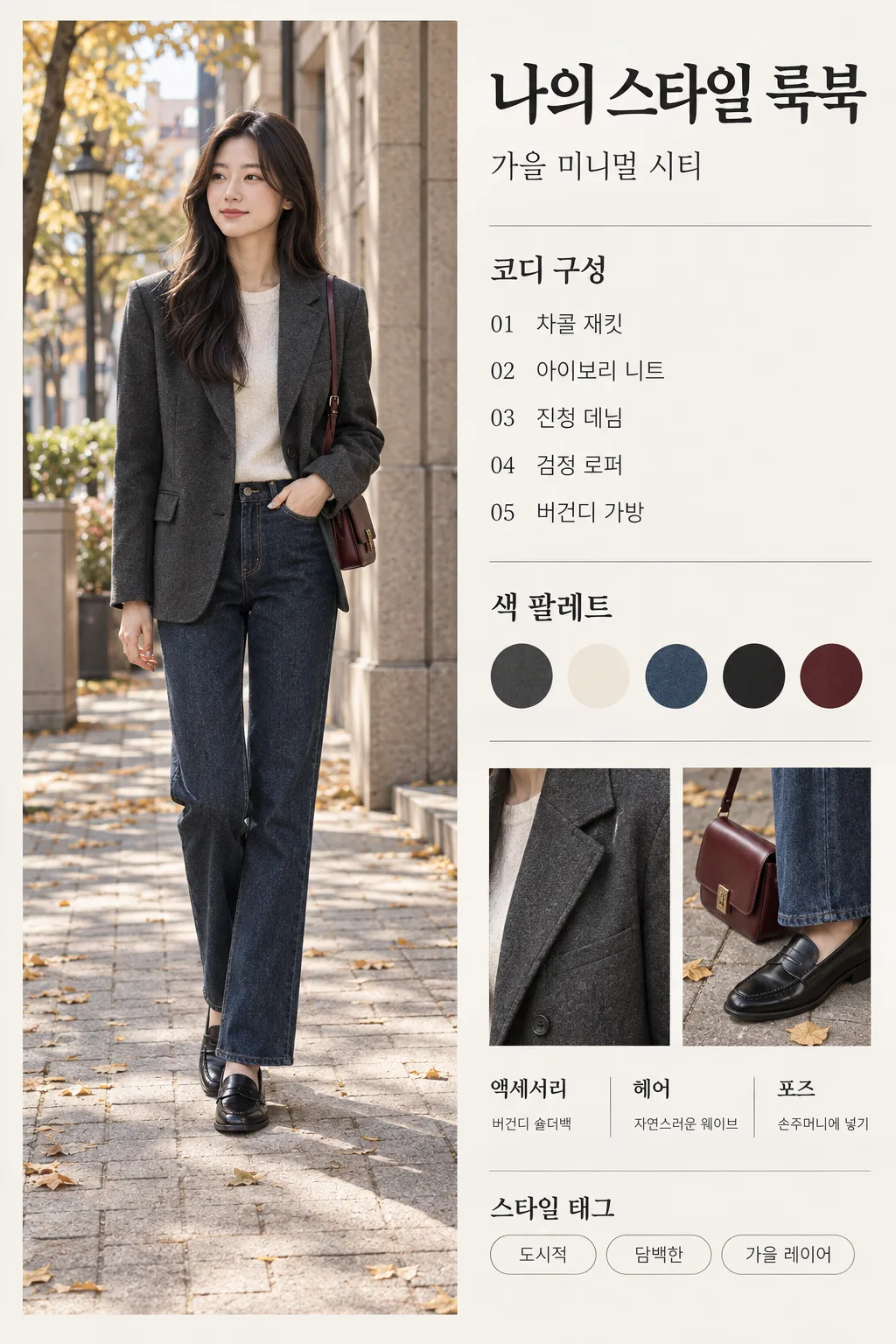
The first image compares the original on the left with the result on the right; the second is the existing example. The comparison uses fictional photos made with a subscription image tool.
The short bob, smiling eyes, mouth, and cheek mole, denim pants, white sneakers, and hands-in-pockets pose are preserved. The gray sweatshirt and black cloth bag changed to a knit, wool jacket, and brown bag, turning it into an autumn magazine-style lookbook.
There are 5 outfit items, 2 full-body and bottom detail shots, and a tag. A photo piece is also added to the right, making the total number of photos exceed 3, and the shoe palette is listed as gray-beige rather than actual white.
"Remove the added photo piece on the right to leave only 1 full-body shot and 2 detail shots, and match the shoe palette to white."
Last checked · Published