
전체 · SNS/카드뉴스 · 정보·꿀팁
069내 사진 스타일 분석 룩북 한 장
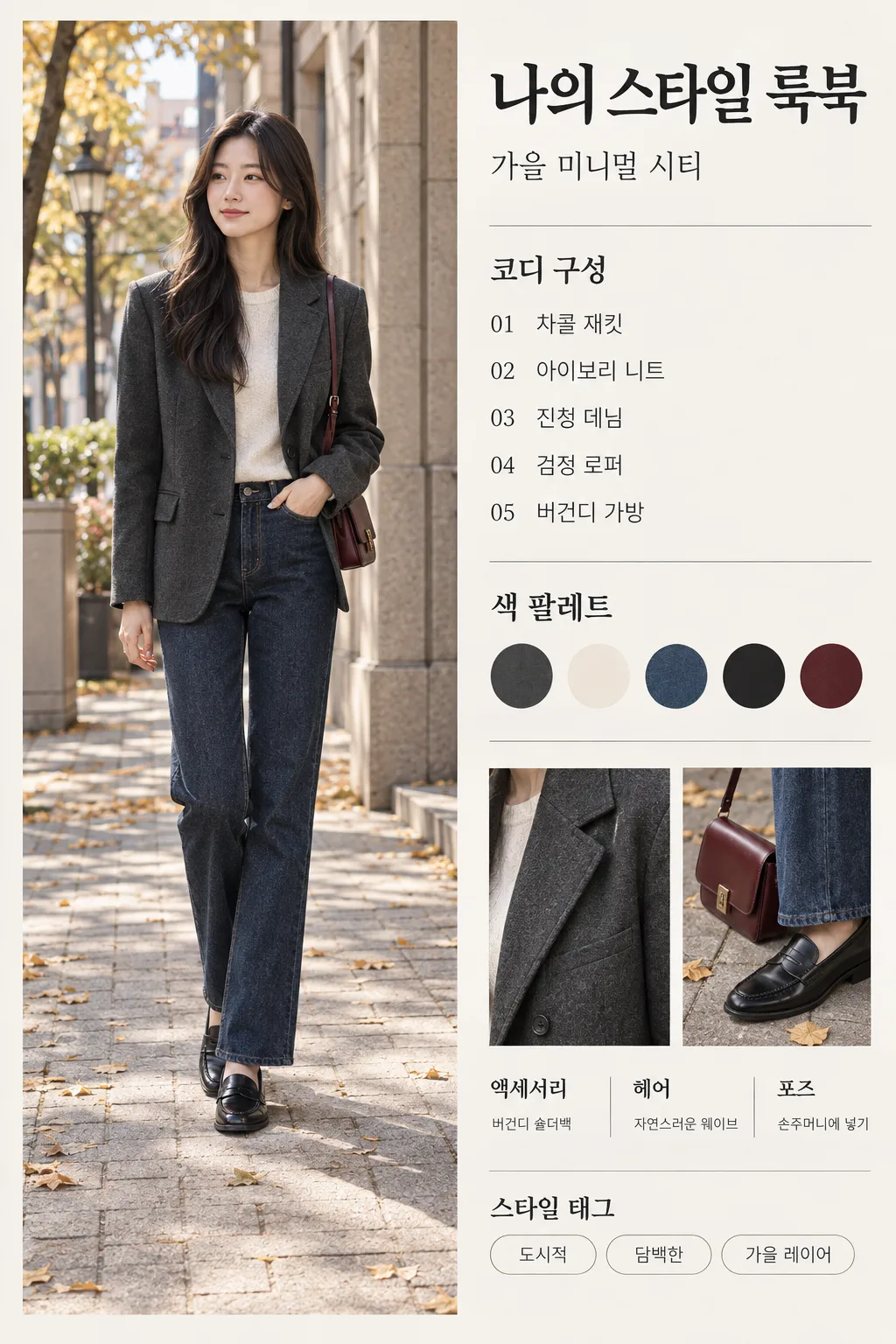
본인이 내 사진으로 만든 룩북 한 장을 인스타에 올려요 — 얼굴을 유지한 전신·부분 사진과 코디 다섯 요소를 담습니다.
칸 채우기
- 1칸을 채워요
- 2복사 버튼을 눌러요
- 3GPT 채팅창에 내 사진을 올리고, 프롬프트를 같이 붙여넣어요
- 4내 사진과 프롬프트가 둘 다 들어간 걸 보고 보내요
프롬프트 원문 보기 6,663자
Generate this image now. Draw it directly - do not describe it, explain it, or ask questions.
Create exactly ONE finished Korean 2:3 portrait fashion lookbook image. The user has attached their own photo in this same message. Use that attachment as the required identity reference. Do not make multiple images, sequential pages, a separate outfit recommendation, code, or a request for "next". Everything below belongs on one canvas.

[Purpose]
Make a personalized style-analysis lookbook that its owner can save and post on Instagram. Selected style: "【원하는 스타일】". Selected season: "【계절】". This is a creative styling proposal from a supplied identity photo, not a color-season diagnosis, body assessment, attractiveness score, shopping list, or one-outfit answer for today's weather. Build one coherent signature look with five named clothing components, a visual color palette, two close-up photographs, accessories, hair direction, pose, and style tags. If style is "알아서 골라줘", do not print those words: choose one coherent style based on the user's stated season and the photo's visible clothing or overall vibe only; do not infer personality, job, gender, ethnicity, income, exact body size, or a scientific color type.

[Attached photo]
The uploaded photograph is mandatory. Keep the same recognizable face, facial structure, natural skin texture, hairstyle identity, and distinguishing features. Do not turn the person into a celebrity, generic model, anime figure, or a different face. The styling can change garments, accessories, hair arrangement, and pose, but must preserve identity. If the photo only shows a face or upper body, design a plausible full-length editorial fashion photograph without claiming to know the person's exact body measurements; avoid slimming, enlarging, or judging their body. If no image is attached, do not invent a person's identity or claim a match. The final image should clearly center the photographed person as one continuous full-body figure. For a real photo texture, consult web examples of editorial full-length fashion photography and garment details if web access is available. Use those only to understand pose, drape, seams, fabric weave, lens perspective, and natural light; never copy a specific photo, brand, logo, or another person's face.

[Scene]
One polished magazine-like vertical lookbook page. A large photorealistic full-body hero photograph occupies roughly the left 58% from below the headline to about 72% of page height. Show head and shoes fully within frame, with realistic fabric folds, believable scale, and a natural environmental setting suited to the chosen style and season. Beneath it, two photo-real close-up crops made within the same generated page: one garment or fabric detail and one accessory or shoe detail. These are content panels in the SINGLE image, not separate outputs. A narrow right editorial column holds readable modular details. At the bottom, a shallow strip has pose and style tags. Avoid an oversized blank fashion image that squeezes the five outfit components into illegible captions.

[Text layout]
Top 0-12%: large Korean display title derived from the selected style, followed by "나의 스타일 룩북" in readable text and a short season line "【계절】 룩". If "알아서 골라줘" was selected, replace it with the chosen real style name; never print the instruction itself.
12-72%: hero full-body photo at left. At right, heading "코디 구성" and exactly five numbered component lines: 01 상의, 02 하의, 03 겉옷 또는 레이어, 04 신발, 05 가방. Give each a concrete garment name and one practical fit, fabric, or layering note appropriate to "【계절】". For a hot summer, 03 can be a light shirt layer rather than a heavy coat. Beneath or alongside, heading "색 팔레트" with four or five named swatches actually visible in the outfit; swatch names must match the garments. Use simple Korean color words and a believable, coherent combination.
72-88%: two close-up real-photo panels at left. At right, three compact labeled notes: "액세서리", "헤어", "포즈". Accessories must appear in the hero photo, hair guidance must be a styling suggestion rather than a claim that a face or hair type needs correction, and the pose note must describe the pictured pose.
88-100%: a small "스타일 태그" band containing three or four concise Korean tags with good contrast. A single short editorial line may tie the look together. Render no brand, price, store, size, or purchase link.

[Style]
Let the style and season drive the entire art direction. For 미니멀 시티, favor architectural lines, charcoal, stone, and one restrained accent; for 빈티지 캐주얼, tactile denim and softened warm neutrals; for 클래식 프레피, tailored layers and scholarly contrast; for 스트리트 캐주얼, strong street geometry and relaxed texture; for 로맨틱 무드, softer fabric and a season-appropriate palette. These are starting points, not rigid gender rules. If the photo suggests another cohesive styling direction and the user chose "알아서 골라줘", name it naturally. Use the supplied example only for density and magazine page structure; do not copy its pink palette, cafe setting, text, or model.

[Visual hierarchy]
The full-length person and lookbook title must register at list thumbnail size. Five numbered components should read at normal phone size, with a more compact palette and notes. Keep every module connected to the same single outfit and the same subject, rather than showing several incompatible outfits. Show exactly one hero full-body photograph and two supporting detail photographs. Align baselines, preserve margins, and leave sufficient contrast behind Korean words.

[Lighting and texture]
Use realistic editorial fashion photography with natural skin detail, correct hands and feet, authentic garment construction, knit, cotton, denim or wool texture as seasonally appropriate, and consistent light across the hero and detail crops. A restrained matte magazine print surface may frame the photos. No illustration, doll skin, obvious AI collage seams, glossy neon, floating items, fake fabric, or cut-off shoes.

[Text rules]
Render all labels in exact Korean, especially "나의 스타일 룩북", "코디 구성", "색 팔레트", "액세서리", "헤어", "포즈", and "스타일 태그". Keep small writing short enough to read. Do not print input labels, a body-type judgment, a personal-color season, placeholder braces, prompt instructions, or an extra page. The selected style and season must agree with the clothes, weather weight, setting, and palette.

[Avoid]
No copied model face, face morphing, celebrity likeness, branded products, invented measurement, shopping link, outfit for a specific event or today's forecast, beauty ranking, objectification, mockup device, cropping plan, or multiple output images.
이 카드도 많이 사용해요
쓰는 법 · 자주 묻는 것
이런 때 쓰세요
내 사진으로 만든 스타일 룩북을 인스타에 한 장 올리고 싶을 때 쓰세요. 전신 사진 하나를 크게 보여 주고, 옷과 소품의 부분 사진 두 장, 코디 다섯 요소, 팔레트, 액세서리, 헤어, 포즈, 태그를 같은 세로 화면에 담습니다. 오늘 날씨에 맞는 한 벌만 추천하는 「오늘 뭐 입지」와 달리, 이 카드는 내 사진을 중심으로 한 잡지형 소개 페이지입니다. 「퍼스널컬러 진단 카드」처럼 웜·쿨을 판정하지도 않습니다.
칸 채우는 법
- 내 사진이 꼭 필요합니다. 얼굴이 분명하게 보이는 본인 사진을 넣으세요. 전신까지 보이는 사진이면 얼굴과 실루엣을 더 안정적으로 맞출 수 있습니다.
- 원하는 스타일은 한 가지를 고르세요. 취향이 정해지지 않았다면 「알아서 골라줘」를 누르면 사진과 계절에 맞춰 한 방향을 정합니다. 선택 단어를 그대로 제목으로 붙이지 않고 실제 스타일 이름으로 바꾸도록 했습니다.
- 계절은 입을 옷의 두께와 재질을 정하는 기준입니다. 지금 날짜가 아니라 룩북을 만들고 싶은 계절을 고르세요.
사진을 넣는 순서
- GPT 채팅창에 본인 사진을 올리세요. 아직 보내지 마세요.
- 같은 입력 칸에 이 카드에서 복사한 프롬프트를 붙여넣으세요.
- 사진과 프롬프트가 둘 다 들어간 것을 본 뒤 한 번만 보내세요.
사진만 먼저 보냈다면 프롬프트 끝에 「위 사진으로 그려줘」를 덧붙여 보내세요. 사진 속 얼굴이 흐리거나 멀리 있으면 결과가 덜 닮을 수 있습니다. 본인 사진을 쓰는 용도로 만든 카드이므로 다른 사람의 사진을 올릴 때는 먼저 허락을 받으세요.
그림이 나오면 꼭 볼 것
전신의 머리끝과 신발이 모두 들어갔는지, 원본 사진과 같은 얼굴인지 가장 먼저 보세요. 옷 부분 사진 두 장이 실제 큰 사진의 옷·소품과 같은지도 확인하세요. 「코디 구성」에는 다섯 항목이 있고 팔레트 색이 옷과 이어져야 합니다. 신발, 가방, 계절감이 서로 어긋나지 않으면 저장해 인스타그램 피드나 스토리에 올릴 수 있습니다. 한글 글자와 태그도 확대해서 살펴보세요.
자주 묻는 것
- 사진 없이 만들 수 있나요? 이 카드는 내 얼굴을 유지하는 룩북이므로 사진 첨부가 필요합니다.
- 퍼스널컬러를 판정하나요? 아니요. 팔레트는 이번 코디의 색 조합이며 피부색 진단 결과가 아닙니다.
- 여러 코디를 차례로 받나요? 아니요. 한 장 안에 하나의 완성된 스타일과 다섯 옷·소품 요소가 들어갑니다.