

All · Social posts · Seasons & holidays · Tips & facts
067Monthly Seasonal Food Calendar
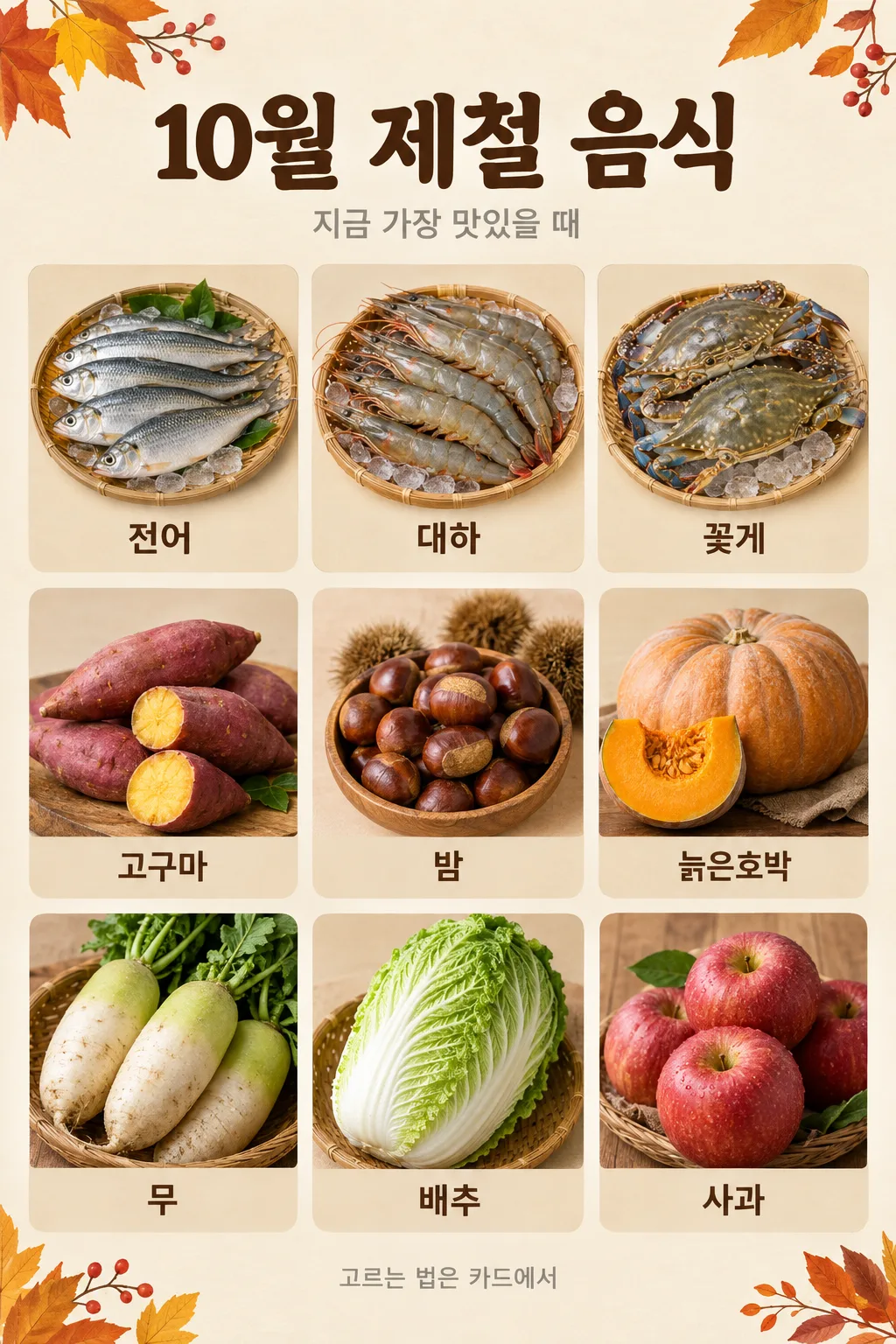
Photographic ingredients grouped by field, orchard and sea, arranged as harvest bands or a wheel.
What you get
- One portrait seasonal ingredient sheet
- Field, orchard and sea groups with buying cues
- Bands or a wheel around the month
Fill in the fields
- 1Fill in the fields
- 2Copy the prompt
- 3Paste it into a GPT chat
- 4Send it as is and you get an image like the thumbnail example
- 5Attach a real photo that fits the card and it is used in the result: a background photo for background cards, a person or food photo for those cards Optional
Full prompt 4,346 characters
Create a finished monthly seasonal-ingredient calendar, a flat portrait 2:3 editorial sheet. Its identifying device is a HARVEST ORIGIN ATLAS: raw ingredients occupy their own growing environments, so a shopper can distinguish field produce, orchard fruit and seafood without reading a detached legend. Photographic food cutouts on matte ivory paper, charcoal Gothic typography, fine sage rules, restrained autumn ochre. Realistic edible anatomy and daylight surface detail; no cartoon food or plastic rendering.

MONTH: 【Month】
PUBLISHER: 【Table signature】
FIELD HARVEST: 【Field ingredients】
ORCHARD HARVEST: 【Orchard ingredients】
SEA HARVEST: 【Sea ingredients】
ATLAS SHAPE: 【Harvest map】

The three comma-separated harvest lists are the complete ingredient ledger. Do not supplement them from memory. Each entry appears once, as an identifiable raw-food photograph with its own local-language name and one short observable buying cue immediately beside it. Keep the entire food visible. Whole or naturally cut raw ingredients only, never prepared meals. A chestnut is a nut with a pointed brown shell, not an onion; a persimmon has a leafy calyx; a mackerel has dark wavy dorsal markings. Match every photo to its label. Do not derive health benefits, prices, harvest dates or provenance claims. These environments classify foods, not actual farms of origin. If an entry is plainly outside its supplied environment, keep its name but move it to the correct environment. Do not claim that every entry is in season merely because it was supplied; the user selects a locally appropriate list for the month.

The chosen ATLAS SHAPE controls the entire map:
Harvest bands — a compact title at the top followed by three broad horizontal harvest bands, stacked vertically. Label their left ends Field, Orchard, Sea. Arrange each band's ingredient photographs across its width with names and buying cues beneath. A fine furrow pattern belongs only to the field band, a sparse branch line only to the orchard band, and a fine wave line only to the sea band. No circular map.
Harvest wheel — place the month and Seasonal ingredients inside a central ivory disc. Surround it with one broad ring divided into three ample sectors, labeled Field, Orchard, Sea. Field foods occupy one sector, orchard foods another, seafood the last. Place photographs, names and buying cues together inside each sector, using upright horizontal text. The furrow, branch and wave marks follow their own sectors. No stacked bands or detached item grid. Keep ring labels away from the central disc and make the ring large enough for legible captions.

In both shapes the publisher is a small signature above the map; the title is the supplied month followed by Seasonal ingredients. The circular shape puts this title in its hub instead of repeating a top heading. Use the same ingredient list, food treatment, palette and wording in either shape. Generate one specific buying cue per ingredient about visible condition only, such as firm leaves or intact skin; do not prescribe tasting raw seafood or promise freshness from appearance alone. Put the quiet footer Seasons vary by region and climate beneath the map. All essential elements stay within a generous trim inset. No daily date boxes, arbitrary day assignments, recipes, supermarket packaging, official seals, source claims, logos, brand names, URLs, watermarks, mockup scene or instructions printed on the sheet. Render the image itself, not a written proposal.
FINAL CHECK: ATLAS SHAPE is an internal layout selector, never visible lettering. Do not print Harvest bands or Harvest wheel. For oysters and scallops pictured open to show the edible flesh, the buying cue must describe moist flesh, not a closed shell or closed mouth; shell-closure cues require an actually closed-shell photograph.
Visible text must be English. Interpret seasonality for the supplied locality and month; do not silently substitute a different regional harvest list.

[Final output format]
Output exactly one finished 2:3 portrait image, 1024x1536 pixels. Leave the top 12% and bottom 15% free of essential text.
This selected output format takes priority over any fixed canvas size or aspect ratio elsewhere in this template. Adapt the composition, text zones and margins to the selected canvas without stretching or cropping essential content. Device safe areas apply only when a device is selected. Never print these format instructions on the image.
How did it turn out?
More cards in this category

How to use it · FAQ
Open oysters received a flesh-based cue
We drew the November bands twice with napa cabbage, radish and winter squash; apple, Asian pear and sweet persimmon; mackerel, oyster and scallop. Both final images kept all nine ingredients in their own environments. Open oysters and scallops received captions about moist flesh. An early version paired an open oyster with a closed-shell cue, so we added one instruction matching the cue to the pictured form.
The month moves into the hub
Changing only the map button replaced three stacked bands with three sectors around the November title. Field foods sat above, orchard fruit below left and seafood below right. Furrows, branches and waves followed their sectors. The first wheel printed the internal option name; the revised test removed it. Photographic ingredients and ivory paper remained.
An environment map does not certify a harvest
The lists determine the pictured ingredients. Changing the month alone does not update them: replace the three lists with foods appropriate to local availability too. We checked layout and food depiction using a Korean November example, without looking up regional shipping conditions. The translated versions have not been image-tested.
Buying cues varied between runs. One final band described the squash as glossy. Treat these as shopping observations, never proof of freshness or safety. Match each photo to its name and check that an open shellfish has not acquired a closed-shell caption.
Last checked · Published